
Sign up to save your podcasts
Or



Women’s sports have been missing from Feed the Matriarchy, so we fixed that, fresh off Game 7 of the WNBA Finals. We sit down with Jen Leary and Lori Albright, founders of Watch Party PHL, and Ashley Mazziotta, the architect bringing their next chapter to life: The Stoop Pigeon, Philly’s first women’s sports hub, opening in early 2027. It started in the isolation of COVID, when WNBA Twitter and the players in the bubble gave Jen and Lori a community and a spark. When they couldn’t find a place for that community in Philly, they built one, and the first watch party had lines of women down the street. We talk about how a name like “The Stoop Pigeon” comes together, why they chose “hub” over “bar,” and what it means to design a coffee shop, co-working space, and sports lounge where kids, non-drinkers, queer folks, and allies all feel welcome. We also get real about fear, failure, and risk. Jen and Lori share what they learned from closing their nonprofit, Ashley talks about the partner who pushes her past imposter syndrome, and all three offer advice for any woman sitting on an idea she’s afraid to start. As Tiffany Hayes said after the championship, this is what happens when you invest in women’s sports.
To connect with Stoop Pigeon: https://www.thestooppigeon.com/
In this episode of Feed the Matriarchy, we finally invite the matriarchy herself: our mom, Cindy. She’s not sure she’s a feminist, but her story says otherwise. From a college professor who told her women have no place in math and science, to a childhood of mixed messages about her body (including diet pills at 12), she walks us through what she had to unlearn to stop shrinking and start taking up space. Along the way, we trace body image and feminism through three generations, and talk about what it means to keep getting better with each one. Grab a tissue and settle in with the matriarchy.
In this episode, we take on joy: what it is, why it’s hard to find, and why it can be an act of resistance. We talk about holding two truths at once, a DBT idea called a dialectic, and how grief and beauty can sit side by side, from a monthly food pantry drive for immigrant neighbors to the joy at a funeral that celebrates a life. We get honest about the ways women mute themselves out of worry over how their bodies and reputations are perceived, and what changes when you stop performing and start living in your body, whether that’s swimming laps with no goal, losing yourself at a concert, or dancing badly and loving it. Along the way there are laughs about white-lady dance moves, a sister who never learned to swim, and wildly different ideas of fun. We close with a question to take with you: if you weren’t muting yourself, what would your joy look like, even in the middle of the hard stuff?
Why are so many women getting diagnosed with ADHD in their 40s? This week on Feed the Matriarchy, we talk with Danielle Taylor, an RN, women-centered ADHD coach, certified mindfulness meditation teacher, and co-founder of Noura Health, about what happens when ADHD and perimenopause collide. Danielle shares her own late-diagnosis story, including the moment she could no longer mask, and why it took raising a child with ADHD to recognize it in herself. We dig into why girls who over-perform, daydream, or talk too much get missed, how “generalized anxiety” became the catch-all diagnosis for a generation of women, and why the shame so many of us carry was never our fault. Danielle also talks about the limits of hormone therapy, the layers of masking and trauma underneath, and what she had to unlearn to stop giving her power away. If you’ve ever called yourself a hot mess, this one is for you.
To connect with Danielle more, check out her instagram:https://www.instagram.com/danielletayloradhd?mdxt=MWl6eThvdnF0ZzY4aQ==
To access Noura Health: https://joinnoura.com/about
In this episode, we're getting into the trenches on anxiety: what it looks like when the day goes sideways, and what we actually do about it. We talk about perfectionism and control, laughing as a coping mechanism, and the generational trauma that may be part of why anxiety runs in our family. We get honest about the cost of white-knuckling your feelings, and we share how we handle panic as adults: naming the feeling, getting down on our knees (metaphorically) to comfort ourselves the way we would a child, and sitting through the surge instead of walking out. We talk about the people who make up your matriarchy, why it helps to externally process with more than one person, and why grounding looks different for everyone (yes, even touching actual grass). We close with the humbling experience of watching our own anxiety reflected back at us through our kids, and how giving ourselves grace makes room for more grace with everyone else. If you’ve ever laid in bed thinking “wow, I feel really fucked up right now,” this one’s for you.
This week on Feed the Matriarchy, we sit down with Sarah Martyn, a licensed massage therapist, E-RYT 500 yoga teacher, body image coach, and owner of Exhale Massage and Yoga in Narberth, PA. Sarah’s work is about helping people move away from treating their bodies like problems to solve and toward listening, connection, and feeling more at home in themselves. Together we talk about what trauma-informed bodywork looks like and what to look for in a safe space, how to start small when getting quiet feels scary, and why so many women apologize for their bodies before anyone says a word. We get into diet culture, the impossible standards it sells us, and how somatic work and nervous system co-regulation help us slow down and stop living in fight or flight. Plus, embodiment through movement, and a spicy tangent you’ll have to hear for yourself. The episode closes with our favorite question: what did you have to unlearn to stop shrinking and start expanding? Sarah’s answer is one you’ll want to sit with.
To contact Sarah Martyn & Exhale Massage and Yoga: https://www.exhalemainline.com/
To learn more about retreat offerings: https://www.exhalemainline.com/poconos-retreat
This episode we're sitting down with Dr. Dana Harron, a Washington, DC-area psychologist, founder of Monarch Wellness and Psychotherapy, and author of Loving Someone with an Eating Disorder. Her second book, Parenting Beyond Trauma, comes out in April 2027. Dr Harron shares how a feminist, relational approach to eating disorder treatment shaped her work, and why she believes in supporting the people around someone who is struggling, whether that's a partner, a sibling, or a parent. The conversation then turns to parenting with a trauma history: how the nervous system puts safety first, why a small moment can suddenly feel like a hill to die on, and how our own childhoods can show up when our kids reach the age that was hard for us (cue Johanna's birthday party anxiety). Along the way we talk about the pressure of Instagram-perfect motherhood, why taking care of yourself is taking care of your kids, and how repair after a mistake can be a gift to a child. Dr Harron closes with what she's unlearning as she enters the second half of life. If you're trying to keep what was good from your childhood and leave the rest behind, this one is for you.
To connect with Dr Dana Harron: https://www.monarchwellness.com/dana-harron-psyd
Loving Someone with An Eating Disorder: To Purchase
Parenting Beyond Trauma : To Purchase
In this episode, we go solo to unpack a theme that's quietly come up with almost every guest this season: the fear of failure, and how differently it shows up for women. We dig into the research — girls report significantly higher fear of failure than boys, and that gap only widens among high achievers — and trace it back to our own lives, from fifth-grade math tests to job losses to raising kids in a world that still tells girls perfect is the baseline. We talk about the conditioned instinct to ask "what did I do wrong?", the reflexive apology, the exhaustion of trying to be everything for everyone, and what it actually looks like to unlearn all of it — not by becoming fearless, but by learning to rest, to fail without spiraling, and to trust that an imperfect result is data, not a verdict. It's a conversation about conditioning, intuition, and giving yourself — and the next generation — permission to try the long shot.
This week we sit down with Jessi Sheridan, founder of Habituelle and author of The Executive Shift, for a conversation that hits every corner of the matriarchy. After nearly two decades climbing the corporate and nonprofit ladder — including time as a COO — Jessi walked away to build a coaching and community company dedicated to helping ambitious women create careers and lives that feel as good as they look on paper. They get into why imposter syndrome shows up at every level of success (yes, even for the women who look like they have it all figured out), the real difference between burnout and just being tired, and why mentorship should never cost you anything but the ask. Jessi also opens up about being labeled "put together" and "intimidating," and what it took to stop shrinking herself into other people's boxes. This one will have you rethinking what "success" actually means to you .
To connect with Jessi, you can find more info here:
https://habituelleleadership.com/
Or on Instagram:
@_habituelle_
@jessi.sheridan
Kerry Miller is a Registered Dietitian and mom of three daughters who spent years working with women whose complicated relationships with food traced all the way back to childhood. Instead of handing her own girls more rules, she wrote them stories — and that's how her book series, Violet Learns, was born. In this episode, Kerry joins us to talk about interoception, the "praise cycle," why silence was actually a protective gift in her own childhood, and the one phrase she wants every parent to keep in their back pocket at the dinner table. We get into what it really looks like to raise a kid who trusts her body, the language she's swapping in for old lines like "finish your plate," and why she believes awareness — not perfection — is what actually breaks the cycle.
The first book in the series, Violet Learns to Pause, launches September 15.
For more information: https://violetlearns.com/
From the publisher's feed
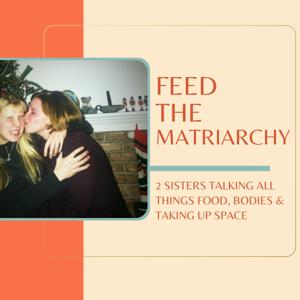
Feed the Matriarchy is a sister-led podcast serving up real talk about food, body image, parenting, and feminist rebellion—while amplifying matriarchal voices across the spectrum. Each week, we…