
Sign up to save your podcasts
Or

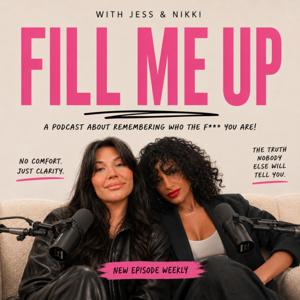


We're calling it: people-pleasing isn't a personality trait. It's dishonesty.
In this episode, Nikki and Jess take one of the most trending conversations on social media — people-pleasing — and flip it completely on its head. Forget the soft reframes. If you're suppressing your truth to avoid conflict, you're lying. And the person you're hurting most? You.
They dig into why people-pleasing never actually pleases anyone, what it really means to give someone authority to speak into your life (and why random people don't get that access), and how not doing the inner work now will catch up to you in your relationships later.
This episode is raw, honest, and exactly the kind of conversation you didn't know you needed. Words matter. Honesty heals. And your people-pleasing? It's costing everyone — especially you.
Soul School is back and she has no filter.
Nicki and Jess unpack one of the most misused terms in self-development: people-pleasing. Their take? Stop softening it. People-pleasing is a form of radical dishonesty — and until you call it what it is, you can't change it.
What They Cover
Notable Quotes from This Episode
Mentioned in This Episode
Are you actually healing — or are you just keeping yourself busy enough to avoid feeling it?
In this episode, we get into spiritual bypassing: the sneaky ways we use crystals, shadow work, self-help books, Eat Pray Love trips, and endless "inner child" content to feel like we're doing the work — without ever actually sitting still long enough to let it happen.
We talk about toxic over-productivity, the restlessness that drives it, and why the most spiritually advanced thing you can do might just be... nothing. We also tell the Alan Watts Chinese Farmer parable — and by the end of it, you'll understand why "I don't know" might be the most honest and freeing answer you've ever given yourself.
Topics covered:
What if the pain you keep feeling… isn’t happening to you — but being replayed by you?
In this episode of Soul School, we break down what resentment really is, why so many people stay stuck in the same emotional loops, and how spiritual growth actually happens in real life — not just in theory.
We talk about:
This isn’t about being perfect.
It’s about becoming aware enough to stop repeating what’s not working.
If you’ve ever felt stuck, restless, or like something deeper is missing — this episode is for you.
🎧 New episodes weekly — follow to stay connected.
You can put the bottle down and still be living in chaos.
In this episode, we get into the reality of untreated alcoholism — what it looks like when the substance is gone, but the thinking, resentment, control, projection, dishonesty, and emotional volatility are still running the show.
We talk about the difference between being physically sober and actually recovering, why some people stay stuck in misery without alcohol, and how untreated patterns show up through anger, judgment, blame, fear, unrealistic expectations, and speaking for everyone except yourself.
We also get into:
This episode is for anyone who has ever thought:
“I’m sober… so why do I still feel so off?”
If that’s you, this conversation will hit.
If you had been offered a medically assisted death at your lowest point — would you have taken it?
We would have. Without hesitation.
In this episode of Soul School, Jessica and Nikki get brutally honest about their darkest moments — the kind of pain that makes you want to permanently exit a temporary situation. We talk about what MAID actually is, how Canada became one of the leading countries in assisted dying, and why the eligibility criteria sounds a lot like every addict and alcoholic we’ve ever known.
We also talk about what saved us. Not medication. Not a doctor. Not a government program.
A psychic change. A spiritual awakening. A reason to live.
Nikki shares the heartbreaking story of losing her grandfather to suicide after a lifetime of alcoholism and antidepressants. Jessica shares how she walked away from a pharmacy prescription list that would shock you — without even trying — after finding God.
This is the conversation the medical system is not having. The spiritual solution exists. It works. And it’s available to everyone.
If you are in the darkness right now — please listen to this episode before you make any permanent decisions. This too shall pass.
Soul School. No religion. No labels. No judgment. Just the truth.
Medical Assistance in Dying (MAID) has become one of the most debated topics in Canada.
In this episode, we have a raw conversation about MAID, suicide, recovery, addiction, and the spiritual transformation that can happen when someone chooses life instead of despair.
Many people struggling with addiction, depression, or emotional pain have moments where they believe the only escape is death. But recovery communities often talk about something different: a psychic change — a transformation in thinking and belief that creates hope where there once was none.
We talk about:
• MAID and the growing debate in Canada
• why people can feel suicidal during addiction and mental health crises
• the difference between temporary pain and permanent decisions
• how recovery programs and spiritual growth can change someone's outlook
• why purpose and helping others can transform a life
This episode is an honest, sometimes emotional conversation about suffering, hope, and the idea that sometimes the darkest moment of someone's life can eventually become the thing that allows them to help others.
If you or someone you know has struggled with suicidal thoughts, addiction, or hopelessness, this conversation may resonate with you.
What if your addiction isn’t just to substances — but to the story, the phone, the chaos, or the need to be chosen?
In this episode, we dive into the psychology and spirituality behind obsession. We talk about:
phone addiction and Pavlov-style conditioning
obsession with people texting back
addiction to chaos and emotional narratives
why nothing in life is permanent
practicing what we already know instead of chasing more information
recovery, acceptance, and the next right action
outgrowing people, relationships, and old timelines
This conversation is honest, funny, spiritual, and deeply relatable for anyone navigating recovery, emotional sobriety, or personal growth.
If you’ve ever felt consumed by your thoughts, attached to an outcome, or trapped in your own mind, this one is for you.
How honest are we really with ourselves and others?
In this episode of Soul School, we dive into a real and raw conversation about gossip, accountability, radical honesty, and spiritual growth.
Friendships, relationships, and personal growth can get messy. Sometimes we say things we shouldn't. Sometimes we gossip. Sometimes we hurt people with our words without even realizing it.
But what happens when we take responsibility and start practicing radical honesty and awareness?
In this episode we discuss:
• The impact our words and gossip can have on others
• Why radical honesty is necessary for personal growth
• The importance of self-awareness and accountability
• How spiritual practice helps guide our behavior
• Why people see the world through different perceptions and experiences
• The importance of patience, service, and staying present
At the end of the day, growth isn't about being perfect — it's about learning, correcting ourselves, and continuing the work.
In this conversation, the hosts explore one of the most overlooked parts of recovery and personal growth:
Who you give your time and energy to.
They discuss how many people spend years people-pleasing, tolerating low-energy relationships, and saying yes to things that drain them.
The episode dives into:
• the importance of protecting your time
• how energy and environment influence your mindset
• why people pleasing is often dishonesty
• learning how to say no without guilt
• discernment and spiritual clarity
• why you can’t expect one person to be everything
• focusing on your own community instead of global distractions
• trusting the process instead of obsessing over outcomes
The conversation highlights a powerful truth:
You can get more money, more friends, even a new house — but you can never get more time.
Choosing where you spend it will determine the quality of your life.
In this deep and honest conversation, Anthony and his guests explore how addiction doesn’t always disappear — it often changes form.
After substances are removed, new obsessions can appear: body dysmorphia, validation seeking, relationships, surgery addiction, food, or self-image. The episode dives into how self-obsession blocks spiritual growth and why many people in recovery struggle with new compulsions.
They discuss:
• body dysmorphia in recovery
• addiction transfer and behavioral addictions
• self-obsession and guilt
• radical acceptance of the body
• discipline vs shortcuts in health
• patience and impulsivity
• choosing what you “worship” in life
• how spiritual awakening changes thinking
The conversation ultimately explores a powerful idea:
If you don’t choose what you serve in life, something will choose for you.
Recovery becomes about removing the things that block connection to purpose, peace, and spiritual growth.
What if the way you think, react, love, and suffer isn’t actually you — but the result of conditioning you never chose?
In this episode of Soul School, we explore spiritual reprogramming, soul awareness, and how unconscious conditioning shapes our thoughts, behaviors, relationships, and sense of self.
We talk about:
How family, culture, media, religion, and fear program the soul
Why old programming eventually stops working
The difference between thinking, acting, and being
Spiritual practice as daily repetition, not perfection
Reprogramming patience, awareness, and responsibility
Why no one is coming to save you — and why that’s empowering
This conversation is for anyone who feels stuck, restless, disconnected, or aware that something deeper needs to change.
If your current programming isn’t working for you anymore — this episode is your invitation to rewrite it.
From the publisher's feed