Sign up to save your podcastsEmail addressPasswordRegisterOrContinue with GoogleAlready have an account? Log in here.
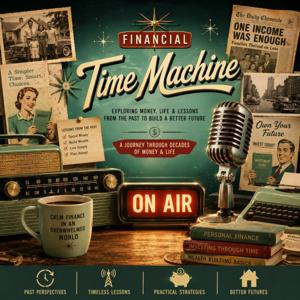
Financial Time Machine is a nostalgic journey through the money, life, and lessons of the past. Each episode explores how previous generations built homes, raised families, handled money, and found ha... more
FAQs about Financial Time Machine:How many episodes does Financial Time Machine have?The podcast currently has 26 episodes available.
May 29, 2026Generated Episode Idea{"title":"The Repair Circle: How Neighborhood Fix‑It Traditions Saved Money and Built Community","one_liner":"A warm, monologue-led look at the neighborly repair rituals—tool sharing, barter fixes, weekend repair bees—that stretched household budgets and kept communities close in mid‑century America.","description":"Imagine a Saturday morning where an old washing machine was fixed on a front porch, a neighbor lent a wrench, and a childhood bike got a new patch from Mrs. Alvarez down the street. This episode explores the Repair Circle: the informal networks of skill-sharing, barter repairs, and do‑it‑yourself pride that helped families maintain homes and save money before planned obsolescence and disposable culture took hold. I trace the history of neighborhood repair traditions, the economics behind keeping things running, and the quiet social rituals—lending tools, trade-for-labor, repair parties—that made thrift feel communal rather than lonely. Along the way I share vivid, small-town vignettes, compare those practices to today’s throwaway habits, and surface practical takeaways listeners can use now: how repairing once created both financial resilience and deeper neighbor ties. It’s a gentle, reflective episode about practical thrift, shared expertise, and the emotional value of things that last.","why_now":"This is a timeless look at practical thrift and community resilience; it reframes everyday repair traditions as cultural wisdom rather than a reaction to a specific trend.","target_audience":"Listeners who love mid‑century Americana, slow living, vintage money habits, and thoughtful stories about how families and neighborhoods stretched budgets and built connection before modern convenience.","episode_type":"monologue","estimated_runtime_s":600,"outline":["00:00-00:30 — Cold Open: A vivid scene of a Saturday porch repair—tape hiss, tools clinking, a neighbor’s laugh to instantly transport listeners to a past neighborhood ritual.","00:30-01:00 — Intro Sequence: Warm intro music and Megan’s brief show ID, promise of an intimate story about repair, thrift, and community.","01:00-05:00 — Main — Historical Context: Origins of household repair culture from wartime thrift to postwar appliance ownership; why families repaired rather than replaced and the economics behind longevity.","05:00-08:00 — Main — Cultural Habits & Social Mechanics: Tool‑sharing, barter, repair bees, and gendered skills; how knowledge passed between neighbors and across generations shaped spending choices.","08:00-09:00 — Main — Everyday Vignettes & Emotional Texture: Concrete scenes—bike patches, mending clothes, radio tune‑ups—illustrating how repair anchored social bonds and reduced household costs.","09:00-09:45 — Reflection Segment: What older repair rituals teach us today about resilience, intentional consumption, and community—and what we’ve lost and gained since.","09:45-10:00 — Closing Thoughts & Outro: A slow, memorable reflection, subscribe CTA, and soft outro music leading to signature line.","tags":["neighborhood","DIY","vintage-economics","community","thrift"],"duplication_check":{"nearest_match_title":"The Saving Ritual: How Mid‑Century Families Turned Spare Change into Security","similarity_score":0.62,"decision":"distinct"},"risks":["Romanticizing hardship or implying all past conditions were preferable to modern conveniences."],"mitigations":["Frame anecdotes with balanced context—acknowledge hardships, note tradeoffs between convenience and resilience, and offer practical, accessible takeaways for today’s listeners."]}...more9minPlay
May 28, 2026The Pocket Ledger: How Daily Planners, Pay Envelopes, and Paper Rituals Shaped Everyday SpendingIn this episode Megan Thomas opens a small, worn paper wallet and listens for the soft rustle of a different money rhythm. We trace a line from leather pocket planners and Sunday pay envelopes to the checkbook registers and penciled budgets that guided weekly choices. Through vivid anecdotes and cultural context, the episode explores how physical rituals — turning calendar pages, crossing off bills, saving stamps in an envelope — enforced patience, limited impulse spending, and made money feel manageable. Megan examines how these paper habits shaped family time, paydays, and the pace of life, and contrasts that steady cadence with today’s instant transactions. Listeners leave with gentle, practical ideas for reclaiming analog habits — whether a simple weekly ledger or a paper ‘pause’ before purchases — and an invitation to try one small practice this week. Subscribe for more calm journeys through the simpler financial habits of the past....more9minPlay
May 27, 2026Roadside Riches: How Full-Service Gas Stations, Diners, and Car Culture Shaped Family BudgetsMegan guides listeners on a gentle, 10-minute journey through mid‑century America’s road economy—those full‑service gas stations with attendants in crisp uniforms, neon diners where change paid for pie, and the ritual of loading the car for a summer drive. This episode blends historical context with small, sensory details: the smell of oil and coffee, the sound of a service bell, the price of a tank of gas beside a family grocery list. Along the way Megan explores how car culture created new everyday expenses, normalized small-credit purchases, and shaped routines that balanced convenience with community. Listeners leave with comforting nostalgia, one concrete budgeting takeaway inspired by past habits, and a reflective question about what conveniences we might slow down to reclaim. Perfect for anyone who misses the hush of analog life or wants a calmer perspective on money and memory....more9minPlay
May 26, 2026The Catalog That Built Main Street: Sears, Roebuck & Mail‑Order AmericaMegan Thomas narrates a calm, immersive episode tracing the Sears, Roebuck catalog from basement book to household bible. We explore how one thick book brought appliances, furniture, and fashions to small towns, altered expectations about choice and price, and quietly rewired household budgets and aspirations. Through vivid scenes — a mother circling pages by lamplight, delivery men unloading crates, and ads promising modern living — the episode reveals the catalog’s cultural power: credit offers, installment plans, and the rise of national consumer taste. Listeners will hear historical context, everyday experiences of shopping by mail, and gentle comparisons to today’s one‑click convenience. The episode balances nostalgia with practical perspective: what did catalog culture teach about patience, value, and community? By the end, you’ll feel transported, calmer about consumption, and curious about forgotten routines that once made households feel secure....more9minPlay
May 25, 2026The Saving Ritual: How Mid‑Century Families Turned Spare Change into SecurityMegan Thomas guides listeners through a warm, intimate portrait of household saving rituals from the 1940s–1970s: coin jars on kitchen counters, envelope systems kept in dressers, Saturday ledger updates by lamplight. This episode unpacks the practical mechanics (how families tracked spending), the social rituals (weekly check‑ins between spouses, children learning money through chores), and the emotional payoff (a sense of security and agency). Blending historical context, cultural detail, and small archival moments—like a Sears savings pamphlet or a 1950s radio budget spot—Megan reveals what these practices taught about delayed gratification, community trust, and slow financial rhythms. Listeners gain concrete, attainable takeaways to try today and a reflective look at what we’ve traded for convenience. Gentle, documentary storytelling keeps the episode comforting and actionable, perfect for late‑night listening and quiet reflection....more10minPlay
May 22, 2026Home Economics: The Class That Taught a Nation to Budget, Mend, and Make DoIn this episode Megan Thomas steps into a sunlit classroom of the past to tell the story of Home Economics—those roomy domestic-science labs where budgeting met baking, sewing met savings, and everyday life became a curriculum. We trace the subject’s origins, its role in shaping household economies and gender expectations, and the tactile lessons that made money feel manageable: meal planning that stretched a grocery dollar, mending that kept garments out of landfills, and ledgers that translated recipes into budgets. Through evocative scenes—starch-smell aprons, a teacher demonstrating a grocery list, a student balancing costs—we consider what practical skills were taught, what cultural limits were enforced, and which habits we might thoughtfully reclaim. By the end, listeners will hear not a call to return wholesale to the past, but an invitation to borrow its sensible tools for calmer, more intentional modern living....more7minPlay
FAQs about Financial Time Machine:How many episodes does Financial Time Machine have?The podcast currently has 26 episodes available.