
Sign up to save your podcasts
Or

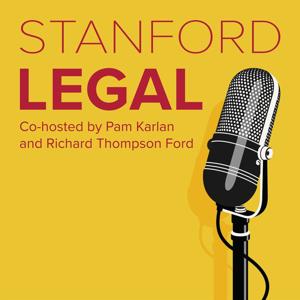

Can the United States arrest a foreign head of state by sending FBI agents—and military troops—into another country? On the latest episode of Stanford Legal, Professor Pam Karlan sits down with international law expert and Stanford Law lecturer Allen Weiner to discuss the recent extraction of Venezuela’s Nicolás Maduro. Their wide-ranging conversation focuses on the uneasy space where U.S. law collides with the constraints of international law.
Weiner, a former U.S. State Department legal adviser and now director of several international law–and humanitarian-focused programs at Stanford Law School, explains how domestic legal theories advanced to justify Operation Absolute Resolve in contrast with the UN Charter’s ban on the use of force. He situates the episode in a longer arc of U.S. efforts to reconcile military action with international legal limits, including earlier debates over actions in Kosovo and Libya.
The legal questions are substantial, but the stakes ultimately turn on precedent and norms: how U.S. actions are understood by other states, what they signal to rivals such as Russia and China, and whether the international system begins to resemble the logic captured in Thucydides’ Peloponnesian Wars—that “the strong do what they can and the weak suffer what they must.”
Links:
Connect:
(00:00) Is a threat a use of force?
(00:16:18) Pressure, coercion, and the non-intervention line
(00:17:02) Venezuela policy and the specter of escalation
(00:28:24) Law, power, and the South China Sea
Hosted by Simplecast, an AdsWizz company. See pcm.adswizz.com for information about our collection and use of personal data for advertising.
 View all episodes
 By Stanford Law School

4.3
4343 ratings
Can the United States arrest a foreign head of state by sending FBI agents—and military troops—into another country? On the latest episode of Stanford Legal, Professor Pam Karlan sits down with international law expert and Stanford Law lecturer Allen Weiner to discuss the recent extraction of Venezuela’s Nicolás Maduro. Their wide-ranging conversation focuses on the uneasy space where U.S. law collides with the constraints of international law.
Weiner, a former U.S. State Department legal adviser and now director of several international law–and humanitarian-focused programs at Stanford Law School, explains how domestic legal theories advanced to justify Operation Absolute Resolve in contrast with the UN Charter’s ban on the use of force. He situates the episode in a longer arc of U.S. efforts to reconcile military action with international legal limits, including earlier debates over actions in Kosovo and Libya.
The legal questions are substantial, but the stakes ultimately turn on precedent and norms: how U.S. actions are understood by other states, what they signal to rivals such as Russia and China, and whether the international system begins to resemble the logic captured in Thucydides’ Peloponnesian Wars—that “the strong do what they can and the weak suffer what they must.”
Links:
Connect:
(00:00) Is a threat a use of force?
(00:16:18) Pressure, coercion, and the non-intervention line
(00:17:02) Venezuela policy and the specter of escalation
(00:28:24) Law, power, and the South China Sea
Hosted by Simplecast, an AdsWizz company. See pcm.adswizz.com for information about our collection and use of personal data for advertising.

32,246 Listeners

6,881 Listeners
4,113 Listeners

3,530 Listeners
379 Listeners
1,110 Listeners
6,304 Listeners

113,121 Listeners
2,380 Listeners
32,354 Listeners

7,244 Listeners

5,576 Listeners

16,525 Listeners

746 Listeners

147 Listeners

632 Listeners