
Sign up to save your podcasts
Or



Travis Thompson is a 5th generation Floridian from Winter Haven, Florida. He’s the Executive Director of the conservation non-profit All Florida, as well as a co-owner of Duck Ranchin’ the state’s largest waterfowl hunting operation. Through his work, he advocates for the things that make Florida special - our woods, water, wildlife, and the way of life that connects us to those things. From spraying to snook fishing, cattle to citrus, Travis and his team are in rooms every day around the state of Florida working on authentic conservation solutions.
Travis has been a huge part of Amendment 2, the Right to Fish and Hunt. I had a lot of questions about this amendment that Travis was gracious enough to answer. If you have more questions after our conversation, Travis makes the invitation to reach out directly to him.
You can learn more about Travis and his work below:
Don’t forget to vote!
Kaylyn, a proud 10th generation Floridian, is deeply connected to the unique landscape of Southwest Florida, near the Western Everglades. Raised barefoot among oak hammocks and cypress tree domes, she inherited a legacy of pioneering ancestors who settled in this region, fueling her passion for protecting this remarkable place.
Overcoming the challenges of teen single motherhood and poverty, Kaylyn has gained invaluable experiences that have shaped her commitment to safeguarding Florida’s natural treasures.
With over a decade of hands-on experience in agriculture, land management across the Southern United States, and invasive species removal, she has become a proactive advocate and spokesperson for the state’s environmental challenges.
Outside of her professional life, Kaylyn enjoys backpacking, exploring new destinations, embarking on historical adventures with her son and family across Florida, and relishing trail rides and hikes with her beloved hound dogs.
Thank you for joining and supporting her on this journey. Together, let’s work to protect
Learn more about Kaylyn and the works she does:
There have been a ton of updates since the last episode about the proposed plan to develop nine Florida state parks. Namely, part of the project proposal has been withdrawn. Great news but the story isn’t over…
Places to follow for most up-to-date news and additional info:
Hey folks! This is a unique call to action to let your voice be heard about the new proposed developments (golf courses, resorts, etc.) inside of our state parks. Listen to the episode and read the article below to learn more about what is being proposed, as well as how to make your voice heard and be involved.
Tampa Bay Times article: https://www.tampabay.com/news/environment/2024/08/20/are-changes-coming-floridas-state-park-system/
Numbers to call:
All meetings are Tuesday, August 27th from 3-4pm ET. Locations and emails are listed below:
Hillsborough River State Park
Honeymoon Island State Park
Oleta River State Park
Jonathan Dickinson State Park
Dr. Von D. Mizell-Eula Johnson State Park
Anastasia State Park, First Coast Technical College
Camp Helen State Park
Topsail Hill Preserve State Park and Grayton Beach State Park
Florida Wildlife Federation info sheet and email template here
To email the governor: https://www.flgov.com/email-the-governor/
Example email:
Subject:
Concern Regarding Development of Golf Courses and Resorts on Environmentally Sensitive Land
Body
Dear Governor DeSantis,
I am writing to express my deep concern regarding the proposed development of golf courses and resorts on environmentally sensitive land within our state parks. Florida's state parks are home to some of the most unique and delicate ecosystems in the world, providing critical habitats for a wide variety of plant and animal species. These hard fought areas are not only essential for biodiversity but also serve as natural buffers against our harsh climate and hurricanes and attract millions of tourists seeking natural settings away from Florida’s bustling roadways and entertainment opportunities.
Developing these lands for commercial purposes threatens to not only disrupt these ecosystems, potentially leading to the loss of endangered species, degradation of water quality, and increased vulnerability to natural disasters, but also the economics that will continue
Moreover, preserving these natural areas is vital for maintaining the ecological balance that supports our state's tourism industry, which relies heavily on the beauty and accessibility of our natural landscapes. While golf courses and resorts may attract short-term economic gains, the long-term environmental costs could far outweigh these benefits. I urge you to consider the lasting impact that such development would have on our state's natural heritage and to seek alternative locations for these projects that do not compromise the integrity of our state parks. Protecting our environment should be a top priority, ensuring that future generations can continue to enjoy and benefit from Florida's natural beauty. In Florida, the environment is the economy.
Sincerely,
[Your Name]
[Your Address]
[City, State, ZIP]
[Email Address]
There are not many folks more central to the idea of a “connected and protected” Florida than Dr. Tom Hoctor. He’s the director of the Center for Landscape Conservation Planning at the University of Florida and is the co-founder of the Florida Wildlife Corridor, considered one of the most ambitious landscape conservation plans in the country.
As we’ll learn, the concept of a statewide ecological corridor is not new. Decades of scientific research has led to the understanding that connected landscape-scale conservation is imperative to the survival of many species and among the best methods of preventing habitat loss and fragmentation.
Before it was called the Florida Wildlife Corridor, this idea of a connected greenspace in the Sunshine state was known as the Florida Ecological Greenways Network,
More info about Dr. Hoctor and links to topics discussed:
Do you have an idea for a guest for the show? Submit guest suggestions here.
I have missed posting an episode for the last couple of months, but the good news is I’m catching up today with three guests at once!
Joining us for a talk about conservation, recreation, and education are the Florida Madcaps, made up of Chelsey and Chris Stevens and Ryan Worthington. They’re three friends who love to volunteer, guide, and educate Floridians on our best natural resources. Although they all do their own form of volunteering and advocacy, they join forces weekly to produce the Florida Madcaps podcast to talk about these topics.
I figured I’d start sharing other podcasts to listen to as they’re more consistent and do a great job sharing new places to explore in wild Florida.
Episode resources:
If you have an idea for a future FU guest, please submit that to our guest suggestion form here.
Hey folks!
The show was recently featured in the Bradenton Herald and we have a lot of new listeners. You can read that article here: ‘Saved or paved.’ Palmetto-based podcast host explores Florida conservation stories
If you have an idea for a future Florida Uncut guest, please fill out this form.
Looking forward to bringing you more stories very soon!
How does the Florida Wildlife Corridor help provide resilience to climate change?
Florida is ground-zero for climate change impacts as our natural and human communities grapple with increasing heat, flooding, sea level rise, and wildfire risk.
In today's episode, we talk with Joshua Daskin, the Director of Conservation at Archbold Biological Station, about a recent assessment with Florida Atlantic University that identified the overlaps between land conservation in the Florida Wildlife Corridor and the resilience of the state's nature and people to advancing climate change. Archbold's conservation program uses the report's results to credibly motivate the Corridor's protection.
At Archbold, Josh works to expand the use of science in conservation of biodiversity and ecosystems. He leads Archbold's conservation strategy, connecting researchers with agencies, landowners, NGOs, and science collaborators to increase the efficiency and effectiveness of conservation actions from Archbold's own 20,000 acres to the statewide Florida Wildlife Corridor and beyond.
Since 2021, he has been a leader of the scientific arm of the campaign to conserve the Corridor.
Josh earned a B.S. in Biology and Environmental Studies from Brandeis University, a M.Sc. in Zoology while a Fulbright Scholar at James Cook University in Australia, and a Ph.D. in Ecology and Evolutionary Biology from Princeton University. Previously, Josh researched the impacts of war on African wildlife and helped reestablish scientific capacity in Gorongosa National Park, Mozambique following the country's civil conflict. He was also a Donnelley Postdoctoral fellow at Yale University, a biologist in the US Fish and Wildlife Service headquarters office, and a research assistant at Archbold.
Articles and links mentioned in the episode:
Craig is a native Floridian and spent over 30 years as a journalist for the Tampa Bay Times. He has authored a half-dozen award-winning books about the wild ideas and quirkiness of our state. Among his publications are Oh Florida!, Cat Tale, The State You're In, and Manatee Insanity.
In 2022, Craig was given the Rachel Carson Award by the Sierra Club, which honors sustained achievement by professional journalists or authors and was also awarded a Florida Literary Legend by the Florida Heritage Book Festival.
Craig is now a columnist for the Florida Phoenix and co-hosts the weekly Welcome to Florida podcast.
https://www.instagram.com/craigpittman78/
https://podcasts.apple.com/us/podcast/welcome-to-florida
Andrew loves exploring the mangroves down in Key Biscayne where he calls home. However, he got sick and tired of seeing trash each time he went out to enjoy wild Florida.
Like many of our guests, Andrew is action-oriented and decided to do something about it. His big plan? Start picking up all the trash. It was that simple.
His impact has grown into dozens of others doing similar work to him, making it their passion to clean south Florida.
Andrew drives awareness in other ways too. He carried a 35-pound bag of mangrove trash (currently in History Miami’s permanent collection) the length of the 2019 Miami Marathon and led a team that hauled a 130-pound trash cart throughout the 2020 Miami Marathon. These efforts raised over $30,500 to protect Miami’s coastal habitats. Andrew has a recurring guest lecture series at the University of Miami, Cornell, Clemson, and local middle and high schools about his adventures in litter.
Andrew has also worked as a research associate at the Harvard Business School, where his 17 academic publications sold over 10,000 copies. He implemented U.S. foreign policy at the State Department. As Mexican President Felipe Calderón’s assistant, he facilitated the decision-making process of one of the world’s highest-level policymakers.
Follow Andrew:
https://www.instagram.com/andrewotazo/?hl=en
Read his book, Miami Creation Myth here: https://miamicreationmyth.com/
From the publisher's feed
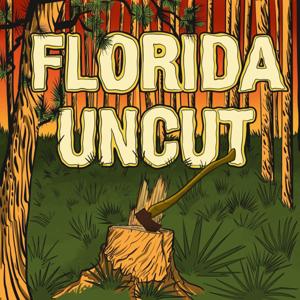
Get ready to explore Florida's vibrant conservation community with Florida Uncut. Each episode is a conversation with the individuals doing the work to protect and connect wild Florida. Whether…
Support Florida Uncut here.
Podcast artwork by the extremely talented @oldfloridavibes.

43,359 Listeners
152,931 Listeners
3,937 Listeners
2,133 Listeners

111,799 Listeners
24,539 Listeners
10,267 Listeners
124 Listeners
2,211 Listeners
15 Listeners
5,631 Listeners
82 Listeners
26,550 Listeners
30 Listeners
9 Listeners