
Sign up to save your podcasts
Or

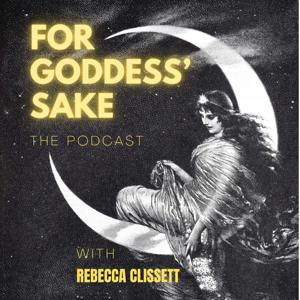


What if the original sin wasn't that Eve ate the forbidden fruit, but that she dared to want something more?
Most of us know the story of Eve. The first woman. The forbidden fruit. The serpent. The fall from the Garden of Eden. The woman who supposedly brought sin, suffering and death into the world.
But have we ever stopped to question the story we've inherited?
In this episode of For Goddess Sake, I'm exploring the story of Eve and the extraordinary influence it has had on how women have been taught to understand themselves.
Because whether or not we identify as religious, the cultural legacy of Eve is much bigger than Christianity. Her story has helped shape centuries of ideas about female sexuality, appetite, intelligence, morality and power.
I call this Eve Programming: the inherited conditioning that tells women they are somehow too much, not enough, inherently flawed and in need of male authority.
We explore how interpretations of the biblical creation story became used to justify women's subordination, how Eve became associated with temptation and original sin, and how these ideas were carried forward through centuries of religious and cultural narratives.
From Augustine of Hippo to the infamous Malleus Maleficarum (The Hammer of Witches), we look at how women were simultaneously portrayed as weak and easily deceived, yet dangerously powerful and capable of leading men astray.
And, more importantly, we look at how this programming continues to show up in modern women's lives.
But what if we looked at Eve differently?
What if the forbidden fruit represented knowledge, curiosity and the desire to experience life beyond the boundaries imposed upon us? What if her story could be understood as one of awakening rather than disobedience?
Perhaps it's time to revisit the stories we've been told about women, question who wrote them and consider what might happen if we looked at history, mythology and religion through a female lens.
This is the work at the heart of Sub Rosa, my six-month journey into the mysteries, histories and reclamation of the feminine.
Because perhaps the original sin was never a woman who wanted more. Perhaps it was the idea that women should never be allowed to want more in the first place.
In this episode, we explore:
Some questions to sit with:
Explore Sub Rosa
Sub Rosa is a six-month journey into feminine reclamation, exploring the women, stories, archetypes and ancient mysteries that have been demonised, distorted or written out of history.
We'll explore figures including Eve, Lilith, Mary Magdalene and Sophia, looking at history, mythology, religion and ancient traditions through a female lens.
This isn't about telling you what to believe. It's about questioning what you've been taught and making space for different stories.
Discover Sub Rosa here:
https://subrosa.therosealmanac.com/-01
Keywords:
Eve Programming, story of Eve, Garden of Eden, original sin, Eve and Adam, history of women, patriarchy, female oppression, Christian theology, women's sexuality, feminine power, sacred feminine, women's history, feminine reclamation.
Stay connected:
📷 Instagram: @therosealmanac
✍️ Read more on Substack: For Goddess Sake
🌹 Explore readings, offerings & more: www.therosealmanac.com
What happens when you actually read one of history's most infamous books on witchcraft?
In this episode, I'm diving into the Malleus Maleficarum, or The Hammer of Witches, a 15th-century text that attempted to establish a theological and legal justification for identifying, interrogating and prosecuting witches.
Published in 1487 by Dominican inquisitor Heinrich Kramer, it's one of the most notorious books in the history of European witch-hunting. And having finally sat down and read it in full, I have quite a lot to say about it!
A little disclaimer lol, I've managed to slightly mispronounce the title of the book we're discussing throughout this entire episode. It's the Malleus Maleficarum, not the Malleus Maleficarium. I've read the whole thing, but apparently saying the title out loud was too much. My excuse is I did have a cold!
What struck me wasn't just the extraordinary beliefs about witches, demons and supernatural powers, but the underlying attitude towards women that runs throughout the text.
Women are described as intellectually inferior, spiritually weaker, sexually insatiable, deceptive and more susceptible to the Devil. Their sexuality is dangerous, their appearance is vanity, their spiritual sensitivity is a weakness and their knowledge of the reproductive body is potentially demonic.
And yet, apparently, these same women are powerful enough to manipulate men's minds, destroy their sexual potency and interfere with the natural order.
There's quite a contradiction there.
In this episode, we're exploring:
Because this Is more than a strange old book. It's about the stories, institutions and beliefs that helped shape our understanding of what it means to be a woman.
And perhaps more importantly, how many of those stories are we still carrying?
SUB ROSA | RECLAIM THE STORIES. RECLAIM YOURSELF.
This is exactly the kind of history we're exploring inside Sub Rosa, my six-month Mystery School.
We'll delve into the women of the Rose, their forgotten and distorted stories, the teachings that were lost or rewritten, and how the narratives we've inherited have shaped not only our collective history but our own personal stories.
It's time to question what we've been taught, look at the stories we've inherited and consider what becomes possible when we start telling them differently.
We begin in February 2027, and there's currently an early bird offer available.
Find out more about Sub Rosa here: https://subrosa.therosealmanac.com/
For Goddess Sake, if you aren't doing things that would have got you named as a witch by the Malleus Maleficarum, what are you even doing?
Stay connected:
📷 Instagram: @therosealmanac
✍️ Read more on Substack: For Goddess Sake
🌹 Explore readings, offerings & more: www.therosealmanac.com
In this episode I share my experience of losing the Instagram account for For Goddess Sake, the unexpected feelings of shame that came with it, and the questions it raised about visibility, self-expression and the power we give to external validation.
What does it mean when we feel judged or silenced? How do we distinguish between genuinely reflecting on our actions and internalising the belief that there is something wrong with us? And how can we continue to speak, create and share our ideas without allowing the fear of rejection to make us smaller?
I also explore the importance of supporting other women in their work. What does sisterhood look like in practice? How can we create space for women to express themselves, explore challenging ideas and develop their work, even when we don't necessarily agree with everything they say?
I share how my personal astrology was reflective of what was playing out and reflect on the symbolism of Venus, Mercury and Uranus in Scorpio, exploring themes of visibility, disruption, loss and transformation.
Ultimately, this experience has brought me back to a bigger question: what does it mean to reclaim our voices, and how do we support other women in doing the same?
Explore Thirteen
These questions of shame, silencing, feminine power and reclamation connect deeply with Thirteen, my free experience exploring the history, symbolism and feminine significance of this much-misunderstood number.
Thirteen has long been associated with bad luck, fear and superstition. But what happens when we look beneath those stories and explore what the number might reveal about the feminine, cycles of transformation and the narratives we have inherited?
Join me for Thirteen on 13 November (or receive the replay if you can't make it live) as we explore the number beyond the superstition and begin reclaiming its meaning.
Join the free experience here: https://thirteen.therosealmanac.com/-01
Because reclaiming our voices begins when we stop allowing shame, fear or external judgement to decide whether we deserve to be heard.
Stay connected:
📷 Instagram: @therosealmanac
✍️ Read more on Substack: For Goddess Sake
🌹 Explore readings, offerings & more: www.therosealmanac.com
Why is thirteen considered unlucky? And what if the number we've been taught to fear is actually a symbol of feminine power, lunar wisdom and transformation?
In this episode of For Goddess Sake, we're exploring the mysterious history of thirteen, from ancient lunar symbolism and the Venus of Laussel to Friday the 13th, Mary Magdalene, the Knights Templar and the witches who were said to gather in covens of thirteen.
We look at the relationship between thirteen and the lunar cycle, the symbolism of the number in women's lives, and how stories about bad luck, betrayal and danger have become attached to a number that once held acvery differentcsaxred meanings.
We'll explore the goddess associations of Friday, the story of the thirteenth guest at the Last Supper, the symbolism of the Death card in tarot, and the historical events that helped shape our modern understanding of Friday the 13th.
Along the way, we'll ask a bigger question: what have we been taught to fear, hide or distrust about our own womanhood?
And if this episode sparks something in you, I'd love you to join me for Thirteen, my free online ceremony on Friday 13th November. We'll journey deeper into the mysteries of thirteen, explore Mary Magdalene and the symbolism of M, and gather in sacred space to reconnect with the feminine.
In this episode, we explore:
Join me for Thirteen
Friday 13th November 2026 | 10am UK time | Online and completely free
Bring a candle, a journal and a pen. If you can't attend live, you can still register to receive the replay, even after the event.
Register here: https://thirteen.therosealmanac.com/-01
If this episode resonated with you, please share it with a woman who might need to hear it, and leave a review to help more people discover For Goddess Sake.
Until next time, reclaim the number of the feminine.
Stay connected:
📷 Instagram: @therosealmanac
✍️ Read more on Substack: For Goddess Sake
🌹 Explore readings, offerings & more: www.therosealmanac.com
The leaves are falling, the nights are drawing in, and we're approaching one of the most mysterious thresholds of the year. But beneath the pumpkins, costumes and commercialised spectacle of Halloween lies a much older story, one woven through ancestral memory, Gaelic folklore, powerful feminine figures and the turning towards winter.
In this episode we're exploring Samhain, its relationship with All Hallows' Eve and Halloween, and the traditions that have survived centuries of religious change, cultural suppression and reinvention.
We'll meet the Cailleach, the ancient Hag of Winter: a formidable feminine force who shapes mountains, brings storms and rules the dark half of the year. Far removed from the sanitised, eternally youthful goddess we're often presented with in modern spirituality, she invites us to reconsider what feminine power looks like beyond youth, fertility and beauty.
We'll also explore the women who stood at the thresholds of life and death, the keening women who voiced the grief of their communities, the wise women who carried healing knowledge, and the powerful female figures of early Irish tradition whose stories have survived in medieval literature and folklore.
And then there's Halloween itself. How did a collection of British and Irish folk customs cross the Atlantic, become commercialised in America, and eventually return to us dressed as something entirely new? Along the way, we'll untangle some popular myths about Samhain, explore the real history of the so-called ancient Celtic 'dumb supper', and consider what happens when traditions are lost, renamed, absorbed and reinvented.
Finally, we'll turn to Scorpio season and the invitation to descend into the dark: to remember our ancestors without idealising them, to acknowledge both the gifts and the wounds we've inherited, and to ask what we want to carry forward.
Because Samhain isn't simply about honouring the dead. It's about recognising that we are ancestors in the making.
In this episode, we explore:
Stay connected:
📷 Instagram: @therosealmanac
✍️ Read more on Substack: For Goddess Sake
🌹 Explore readings, offerings & more: www.therosealmanac.com
What if blood is more than biology? What if its connection to life, the soul and the sacred reveals something about how our ancestors understood the human body and the feminine?
Welcome back to For Goddess Sake, where we follow the threads of history, mythology, spirituality and the feminine to explore the stories beneath the stories.
In this episode, we're going down a fascinating rabbit hole into the symbolism of blood.
We begin with a powerful phrase from the Hebrew Bible: “For the blood is the life.” What did this mean in its original religious context? And how have mystics explored the relationship between blood, life and the soul?
From there, we venture into the mystical symbolism of the Shekhinah, the indwelling Divine Presence, associated with feminine imagery in Kabbalah and explore how blood, the body and the sacred have been understood across different traditions.
We also confront the complicated history of menstrual blood. Why has something so intimately connected with the creation of life been surrounded by ideas of taboo, impurity and shame? What happens when we look beyond those inherited narratives and reconsider the relationship between women's bodies and the sacred?
Then we turn to another ancient substance: oil.
From sacred anointing rituals in the Hebrew Bible to the fragrant spices carried by the women who came to Jesus' tomb, we explore the symbolism of oil, myrrh, the body and the threshold between death and resurrection.
And this brings us to Mary Magdalene.
Honoured in mystical Christianity as one of the Myrrhbearers, Mary Magdalene occupies a central place in the story of Jesus' death and resurrection. We explore the women who remained present with the body, the traditions connecting Mary Magdalene with Provence, and the mystery surrounding Sara-la-Kali, venerated in the south of France.
In this episode, we explore:
A question to reflect on:
What stories have you inherited about your body? And what might change if you began to see it not as separate from your spiritual life, but as a place where you experience the sacred?
If this episode sends you down a few rabbit holes of your own, come and find me on Instagram and tell me what you've been exploring.
And if you feel called to go deeper into the mysteries, forgotten stories and reclamation of the feminine, I'd love to invite you into Sub Rosa, my six-month journey into feminine reclamation. Find out more here https://subrosa.therosealmanac.com/-01
Until next time, stay curious, question the stories you've been told, and remember: there's usually more to the story.
Subscribe to my podcast and come down the rabbit hole with me next time.
Stay connected:
📷 Instagram: @therosealmanac
✍️ Read more on Substack: For Goddess Sake
🌹 Explore readings, offerings & more: www.therosealmanac.com
Before we think of salt as something we sprinkle on our food, we might want to ask what it meant to the ancient world, and what it might reveal about our relationship with the sacred. This episode begins with a familiar phrase, ‘the salt of the earth’, where it comes from and follows it into a much deeper exploration of alchemy, the feminine and the sacred body.
In this episode of For Goddess Sake, Rebecca goes down rabbit hole that connects the words of Jesus, the alchemical symbolism of salt, the planet Venus, the sea and Mary Magdalene. Drawing on Nancy Qualls-Corbett’s The Sacred Prostitute: Eternal Aspect of the Feminine, she explores a fascinating symbolic connection between salt and Venus, and what it might mean to understand the material world through the lens of the sacred feminine.
This episode explores salt not simply as a substance that preserves and seasons, but as a symbol of the body and the material world. Through the alchemical tradition of Paracelsus, Rebecca looks at the three principles of salt, sulphur and mercury, and the relationship between body, soul and spirit. She asks why spiritual awakening is so often framed as a process of rising above the physical, and what becomes possible when we begin to see the body not as an obstacle to spiritual experience, but as the vessel through which we experience life itself.
From there, the conversation moves into Venus, the feminine and the alchemical process of transformation. Rebecca explores the symbolic relationship between the Venus sign, copper and salt, asking why the qualities traditionally associated with the feminine like care, nourishment, receptivity, embodiment and the sustaining of life — have so often been treated as secondary to power, productivity and control.
And then we go deeper still, into the sea. Into primordial waters, creation stories and the mystery of what lies beneath the surface. Rebecca explores the symbolic associations between Mary, the sea and the divine feminine, including the image of Stella Maris, the Star of the Sea, and its connections with Mary Magdalene and the Virgin Mary.
We arefollowing the threads, asking different questions and noticing what emerges when we bring ideas into relationship with one another.
What if reclaiming the feminine begins with reclaiming the body, the earth and the things that sustain life?
And what if losing our saltiness is what happens when we forget how to care?
What You'll Learn in This Episode
If this episode stirred something in you, Sub Rosa is now open for enrolment. It's a six-month mystery school initiation journey with a difference, where we enter the mystery together. We begin in February 2027 with the solar eclipse in Aquarius. https://subrosa.therosealmanac.com/-01
Stay connected:
📷 Instagram: @therosealmanac
✍️ Read more on Substack: For Goddess Sake
🌹 Explore readings, offerings & more: www.therosealmanac.com
When you hear the words "mystery school", what do you picture? This episode asks how we got from one to the other, and what happened to the feminine along the way.
In Episode 8 of For Goddess Sake, Rebecca explores what the ancient mystery schools actually were. They weren't religions you believed in. They were initiations you went through. The "mystery" was never really a secret in the modern sense. It was something you had to experience to understand. From the Eleusinian Mysteries of Demeter and Persephone to the cult of Isis, which spread right across the Roman world, Rebecca looks at the traditions where women were initiates and priestesses, and at the women-only rites, like the Thesmophoria and the Bona Dea, that men were forbidden to witness.
She then turns to two women you might not expect in an episode about mystery schools: Mother Mary and Mary Magdalene. Many of us switch off at the mention of "biblical women". But these women were never really the Church's. The Church wrote about them, and then wrote over them. Rebecca looks at the early text in which Mary Mother of Jesus is raised in the Temple and learns the secrets of life and death, at Mary Magdalene's role as myrrh-bearer.
From there, the episode follows the idea of hidden wisdom through the Renaissance fascination with Egypt and Hermeticism, to the founding of modern Freemasonry: a brotherhood with initiation, degrees, ritual and secrets, and no women in the room. Along the way, the feminine turns from something embodied into something different: the muse, the Madonna, the femme fatale.
What You'll Learn in This Episode
If this episode stirred something in you, Sub Rosa is now open for enrolment. It's a six-month mystery school initiation journey with a difference, where we enter the mystery together. We begin in February 2027 with the solar eclipse in Aquarius. https://subrosa.therosealmanac.com/-01
Stay connected:
📷 Instagram: @therosealmanac
✍️ Read more on Substack: For Goddess Sake
🌹 Explore readings, offerings & more: www.therosealmanac.com
What if history isn't a straight line but a wheel? This episode explores the Yuga cycles, the Age of Aquarius, and why the rise of the divine feminine may be the key to humanity's ascent.
We're raised to believe time is linear: primitive, then civilised, then us, with later always meaning better. In Episode 7 of For Goddess Sake, Rebecca questions that story, starting with a simple but radical point: history isn't the past, it's what survived of the past, and it was overwhelmingly written by men. If women's lives could be left out of the archive, what else might we have got wrong about the story of civilisation?
From there, Rebecca takes us into one of the most sophisticated models of cyclical time ever created: the Yugas of ancient India. Drawing on Sri Yukteswar's The Holy Science, she walks through the great wheel, from Satya Yuga, the Golden Age of truth, down through the Silver and Bronze Ages to Kali Yuga, the Dark Age of forgetting, and back up again. She explores the yogic image of dharma as a bull that loses a leg in each age, why so many religions were born on the descent, and why some of the brightest lights, from Jesus to Mary Magdalene, appeared in the darkest times.
Rebecca then brings in her astrologer's lens: the precession of the equinoxes, the Great Year, and what happens when you lay the zodiac over the Yuga wheel. She unpacks the shift from the Age of Pisces to the Age of Aquarius, from believing to knowing, and explains why Aquarius is far more disruptive than the peace-and-love version suggests.
Underneath it all is the question Rebecca keeps returning to: if the descent was a forgetting, what does remembering look like? She makes the case that the desecration of the feminine, the Earth, and the body are symptoms of the same forgetting. She argues that yoga is a technology of remembering. And she argues that valuing what has been missing, the feminine in all of us, is the biggest piece of the climb back up.
What You'll Learn in This Episode
Also referenced in this episode:
Substack article with diagram: https://forgoddesssake.substack.com/p/what-if-time-isnt-a-straight-line?r=91722k
Dolores Canon: https://www.youtube.com/watch?v=M1LiK7T0L2E
An invitation into Sub Rosa, Rebecca's new six-month mystery school for reclaiming the feminine archetypes open for enrolment for a Feb 2027 start: https://subrosa.therosealmanac.com/-01
Stay connected:
📷 Instagram: @therosealmanac
✍️ Read more on Substack: For Goddess Sake
🌹 Explore readings, offerings & more: www.therosealmanac.com
Before astrology was a horoscope in a magazine, it was a way of understanding our place within the cosmos. This episode explores ‘as above, so below’, the ego, synchronicity, and the possibility that the universe isn't a collection of disconnected events at all, but a web of patterns we are already part of.
In Episode 6 of For Goddess Sake, Rebecca goes beneath the surface of astrology to ask a much bigger question: how does astrology actually work? She explores why astrology can be so confronting to the ego, particularly our deeply held belief that we are separate individuals who are completely in control of our own lives. Because astrology asks us to look up and consider that we are part of something much bigger: planetary cycles, lunar rhythms, seasons and patterns that existed long before we did.
This episode moves between ancient philosophy, psychology, archetypal astrology and some of the theories that have been proposed to explain our relationship with the cosmos. Rebecca explores the Hermetic principle ‘as above, so below’, Carl Jung's theory of synchronicity, the zodiac as one whole expressed through twelve archetypal principles, planetary cycles as a kind of ‘cosmic clock’, and even ideas around quantum entanglement and neutrinos. Rather than arguing for one single mechanism, she explores the possibility that different theories may simply be describing different aspects of the same underlying relationship.
Rebecca also breaks down the zodiac as a cycle of consciousness, moving from Aries and emergence through to Pisces and dissolution, and explains how the four elements and three modes create the twelve signs. Rather than reducing ourselves to ‘I'm a Leo’ or ‘I'm a Pisces’, she explores the idea that we contain all twelve archetypes, each representing a different movement within the larger cycle of life.
Underneath it all is a bigger question: what happens when we stop seeing ourselves as separate from the universe and start recognising ourselves as an expression of it?
Because perhaps astrology isn't about the planets causing things to happen to us.
Perhaps it's about learning to recognise the patterns that are already there.
What You'll Learn in This Episode
Stay connected:
📷 Instagram: @therosealmanac
✍️ Read more on Substack: For Goddess Sake
🌹 Explore readings, offerings & more: www.therosealmanac.com