
Sign up to save your podcasts
Or

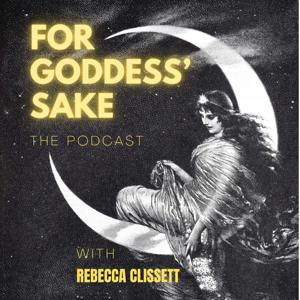


Before clocks, before calendars, there was the moon. This episode explores lunar timekeeping, moon cycles, and why time itself used to be feminine.
Before solar calendars standardized time into something a centralized authority could issue and control, the moon was humanity's original clock. In Episode 5 of For Goddess Sake, Rebecca traces how lunar cycles governed everything from ancient calendars (the word "month" literally comes from "moon") to coral spawning on the Great Barrier Reef, to lion hunting patterns in Tanzania and makes the case that the shift from lunar to solar time wasn't just a technical upgrade. It was a shift from a communal, visible, feminine-coded rhythm to a linear, authority-controlled one.
This episode moves fluidly between mythology, hard science, and astrology. Rebecca covers moon goddesses like Selene, Artemis, and Hecate; the peer-reviewed research showing moonlight measurably alters plant gene expression; and the ongoing (if weakening) research linking women's menstrual cycles to the lunar cycle, weakening, she argues, likely due to artificial light disrupting our ability to sense the moon at all. She also breaks down how to actually work with the moon: dark moon rest, new moon intention-setting, full moon culmination, and the elemental quality of the moon's zodiac sign (water, fire, earth, air) as a tool for understanding your own emotional weather.
Underneath it all is a bigger question Rebecca keeps returning to: what would it look like to build a world that centers the moon's territory of nurturing, mothering, rest, cyclical time, instead of treating it as an afterthought to sun-coded achievement and growth?
What You'll Learn in This Episode
An invitation into Sub Rosa, Rebecca's new six-month mystery school for reclaiming the feminine archetypes open for enrolment for a Feb 2027 start: https://subrosa.therosealmanac.com/-01
Stay connected:
📷 Instagram: @therosealmanac
✍️ Read more on Substack: For Goddess Sake
🌹 Explore readings, offerings & more: www.therosealmanac.com
From revered goddess to executed witch, this episode traces how the feminine wisdom holder was edited, managed, then cast out. And why she's returning now.
Episode Summary
Across history, there's a pattern that keeps repeating: a woman holds sacred knowledge, attains power and reverence, and then, gradually, she is diminished, managed, and cast out. In Episode 4 of For Goddess Sake, Rebecca traces that pattern through three archetypes: the goddess, the priestess, and the witch, and reveals how each one represents the same feminine wisdom, just further and further from the center of society.
Rebecca opens by showing how goddess worship and patriarchy weren't sequential, they overlapped. Powerful goddesses like Athena, Artemis, and the Vestal cult didn't disappear under patriarchal rule; they were edited, stripped of maternal and sexual autonomy, or paired with a more powerful male god as consort. She contrasts this with Hindu Shakti traditions, where the goddess is the supreme, unmediated source of power, and asks why that still didn't guarantee real-world power for actual women.
From there, the episode moves to the priestess, women like the Vestal Virgins and the Oracle at Delphi, who held genuine institutional authority, but only on condition of surrendering their bodily autonomy. And finally, to the witch. The wise women, midwives, and healers pushed to the edges of the village, stripped of official sanction, and ultimately targeted in the witch trials, where an estimated 40,000–60,000 people, overwhelmingly women, were executed. Rebecca connects this directly to the "old wives' tale," the rise of industrialised (and eventually Big Pharma) medicine, and why so many women today still feel embarrassed to admit they read tarot or believe in the moon.
What You'll Learn in This Episode
If you loved this episode sign up for Sub Rosa, a mystery school initiation journey with a difference open for enrolment for a Feb 2027 start: https://subrosa.therosealmanac.com/-01
Stay connected:
📷 Instagram: @therosealmanac
✍️ Read more on Substack: For Goddess Sake
🌹 Explore readings, offerings & more: www.therosealmanac.com
Christianity & the Distortion & Erasure of Women: Eve, Mother Mary & Mary Magdalene
"There are no girl parts to play." That's what Rebecca's daughter Zoe said about her school's Easter play, and it sparked the walk-to-school conversation that this whole podcast (and Rebecca's in progress book) was born from.
In Episode 3 of For Goddess Sake, Rebecca takes on Christianity directly, as the operating system underneath modern Western society, whether you set foot in a church or not.
Starting with Eve, who was the template patriarchy built every subsequent "difficult woman" from, Rebecca traces how women's near-total absence from Scripture wasn't proof they didn't matter, but proof of who was holding the pen. She unpacks the real, largely untold picture of Jesus's ministry: one that was structurally and financially built on the backs of independent women. Then she goes deep on the two women history split the feminine into. The impossibly pure Virgin Mary, and Mary Magdalene, whose reputation was rewritten by a 6th-century Pope and only officially corrected by the Vatican in 1969 and further in 2016.
This episode makes the case that the "Virgin and the Fallen Woman" isn't ancient history, it's a sorting mechanism still running underneath purity culture, the trad wife movement, and the instinct to doubt women's testimony today. It closes with an invitation into Rebecca's new offering, Sub Rosa, a six-month mystery school journey into the feminine archetypes.
What You'll Learn in This Episode
Stay connected:
📷 Instagram: @therosealmanac
✍️ Read more on Substack: For Goddess Sake
🌹 Explore readings, offerings & more: www.therosealmanac.com
Before Adam and Eve, before land ownership, women were revered as sacred. This episode traces goddess culture, matriarchy, and how patriarchy actually began.
Episode Summary
Picture a cave wall lit by firelight and carved into the stone, is a woman's body: full-hipped, full-breasted, faceless. She is not a portrait of any one woman, but a symbol, representing all women. Archaeologists have pulled thousands of these carvings and goddess figurines from the ground across Europe and the Near East, some over 20,000 years old, long before Adam and Eve, long before humanity needed a story explaining why women were "less than."
In Episode 2 of For Goddess Sake, Rebecca goes back before the fences, before agriculture, before land ownership, before inheritance, to a time when the feminine was revered as a matter of plain observation, not belief. Women bled on a cyclical rhythm and didn't die. Women birthed life from their own bodies with no explanation available except that it looked like magic. Women's bodies mirrored the Earth itself: fertile, cyclical, capable of producing life and abundance. Reverence for the feminine wasn't a fight anyone had to win, it simply was.
So what changed? This episode traces a compelling, non-conspiratorial theory: the shift from foraging to farming introduced something entirely new. Ownership and with it, the problem of paternity certainty. Rebecca walks through how marriage, chastity culture, seclusion, and the double standards around infidelity weren't invented out of malice, but engineered to solve one specific anxiety: knowing whose bloodline a child belonged to. From there, she traces how that same logic of ownership and control expanded into capitalism, colonisation, and the erasure of goddess traditions and healers, and why, now, the goddess is making her way back.
What You'll Learn in This Episode
Stay connected:
📷 Instagram: @therosealmanac
✍️ Read more on Substack: For Goddess Sake
🌹 Explore readings, offerings & more: www.therosealmanac.com
For Goddess Sake Podcast | Episode 1 The brain the patriarchy told you to ignore.
Ever known something you couldn't explain? In Ep. 1 of For Goddess Sake, Rebecca unpacks the "goddess brain", your intuition, and why we stopped trusting it.
Episode Summary
Have you ever known something you couldn't explain, maybe a gut feeling, a 3.33am flash of insight, a knowing in your body that logic couldn't back up? In this founding episode of For Goddess Sake, host Rebecca introduces the concept of the goddess brain: the intuitive, symbolic, pattern-reading intelligence that humans relied on for most of our history, and that women, in particular, have carried forward through generations of mothering, healing, and survival.
This episode lays the philosophical foundation for the whole show. Rebecca traces how logos (logical, linear, "prove it", evidence needed thinking) was gradually crowned the only legitimate way of knowing, and how that shift ran parallel to the suppression of women's authority, from midwives and healers to astrologers and so-called witches. She explores the difference between masculine and feminine energetics (not gender), why ancient cultures across the globe. From Egypt to the Vedic tradition to Siberian shamanism, independently developed rituals to quiet the logical mind and access deeper intuitive knowing, and why the modern meditation and wellness boom might actually be a mass reawakening of exactly that.
Expect goddess culture, brain science, astrology's forgotten roots in mathematics, and a compelling case for why it's time to stop apologising for how you know what you know.
What You'll Learn in This Episode
Stay connected:
📷 Instagram: @therosealmanac
✍️ Read more on Substack: For Goddess Sake
🌹 Explore readings, offerings & more: www.therosealmanac.com