
Sign up to save your podcasts
Or

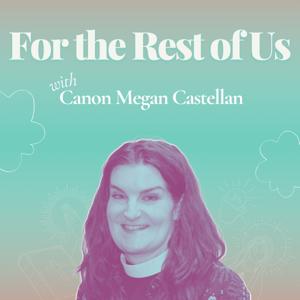


This episode, Megan and Adam take on one of the most misunderstood—and most emotionally charged—ideas in Christianity: the Virgin Birth.
Together, they unpack what the doctrine actually claims, what it doesn’t claim, and why it’s often tangled up with purity culture in ways that do far more harm than good. Along the way, they clarify the very common confusion between the virgin birth and the Immaculate Conception (spoiler: those are not the same thing), explore why Matthew and Luke tell the story differently, and talk about what these birth narratives are really trying to say about who Jesus is.
Rather than treating the virgin birth as a biological puzzle to be solved, Megan and Adam invite listeners to see it as a theological story about identity, dignity, and God showing up in unexpected ways—especially through the body and agency of a woman. The episode also makes space to name how these stories have been misused, particularly when they’re read through the lens of shame or control.
And because this is For The Rest Of Us, the conversation wraps up with something appropriately seasonal and human: favorite Christmas songs.
As always, thanks for listening to For The Rest Of Us. Make sure to leave us a rating and review, and share with a friend.
In a special crossover episode, Megan and Adam are joined by the Rev. Robyn King and the Rev. Stephanie Shockley, hosts of the podcast The Accessible Altar, for a rich and necessary conversation about faith, disability, and what the church gets wrong—and right—when it comes to inclusion.
Together, they explore how disability is often misunderstood in Christian spaces, why the church tends to default to charity instead of solidarity, and how scripture, theology, and lived experience can help us imagine something better. Robyn and Stephanie share how The Accessible Altar was born out of real conversations, real frustrations, and real hope for a church that actually means it when it says all are welcome and people are not problems.
This episode isn’t about quick fixes or easy answers—it’s about listening, learning new language, rethinking old assumptions, and making room at the altar for voices that have too often been sidelined.
If you’ve ever wondered how faith communities can move from “helping” to belonging, this conversation is for you.
🔗 Learn More
You can learn more about The Accessible Altar and their work at https://accessiblealtar.com/
And listen to The Accessible Altar podcast everywhere you already get podcasts—go subscribe and join the conversation.
As always, thanks for listening to For The Rest Of Us. If this episode stretched you, challenged you, or gave you new language—share it with someone who needs it.
In this cozy-yet-apocalyptic episode, Megan and Adam dive into the season of Advent: that beautiful, purple (or maybe dark blue) draped moment in the church year when we are somehow preparing for a baby and the end of the world at the same time. No pressure.
They explore the history of Advent, the liturgical rhythms that shape it, and how this season asks us to acknowledge both the brokenness of the world and the stubborn hope that refuses to quit. Along the way, Megan and Adam unpack the spirituality of waiting, the communal practices that make Advent feel grounding, and the charming particularity of family traditions that make the season… well, seasonal.
They wrap things up pondering the question absolutely nobody asked but everyone apparently needs to answer: what does Advent smell like?
So grab your figgy pudding and enjoy Advent… for the rest of us!
In Part 3 of our series on Apartheid & Christianity in South Africa, Megan and Adam explore the Anglican Church's response to apartheid in South Africa, focusing on the historical context, the role of different churches, and expand on the significant influence of Desmond Tutu. The discussion highlights the church's opposition to apartheid, Tutu's theological insights, and the call for action against injustice, emphasizing hope and the belief in God's ultimate justice.
In Part II in our multi-episode series on Apartheid & Christianity in South Africa, Megan and Adam explore the significant role of the Dutch Reform Church in South Africa, particularly during the apartheid era. It highlights the church's mainstream influence and its connections to political figures, emphasizing its importance in shaping societal norms and policies. They also introduce the importance of Desmond Tutu in the work of confronting apartheid and his role in bringing change to the people and the church in South Africa.
In this episode, Megan and Adam delve into the historical roots of apartheid in South Africa, exploring the colonial influences, the role of the Dutch Reformed Church, and the impact of the Boer Wars. They discuss how the Afrikaners developed a narrative of victimhood and divine destiny, which shaped their identity and justified the oppressive system of apartheid. The conversation draws parallels between historical and contemporary narratives of oppression, emphasizing the importance of understanding these dynamics in today's context.
In this spooktacular episode, Canon Megan and Adam dig into the surprisingly Christian roots of Halloween — yes, you heard that right. They trace how trick-or-treating, costumes, and remembering the dead all connect to ancient church traditions like All Saints Day and All Souls Day.
From the sweetness of candy to the solemnity of candles for the departed, Adam and Megan explore how grief, joy, and community come together this time of year. They talk about why the church has always borrowed from culture (hello, pumpkins!) and how honoring the saints and souls can actually deepen our faith — and maybe even make Halloween a little holier.
So grab a fun-sized Snickers, light a candle, and join the conversation about why being a little spooky can be very sacred.
In this episode, Canon Megan and Adam get a little uncomfortable and talk about one of the church’s more delicate subjects—money. They explore how the American church built its financial foundation, from the days of land grants and pew rents to modern pledge drives and stewardship campaigns. Along the way, they uncover some of the stranger and darker corners of church history, including ties to slavery and the role of wealth in shaping who sat where on Sunday morning.
Megan and Adam talk about how money has always been more than just a budget line—it’s a moral mirror for the church. The conversation wrestles with what it means to be transparent, responsible, and faithful with resources today, all while keeping a sense of humor about the fact that, yes, the church has always been talking about money.
In this episode, Megan and Adam take on the often uncomfortable topic of evangelism in the Episcopal Church. They talk about why the word makes so many Episcopalians squirm, explore its historical baggage, and reimagine what it could look like when approached with authenticity and love.
Megan and Adam also discuss how sharing faith isn’t about coercion or conversion—it’s about embodying the good news through how we live, speak, and care for others.
Takeaways:
Here's a chance for us to reclaim the language of Christianity and maybe even make it a little weird again.
What’s really happening when someone is baptized? In this episode, Canon Megan and Adam take a deep dive into one of the most central sacraments of the Christian faith: baptism.
They explore where baptism comes from—starting with Jewish purification rituals—and how it grew into a practice that marks new life, identity, and belonging in Christ. Along the way, they unpack the baptismal covenant, the tension between infant baptism and believers’ baptism, and the role of the whole community in supporting the baptized.
With humor, personal stories, and theological insight, Megan and Adam remind us that baptism isn’t just about what happens at the font—it’s about how we live out God’s grace every single day.
What You’ll Walk Away With
If you’ve ever wondered what baptism means in the Episcopal tradition—or why it matters so much—this episode offers both clarity and inspiration.
From the publisher's feed

90,560 Listeners

171,939 Listeners

57,657 Listeners

109 Listeners
102 Listeners
17 Listeners
7 Listeners