
Sign up to save your podcasts
Or

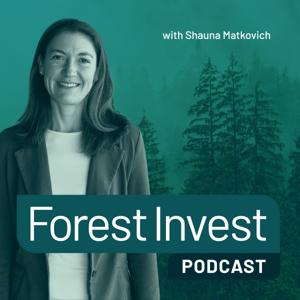


In this episode, Shauna is interviewed by Matthew Kristoff of the Your Forest Podcast. In this conversation, they talk about what it means to invest in forests today – starting with the basics. Can individuals invest in forests? What is the traditional timberland investment model, and why doesn't it fit in most of Canada? Shauna shares insights on how timber remains a key driver of forest investment returns, but that new investors are approaching the asset class as part of a broader strategy that also values biodiversity, carbon, and cultural outcomes. They explore how investors can begin to account for forest benefits that have historically been valued existentially rather than financially, from climate resilience to community well-being. The discussion touches on practical pathways for finance—such as Indigenous partnerships, accessing secondary markets like biomass for bioenergy, and fire risk mitigation—that could open new pathways for forest investment in Canada.
The ForestLink newsletter signup
Your Forest Podcast
[00:11] Introduction by Shauna – framing forest investment basics
[02:32] Matthew opens – news about the podcast winding down
[04:55] Introducing guest Shauna Matkovich and The Forest Link
[15:56] Putting a value on biodiversity and carbon
[22:06] How timberland investment began and pension fund role
[29:42] Beyond carbon credits – biodiversity and risk reduction strategies
[33:44] Partnerships and aligning different capital objectives
[37:12] Timber, biodiversity, and investor–manager roles
[42:03] KPIs and impact pathways for investors
[44:28] Linking financial and ecological objectives
[52:58] Public vs private land investment opportunities
[01:17:51] Spectrum of investors – safe returns vs impact
[01:24:00] How forest investment might change management in 30–50 years
[01:31:44] Final reflections – facilitators of change and investor roles
[01:33:01] Closing thanks and outro
Founding Director and Host: Shauna Matkovich - The ForestLink
Producer and Editor: Magdalena Laas - Unscripted Creatives
Nature by MaxKoMusic/Soundcloud
Sopwell Woodlands and Scohaboy Bog SAC, Cloughjordan, Co Tipperary, IRELAND by wild_rumpus/Soundcloud
Ambient Documentary by Sound Guru (Pixabay)
Sign up now for the ForestLink’s newsletter, where you’ll receive technical advice, reflections, and best-practice guidance to support you with your forest-linked investment strategy or business straight to your inbox.
Hosted on Acast. See acast.com/privacy for more information.
In this episode, I speak with Dr. Virginia Dale, Research Professor at the University of Tennessee, about forest bioenergy, biomass energy, and sustainable forest management. We explore how post-harvest waste, sawdust, and rejected logs can be transformed into biomass pellets that generate renewable energy while lowering wildfire and insect risks.
Virginia explains why the carbon footprint of bioenergy depends on the carbon cycle, landscape scale, and timeframe. We also discuss bioenergy with carbon capture and storage (BECCS), certification standards, and transparent monitoring to strengthen trust. The conversation highlights economic opportunities for rural communities, the challenges of inland transport, and the limits of bioenergy when it fails to meet sustainability goals.
The ForestLink newsletter signup
Dr. Virginia Dale's University of Tennessee profile
[00:00] Introduction and welcome
[00:36] Virginia Dale’s favourite tree and climate change insights
[01:21] Academic background and path to mathematical ecology
[02:26] Why bioenergy is central to her work
[03:01] Bioenergy basics and the value chain from forest to grid
[05:24] Forest residues, sawdust, and rejected logs explained
[06:03] The controversy around bioenergy and carbon accounting
[09:21] Species protection, biodiversity, and sustainable forestry practices
[11:14] Perceptions, policy gaps, and the reputation of bioenergy
[12:30] Where critics have valid concerns and the role of monitoring
[14:00] Rural jobs, pellet mills, and environmental justice issues
[15:47] Climate benefits, carbon cycle, and wildfire risk reduction
[19:51] Bioenergy with carbon capture and storage (BECCS)
[20:53] Social and economic impacts for local communities
[23:37] Forest owners, smallholders, and certification challenges
[27:00] The issue of unloved wood and the role of sustainable aviation fuel
[30:15] Opportunities for bioenergy in sustainable forest management
[31:56] Indirect land use change and food security concerns
[34:39] The role of ecological models in decision-making
[35:15] Investor perspective: bioenergy as part of forest investment
[37:56] Constraints facing the bioenergy industry
[40:44] Final advice for new forest investors
[41:40] Where to find Virginia Dale’s research
[42:35] Closing remarks and outro
Founding Director and Host: Shauna Matkovich - The ForestLink
Producer and Editor: Magdalena Laas - Unscripted Creatives
Nature by MaxKoMusic/Soundcloud
Sopwell Woodlands and Scohaboy Bog SAC, Cloughjordan, Co Tipperary, IRELAND by wild_rumpus/Soundcloud
Ambient Documentary by Sound Guru (Pixabay)
Sign up now for the ForestLink’s newsletter, where you’ll receive technical advice, reflections, and best-practice guidance to support you with your forest-linked investment strategy or business straight to your inbox.
Hosted on Acast. See acast.com/privacy for more information.
Danan Margason, Founder & CEO of Aarden AI, joins me in conversation to explain how their platform helps Timberland Investment Management Organizations (TIMOs) and natural capital managers find the highest and best use of land. From geospatial AI and NPV/IRR scenarios to conservation, carbon, solar, and data centers, we explore where it works best, where it’s less effective, and why better data boosts liquidity and attracts new capital to forests. Danan shares how integrating biodiversity and community indicators can inform trade-offs and what he’s seeing with early beta clients ahead of Aarden’s launch this autumn.
The ForestLink newsletter signup
Aarden AI
[1:17] Danan’s journey – from law, real estate & tech to forestry and carbon credits
[3:34] Founding story – why landowners need better tools for highest and best use
[4:15] Lifecycle of land investments – strategy, acquisition, management, exit
[5:41] How Aarden supports TIMOs & institutional capital
[6:29] Alternative uses – carbon credits, conservation, data centers, even space launchpads
[8:03] Valuation methods – geospatial data, historical comps, forward NPV/IRR
[10:29] Platform limits – rigid fund structures vs flexible mandates
[12:13] Blending timber, solar, and sustainability goals
[13:19] Modeling biodiversity & carbon credits with scenario planning
[15:25] Data inputs – species indexes, water quality, jobs, and more
[16:55] Technology shift – AI enabling richer, faster land insights
[17:44] Breaking silos – moving beyond single-use forestry models
[21:05] Focus on the U.S. market – early days, next Canada, then global
[22:12] Platform demo – natural language map queries & scenario testing
[23:53] Opportunity scoring – blending multiple land-use returns
[25:12] Innovations – talking to maps and valuation modeling
[26:43] Scaling regionally – from parcels to counties to states
[28:33] Future feature – scraping public land listings for deal flow
[30:39] Forestry software gap – why land lags other asset classes
[33:24] Ideal use cases – institutional landowners, portfolio optimization
[34:52] Less useful – narrow timber-only mandates or very small owners
[35:24] Looking ahead – how tools like Aarden could transform forestry
[39:05] Advice for new forest investors – financial + environmental returns
[40:52] Where to learn more – Aarden.ai, climate week, Canopy
Founding Director and Host: Shauna Matkovich - The ForestLink
Producer and Editor: Magdalena Laas - Unscripted Creatives
Nature by MaxKoMusic/Soundcloud
Sopwell Woodlands and Scohaboy Bog SAC, Cloughjordan, Co Tipperary, IRELAND by wild_rumpus/Soundcloud
Ambient Documentary by Sound Guru (Pixabay)
Sign up now for the ForestLink’s newsletter, where you’ll receive technical advice, reflections, and best-practice guidance to support you with your forest-linked investment strategy or business straight to your inbox.
Hosted on Acast. See acast.com/privacy for more information.
Michael Schmitt, Director of Sales & Marketing at Air Burners, explains how air curtain burners provide a safer, low-emission alternative to slash burning and wood chipping.
We cover innovations like the BurnBoss and CharBoss, which help the US Forest Service and landowners turn forest residues into biochar, cut wildfire risk, and even generate on-site electricity.
Michael shares case studies from wildfire recovery, disaster zones, and private forestry, showing how this technology creates new value streams and supports sustainable forest management.
The ForestLink newsletter signup
Air Burners
[0:12] Welcome and guest introduction
[0:32] Michael’s favourite tree
[1:08] What Air Burners does
[2:25] Who uses air curtain burners
[3:02] Work with US Forest Service
[3:37] Development of the BurnBoss
[5:17] From BurnBoss to CharBoss
[6:00] How the technology works
[7:48] Types of wood waste handled
[9:19] Emissions and comparisons
[12:17] Drivers behind biomass reduction
[14:21] On-site power generation with BioCharger
[16:42] Emissions testing and regulation
[17:20] Transportation and cost savings
[19:00] Case study: vineyard owner in California
[20:50] Air Burner Certified Contractors (ACCs)
[21:05] Biochar benefits and crop results
[24:03] Biochar and carbon credits
[25:49] Logistics and market access for biochar
[27:38] Air Burners in wildfire-prone regions
[31:07] Limitations and site requirements
[33:29] Case study: PG&E wildfire mitigation
[36:23] Air Burners in disaster recovery
[38:08] Advice for new forest investors
[39:51] Where to learn more about Air Burners
[40:45] Closing remarks
Founding Director and Host: Shauna Matkovich - The ForestLink
Producer and Editor: Magdalena Laas - Unscripted Creatives
Nature by MaxKoMusic/Soundcloud
Sopwell Woodlands and Scohaboy Bog SAC, Cloughjordan, Co Tipperary, IRELAND by wild_rumpus/Soundcloud
Ambient Documentary by Sound Guru (Pixabay)
Sign up now for the ForestLink’s newsletter, where you’ll receive technical advice, reflections, and best-practice guidance to support you with your forest-linked investment strategy or business straight to your inbox.
Hosted on Acast. See acast.com/privacy for more information.
Today, I’m joined by Warren Erses, Founder and Partner, and Megha Chakraborty, Research Analyst at CE Events and Media. Together, we dive into their Global Biodiversity Report: Market Dynamics – The Push & Pull of Supply & Demand and unpack the fast-evolving world of biodiversity markets.
Warren explains how forest investment is shifting in response to corporate net-zero commitments, regulatory changes, and new financing mechanisms. Megha draws on insights from more than 80 interviews across both the supply and demand sides of the market, sharing what she uncovered.
We also examine the disconnect between investors seeking practical, commercially viable entry points and suppliers offering technically robust but often complex solutions. From biodiversity credits and verification standards to on-the-ground case studies in Colombia and New Zealand, this episode shows how clearer communication and collaboration can unlock the capital urgently needed for nature.
The ForestLink newsletter signup
CE Events and Media
[00:24] Guests introduced: Warren Erses and Megha Chakraborty of CE Events & Media
[02:16] Warren on founding CE Events & Media and their mission
[05:18] How forestry and biodiversity finance has evolved since 2015
[07:54] The impact of corporate net-zero commitments and carbon market scrutiny
[09:14] Launching the Global Biodiversity Report: why now
[15:02] Research methodology: literature review, 80+ interviews, surveys
[18:05] Adapting the methodology and building trust with stakeholders
[23:28] Key findings: disconnect between supply and demand in biodiversity markets
[27:57] Bridging the gap through a Q&A-style report
[29:24] The need for education on both sides of biodiversity markets
[34:31] The role of regulation and emerging standards
[35:12] Verification standards and the challenges of measuring biodiversity
[39:02] Technological approaches to biodiversity measurement
[40:47] Who is interested in standalone biodiversity credits?
[42:01] Case studies: Terrazos in Colombia and ECOS in New Zealand
[44:28] Final advice for new forest and biodiversity investors
[45:41] Where to learn more about CE Events & Media
Founding Director and Host: Shauna Matkovich - The ForestLink
Producer and Editor: Magdalena Laas - Unscripted Creatives
Nature by MaxKoMusic/Soundcloud
Sopwell Woodlands and Scohaboy Bog SAC, Cloughjordan, Co Tipperary, IRELAND by wild_rumpus/Soundcloud
Ambient Documentary by Sound Guru (Pixabay)
Sign up now for the ForestLink’s newsletter, where you’ll receive technical advice, reflections, and best-practice guidance to support you with your forest-linked investment strategy or business straight to your inbox.
Hosted on Acast. See acast.com/privacy for more information.
Andrew Morgan, Managing Director of SFM Agribusiness, a leading forest management operator (timber and carbon projects), joins me to discuss the evolution of Australia’s compliance carbon market. We look at its standards, methodologies, pricing, and the main Australian Carbon Credit Units (ACCU) buyers. Andrew shares insights on SFM’s “ActivAcre” model, which partners landowners with institutional investors, and explores how carbon credits are reshaping forestry portfolios.
The ForestLink newsletter signup
SFM - Plantation Carbon Partners
Founding Director and Host: Shauna Matkovich - The ForestLink
Producer and Editor: Magdalena Laas - Unscripted Creatives
[0:48] Background & SFM Agribusiness
[2:25] SFM’s Role in Forest Investment Operations
[3:16] Evolution of Carbon Forestry (Australia)
[6:31] Understanding Carbon Project Methodologies (Schedules 1–4)
[8:02] First Carbon Project & Early Learnings
[9:06] The Drivers: Climate & Timber Deficit
[10:22] Land Constraints & Strategic Aggregation Models
[11:27] How the Australian Carbon Market Works
[12:23] Pricing, Credit Types & Market Trends
[13:48] Buyers in the Compliance Carbon Market
[15:20] Compliance vs. Voluntary Markets
[16:22] Strengths & Weaknesses of the Compliance System
[17:50] Challenges with Timelines, Audits & Approval Delays
[20:03] Investor Confidence & Carbon Modeling
[21:05] Market Demand Outlook to 2033
[22:01] Carbon's Emerging Role in Asset Valuation
[23:44] The Active Acre Model: Origins & Design
[26:33] Retail-Focused Landowner Partnerships
[28:56] Land Aggregation Strategy & Regional Development
[30:01] Farmer Engagement & Early Adoption Curve
[30:52] Landowner Concerns: Tenure, Risk & Trust
[32:14] Fire Risk Management & Industry Networks
[33:57] Certification, Biodiversity & AU Plus Potential
[34:39] Flexible Models for Participatory Land Use
[35:26] Investor Perspectives: Risk, Pipeline & Land Use
[38:12] Real Estate Pipeline Management & Land Suitability
[40:49] Evolving Client Base: Emitters & AU Offtake
[42:22] Unlocking Plantation Forestry Potential
[44:36] Emerging Trends in Nature-Based Solutions
[46:36] Communicating the Value of Forest Management
[49:08] Actionable Advice for New Investors
Nature by MaxKoMusic/Soundcloud
Sopwell Woodlands and Scohaboy Bog SAC, Cloughjordan, Co Tipperary, IRELAND by wild_rumpus/Soundcloud
Ambient Documentary by Sound Guru (Pixabay)
Sign up now for the ForestLink’s newsletter, where you’ll receive technical advice, reflections, and best-practice guidance to support you with your forest-linked investment strategy or business straight to your inbox.
Hosted on Acast. See acast.com/privacy for more information.
Today, I’m joined by Tony Pesklevits, Manager of Wildfire Prevention, Cultural and Prescribed Fire at the BC Wildfire Service. In this conversation, we explore how wildfire management in British Columbia (BC) is evolving to reflect a changing climate, forest ecosystems, communities in the wild-urban interface, and the resurgence of Indigenous fire management. Tony shares how fire has always shaped BC’s forests and how reintroducing “good fire” through cultural and prescribed burning is key to resilience. We cover what makes for an effective forest manager from a wildfire risk lens, the importance of collaboration across sectors, and how investors should think about fire. Not as a risk to fear, but as a force to understand and manage.
The ForestLink newsletter signup
Wildfire Service, Province of British Columbia
Cultural Burning & Prescribed Fire
FireSmart BC
Tony Pesklevits (LinkedIn)
Yellow Birch (Betula alleghaniensis)
Founding Director and Host: Shauna Matkovich - The ForestLink
Producer and Editor: Magdalena Laas - Unscripted Creatives
[00:00] Introduction & Guest Welcome
[01:05] Tony’s Favorite Tree & Background
[03:18] From Conservation to Wildfire Management
[04:44] Overview of Tony’s Current Role
[05:20] The Role & Mandate of the BC Wildfire Service
[07:17] Cultural vs. Prescribed Fire
[10:06] Building Partnerships with First Nations
[11:02] Monitoring & Measuring Fire Outcomes
[13:36] Adaptive Management in Fire Practices
[13:56] Community Perceptions & Communication
[16:08] The Williams Lake Burn Case Study
[17:34] Forest Management Without Fire
[20:11] Forest Practices to Reduce Wildfire Risk
[22:16] Collaboration with the Forest Industry
[24:16] Fire Surveillance Techniques
[27:48] Emerging Technologies in Fire Detection
[28:17] Funding & Responsibility for Wildfire Response
[29:46] Cross-Border & Interagency Cooperation
[32:29] Lessons Learned Since 2017
[34:07] FireSmart & Community-Level Actions
[35:35] The Role of Forest Managers
[37:02] Actionable Advice for Forest Investors
[40:06] Where to Learn More
[41:09] Outro & Closing Remarks
Nature by MaxKoMusic/Soundcloud
Sopwell Woodlands and Scohaboy Bog SAC, Cloughjordan, Co Tipperary, IRELAND by wild_rumpus/Soundcloud
Ambient Documentary by Sound Guru (Pixabay)
Sign up now for the ForestLink’s newsletter, where you’ll receive technical advice, reflections, and best-practice guidance to support you with your forest-linked investment strategy or business straight to your inbox.
Hosted on Acast. See acast.com/privacy for more information.
Today, Alex Logan, CEO and Co-Founder of Cecil, joins me on the Forest Invest podcast. We explore how Cecil is helping bridge the gap between complex nature data sets and real-world applications by addressing a growing challenge in forest investment: accessible, accurate, and actionable nature data. We discuss the importance of understanding the limitations of current data, the need for better “ground-truthing,” and the complexities of localized ecosystems. Alex also shares what the future might hold as biodiversity reporting standards begin to catch up with climate disclosures – and leaves us with one core insight: there’s no silver bullet, only the power of leaning into complexity with the right team.
Cecil
Alex Logan (LinkedIn)
The ForestLink newsletter signup
Founding Director and Host: Shauna Matkovich - The ForestLink
Producer and Editor: Magdalena Laas - Unscripted Creatives
[00:00] Introduction: Meet Alex Logan, CEO of Cecil
[00:31] What’s Your Favorite Tree?
[01:00] Alex’s Background and Career Journey
[01:46] The Birth of Cecil: From Climate to Nature
[02:57] Why Nature Data Matters
[03:53] The Problem Cecil is Solving
[04:35] How Cecil Has Evolved Over Time
[06:06] Pivoting to a Data-Centric Model
[07:34] What Is Nature Data?
[08:56] Who Uses Cecil’s Platform?
[10:13] Real-World Use Case: Land Banking Group
[11:21] Most Requested Data Sets
[12:50] Data Set Reliability & Curation Challenges
[15:07] Why Context Matters in Data Application
[16:41] The Vision: Smart Data Set Recommendations
[17:33] Questions to Ask Your Nature Data Provider
[19:11] Cost vs. Resolution in Remote Sensing
[20:55] Temporal Coverage and Use Cases
[21:28] What Users Want Most: Accuracy & Trust
[23:27] How to Improve Model Accuracy
[24:19] The Ground Truth Challenge
[26:02] Reducing Costs & Funding Nature Data
[28:39] Advice for Small Forest Landowners
[31:25] Creating an Economy Around Nature Data
[33:01] Making Complex Data Accessible
[34:28] The Role of Intermediaries like Land Banking Group
[36:41] Standard Setting in Nature Disclosures
[39:20] Crystal Ball: The Next 12 Months in Nature Data
[41:23] Final Reflections & Where to Learn More
Nature by MaxKoMusic/Soundcloud
Sopwell Woodlands and Scohaboy Bog SAC, Cloughjordan, Co Tipperary, IRELAND by wild_rumpus/Soundcloud
Ambient Documentary by Sound Guru (Pixabay)
Sign up now for the ForestLink’s newsletter, where you’ll receive technical advice, reflections, and best-practice guidance to support you with your forest-linked investment strategy or business straight to your inbox.
Hosted on Acast. See acast.com/privacy for more information.
Today, I’m joined by Hans Lemm, Director of Acacia Africa Advisors and former CEO of East Africa’s largest forest company. In this conversation, Hans shares lessons from over two decades of leading industrial forestry businesses across the emerging markets of Tanzania, Uganda, Kenya, Mozambique, and South Sudan. We explore what’s changed and what hasn’t in African forestry, from the growing role of smallholder farmers to the influx of Asian processing investment. Hans offers practical insights on managing operational and reputational risks, outlines investor misconceptions, and explains why inclusive value chains and realistic projections are key to successful forest investment. We also talk about the critical (but often misunderstood) role of carbon finance and the job-creation potential of forest industrialization.
The ForestLink newsletter signup
Hans Lemm on LinkedIn
Founding Director and Host: Shauna Matkovich - The ForestLink
Producer and Editor: Magdalena Laas - Unscripted Creatives
00:00] Introduction – Meet your host, Shauna Matkovich
[00:19] Guest intro – Hans Lemm of Acacia Africa Advisors
[01:12] Hans’s journey: 25 years in African forestry
[03:08] How Africa’s forest sector has changed – and what hasn’t
[04:12] More than just planting: The need for downstream investment
[05:14] The role of smallholder tree farmers
[06:27] What happens when industrial capacity lags behind wood supply?
[07:16] Rise of Asian investors and local processing
[08:27] Domestic markets: Still largely informal
[09:37] What still needs to change: Standards, logistics & regulation
[11:11] Ingredients for a sustainable forestry business
[13:01] Real vs. perceived investment risks
[15:06] Taxation and technical missteps – hidden threats
[17:06] Local knowledge matters – even within small regions
[18:02] Forex, investor fatigue & reputational concerns
[19:09] Aligning operators and investors for long-term success
[21:52] Reporting pressure in emerging markets
[24:08] The role of DFIs in African forestry
[26:32] Key market drivers: Trade with Asia, local manufacturing
[28:14] Carbon finance: Tool or trap?
[30:07] Forestry as a job engine and community license to operate
[33:01] Field story: The cobra in Uganda
[33:19] Mentorship and career-defining moments
[34:54] Evacuation in South Sudan – and the best beer ever
[37:04] What’s next for Hans Lemm
[38:00] Final advice to investors: Be realistic
[38:41] Where to find Hans Lemm online
[39:00] Outro – Thanks from Shauna Matkovich
Nature by MaxKoMusic/Soundcloud
Sopwell Woodlands and Scohaboy Bog SAC, Cloughjordan, Co Tipperary, IRELAND by wild_rumpus/Soundcloud
Ambient Documentary by Sound Guru (Pixabay)
Sign up now for the ForestLink’s newsletter, where you’ll receive technical advice, reflections, and best-practice guidance to support you with your forest-linked investment strategy or business straight to your inbox.
Hosted on Acast. See acast.com/privacy for more information.
Alessandro Materni, Managing Partner at FLS Forestry Linked Securities, joins me on The Forest Investment Podcast. Today, we explore how securitization can revolutionize forest investment in the Global South, making it more accessible to institutional investors. Alessandro breaks down the mechanics of forestry-backed securities, the unique advantages of reforestation in Paraguay, and the safeguards needed to mitigate ESG and political risks. We also discuss FLS's mission-driven strategy, seeking long-term investor returns with biodiversity, climate, and social impact goals. If you're interested in learning alternative approaches to structuring finance in a forest investment, this episode offers great lessons.
The ForestLink newsletter signup
Alessandro Matterni LinkedIn
FLS Forestry Linked Securities
FLS on LinkedIn
Strawberry tree (Arbutus unedo) & Lapacho (Handroanthus impetiginosus)
Founding Director and Host: Shauna Matkovich - The ForestLink
Producer and Editor: Magdalena Laas - Unscripted Creatives
[00:00] Introduction to Forest Invest with Shauna Matkovich
[00:21] Meet the Guest: Alessandro Materni of FLS
[00:35] Alessandro’s Favorite Trees: Strawberry Tree & Lapacho
[02:05] Introduction to Alessandro and FLS Forestry Linked Securities
[04:45] Explaining Securitization in Forestry Terms
[07:18] Rating Agencies & Forestry Assets
[08:46] Scale of Institutional Forestry Investment
[10:06] How FLS Aims to Expand Forestry Markets
[12:15] Addressing Political Risk in Emerging Markets
[13:49] Why Paraguay? Land, Governance, and Risk Mitigation
[17:03] Target Wood Markets in Paraguay
[18:35] ESG, Carbon Credits, and Conservation Commitments
[21:20] Local Community Engagement and Biodiversity Practices
[23:39] Reforestation vs. Mature Asset Strategy
[24:39] Life Cycle of Forest Investment and Securitization Timing
[27:02] Exit Options and Evergreen Structure
[29:39] Investor Profiles and Suitability
[32:12] Is This Strategy Right for Forestry Newcomers?
[34:12] Non-Negotiable ESG Commitments
[36:26] Why Securitization Is Less Common in Developed Markets
[38:03] Other Potential Jurisdictions Beyond Paraguay
[41:05] Carbon Markets and the Bigger Picture
[45:12] Final Advice for New Forest Investors
[46:17] Where to Learn More About FLS
[47:23] Closing Remarks from Shauna
Nature by MaxKoMusic/Soundcloud
Sopwell Woodlands and Scohaboy Bog SAC, Cloughjordan, Co Tipperary, IRELAND by wild_rumpus/Soundcloud
Ambient Documentary by Sound Guru (Pixabay)
Sign up now for the ForestLink’s newsletter, where you’ll receive technical advice, reflections, and best-practice guidance to support you with your forest-linked investment strategy or business straight to your inbox.
Hosted on Acast. See acast.com/privacy for more information.
From the publisher's feed
Hosted on Acast. See acast.com/privacy for more information.