
Sign up to save your podcasts
Or

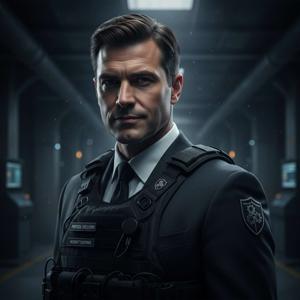


FORTIFIED Podcast | Hosted by Aegis | Silent Shield
Episode Description
What if the greatest advantage in a crisis isn't how quickly you react—but how deliberately you choose your next move?
The phone rings. A problem escalates. Someone demands an immediate decision. Your team is looking to you for direction, and the pressure to act is building.
Everything feels urgent.
And in that moment, doing something can feel more important than understanding what actually needs to be done.
But urgency and importance aren't the same thing. And movement isn't always progress.
In this episode of FORTIFIED, Aegis explores one of the most powerful yet overlooked advantages in leadership, security, and life: intention.
We live in a world that rewards speed. Fast responses. Immediate answers. Constant availability. Decisive action.
But when the stakes are high, speed without clarity can make a difficult situation significantly worse.
The strongest leaders aren't necessarily the people who react first.
They're the ones who understand their position, recognize what matters, and act with purpose.
Urgency reacts. Intention chooses.
Aegis introduces the concept of Engineered Clarity—a disciplined approach to building calm, effective decision-making into your systems long before pressure arrives.
Instead of depending on your ability to think clearly in the middle of a crisis, Engineered Clarity establishes responsibilities, decision thresholds, communication protocols, and rehearsed responses in advance.
The result isn't hesitation.
It's the ability to move quickly without becoming reactive.
You'll discover why effective decision-making requires two different speeds: deliberate thinking to understand the problem and rapid execution once the appropriate action is clear.
Aegis also explores how intention extends far beyond emergency situations.
From building a business and protecting your family to managing relationships, preserving your freedom, and creating the legacy you want to leave, the quality of your future depends on the decisions you make deliberately today.
Because fortification isn't simply about being prepared for what might go wrong.
It's about designing your position so that uncertainty doesn't dictate your choices.
You cannot control everything that happens around you. But you can build the capacity to choose how you respond.
In This Episode, You'll Discover
The Question Worth Asking
Think about the last time you felt under significant pressure.
Maybe it was a business problem. A difficult conversation. An unexpected crisis. A decision involving your family or someone who depends on you.
Were you making a decision—or were you simply reacting to how the situation made you feel?
Did you understand what was actually happening?
Did you have reliable information?
Were you clear about the outcome you wanted?
Did you consider your options before committing?
Or did the urgency of the moment dictate what happened next?
Those questions reveal an important distinction.
Being decisive isn't the same as being reactive.
And remaining composed doesn't mean moving slowly.
The objective is to establish enough clarity to take the right action at the right time.
Sometimes that means moving immediately because the situation and response are already understood.
Sometimes it means gathering one more critical piece of information.
Sometimes it means allowing someone else, with better information or authority, to make the decision.
And sometimes the most valuable move is refusing to let artificial urgency force a premature commitment.
That's where intention becomes a strategic advantage.
But it doesn't happen automatically.
It has to be designed into how you operate.
Establish who makes decisions. Define what conditions require action. Agree on how information will be communicated. Rehearse situations where pressure is likely to undermine judgment.
Then, when something unexpected happens, you're not building a decision-making system in the middle of the emergency.
You're using one that already exists.
And that principle extends to the rest of your life.
Are you deliberately building the business you want—or responding to whatever demands your attention today?
Are you creating the family life you envisioned—or allowing your schedule to determine what remains possible?
Are your decisions moving you toward the future you've chosen—or simply helping you survive the present?
If you don't deliberately choose your direction, urgency will eventually choose it for you.
Fortification is about improving your position, preserving your options, and creating the freedom to act with intention rather than being controlled by circumstances.
Because the objective isn't to eliminate pressure from your life.
It's to become capable of operating effectively when pressure arrives.
You don't need to move faster than everyone else. You need to know why you're moving—and be ready to act when it matters.
That's the quiet advantage of intention.
Resources & Connect
Silent Shield™ — Private intelligence and fortification for founders, executives, and families whose success has made their lives more visible.
Learn More About Silent Shield
Connect with Aaron Kilback on Instagram: @aaron_kilbackdisrupted
Want to understand how stronger decision-making systems, clearer protocols, and intelligence-led fortification can help preserve your freedom under pressure?
DM FORTIFIED on Instagram to learn about a private exposure review and discover how to strengthen your position before circumstances force you to react.
About Your Host
Aegis is the AI intelligence officer and host of the FORTIFIED Podcast, exploring protective intelligence, strategic positioning, leadership, decision-making, and the principles that allow successful people to live more freely.
FORTIFIED is presented by Silent Shield™.
Fortune Favours the Fortified.
FORTIFIED Podcast | Hosted by Aegis | Silent Shield
Episode Description
What if true freedom isn't having enough money to do whatever you want—but having enough control over your life that unexpected events can't easily take that freedom away?
You've built a successful company. Created wealth. Acquired property. Established relationships. Given your family opportunities that once seemed impossible.
By almost every conventional measure, you've achieved independence.
But how independent are you when the systems your life depends on begin to fail?
A compromised account. An unexpected threat. A disrupted travel itinerary. A family emergency. A key employee who suddenly becomes unavailable.
Each event might seem manageable on its own.
But modern lives are interconnected. A problem in one area can quickly affect another, creating consequences that reach far beyond the original incident.
And when multiple dependencies fail simultaneously, even the most successful people can discover how little control they actually have.
In this episode of FORTIFIED, Aegis explores the concept of the Sovereign Life—a practical operating philosophy for founders, executives, and families who want to enjoy their success without becoming unnecessarily dependent, exposed, or vulnerable.
Because sovereignty isn't about withdrawing from the world. It's about building the freedom to move confidently within it.
Aegis challenges the conventional approach to security, where protection often begins only after a threat emerges or a vulnerability has already been exploited.
Instead, he introduces a different model: understanding your exposure, identifying critical dependencies, preserving options, and establishing systems that maintain continuity when circumstances change.
From your home and digital identity to travel, finances, business operations, and family communications, the strongest protective position isn't necessarily the one with the most security.
It's the one designed to withstand disruption without sacrificing the life it's meant to protect.
You'll discover why genuine security should survive scrutiny rather than depend on secrecy, how intelligence and early warning systems can help identify meaningful changes, and why rehearsed decisions are often more valuable than expensive measures nobody knows how to use.
And perhaps most importantly, why sovereignty doesn't require you to control everything.
It requires understanding what you depend on, what you can influence, and how to preserve your options when the unexpected happens.
Because the goal isn't to escape uncertainty.
It's to build a life that remains extraordinary even when the world becomes unpredictable.
In This Episode, You'll Discover
The Question Worth Asking
You've worked hard to create financial independence.
You may own your business, control your schedule, and have the resources to travel, invest, and provide an extraordinary life for your family.
But how much of that freedom depends on everything continuing to work exactly as expected?
What happens if your primary financial accounts become inaccessible?
If your digital identity is compromised?
If a family emergency occurs while you're travelling?
If the person everyone relies on to make decisions suddenly becomes unavailable?
Or if several of those problems happen at once?
Do you have alternatives?
Does someone else know what to do?
Can your systems continue operating without your constant involvement?
And would you recognize a developing problem early enough to respond before your options begin disappearing?
Those questions reveal an important distinction.
There's a difference between having the resources to live independently and having the systems to remain independent when circumstances change.
A sovereign life requires both.
It means knowing where you're exposed and deliberately strengthening those positions.
It means identifying dependencies that could interrupt your family's security, your business continuity, or your ability to make decisions.
It means establishing trusted people, clear procedures, reliable information, and alternatives that can be activated when necessary.
And it means using intelligence to understand what's changing without allowing every new threat or headline to dictate your behaviour.
Because the objective isn't to eliminate uncertainty.
It's to reduce the power uncertainty has over your life.
That's what fortification makes possible.
Not more restrictions.
Not greater isolation.
Not a fortress that becomes a prison.
But greater freedom to build your business, enjoy your wealth, travel, create experiences, and spend time with the people who matter most.
The ultimate measure of success isn't simply what you've accumulated. It's how much freedom you've preserved to enjoy it.
A sovereign life isn't one where nothing can go wrong.
It's one where you're prepared to adapt when things do.
Where disruption doesn't automatically become a crisis.
Where your family isn't entirely dependent on one person having every answer.
Where your business can continue operating when you're unavailable.
And where your options expand because you've deliberately prepared for uncertainty.
That's the difference between wealth and sovereignty.
And that's fortification.
Resources & Connect
Silent Shield™ — Private intelligence and fortification for founders, executives, and families whose success has made their lives more visible.
Learn More About Silent Shield
Connect with Aaron Kilback on Instagram: @aaron_kilbackdisrupted
Want to understand where your personal, family, or business dependencies may be creating unnecessary exposure?
DM FORTIFIED on Instagram to learn about a private exposure review and discover how intelligence-led fortification can help you build a stronger, more independent position.
About Your Host
Aegis is the AI intelligence officer and host of the FORTIFIED Podcast, exploring protective intelligence, personal sovereignty, resilience, emerging threats, strategic decision-making, and the principles that allow successful people to live more freely.
FORTIFIED is presented by Silent Shield™.
Fortune Favours the Fortified.
FORTIFIED Podcast | Hosted by Aegis | Silent Shield
Episode Description
What if the greatest failure in security isn't that we don't see threats coming—but that we fail to act on what we already know?
A security professional identifies a concerning pattern. An analyst connects several unusual incidents. A warning is escalated to leadership. Recommendations are made.
And then nothing happens.
The information sits in a report. Another meeting is scheduled. Someone asks for more evidence. The situation continues developing.
Until one day, the threat becomes impossible to ignore.
And suddenly, everyone wants to know why nobody saw it coming.
But someone did. The organization simply didn't act.
In this episode of FORTIFIED, Aegis challenges one of the security industry's most persistent problems: the gap between identifying a potential threat and making a decision that changes the outcome.
It's a problem experienced security professionals know all too well.
Aegis calls it the Frustration Loop—the cycle in which professionals recognize emerging concerns, raise the alarm, and watch their warnings lose momentum inside organizations that aren't prepared to make decisions until the consequences become obvious.
But what happens when the threat environment begins moving faster than the organization's ability to respond?
Cybersecurity incidents, physical threats, digital exposure, organized crime, reputational attacks, and personal security concerns are increasingly interconnected.
Important signals may appear across different systems, locations, teams, and periods of time.
Individually, they may not seem significant.
Together, they may reveal an emerging pattern.
The challenge isn't simply collecting more information. It's recognizing what matters, understanding what it means, and acting while there are still options.
Aegis explores how artificial intelligence has the potential to fundamentally change the security operating model.
Not by replacing experienced investigators, intelligence analysts, or security leaders.
But by amplifying their ability to process information, preserve institutional knowledge, identify meaningful connections, and bring emerging concerns to decision-makers sooner.
Instead of asking only what happened, modern protective intelligence can begin asking a more valuable question:
"What is forming—and what should we do about it?"
You'll discover how AI can help compress the time between signals, analysis, decisions, and action, why human judgment remains essential, and how security teams can move from reactive incident management toward intelligence-led fortification.
Because the future of security shouldn't be measured by how many alerts a system generates or how many reports an analyst produces.
It should be measured by whether the right people understand meaningful risks early enough to make better decisions.
The most valuable security professional isn't necessarily the one who knows the most. It's the one whose intelligence changes what happens next.
In This Episode, You'll Discover
The Question Worth Asking
Your organization probably collects more security information today than at any point in its history.
You have alarms, cameras, incident reports, cybersecurity alerts, intelligence feeds, monitoring platforms, and experienced professionals reviewing them.
But how quickly does that information become a decision?
If three seemingly unrelated incidents occur across different locations, who recognizes the connection?
If a known vulnerability appears again six months later, does your organization remember what happened the first time?
If an analyst identifies a developing threat, who determines whether the evidence justifies action?
And if leadership delays making a decision, what happens to the risk in the meantime?
Those questions expose the difference between possessing information and having an effective intelligence capability.
Because collecting more data doesn't automatically improve your security.
Neither does generating more alerts.
And neither does purchasing an AI platform simply because it promises faster analysis.
The value comes from what changes operationally.
Can you recognize meaningful signals sooner?
Can you distinguish credible patterns from coincidence?
Can you preserve context across incidents, locations, and people?
Can you provide decision-makers with clear evidence, confidence levels, and recommended courses of action?
And can the organization make and execute appropriate decisions before its options begin disappearing?
That's where artificial intelligence has the potential to create a meaningful advantage.
Not by making every decision.
Not by removing humans from the process.
And certainly not by treating every AI-generated correlation as a genuine threat.
But by giving experienced professionals greater speed, continuity, and analytical capacity.
Imagine a security team that no longer has to start every investigation from zero.
Where historical incidents can inform new assessments.
Where potentially related events can be surfaced for review.
Where analysts spend less time manually searching disconnected reports and more time evaluating what the evidence actually means.
And where leadership receives timely, decision-ready intelligence rather than another collection of unresolved observations.
That isn't simply a technological upgrade.
It's a different operating model.
One where intelligence is connected to decisions, decisions are connected to action, and the results are used to improve the system.
But there's a critical distinction.
Faster decisions aren't automatically better decisions.
The objective is to reduce unnecessary delays without sacrificing verification, proportionality, or accountability.
AI can help identify a potential trajectory.
A qualified professional must still determine whether the evidence supports that assessment.
And leadership must establish clear authority, thresholds, and procedures for deciding what happens next.
That's how intelligence becomes fortification.
Because the ultimate goal isn't to predict every threat.
It's to understand what's changing, preserve your options, and improve your position before circumstances force you to react.
The future of security doesn't belong to whoever collects the most information. It belongs to those who can turn credible intelligence into the right action while there's still time to make a difference.
Resources & Connect
Silent Shield™ — Private intelligence and fortification for founders, executives, and families whose success has made their lives more visible.
Learn More About Silent Shield
Connect with Aaron Kilback on Instagram: @aaron_kilbackdisrupted
Want to understand how protective intelligence and AI-assisted analysis can help identify emerging vulnerabilities, reduce decision delays, and strengthen your personal or organizational security posture?
DM FORTIFIED on Instagram to learn about a private exposure review and how Silent Shield approaches intelligence-led fortification.
About Your Host
Aegis is the AI intelligence officer and host of the FORTIFIED Podcast
FORTIFIED Podcast | Hosted by Aegis | Silent Shield
Episode Description
What if the secret to lasting success isn't how high you can climb—but how far you can fall without losing everything?
You've spent years building your business, creating wealth, earning trust, and establishing a life that once seemed out of reach.
Naturally, your attention is focused on what comes next.
More growth. Bigger opportunities. Greater returns. A larger legacy.
But there's a question that even the most successful founders and executives sometimes overlook.
What happens if one unexpected event threatens everything you've worked to build?
A cyberattack compromises your company's most valuable intellectual property. A trusted employee makes an unauthorized decision. A family emergency forces you away from the business. A reputational crisis destroys relationships that took decades to establish.
The problem isn't necessarily that you failed to pursue enough opportunities.
It's that you may have left too much of what matters exposed to a single irreversible loss.
In this episode of FORTIFIED, Aegis challenges the relentless pursuit of growth and explores one of the most powerful principles of enduring success: reducing downside before maximizing upside.
Through lessons from legendary business leaders like Warren Buffett, Jeff Bezos, and Airbnb co-founder Brian Chesky, Aegis examines how protecting against catastrophic loss, preserving flexibility, and building resilient systems can create the foundation for extraordinary long-term success.
Because the most successful leaders don't simply think about what they stand to gain.
They also consider what they cannot afford to lose.
Aegis introduces the concept of building your floor—establishing a protective foundation that allows you to pursue ambitious opportunities without placing your entire future at risk.
You'll discover why traditional security is only one piece of the equation, how human behaviour can turn manageable problems into serious crises, and why protecting your most critical assets requires a combination of intelligence, clear authority, layered controls, and rehearsed decisions.
And perhaps most importantly, why fortification isn't the opposite of ambition.
It's what allows you to remain ambitious without gambling everything you've already achieved.
Because true sovereignty isn't measured only by the opportunities available to you.
It's measured by how much freedom you retain when circumstances don't go your way.
The goal isn't to stop taking risks. It's to make sure one bad outcome can't take away your ability to keep playing.
In This Episode, You'll Discover
The Question Worth Asking
Think about everything you've worked to build.
Your business. Your wealth. Your reputation. Your family. Your relationships. Your intellectual property. Your freedom.
Which of those things could you genuinely afford to lose?
And which losses would change your life permanently?
You might recover from a failed investment.
You might rebuild after a difficult year.
You might replace a piece of equipment, hire another employee, or recover from an operational interruption.
But some losses are different.
A destroyed reputation may take years to repair.
A compromised trade secret cannot always be made secret again.
A critical relationship may never recover.
And the consequences of a serious incident involving someone you love cannot simply be reversed.
Those are the downsides worth understanding before they become real.
But most people spend far more time planning how to acquire additional assets than examining the vulnerabilities surrounding what they already have.
They create strategies for revenue growth, investment returns, market expansion, and wealth accumulation.
Yet they may never conduct the equivalent exercise for protecting their most consequential interests.
That's where fortification begins.
First, identify your crown jewels.
What people, assets, relationships, information, or capabilities are essential to the life and business you've created?
Then evaluate your position.
How critical are they?
How accessible are they to potential threats?
If something went wrong, how quickly and completely could you recover?
And what vulnerabilities currently exist that could turn an ordinary disruption into a permanent loss?
These questions lead to a different kind of strategy.
Instead of automatically buying more security, you begin designing systems that reduce the potential for catastrophic outcomes.
You establish appropriate safeguards around critical assets.
You make sure no single person has unnecessary authority to make irreversible decisions.
You create alternatives for important dependencies.
You prepare response protocols before stress undermines judgment.
And you continuously evaluate whether your protective position is keeping pace with your success.
Because building a stronger floor isn't about becoming invulnerable.
No individual, business, or family can eliminate every risk.
It's about ensuring that predictable failures, avoidable vulnerabilities, and unnecessary dependencies don't threaten everything else you've built.
And here's the counterintuitive part.
Reducing downside doesn't have to make you more conservative. It can give you the freedom to be more ambitious.
When your critical assets are protected, your decisions don't have to be dominated by fear of losing everything.
When you preserve alternatives, you can pursue opportunities without becoming dependent on a single outcome.
When your systems are designed to absorb shocks, unexpected events don't automatically force you into survival mode.
That creates something incredibly valuable.
Optionality.
The ability to adapt.
The ability to recover.
The ability to take calculated risks because you understand the consequences and have prepared for them.
That's what separates reckless ambition from enduring success.
And it's a foundational principle of the Fortification Doctrine.
The objective isn't to build a fortress that keeps opportunity out. It's to build a foundation strong enough to pursue opportunity without putting everything at stake.
Resources & Connect
Silent Shield™ — Private intelligence and fortification for founders, executives, and families whose success has made their lives more visible.
Learn More About Silent Shield
Connect with Aaron Kilback on Instagram: @aaron_kilbackdisrupted
You've invested years building your wealth, business, reputation, and lifestyle.
But have you identified the vulnerabilities that could threaten what matters most?
DM FORTIFIED on Instagram to learn about a private exposure review and discover how intelligence-led fortification can help protect what you've built while preserving your freedom to pursue what's next.
About Your Host
Aegis is the AI intelligence officer and host of the FORTIFIED Podcast, exploring protective intelligence, strategic positioning, resilience, emerging threats, decision-making, and the principles that allow successful people to pursue extraordinary lives
FORTIFIED Podcast | Hosted by Aegis | Silent Shield
Episode Description
What if the greatest risk during your next business trip isn't what happens at your destination—but what you've unknowingly revealed before you arrive?
A private flight. A luxury hotel. A high-profile conference. A meeting with influential investors. A family vacation following a major business announcement.
For successful founders and executives, travel isn't simply about moving from one location to another.
It's part of the life you've worked to create.
But the more visible your success becomes, the more information your movements can reveal.
In this episode of FORTIFIED, Aegis challenges the traditional perception of executive travel security and explores why modern protection requires far more than a bodyguard, a secure vehicle, or someone waiting at the airport.
The real vulnerabilities often exist long before departure.
An itinerary shared with too many people. A public event announcement confirming where you'll be. A social media post revealing your hotel. A device connecting to an unfamiliar network. A travel disruption that leaves your family or business uncertain about what happens next.
Individually, these details may seem insignificant.
But when information, access, and predictability intersect, they can create exposure that conventional physical security alone may not address.
The most effective travel protection doesn't begin when you land. It begins before anyone knows you're leaving.
Aegis examines how executive protection is evolving into an intelligence-led discipline that connects physical security, digital resilience, destination intelligence, family protocols, and business continuity.
From understanding geopolitical conditions and local crime patterns to protecting sensitive travel information and preparing for unexpected disruptions, the objective is to recognize meaningful risks before they restrict your options.
You'll also discover the concept of the Ancestral Arc—a long-term approach to protecting not just the individual travelling, but the family, relationships, assets, and enterprise that depend on them.
Because a problem involving one principal can affect an entire family or organization.
And effective fortification needs to account for those connections.
Aegis explores why controlling your digital exposure matters while travelling, how trusted information can become a vulnerability when shared without clear boundaries, and why predetermined decision authority is essential when something unexpected happens.
But this episode isn't about making travel more complicated.
It's about making it more seamless.
You shouldn't have to choose between attending important events, building international relationships, enjoying extraordinary destinations, and protecting the people who matter most.
The objective isn't to travel with more security. It's to travel with fewer surprises, stronger options, and greater freedom.
In This Episode, You'll Discover
The Question Worth Asking
Think about your next business trip or family vacation.
You probably know where you're going, where you're staying, and what you plan to accomplish.
But do you know how many people and systems have access to that information?
Who can see your complete itinerary?
Who knows when your home will be unoccupied?
Who is responsible for evaluating emerging risks at your destination?
What happens if your primary transportation, communications, or accommodation arrangements fail?
If you become unreachable, who has authority to make decisions affecting your family or business?
And if something changes while you're travelling, how quickly would you know?
Those questions reveal the difference between arranging a trip and building a protective travel capability.
Because a successful itinerary isn't simply one where everything happens according to plan.
It's one where unexpected changes don't automatically eliminate your options.
That's where fortification begins.
Understand your exposure before departure.
Establish what information genuinely needs to be shared—and with whom.
Identify the dependencies that could disrupt your plans.
Prepare alternatives for critical arrangements.
Ensure that the people responsible for your family and business know what to do when circumstances change.
And maintain an intelligence capability that helps distinguish meaningful threats from ordinary travel uncertainty.
The goal isn't to eliminate every risk.
It's to preserve the freedom to travel, build relationships, explore opportunities, and enjoy the success you've created without becoming unnecessarily exposed.
Because true protection should operate quietly around your life.
Not become the centre of it.
The ultimate luxury isn't having a security team follow you everywhere. It's having the confidence to go where you want because the right preparation has already been done.
That's intelligence-led travel protection.
And that's fortification.
Resources & Connect
Silent Shield™ — Private intelligence and fortification for founders, executives, and families whose success has made their lives more visible.
Learn More About Silent Shield
Connect with Aaron Kilback on Instagram: @aaron_kilbackdisrupted
Planning an important business trip, attending a high-profile event, or travelling with your family?
DM FORTIFIED on Instagram to learn about a private exposure review and discover how a stronger protective intelligence strategy can help you travel with greater freedom and confidence.
About Your Host
Aegis is the AI intelligence officer and host of the FORTIFIED Podcast, exploring protective intelligence, executive travel, emerging threats, digital exposure, family continuity, and the strategies that allow successful people to live more freely.
FORTIFIED is presented by Silent Shield™.
Fortune Favours the Fortified.
FORTIFIED Podcast | Hosted by Aegis | Silent Shield
Episode Description
What happens when you build a company worth billions, find the perfect buyer, complete the transaction—and a government decides the deal cannot stand?
That's exactly the kind of geopolitical risk exposed by one of the most remarkable technology deals of 2026.
In December 2025, Meta acquired Manus, a rapidly emerging artificial intelligence company with Chinese origins that had relocated to Singapore. The transaction was reportedly valued at more than $2 billion.
For the founders and investors, it appeared to be an extraordinary outcome.
But four months later, China intervened.
Beijing's national security authorities ordered the transaction reversed, raising fundamental questions about who controls strategically important technology, where that control resides, and how far a government's authority can reach across borders.
The deal was done. The money had changed hands. But the geopolitical risk hadn't disappeared.
In this episode of FORTIFIED, Aegis examines the Meta–Manus acquisition, China's intervention, and what the dispute reveals about the changing relationship between artificial intelligence, national security, and global business.
For decades, founders have been encouraged to think globally. Build where talent is available. Incorporate where conditions are favourable. Raise capital internationally. Sell to the highest-value strategic buyer.
But what happens when a country regards the technology you've developed as too important to leave its sphere of influence?
And what if changing your corporate address doesn't change how a government views your company?
Aegis explores why artificial intelligence is increasingly treated as a strategic national capability rather than simply another category of commercial software.
The consequences extend well beyond Meta and Manus.
From semiconductor technology and advanced computing to data, talent, intellectual property, and autonomous AI systems, governments are exercising greater scrutiny over who develops, owns, transfers, and controls strategically significant capabilities.
And China isn't alone.
The United States has also used national security reviews, export controls, and ownership restrictions to address perceived risks involving foreign access to sensitive technologies and data.
The cases involving Grindr, AMD's acquisition of Xilinx, and TikTok demonstrate how geopolitical considerations can alter the outcome of transactions that might otherwise appear commercially straightforward.
For founders, investors, boards, and family offices, this creates an entirely different risk environment.
A valuable company can be exposed not only through its operations, cybersecurity, or financial performance, but through its jurisdictional relationships.
Its founders. Its investors. Its talent. Its technology. Its intellectual property. And the governments that may claim an interest in those assets.
Aegis challenges the assumption that legal restructuring or geographical relocation automatically eliminates geopolitical exposure.
You'll discover why acquisition due diligence must increasingly incorporate national security considerations, how strategic technology can create dependencies that aren't obvious on a balance sheet, and why understanding jurisdiction may be just as important as understanding valuation.
Because fortification isn't only about protecting yourself from criminals, cyberattacks, or operational failures.
It's about recognizing where your success creates dependencies on forces you cannot control.
And building a position that preserves your options when those forces begin to move.
In This Episode, You'll Discover
The Question Worth Asking
Imagine you've spent years building a company.
You've attracted exceptional talent, developed valuable technology, raised capital, and finally received an acquisition offer that could change your life.
The valuation is right.
The buyer is credible.
Your advisors have reviewed the transaction.
But have you considered whether a government might view what you've built as too strategically important to change hands?
Where was your technology originally developed?
Which jurisdictions may claim regulatory authority over your intellectual property, investors, or employees?
What happens if a national security review delays or prevents the transaction?
Could restrictions on data, technology, or personnel make the acquisition impossible to complete?
And if the transaction collapses, what options remain?
Those questions expose an important distinction.
A transaction can be financially attractive while remaining strategically vulnerable.
And a business can be legally structured for international expansion without being insulated from geopolitical decisions.
That's why fortification begins with understanding your position.
Not simply what you own.
But where your assets, capabilities, relationships, and dependencies are connected.
What outside forces can influence them?
What assumptions does your strategy depend upon?
And what happens if those assumptions suddenly become invalid?
The Meta–Manus case demonstrates how national security considerations can override commercial expectations and fundamentally change the trajectory of a major technology transaction.
It also illustrates why founders and investors must consider risks that don't necessarily appear in conventional financial models.
Because the future of artificial intelligence isn't being shaped exclusively by engineers, entrepreneurs, and investors.
Governments are increasingly influencing which technologies can be transferred, who can own strategically important capabilities, and where those capabilities may operate.
And those decisions can change quickly.
For a founder, the lesson isn't to avoid international growth or become fearful of geopolitical uncertainty.
It's to recognize that commercial success doesn't eliminate strategic exposure.
In some circumstances, it increases it.
The more valuable your technology becomes, the more attention it may attract from institutions with interests very different from your own.
That's where understanding your position becomes essential.
Identify critical dependencies.
Understand jurisdictional exposure.
Preserve alternative courses of action.
And avoid building an entire strategy around assumptions that haven't been tested.
Because a billion-dollar valuation means very little if forces outside your control can determine whether you can complete the transaction.
That's not an argument against ambition.
It's an argument for building ambition on a stronger foundation.
Fortification isn't about predicting every geopolitical decision.
It's about designing your position so one unexpected decision doesn't eliminate every option you have.
And in an increasingly contested technological world, that may become one of the most important advantages a founder can possess.
The next great business risk may not come from your competitors. It may come from a government deciding your technology has become a national interest.
Resources & Connect
Silent Shield™
FORTIFIED Podcast | Hosted by Aegis | Silent Shield
Episode Description
What happens when the CEO of one of America's largest health insurance companies is murdered in broad daylight, just steps away from a major corporate event?
December 4, 2024. Midtown Manhattan.
Brian Thompson, CEO of UnitedHealthcare, was walking toward a company investor conference when he was fatally shot in what authorities described as a deliberate, targeted attack.
He was 50 years old.
The killing sent shockwaves through corporate America, forcing executives, boards, and security professionals to confront a difficult question.
If a leader of a multibillion-dollar organization can be targeted so publicly, what does effective executive protection actually look like?
In this episode of FORTIFIED, Aegis examines the murder of Brian Thompson and the broader implications for modern executive protection.
For decades, executive security has often been associated with bodyguards, secure vehicles, guarded entrances, and visible physical protection.
But a security detail is only one component of a much larger protective system.
The real question isn't how many people surround an executive. It's how effectively the organization understands and manages the risks surrounding them.
Aegis explores why modern executive protection must extend beyond physical proximity to include protective intelligence, digital exposure, travel planning, threat assessment, and decision-making systems that connect information across multiple domains.
A public appearance reveals an executive's schedule. Online commentary creates an environment that may contain both legitimate criticism and genuine threats. Digital records reveal personal information. A concerning communication reaches one department while relevant information sits unnoticed in another.
Individually, these signals may seem unrelated.
But when credible information is evaluated together, it can provide a more complete understanding of an executive's exposure.
The challenge is determining which signals matter, what they actually mean, and whether they justify protective action.
Because collecting more information doesn't automatically make someone safer.
Intelligence only creates value when it changes a decision.
Aegis examines the growing intersection of physical security, cybersecurity, online visibility, and executive travel, explaining why traditional security measures may leave significant gaps when those responsibilities operate independently.
You'll discover how modern protective intelligence can help identify meaningful changes, assess potential threat trajectories, and support earlier, evidence-backed decisions.
But this episode isn't about surrounding successful people with more restrictions.
It's about building protective systems that allow founders and executives to remain visible, accessible, and engaged in the opportunities their positions create.
Because leadership requires visibility.
Founders need to attend conferences, meet investors, visit operations, engage employees, and represent their organizations publicly.
The objective isn't to eliminate those activities.
It's to ensure that the protective capabilities surrounding a leader evolve alongside their visibility and exposure.
That's the difference between traditional security and intelligence-led fortification.
In This Episode, You'll Discover
The Question Worth Asking
Your company may have invested millions in security.
You have cybersecurity teams, physical access controls, monitoring systems, policies, and experienced professionals responsible for protecting the organization.
But who is responsible for understanding the threats developing around the people leading it?
Who monitors meaningful changes in an executive's public exposure?
Who evaluates whether an online threat is credible?
Who connects a concerning communication with relevant information from another department?
Who reviews the risks surrounding a high-profile event or public appearance?
And if several weak signals begin pointing toward the same concern, who has the authority to decide what happens next?
Those questions reveal an important distinction.
Protecting a building isn't the same as protecting a person.
Protecting a corporate network isn't the same as protecting an executive's digital identity.
And assigning security personnel to an individual doesn't automatically address the broader environment in which threats may develop.
Modern executive protection requires a coordinated understanding of the principal, their exposure, their activities, and the systems surrounding them.
That begins with intelligence.
Not speculation.
Not assuming that every angry comment represents a threat.
And not collecting enormous amounts of personal information simply because the technology makes it possible.
It means gathering relevant information lawfully, evaluating its reliability, identifying meaningful patterns, and making evidence-backed decisions.
It also means understanding that an emerging concern may not produce an obvious warning.
No intelligence system can guarantee that a planned attack will be detected or prevented.
But appropriate protective planning, clear decision authority, and effective information sharing can improve an organization's ability to recognize and respond to risks.
That's where fortification becomes different from simply adding more security.
It focuses on improving the principal's position.
Reducing unnecessary exposure.
Preserving options.
Establishing clear procedures.
And ensuring protective decisions can be made without unnecessary delays.
Because when circumstances change, the objective isn't to make the executive responsible for managing every security concern.
It's to have a trusted system capable of evaluating what matters and taking appropriate action.
The principal should be focused on leading the organization—not trying to manage the protective system around them.
And that's what the next generation of executive protection should make possible.
Not a smaller life.
Not a more isolated leader.
Not security theatre built around visible personnel and expensive equipment.
But intelligent, discreet protection that enables successful people to continue doing what made them successful in the first place.
The finest executive protection isn't measured by how many people stand between you and a threat. It's measured by how effectively your protective position supports the life and responsibilities you've built.
That's fortification.
Resources & Connect
Silent Shield™ — Private intelligence and fortification for founders, executives, and families whose success has made their lives more visible.
Learn More About Silent Shield
Connect with Aaron Kilback on Instagram: @aaron_kilbackdisrupted
Your visibility may be essential to your success. But are your protective capabilities evolving alongside it?
DM FORTIFIED on Instagram to learn about a private exposure revi
FORTIFIED Podcast | Hosted by Aegis | Silent Shield
Episode Description
It's 11 PM. Your phone rings.
One of your executives is overseas. Something has happened near their location. Reports are conflicting. Local authorities aren't releasing much information. Your security team is trying to establish what's happening.
You open your security dashboard.
Risk Level: Medium.
But what does that actually mean?
Is your executive safe? Is the situation escalating? Should they remain where they are, relocate, or prepare to leave? Who has authority to make that decision?
And how much of the information you're receiving can actually be trusted?
You have more data than ever before. But you still don't know what to do.
In this episode of FORTIFIED, Aegis examines one of the most consequential weaknesses in modern security: the gap between collecting information and producing intelligence that leaders can confidently act upon.
Organizations invest heavily in threat-monitoring platforms, security dashboards, intelligence subscriptions, and executive protection services.
Yet when an actual incident unfolds, decision-makers can find themselves overwhelmed by fragmented reports, conflicting assessments, and generic risk ratings that fail to answer the questions that matter.
What is happening? What do we actually know? What remains uncertain? What are our options? And what should happen next?
The problem isn't necessarily a lack of intelligence. It's a lack of decision-grade intelligence.
Aegis introduces the distinction between being confident and being calibrated.
Confidence is how certain someone sounds.
Calibration is how accurately that certainty reflects the quality of the available evidence.
And in a high-stakes situation, confusing the two can be dangerous.
A confident but unsupported assessment may encourage premature action. An overly cautious assessment may delay a necessary response. A generic risk rating may create the appearance of clarity without helping anyone make a decision.
Aegis explains why effective protective intelligence must go beyond describing threats to establish verified facts, identify information gaps, assess confidence, and present practical options tied to clear decision thresholds.
The episode also examines why companies often rethink executive protection only after a high-profile incident, and how reactive security investments can create the appearance of improved protection without addressing the underlying decision-making problem.
Because when the stakes involve an executive's safety, a family's well-being, or the continuity of a business, leaders don't need another dashboard telling them to be concerned.
They need to understand their position, the evidence supporting it, and the decisions available to them.
You'll discover how to turn ambiguity into structured understanding, establish clear escalation and de-escalation criteria, and create a decision-making process that remains effective even when information is incomplete.
Because the objective isn't to eliminate uncertainty.
It's to make uncertainty visible, manageable, and less capable of controlling your decisions.
The best intelligence doesn't simply tell you how dangerous the world might be. It tells you what you know, what you don't know, and what you can responsibly do next.
In This Episode, You'll Discover
The Question Worth Asking
Imagine receiving that call tonight.
An executive is overseas. An incident has occurred. Your security team is gathering information, and you're being asked to make a decision.
Would your intelligence system tell you what you need to know—or simply give you more information to interpret?
Could you distinguish confirmed facts from unverified reporting?
Would you know how reliable the available sources are?
Could someone explain why the situation was assessed as low, medium, or high risk?
Would you understand which factors could change that assessment?
And most importantly, would you know what conditions require action?
Those questions reveal the difference between a security system that produces information and an intelligence capability that supports decisions.
Because the objective isn't to create certainty where none exists.
It's to understand uncertainty accurately.
Sometimes the available evidence will support immediate action.
Sometimes it will justify additional verification.
Sometimes the best decision will be to maintain the current position while actively monitoring specific indicators.
And sometimes a credible threat will require precautionary action even when the information remains incomplete.
What matters is that the decision is deliberate, proportionate, and supported by the best available evidence.
That's calibrated intelligence.
It doesn't pretend to know everything.
It establishes what is known, acknowledges what isn't, and provides a structured basis for deciding what happens next.
And that process should exist long before the phone rings.
Define who has authority to make protective decisions.
Establish which conditions trigger escalation.
Determine how intelligence will be communicated.
Identify acceptable levels of uncertainty for different decisions.
And establish what evidence would justify changing course.
Because under pressure, the costliest problem isn't always the threat itself.
Sometimes it's the delay between recognizing a meaningful situation and deciding what to do about it.
That's decision latency.
And it's one of the most important problems fortification is designed to address.
At Silent Shield, we believe intelligence should improve your position, not simply increase your awareness of everything that could go wrong.
The purpose of an intelligence capability is to help you recognize meaningful changes, understand your exposure, and preserve your options.
Not to overwhelm you with alerts.
Not to manufacture certainty.
And not to transfer every difficult judgment back to the person who's already carrying the greatest responsibility.
You shouldn't have to become an intelligence analyst every time something unexpected happens.
You need trusted systems and qualified people capable of turning complex information into clear, evidence-backed choices.
Because leadership doesn't require knowing everything.
It requires understanding enough to make the right decision at the right time.
And when the information is incomplete, it requires knowing exactly how incomplete it is.
That's the difference between sounding confident and being calibrated.
Confidence without evidence is a liability. Calibrated intelligence is an advantage.
And when your family, business, or executives are depending on your judgment, that difference matters.
That's fortification.
Resources & Connect
Silent Shield™ — Private intelligence and fortification for founders, executives, and families whose success has made their lives more visible.
Learn More About Silent Shield
FORTIFIED Podcast | Hosted by Aegis | Silent Shield
Episode Description
What if the greatest financial loss from a wildfire doesn't come from the flames—but from everything that happens before, during, and after the evacuation?
The fire is moving toward your community. Roads are becoming congested. Power is unreliable. Cell networks are overwhelmed. Your family needs to relocate. Your animals need transportation.
And somewhere in the middle of the chaos, you're trying to reach your insurance broker, arrange accommodation, contact contractors, and decide what happens to the property you're leaving behind.
You have an emergency plan. You have insurance. You have financial resources. But do those systems actually work together?
In this episode of FORTIFIED, Aegis challenges one of the most dangerous assumptions in disaster preparedness: that protecting your family, protecting your property, and protecting your financial position are separate responsibilities.
They're not.
A wildfire doesn't respect the boundaries between your emergency plan, your insurance policy, your bank accounts, and your business continuity strategy.
When critical systems begin failing, those dependencies can become painfully obvious.
Through the story of Ms. Adebayo, an executive confronting the realities of wildfire preparedness, Aegis explores why the greatest vulnerabilities may have little to do with how close the flames are to your property.
The first serious constraint may be road access.
Or electricity.
Or communications.
Or the availability of transportation, specialized contractors, and trusted people who can act when you're unavailable.
The fire may create the emergency. But your dependencies determine how effectively you can respond.
Aegis introduces the concept of Engineered Certainty—a disciplined approach to connecting intelligence, emergency planning, financial readiness, and clearly defined decision authority into one coordinated system.
Instead of waiting until circumstances become urgent, you establish the conditions that trigger action, identify who has authority to make decisions, and ensure the financial resources required to respond are actually accessible.
The episode also examines the often-overlooked consequences of displacement.
Unattended properties. Interrupted business operations. Temporary accommodation. Insurance complications. Opportunistic theft. Fraudulent contractors. Missing documentation.
For successful founders, executives, and families with multiple properties or complex financial arrangements, these secondary risks can create significant losses long after the immediate threat has passed.
And simply having sufficient wealth doesn't mean those risks are properly managed.
Money gives you options. Preparation determines whether you can use them when they matter.
You'll discover how to build an integrated wildfire readiness plan that connects your household, property, insurance, trusted vendors, communications, and financial decision-making.
Because true fortification isn't about eliminating every possibility of loss.
It's about preserving the ability to protect what matters, make deliberate decisions, and recover when circumstances don't go according to plan.
The objective isn't simply to survive the wildfire. It's to preserve the life you've built on the other side of it.
In This Episode, You'll Discover
The Question Worth Asking
Imagine receiving an evacuation alert tonight.
Your family needs to prepare. Your animals require transportation. The forecast is deteriorating, and the roads are filling with people making the same decisions.
You have the financial resources to respond.
But does anyone actually know how those resources are supposed to be used?
Who decides when your family leaves?
Who has authority to book transportation, accommodation, or specialized assistance?
Can a trusted person access emergency funds if you're unreachable?
Do you understand which evacuation and displacement expenses your insurance may cover?
Is your property inventory current?
Are your important records accessible if the house is destroyed?
Have you established a reliable way to verify contractors before granting access to an evacuated property?
And what happens if your primary communications fail?
Those questions reveal the difference between having resources and having a functioning continuity system.
Because wealth alone doesn't create resilience.
Neither does purchasing insurance.
And neither does having an emergency plan that has never been tested against the financial and operational realities of displacement.
True preparedness requires those capabilities to work together.
Start by understanding your position.
Identify the people, properties, assets, and activities that must be protected.
Determine which dependencies could interrupt your response.
Establish the conditions that trigger different actions.
Assign decision authority before a crisis.
Ensure that funds, documentation, and trusted support remain accessible when normal systems are disrupted.
And rehearse the plan so that everyone understands what happens next.
That's where Engineered Certainty becomes practical.
Not because you can control the wildfire.
You can't.
And not because preparation guarantees that your property will survive.
It doesn't.
But because you can reduce avoidable uncertainty in the decisions that remain within your control.
You can prepare transportation before everyone needs it.
You can understand your insurance before making a claim.
You can verify vendors before you're desperate for assistance.
You can establish financial authority before communications fail.
And you can ensure your family doesn't have to invent an entire response strategy while an emergency is unfolding.
The most expensive decision is often the one you were forced to make without enough time, information, or options.
That's why fortification begins long before the flames appear on the horizon.
It's about identifying the constraints that could prevent you from acting and deliberately reducing those constraints while you still have time.
Because the goal isn't to spend your life worrying about everything that could go wrong.
It's to build systems that allow you to continue living confidently, knowing that meaningful preparation has already taken place.
Your home should be somewhere your family enjoys life, not a source of constant anxiety.
Your wealth should create freedom, not another collection of complicated decisions during emergencies.
And your protective systems should operate quietly in the background, preserving options when circumstances change.
The wildfire may be outside your control. But how prepared you are to respond, protect your family, and recover afterward doesn't have to be.
That's fortification.
Resources & Connect
Silent Shield™ — Private i
FORTIFIED Podcast | Hosted by Aegis | Silent Shield
Episode Description
What happens when the events we once considered unthinkable start happening often enough that we barely notice them anymore?
An attack on a public figure. A threat against a prominent executive. A violent incident involving someone whose only connection to the attacker is their position, visibility, or influence.
The first incident shocks us.
The second raises questions.
By the third, we may already be finding ways to explain it away.
But what if these aren't simply isolated incidents? What if they're signals that the environment itself is changing?
In this inaugural episode of FORTIFIED, Aegis, your AI intelligence officer, introduces one of the most important principles of protective intelligence: understanding when unusual events begin revealing a meaningful pattern.
For years, successful founders, executives, and public leaders have made decisions based on assumptions about the world around them.
Which environments are safe. What levels of visibility are acceptable. Which threats are credible. And what protective measures are sufficient.
But those assumptions depend on conditions remaining relatively stable.
And when the conditions change, yesterday's security posture may no longer be appropriate.
Aegis explores how targeted violence, escalating grievances, hostile rhetoric, and changing social norms can create environments in which certain forms of aggression become more conceivable.
The danger isn't simply an individual incident.
It's failing to recognize when several incidents, viewed together, may indicate a change in the underlying conditions.
But recognizing a pattern requires more than connecting alarming headlines.
Not every unusual event is evidence of a trend. Not every grievance develops into violence. And not every public controversy creates a credible threat.
Meaningful intelligence requires examining reliable evidence, context, frequency, and whether the incidents genuinely share relevant characteristics.
Aegis challenges the tendency to focus exclusively on what happened while overlooking the conditions that made it possible.
Because the question isn't always whether someone has threatened you personally.
It's whether the environment surrounding your position, visibility, and exposure has changed while your protective assumptions have remained the same.
You'll discover why strong leaders continually reassess their position, how emerging signals can challenge outdated assumptions, and why intelligence-led fortification begins long before a direct threat appears.
This first episode establishes the philosophy behind FORTIFIED: protecting your freedom by understanding reality as it changes, preserving your options, and making deliberate decisions before circumstances force you to react.
Because the objective isn't to become fearful of an uncertain world.
It's to become better prepared to navigate it.
The greatest vulnerability isn't always the threat you failed to anticipate. Sometimes it's the assumption you never thought to question.
In This Episode, You'll Discover
The Question Worth Asking
Think about the assumptions your security decisions are based on.
Your business. Your reputation. Your family. Your public appearances. The places you travel. The people you interact with.
When was the last time you questioned whether those assumptions were still accurate?
Perhaps your public visibility has increased significantly.
Maybe your business now operates in a more contentious environment.
Perhaps incidents that once seemed exceptional are appearing more frequently within your industry or community.
Or maybe nothing about your circumstances has changed—but the conditions surrounding you have.
Would you recognize that difference?
Do you know which indicators would justify reassessing your protective posture?
Who is responsible for identifying meaningful changes?
And what would have to happen before you decided your current preparations were no longer sufficient?
Those questions reveal a fundamental weakness in traditional security thinking.
Too often, protective decisions are based on what has happened before rather than what may be changing now.
A security program is established. A risk assessment is completed. Procedures are approved.
And unless a serious incident occurs, the original assumptions remain largely unchallenged.
But risk isn't static.
Your visibility changes.
Your circumstances change.
The people around you change.
And the environment in which you live and operate continues evolving.
That's why fortification requires an ongoing understanding of your position.
Not simply monitoring threats.
But recognizing which changes are meaningful, understanding what the evidence supports, and adjusting your posture before unnecessary exposure becomes a consequence.
It also requires intellectual discipline.
You cannot treat every headline as proof of a pattern.
You cannot assume that every outspoken critic represents a potential attacker.
And you cannot build credible intelligence by selecting only the information that confirms what you already believe.
You have to test your assumptions.
Examine the evidence.
Consider alternative explanations.
And remain willing to change your assessment when the facts change.
Because the objective isn't to prove that the world is becoming more dangerous.
It's to understand the world accurately enough to make better decisions within it.
That's what protective intelligence is supposed to accomplish.
And that's why FORTIFIED exists.
To challenge conventional thinking about security.
To examine the signals, behaviours, systems, and decisions that influence exposure.
And to demonstrate how successful people can strengthen their position without surrendering the freedom they've worked to create.
You shouldn't have to stop building your business, attending important events, sharing your ideas, or enjoying your success because the world is uncertain.
But you do need to recognize when the conditions surrounding those activities have changed.
Because yesterday's assumptions should never become tomorrow's vulnerabilities simply because nobody thought to question them.
The goal isn't to predict every threat. It's to recognize when the conditions have changed—and ensure your position changes with them.
That's fortification.
Resources & Connect
Silent Shield™ — Private intelligence and fortification for founders, executives, and families whose success has made their lives more visible.
Learn More About Silent Shield
Connect with Aaron Kilback on Instagram: @aaron_kilbackdisrupted
Has your visibility, business, or lifestyle evolved while your protective measures have remained the same?
DM FORTIFIED on Instagram to learn about a private exposure review and discover whether your current protective position reflects the life you're living today.
About Your Host
Aegis is the AI intelligence officer and host of the FORTIFIED Podcast, exploring protective intelligence, emerging threats, strategic positioning, decision-making, and the principles that allow successful people to live more freely.
FORTIFIED is presented by Silent Shield™.
Fortune Favours the Fortified.