
Sign up to save your podcasts
Or

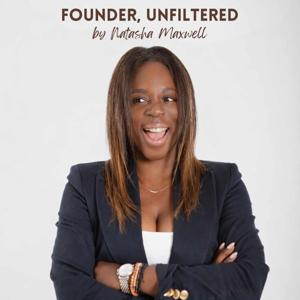


There’s a version of decision-making that feels like life or death and then there’s the version that actually serves your business. In this episode, I’m talking about one of the quietest growth blockers I see founders run into: the paralysis of trying to get it perfect the first time.
Whether it’s your brand colors, your logo, or your website, the decisions you’re making right now are the right ones for right now. And that’s enough.
I’ve seen this come up again and again in client sessions lately: founders stalled out over a color palette or a homepage layout, not because they don’t care, but because they care so much they’ve forgotten that everything evolves. Your brand is a living thing. So is your business. So are you.
The goal isn’t to build something permanent. It’s to build something that moves you forward, knowing it will look completely different in three years, and that’s exactly the point.
In this episode:
* Why the decisions that feel like life or death rarely are
* How I think about visual identity work with clients (logos, colors, websites)
* Why your brand is like a baby — it grows, and that’s the whole idea
* The permission slip you didn’t know you needed
Give yourself some grace. You’re making the right call for where you are right now.
Follow along on Substack for more: themaxwellmethod.substack.com
Ready to work together? themaxwellmethod.com/lets-talk
This episode is brought to you by BrandMate AI
If you’re in that early stage of building your brand and you just need a starting point, something to pressure-test your ideas against, BrandMate AI was built for exactly that moment. It’s a one-time $29 tool that helps you get out of your own head and into a clearer brand direction, fast.
No subscription. No overwhelm. Just a smarter starting point.
👉 Grab BrandMate AI here
Show Notes
By now you’ve probably seen it. Millennial creator Jessi Jean (@jessijean) just launched a Yap Challenge that brought in over $1.2 million, organically, with over 4,000 students buying into a course priced just under $300. And the internet had feelings about it.
I’m not here to add to the noise. I’m here to talk about what it actually means for the rest of us, specifically the founders and creators who watched that and thought “okay but could I do something like that?”
The short answer is yes. But not necessarily by copying her playbook.
In this episode I’m breaking down what yapping actually is as a business strategy, why it’s bigger than just talking on camera, and how to figure out what your own version of it looks like. Because if you’re someone who lights up in writing, or in long LinkedIn articles, or in voice notes, or in Substack posts about sandcastles, that counts. That’s your yap style and it’s worth building on.
I also talk about how I’ve been using long-form writing on LinkedIn to connect with integrative medicine clinic founders, and why I see all of it as top of funnel even when I haven’t figured out how to directly monetize every piece of it yet.
This is a shorter one but it’s one I really wanted to get out while the moment was still hot. What Jessi Jean pulled off is remarkable and I think more of us should be paying attention to the right lessons from it.
If you’re not subscribed yet, come find us at themaxwellmethod.substack.com
Ready to build a brand that actually sells? Book a call at www.themaxwellmethod.com/lets-talk
Action steps: finding your yap style
01
Figure out where you already yap. Do you write long texts? Send voice notes? Fill journals? Post long captions? That’s your natural format. Start there, not with what’s trending.
02
Know the formats available to you. On-camera is one option. Long-form writing on LinkedIn or Substack is another. Podcasting is another. Yapping is the content, the format is your choice.
03
Start before you’re ready. Order the mic, get the ring light, and record something just for yourself. You don’t have to post it. The point is to get comfortable enough to find out if camera is actually your thing or not.
04
Think of it as top of funnel first. You don’t need to know how to monetize your yapping right now. Consistency builds trust, trust builds an audience, an audience is where every offer eventually sells.
05
Don’t copy the playbook, extract the principle. Jessi Jean proved that unfiltered, unpolished, consistent content can convert at scale. The principle is authenticity plus volume plus an offer. Apply that to your own style.
Thanks for reading! This post is public so feel free to share it.
Connect
Follow Natasha on LinkedIn, Instagram, and Substack
Work with Natasha: www.themaxwellmethod.com/lets-talk
Show notes
What if the answer to surviving this job market wasn’t to search harder, but to stop going at it solo?
This week I’m diving into a concept that has been showing up in my algorithm on repeat and honestly, I can’t stop thinking about it: the consulting collective. I first came across the term in a reel by Janel Abraham (@janelabrahami) and it immediately clicked for me in a big way.
A consulting collective is a small, intentional group, ideally two to three people max, where each person brings a distinct skill set to the table. Together you market and sell your services as a package to clients or companies. It’s not a partnership in the traditional sense. It’s more like a built-in force multiplier, where everyone does what they’re actually best at and no one person has to carry the whole thing.
I’m already doing a version of this with a partner focused on integrated medical clinic marketing. We have two doctors on our roster and we’ve divided the work exactly where our strengths are: I handle the website and the brand aesthetic, she handles the systems, the logistics, and the automation side. Two people, two skill sets, one clean offer.
In this episode I walk through:
What a consulting collective actually is and why the two-to-three person max rule matters
How to think about skill set division so you’re doubling down on what you’re best at, not just splitting tasks
The passive income angle, including how my partner and I are building self-paced workshop resources for doctors so we’re not trading time for every dollar
How to use LinkedIn to find the right collective partners, not just clients
Why this model is worth seriously considering if you’re mid-career, in between roles, or tired of building alone
This isn’t about being everything to everyone. It’s about pairing up with the right people so that together you can offer something more valuable than either of you could alone.
If this landed for you, I’d love to know. Come find me and let’s keep the conversation going:
LinkedIn: Natasha Maxwell
Instagram: @themaxwellmethod
Substack: themaxwellmethod.substack.com
Ready to talk about your brand? Book a call with me at www.themaxwellmethod.com/lets-talk
After 12 years of building my personal brand on Instagram, I made a decision that surprised even me. I’m doubling down on LinkedIn.
Not abandoning Instagram. But getting really honest about where the people I actually want to work with are spending their time... and what they’re looking for when they get there.
This episode is about the shift. I share what finally moved the needle for me, starting with a video from LinkedIn strategist Kasey Brown featuring a founder who spent three years on Instagram and converted one client, then moved to LinkedIn and brought in close to $400K in her first year. I’ll be real, that hit different.
I also talk about why the market I’m going after right now, integrative medicine clinics and high-level physicians, just isn’t reachable the same way on Instagram. These are people who show up on LinkedIn with intention. They’re there to grow their practices, build connections, and find the people who can actually help them do that.
And then I get into what I’ve actually been doing. Posting every single day on LinkedIn. Sharing the three times I was laid off over the last 20 years. Talking about how a career that looks like a zigzag from the outside actually makes complete sense when you see the full picture. Building the know, like, and trust factor with the people who matter most right now.
I also share where Threads fits into all of this, why Instagram stays as my curated portfolio of real life, and what it feels like to finally put on the founder cap instead of the creator cap.
If you’re a founder trying to figure out where to put your energy... this one’s for you.
🔗 Kasey Brown video mentioned:
_
Work with me: www.themaxwellmethod.com/lets-talk
Hi Founder Fam,
I’m recording this one from Lisbon. I just got in yesterday after eight weeks in Madrid, and I want to be honest with you about something that’s been sitting with me.
The past three months have been a bit of an emotional rollercoaster. I’ve been a founder for six years, but only recently have I actually started thinking of myself as one. And as I keep building this business from international cities, I’ve been sitting with how often I feel misunderstood. Not by strangers. By the people who love me the most. That’s the part that surprised me.
In this episode I’m getting into:
* The Madrid sublet scramble that ended my eight weeks there, and the visa context behind why I’m not signing a long-term lease yet
* The “vagabond” comment from my mom that sat with me, and why I didn’t get triggered by it but also didn’t ignore it
* Why my dad’s reaction was completely different, and what reference points have to do with how the people closest to us interpret our choices
* The difference between family love and family understanding, and why the absence of one doesn’t mean the absence of the other
* Why I’ve been committing to two and three month windows in cities like Lima and Madrid before deciding anything long-term
* The bigger takeaway I keep coming back to about why community isn’t a nice-to-have when you’re building something non-traditional. It’s mental health infrastructure.
If you’re a founder building something the people closest to you can’t quite picture, this one is for you.
Long-form written version of this episode coming later in the week. 🖤
If anything in this episode resonated and you want to talk through what you’re building, I offer Single Strategy Sessions designed for exactly that. You can book one here: www.themaxwellmethod.com/lets-talk
🎧 Also on Apple Podcasts | 🎥 Watch on YouTube
A short follow-up to last week’s deep dive on nervous system regulation. After six weeks of nonstop build mode in Madrid, I got invited to Denia Beach (in the region of Alicante) and the second I sat in front of the water, I remembered: this is the tool. The ocean isn’t just something I love. It’s the thing that pulls me out of spin-out and into presence faster than anything else.
This episode is a challenge: figure out yours.
In this episode:
* Why six weeks of “go, go, go” mode made the ocean feel like a revelation, not a routine
* The difference between something you enjoy and something that actually regulates your nervous system
* Why proximity isn’t the point (I lived 10 minutes from the ocean in LA and rarely went)
* How sound can be a backdoor to your tool when you can’t physically get there
* Journal prompts to help you identify your own anchor
5 journal prompts to find your tool:
* Where am I when I feel the most like myself; not performing, not producing, just being?
* What activity or place makes me lose track of time in a good way?
* When was the last time I noticed my breath naturally slow down without trying?
* What did I love as a kid that I’ve quietly stopped making space for?
* After spending time with what (or whom), do I feel most regulated for days afterward?
A few tips once you’ve identified yours:
* Don’t wait until you’re depleted to use it. Most of us only reach for our tool after we’ve already spun out. Build in proactive access, even small doses, before the breaking point.
* Find the backdoor version. You won’t always have access to the real thing. If yours is the ocean, save a wave-sounds playlist. If it’s a forest, keep a window seat with a tree view. The sensory shortcut is 70% as effective as the real thing and infinitely more available.
* Stop confusing “things you like” with “things that regulate you.” A glass of wine, a scroll session, a shopping cart. Those are dopamine hits, not regulation. Your real tool leaves you calmer for days, not minutes.
* Proximity isn’t the point. Intention is. I lived 10 minutes from the Pacific for 15 years and rarely went. You can be next door to the answer and still ignore it. Schedule it like a meeting.
* Notice what makes you forget your phone. That’s usually the tool. If you naturally stop reaching for the scroll, your nervous system is already doing the work.
Connect with me:
* Instagram: @themaxwellmethod
* Website: www.themaxwellmethod.com
* Work with me: www.themaxwellmethod.com/lets-talk
Something I never expected to be talking about as a brand strategist — nervous system regulation. And yet here we are.
For a while I kept seeing it everywhere. Instagram, TikTok, YouTube. Somatic coaches, nervous system experts, all saying the same thing: you can only grow as much as your nervous system expands. And honestly? Part of me was like... is this just the new trend?
But a few weeks ago I started actually paying attention to what my own system was doing. The constant content creation, the outreach, the go-go-go of building a business was a lot. More than I realized. So I started taking mid-day walks with no podcast, going back to morning pages, eating dinner in actual silence. And something shifted.
In this episode I’m sharing what I noticed, what changed, and why I think this applies whether you’re a fighter (spinning, overdoing, can’t slow down) or a flighter (frozen, procrastinating, perfectionism on overdrive). Neither mode is serving your growth. And the fix is simpler than most nervous system coaches will tell you.
This one’s for the founders in Q2 who are doing a lot but still feel like they can’t quite see the path forward clearly. That fog might not be a strategy problem. It might be a nervous system one.
If you’re in that place and want help seeing your brand and business more clearly, that’s exactly what a Single Strategy Call is for. Book yours at www.themaxwellmethod.com/lets-talk.
The job market is shifting fast. AI is displacing roles in design, copywriting, marketing, engineering, and if you’ve been feeling that pressure, this episode is for you.
This week I’m breaking down the one thing I wish more people did before the uncertainty hit: figure out what you’re already known for, and build something around it.
I share my own story: how a skill I didn’t even have a name for at Equinox turned into a brand strategy consultancy plus two real examples from friends who went through layoffs and came out on the other side with something that was actually theirs.
You don’t have to quit your job tomorrow. But you do have to start asking the right questions now.
In this episode:
* Why this moment is actually an opportunity to build something of your own
* The one question to ask friends, family, and colleagues to find your superpower
* How a journalist-turned-Latin music thought leader rebuilt her brand after two layoffs
* Why “what do people already come to you for” is the most important question you can ask yourself
* Simple first steps: landing page, one-page portfolio, a consultancy you can actually launch
Connect with Natasha: Instagram: @themaxwellmethod LinkedIn: Natasha Maxwell Website: themaxwellmethod.com
Three weeks into Madrid and I’ve stumbled onto something the locals seem to know by default; joy isn’t the reward at the end of the to-do list. It’s the fuel you run on while you’re doing it.
In this episode I’m talking about the whimsy trend, why I think it’s actually a nervous system necessity for founders, and what’s shifted in my work (and my content) since I started building real play into my days, not as an escape, but as a reset.
We get into:
* Why founders’ nervous systems specifically need this
* What an hour of “pure whimsy” actually looks like in practice
* How stepping away from your work makes you better at it
* Why the energy behind your content is something your audience can feel
* What Madrid taught me about joy that Naples never did
If you’ve been telling yourself “I’ll relax when I hit the number” — this one’s for you.
🔗 Ready to look at your brand from a fresh perspective? That’s exactly what the Brand Strategy Intensive is designed to do. [Brand Strategy Sessions]
If referrals have been the backbone of your business, this episode is for you and honestly, it’s for me too. In this episode, I’m getting real about a pattern I’ve been seeing while auditing wellness founders on Instagram: your website is built for scale, but your social media is still quietly speaking to the friends, family, and colleagues who found you first.
That’s not a content problem. That’s a mindset problem. And once you see it, you can’t unsee it.
I break down:
* Why referrals are powerful but can’t be your only growth engine
* The disconnect between how founders write their websites vs. how they show up on social
* Why this might actually be fear-based (and how to move through it)
* A simple audit exercise you can do this week to bridge the gap
Plus I’m sharing the exact exercise I did using Claude to compare my own website voice to my Instagram content and what I discovered.
📩 Try the free audit below and send me what you find: [email protected]
FREE AUDIT EXERCISE: The Website vs. Social Check
Do this in under 20 minutes.
Step 1. Open your website and ask yourself (or paste it into Claude or ChatGPT and ask): Who is this written for? What problem are they experiencing? How specific is the language?
Step 2. Screenshot 6–9 of your most recent Instagram (or TikTok or LinkedIn) posts and ask the same question: Who is this written for? How specific is the language?
Step 3. Compare the two. Is your website speaking to a specific person with a specific problem while your social is speaking to “anyone who might relate”? That gap is the work.
The question to sit with: Are you creating content for the cold lead who’s never heard of you or for the warm audience who already likes you?
READY TO CLOSE THE GAP WITH STRATEGY?
If this episode hit a nerve and you’re tired of posting without a clear direction, the Brand Strategy Intensive was made for this exact moment.
In two focused 1:1 sessions, we’ll get clear on who you’re really talking to, what you should be offering and how to price it, which platform to actually focus on, and what your content needs to say to convert cold leads, not just warm ones. You’ll leave with a custom brand roadmap and full session recordings to reference anytime.
Investment: $600 👉 Book your intensive here
The Intensive is also the first step into the 6-Week Brand Mentorship if you’re ready to go deeper.
From the publisher's feed