
Sign up to save your podcasts
Or

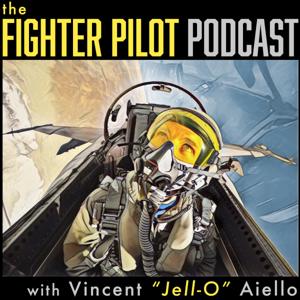

Landing a high-performance jet aircraft on an aircraft carrier is the most difficult and challenging task any pilot will ever face, and is what distinguishes naval aviators from all other military aircrew. In what effectively amounts to a “controlled crash” onto the flight deck, a 44,000-pound aircraft traveling 140 mph engages a 1.5-inch steel cable and is brought to a halt in less than 200 feet. The feat requires the combined efforts of hundreds of sailors above and below decks, and the assistance of fellow pilots to ensure the pilot landing does so safely.
The fact that they do—hundreds of times a day somewhere around the world—is a testament to their skill and professionalism.
On this episode, U.S. Navy Commander Jack “Farva” Curtis, EA-18G pilot and former air wing landing signal officer, begins a two-part discussion on the procedures and equipment involved in daytime carrier landings. We discuss the “Case 1 stack” and aircraft arrival procedures, as well as the arresting gear cables and equipment involved in bringing an aircraft to a (relatively) uneventful stop.
The listener question segment this week is a replay of a recent Facebook Live session with episode 1 guest Brian “Sunshine” Sinclair, who returns to help explain what a ‘VX’ squadron is, why the US Air Force is dealing with pilot shortages, and whether “compartmentalization” is a trained skill.
Episode photography by the U.S. Navy. Bumper music by Incompetech.
Learn more about your ad choices. Visit megaphone.fm/adchoices
 View all episodes
 By Tucker "Cinco" Hamilton, Retired U.S. Air Force Fighter Test Pilot

4.9
18471,847 ratings
Landing a high-performance jet aircraft on an aircraft carrier is the most difficult and challenging task any pilot will ever face, and is what distinguishes naval aviators from all other military aircrew. In what effectively amounts to a “controlled crash” onto the flight deck, a 44,000-pound aircraft traveling 140 mph engages a 1.5-inch steel cable and is brought to a halt in less than 200 feet. The feat requires the combined efforts of hundreds of sailors above and below decks, and the assistance of fellow pilots to ensure the pilot landing does so safely.
The fact that they do—hundreds of times a day somewhere around the world—is a testament to their skill and professionalism.
On this episode, U.S. Navy Commander Jack “Farva” Curtis, EA-18G pilot and former air wing landing signal officer, begins a two-part discussion on the procedures and equipment involved in daytime carrier landings. We discuss the “Case 1 stack” and aircraft arrival procedures, as well as the arresting gear cables and equipment involved in bringing an aircraft to a (relatively) uneventful stop.
The listener question segment this week is a replay of a recent Facebook Live session with episode 1 guest Brian “Sunshine” Sinclair, who returns to help explain what a ‘VX’ squadron is, why the US Air Force is dealing with pilot shortages, and whether “compartmentalization” is a trained skill.
Episode photography by the U.S. Navy. Bumper music by Incompetech.
Learn more about your ad choices. Visit megaphone.fm/adchoices
396 Listeners

776 Listeners
89 Listeners

949 Listeners
307 Listeners
931 Listeners

468 Listeners

1,667 Listeners
923 Listeners

174 Listeners
406 Listeners
1,278 Listeners
1,801 Listeners
790 Listeners

353 Listeners