
Sign up to save your podcasts
Or

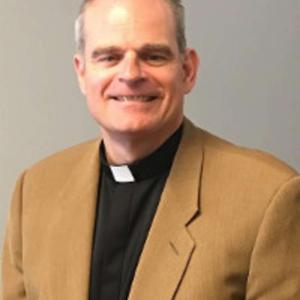


First responders go into burning buildings that people run away from; they go into moments of danger and put their lives at risk to save our lives. I think it is very clear who they are; and what they stand for. Is it as clear who we are as Catholic Christians? Who do people say that we are? What is our first response to anything? Are our values and our actions so clearly defined?
Think of it as two plants inside our heart. One is the good plant, which produces the good fruit of gentleness, kindness, forgiveness and all that. And then there is another plant that is the evil plant, that produces selfishness, bitterness, lies and sort of egocentric behavior. You might ask “Well which plant grows best in our heart?” Whichever one we water. Whichever one we water will grow.
Here is the my homily from this past weekend. Please feel free to share it with others. Today I leave for a pilgrimage to Lourdes with my brother Paul and several other of the community. Please pray for healing and peace as we make this journey.
Today, we claim what Peter does; those beautiful words, the testimony of faith: “To whom else will we go, Lord? You have the words of eternal life.” We have come to believe that you are the holy one of God. And we do not just choose to believe in you. We choose to follow you with everything we do and everything we say.
Let that river of life flow through the reservoir of our hearts and to give fresh life and water to all we meet.
The beautiful prayer that we hear quoted in today’s Gospel of Luke as we celebrate the Assumption is called the “Magnificat” or the “Canticle of Mary.” In this prayer an invitation was given and then repeated. Then Mary gives a beautiful response of acceptance. Bear in mind all that was happening. Her whole life was turned upside down and yet her response was, “Let it be done to me according to your will.” This is a great model for all of us. What if we wrote our own canticle?
In today’s gospel, we continue to read from this long passage in John’s Gospel called “The Discourse of the Bread of Life.” It is one of the largest discourses in John’s Gospel.
The Catholic Imaginarium is something which we all live inside whether we realize it or not. It’s the very language we use: the symbols; the sacraments; the signs. Everything about who we are as Catholics is inside this Catholic Imaginarium.
The power of touch is real. And we need it especially the elderly and especially the young. The young children, teenagers even, they need to be loved; they need to feel that power of love. Indeed, all of us need it.
I will be away for the month of July for a much-needed vacation. I will spend some time with my brother, Paul who has pancreatic cancer and then take some time alone hiking in the mountains of Idaho and Utah. I will not be sending out any homilies during this time and I hope you understand my need for a break. Please say a prayer for me and I will say one for all of you.
We want to believe in a God who would make things a lot easier by having only good things happen to good people and bad things happen to bad people. It would make it much simpler that way.
Last week, we entered into ordinary time and it is not ordinary as in “not extraordinary.” It is ordinary as it is ordered time. We now move back to the non-feast days of summertime and in a sense, we go back to the ordinary day-to-day loving of one another in the ordinary way; or what I call the muck of everyday life...That the little ordinary things are what matter and what builds up and constitutes a life of love.
It is not enough to love those who love us, to mirror back; that part is important and good. We need to do that but we also must love those who are not capable of love; those who are toxic, have bitterness, have jealousy, hatred, violence and even death in their life
From the publisher's feed

38,675 Listeners

25,776 Listeners

8,758 Listeners

111,809 Listeners

56,398 Listeners

5,106 Listeners