
Sign up to save your podcasts
Or

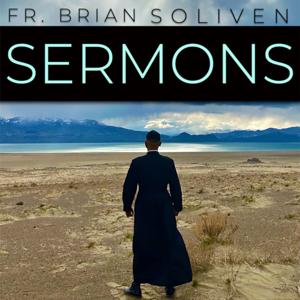


Lent is upon us! In this holy season, the Church asks us to purposely become weak.
With the approach of Ash Wednesday on February 18th, the Church once again does something both startling and merciful: she reminds us that we shall die.
There is about this reminder a bracing honesty which our modern age sorely needs. We are encouraged, most days, to behave as though we were permanent fixtures in a very temporary world. We speak of plans and prospects, of improvements and entertainments, and seldom of endings. Yet on Ash Wednesday the priest marks our foreheads with ashes and speaks the plain truth: “Remember that you are dust, and to dust you shall return.” It is not cruelty. It is clarity. And clarity, in the hands of God, is always a form of kindness.
Lent, then, is not a season for religious theatrics, but for reality. The Church calls us to consider the Four Last Things—Death, Judgment, Heaven, and Hell—not because she delights in severity, but because she desires our joy.
Death is the great appointment we all keep. It is not an interruption of the story, but its turning page. For the Christian, death is not the collapse of meaning but its unveiling. The One we have trusted in shadows we shall meet face to face. To remember death is not to become morbid; it is to become wise. Only when we grasp that our days are numbered do we begin to truly live.
Judgment, too, has been misunderstood. We imagine a cold tribunal and forget that judgment is the setting right of what has gone wrong. Every time we cry out against injustice, every time we long for truth to prevail, we are secretly longing for judgment. And the Judge is not a stranger but the very Christ who bore our sins. To stand before Him will be to stand before Love itself; it’s a love that burns away falsehood and heals what we have surrendered to Him.
Heaven and Hell stand as the two great possibilities before every human soul. Heaven is not a sentimental cloud, but the solid, blazing reality for which we were made. It is the fulfillment of every pure desire, the answer to every homesick ache we have ever felt in this world. Hell, on the other hand, is not so much a torture devised by God as the final monument to human refusal, the tragic end of a will that persistently says, “I will have my own way.” In the end, we are given what we have chosen.
Lent is the season in which we are invited to choose again.
Through prayer, we learn to desire God above lesser things. Through fasting, we discover how tightly we cling to what cannot save us. Through repentance, we unlock doors we have long kept barred. The ashes on our foreheads are not a sign of despair but of hope, hope that even dust may be raised to glory. As February 18th draws near, we would do well not to rush past it. Let us receive the ashes. Let us ponder the Last Things. Let us allow eternity to cast its searching and saving light upon our present lives.
For it is only in remembering that we shall die that we truly learn how to live. Only in facing judgment that we begin, at last, to desire Heaven.
When an exorcist meets with a person allegedly possessed by a demon, one of the first questions the priest must ascertain is how the demon gained access to the soul.
Hardwired in the soul of a man is to fight and serve. It's by divine design.
It is a curious mistake of the modern world to imagine that Christians best serve society by becoming bland and tame, like toothless lions. Our Lord did not tell His followers, “be like everyone else” but salt and light. He wanted them to change the world around them.
Salt, after all, does not exist for its own sake. It preserves, sharpens, and reveals flavor. A society may have abundance, efficiency, and cleverness, and yet still taste oddly thin. When Christians live their Catholic faith honestly – praying when prayer is unfashionable, forgiving when resentment would be easier, welcoming life where it is inconvenient – they restore depth to the human experience. They remind the world that truth is not invented, that goodness is not a private hobby, and that love is more than sentiment. Remove the salt, and decay is not dramatic at first; it is simply inevitable.
Light works differently. It does not argue with the darkness; it exposes it by being present. A single lamp does not abolish the night, but it makes orientation possible. In the same way, Catholics who live their faith publicly through works of mercy, fidelity in marriage, care for the poor, reverence for the weak,do not claim moral superiority. They simply make visible a way of living that assumes God is real and that human beings are made for more than comfort or consumption.
The great contribution, then, is not power or prestige, but witness. The Christian adds to society a stubborn hope that refuses to believe evil is final, a patience grounded in eternity, and a joy that does not depend on circumstances behaving themselves. Such people are often inconvenient. Salt stings in open wounds; light reveals what some would rather keep hidden. Yet without them, society may grow cleverer and louder, but not wiser.
When Catholics live as salt and light, they do not escape the world. They help save it from spoiling, and from forgetting what it is for. Remember, dear parishioner, you are called to be lions.
The martyrs teach us a very valuable lesson.
The humility of Mary sends vitriolic shivers down the spines of demons.
The world likes to mock Christians as silly for constantly calling upon God. It's a curious paradox at the heart of the Christian life which makes the believer appear faintly ridiculous to the sensible world: he dares to admit that he cannot heal himself. He stakes everything on Another, and does so with a cheerfulness that looks like folly. Yet it is precisely here that his courage is born. For when a man stops pretending he is whole and instead places his brokenness gladly in the hands of Christ, he discovers that reliance is not the enemy of boldness but its source. The one who knows he is being healed is freed from the exhausting labor of self-salvation, and may therefore stand upright, unashamed, and oddly fearless.
Consider the scene upon that Galilean hillside, dear reader. There ascends a Man—not with tablets of stone borne heavily in His hands, as once did Moses upon Sinai amid thunder and smoke—but with words that burn more fiercely than any fire, words destined to be written not upon rock but upon the living tablets of human hearts.
In the old story, Moses climbed the mountain alone, veiled in cloud and terror, to receive the Law that would set a people apart. The Ten Words thundered forth, carving boundaries around conduct, marking what was holy from what was profane. They were good, those commandments; they were the very breath of God restraining the chaos of fallen man. Yet they stood external, like a fence around a garden we could not enter without stumbling.
Now behold a greater ascent. Jesus of Nazareth goes up into the mountain, and the crowds follow, not in fear, but drawn by a strange authority that mingles majesty with meekness. He sits (as teachers do), yet speaks as One who needs no intermediary. Where Moses mediated between God and man, this Man is the mediation. Where Moses brought down stone inscribed by the finger of God, this Man brings down Himself – the living Word, the very finger of God made flesh.
He does not abolish the ancient Law; no, He fulfills it to its utmost depth. “You have heard that it was said... but I say to you.” With each repetition, the old commandment is not merely repeated but plunged into the hidden springs of the soul. Murder becomes anger unchecked; adultery becomes lust entertained; oaths become the simple honesty of “yes” and “no.” The Law, once a boundary line drawn upon the ground, is now revealed as a mountain peak we are called to scale but this, it's not by our own strength, but by the power of the One who has already reached the summit and beckons us upward.
And yet, who among us can hear these words without a secret shrinking? The Beatitudes pronounce blessing upon poverty of spirit, upon mourning, upon meekness; these qualities we possess only in fragments, if at all. The command to love enemies, to turn the other cheek, to be perfect as our Father in heaven is perfect strikes like a sledgehammer upon our self-sufficiency. We are not flattered; we are exposed. The mountain does not flatter the climber; it humbles him.
So let no one suppose the Sermon on the Mount is a counsel of despair. It is, rather, the map of joy. It is the narrow path that leads to life. In Christ, the old commandments find their fulfillment, and the new commandment of love becomes not a burden but a liberation. Ascend, then, with Him; listen to His voice upon the mountain; and find that the Lawgiver has become the Law fulfilled, the Teacher the Truth incarnate, the Moses greater than Moses, leading us home.
Pray that the Lord may bless our upcoming Parish Crab Feed fundraiser!
From the publisher's feed

227,448 Listeners

4,984 Listeners
6,223 Listeners
7,653 Listeners

2,154 Listeners

28,207 Listeners
1,274 Listeners

39,402 Listeners
61,803 Listeners
662 Listeners
11,374 Listeners

5,708 Listeners

10,593 Listeners
5,221 Listeners