
Sign up to save your podcasts
Or

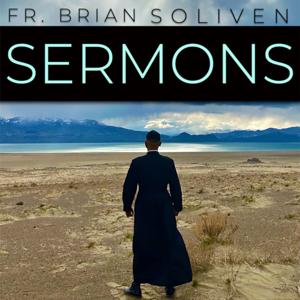


In today's Gospel passage, Jesus tells us that if we want to be his disciples, we must embrace the crosses of our lives and follow him. For the first century listener, they new what Our Lord was asking of them. They would have seen people hanging from crosses with their own eyes. The cross was violent, vociferous and vehemently vile. To that visceral reality, Jesus says, "Pick it up."
“Why do Catholics call your priests ‘father’?” How many of you have heard that before? It’s a common question that non-Catholics will use against us. They will then point to the Scripture passage that we just had in the Gospel reading this Sunday, “Call no one on earth your father; you have but one Father in heaven.” (Cf. Matthew 23:9). See, Catholicism is unbiblical! How are we to respond when confronted with this seemingly airtight logic?
The study of interpreting Sacred Scripture is called “exegesis.” It’s the critical analysis and explanation of a given text in order to derive its meaning. A key principle, for scholars and devotional readers of the bible alike, is to keep in mind the context. Context is absolutely essential. It is the oxygen of correct exegesis. Without context, we can essentially take a single verse out of the bible and twist it, forcing it to support our point of view. Oftentimes, when we speak with non-Catholics about a certain doctrine, they will point to a single verse in the bible in order to justify their position. However, the context of the bible passage must be taken into consideration. Without context, we run the risk of pulling a single piece of lumber from a mansion and forgetting how the house is supposed to appear. The Bible is like a big house.
Using this contextual approach, let us now return to the initial question of Matthew 23:9, which seems to contradict the ancient, Catholic, practice of calling priests “Father.” Let us put the verse in its broader context, take a step back and look at the “house” as a whole. Jesus continues, “As for you, do not be called ‘Rabbi.’ You have but one teacher, and you are all brothers. Call no one on earth your father; you have but one Father in heaven. Do not be called ‘Master’; you have but one master, the Christ.” Jesus also says not to use the word “rabbi,” which translates into english as “Teacher.” We see that word used throughout the Bible and Church history. The word “doctor” also means teacher (translated from the Latin word docere), yet we have no problem calling people doctor.
When it comes to the title “father,” the verse says not to call anyone on “earth your father,” yet we constantly call our male parents “father.” St. Paul himself, one of the greatest Christian evangelizers we have ever seen, refers to himself with the title “father” in 1 Corinthians 4:15, “For I became your father in Christ Jesus through the gospel.” Then we have the example of St. Stephen in his speech before he is stoned to death in the Book of Acts of the Apostles. He says, “Brethren and fathers, listen: The God of glory appeared to our father Abraham…” (Cf. Acts 7:2). By looking at the wider context, it is obvious to see that they had no issue with using the term “father” to speak about their spiritual leaders. What then, did Our Lord mean in Matthew 23:9, when he said not call anyone on earth our “father”? Jesus was using a common rabbinical teaching technique in the first century by using hyperbole to underscore his point. He did something similar a few chapters earlier in Matthew 5:29-32, when he said, “If your eye causes you to sin, pluck it out.” Obviously, he was not being literal, otherwise our entire parish would be blind. The heart of this passage is to emphasize the sovereignty and almighty power of our Heavenly Father, from which all fatherhood is derived. From the earliest beginnings of the Church, Christains have reverently used the word “father” to address their priests. That is why we still do it today.
Resist the temptation to be bored with Jesus. Look at him with Jewish eyes. The shock of his words will hit you square in the chest.
Following Jesus Christ means putting him first. By definition, it means my ego must die. That process is never easy.
Today's Solemnity of All Saints answers the existential angst of the human heart, "Am I alone?"
At this very moment, what does God want? It’s a weird question to reflect upon. When we normally think of God, we naturally do it from our perspective and need. We worry about the many issues that leap around our minds, like chimpanzees in a tree, keeping us awake at night. We especially worry about our own family, our kids, our health and ask God to help with our quagmire of problems. After all, St. Paul reminds us in his letter to the Phillipians, “Be anxious for nothing, but in everything by prayer and supplication, with thanksgiving, let your requests be made known to God…” (Cf. Philippians 4:6). God is patiently interested in what we have to say. But how about Him? What does he, our Heavenly Father, passionately desire at the very moment in time; here and now?
The answer is found in today’s challenging Gospel reading: “Which Commandment in the law is the greatest?” asked one of the Pharisees to Our Lord. He’s essentially asking, what is the most important hunger for God? What does he want from you and I? Out of the 613 commandments that each practicing first century Jew had to follow, which of these is the most crucial? Jesus responded: “You shall love the Lord your God, with all your heart, with all your soul, and with all your mind.” (Cf. Matthew 22:37). Here's the answer to the question we began. God wants my heart, my soul, and my mind. That’s all! At the very moment, God simply wants me.
In Greek, the word heart is kardia (καρδιά). It can be understood as the source of our emotions and affections. It’s the traditional, stereotypical idea of what we think of the heart. To love God with our kardia means to develop our sentiments and sense of connectedness to him. The soul is translated from psyche (ψυχή). This refers to our spiritual nature. The Catechism of the Catholic Church defines the psyche as “The spiritual principle of human beings. The soul is the subject of human consciousness and freedom.” Essentially, it's the innermost core of what makes each of us unique. And finally, God wants our mind. This word is from dianoia (διάνοια), which is simply the intellectual part of ourselves. It’s the rational aspect of the brain. God wants to seek to understand him, to know him, to study and learn more about him.
When we were baptized, something made an appearance. This same something will return at our death, when the Christian Burial Rites are done. It's a solemn reminder that those in Christ can never be extinguished.
My heart explodes with joy to report to you the number of people in this year's OCIA (formally known as RCIA) class. It’s the formation and catechetical classes that non-Catholics take, in order to be received fully into the Catholic Church. We have thirty-three! It’s the largest class our parish has seen in the last few decades. The Holy Spirit is proving to us again that He is active and moving in the hearts of the people of Vacaville. To mimic the words of St. Paul from our Second Reading today, I want to speak directly to these thirty-three brothers and sisters of ours: “We give thanks to God always for all of you, remembering you in our prayers, unceasingly calling to mind your work of faith and labor of love….” (Cf. 1 Thessalonians 1:1-5).
There’s only one reason to be Catholic – love. That’s it. I am Catholic because I am striving to love Jesus Christ with all of my heart, my soul, my strength and my mind (Cf. Matthew 22:36-40). To love Jesus Christ, is to be faithful to all that he reveals to us. If we live this love to the fullest potential, we will stand out in the world. The English word “Church” is a translation of the Greek word “ekklesia” (ἐκκλησία), which means “those who are called out.” In Spanish, we can hear the connection more readily, “iglesia”. To be a member of the Catholic Church, as we all are, is to be a part of this exclusive group of people that have been freed from the clutches of this fallen world. The price of this membership was paid through the blood of Jesus Christ.
In the Gospel, this distinction between the world and God’s family, the Church, is made explicitly clear as the Pharisees and Heodians try to trap Jesus with a provocative question: “Is it lawful to pay the census tax to Caesar or not?” If he says yes, he will provoke the ire of the Jewish people who hate the occupying Roman forces. If he says no, he immediately becomes an enemy of the state. Either way, the enemies of Jesus will finally have cause to arrest him. Little do they realize, Our Lord sees the dark intentions of their hearts. They have no interest in the truth, only their own hatred. Jesus responds, “Repay to Caesar what belongs to Caesar and to God what belongs to God.” In other words, leave the world to fight over the scraps of money, power, honor and pleasure. We Christians have been called out of that mess; we belong to a God who wants to give us more than what the world can offer.
Reducing Christianity to mere "niceness" has never made sense to me. If that were true, why is Christianity the most persecuted religion on earth? Why does Our Lord, as he tells us in this Gospel reading, that we will be hated for our faith? After all, who hates someone for sharing their cookies? Our faith is more than being nice. It's about the Lordship of Jesus Christ.
"The future of humanity passes through the family," as the Pope John Paul II used to always remind us. The family is the bed rock of our civilization. In an age when many young people question its usefulness, I dare say, it's one of the most heroic decisions anyone can make. As G.K. Chesterton famously said, "The most extraordinary thing in the world is an ordinary man and an ordinary woman and their ordinary children.”
From the publisher's feed

227,416 Listeners

4,982 Listeners
6,222 Listeners
7,657 Listeners
2,151 Listeners

28,197 Listeners
1,278 Listeners

39,374 Listeners
61,755 Listeners
660 Listeners
11,371 Listeners
5,708 Listeners

10,572 Listeners
5,220 Listeners