
Sign up to save your podcasts
Or

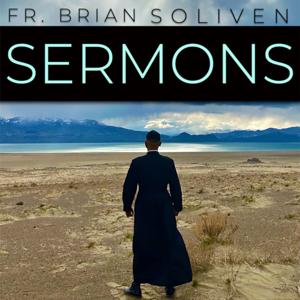


We must forgive, for we ourselves have been forgiven a debt beyond reckoning. The wrongs we bear against one another, though grievous, are but small coins beside the vast debt of sin that stood against us, a debt whose end was death and separation from God. Yet Christ, in His mercy, took that burden upon Himself and opened the way of life to us. Therefore let us not cling to the lesser debts owed by our brothers, but release them as we have been released, remembering always the mercy that first sought us when we had no strength to save ourselves.
We are forever trying to make ourselves strong enough to need no Father, and this is the very madness from which Christ calls us to be saved. The child does not calculate whether the arms that hold him are capable of holding him; he simply rests there. So must we learn again to become little, not childish, but utterly dependent, emptied of the proud illusion that we can carry ourselves. Our Heavenly Father does not ask us to understand the whole road before we take the next step. He asks us to trust His hand. And perhaps the hardest lesson of faith is also the simplest: that the Kingdom is entered not by those who have learned to stand alone, but by those who have finally learned to let themselves be held.
There is a curious notion that if we are faithful enough, wise enough, or holy enough, the storms of life will somehow pass us by. Yet Our Lord never promised calm seas. He promised His presence. The storm is not evidence that God has abandoned us; often it is the very place where He teaches us to trust Him.
When St. Peter stepped from the boat, he accomplished the impossible. He walked upon the water—not because the waves had ceased or the wind had surrendered, but because his eyes were fixed upon Christ. The miracle was never that the sea became gentle. The miracle was that faith proved stronger than the storm. It was only when Peter measured the size of the waves instead of the greatness of the Savior that fear found its opening. The wind had not grown stronger; his gaze had simply wandered.
How often we make the same mistake. We count our troubles more carefully than we count God’s promises. We become experts on the waves. Yet anxiety has never calmed a sea, and fear has never carried a soul across the water.
Our parish mission boldly calls us to “Be Faithful Like Mary.” Those few words contain a lifetime of wisdom. The Blessed Mother did not live a life free from storms. She knew uncertainty at Bethlehem, sorrow in Egypt, misunderstanding in Nazareth, and unspeakable grief beneath the Cross. But through every trial, her heart remained fixed upon the Lord. She did not pretend the storms were small; she simply knew that God was greater. Her faith was not the absence of suffering but the refusal to let suffering have the final word.
To be faithful like Mary, then, is not to ask God for fewer storms, but for steadier eyes. It is to look beyond the crashing waves and behold the One who commands both wind and sea. The Christian’s peace is never found in favorable weather; it is found in the presence of a person. As long as Christ remains the object of our gaze, no storm can ultimately overcome us.
The waves will rise again. The winds will surely blow. They always do. But if we keep our eyes on Jesus, and if, like Mary, we remain faithful whatever the weather, we will discover that the One who called us onto the water has never ceased holding us in His loving care.
We do not come to Christ because He promises an easier road, nor because He adorns our hands with the glittering prizes of this passing world. We come because He bids us take up a cross before He speaks of a crown. The Christian faith is not an escape from suffering but an invitation to die to the self that clings so desperately to comfort and applause. If we seek only what is pleasant, we shall soon abandon Him; but if we have seen that He alone is Truth, then even the hardest path becomes worth walking. It is precisely because Christ asks for everything that He is worthy of our trust, for only the One who leads us through death can also lead us into everlasting life.
*The homily was given at our Traditional Latin Mass, which uses different Sunday Scripture readings*
The world is very good at filling our ears, but not our souls. From the moment we awaken, voices compete for our attention, each promising peace if only we will listen a little longer. Yet Christ chose another way. Again and again, the Gospels tell us that He withdrew to lonely places to pray. Before teaching the crowds, before carrying the Cross, before choosing His disciples, He first sought the quiet company of His Father.
If the Son of God desired silence, how much more do we?
There is something sacred about stepping away from the noise in the middle of an ordinary week. Not because the week has become less busy, but because our hearts have become more needy. A soul cannot live forever on hurried prayers, just as a friendship cannot flourish on passing greetings alone. Love requires presence.
At St. Mary’s Parish, the side door remains open during the week, quietly inviting anyone who longs for a few moments with the Lord. Beyond that door is not merely a church building, but a sanctuary where the Blessed Sacrament waits in gentle silence. There, in Eucharistic Adoration, Christ asks for nothing spectacular. He simply invites us to be with Him.
The world measures success by constant activity. Heaven often measures it by faithful attention. An hour spent before Jesus may seem unproductive to everyone else, yet it is often the hour that puts every other hour in its proper place. In His presence, burdens become lighter, anxieties lose their sharp edges, and the soul remembers who it belongs to.
If you find yourself weary this week, do not wait for Sunday to seek Him. Walk through the open side door.
Is God real? If so, why is there so much evil in the world? How do we know our God exists? Why does God only hear you sometimes? What is going on with the tabernacle and the bread? How do I actually talk to God? These are some of the questions our Confirmation students asked in class one day. These questions can seem like obstacles to faith, when in truth they are often the first footprints leading toward it. A heart that asks such things is not necessarily far from God; rather, it is a heart that seeks.
Among Christ’s most surprising stories is the parable of the wheat and the weeds in today’s Gospel passage. A farmer sows good seed, but in the darkness an enemy scatters weeds among the wheat. The servants are eager to tear the weeds out at once, yet the master restrains them. “Let both grow together until the harvest.” At first this seems almost careless. Why would a good master tolerate weeds? But Christ is teaching us something astonishing: God permits evil, not because He delights in it, but because His wisdom is so great that He can draw from it a harvest more glorious than we can presently imagine.
We long for a world where God would uproot every evil before breakfast. Yet if He did, we might discover that many of the roots are tangled with our own. Patience is one of God’s greatest mercies. The same sunlight that nourishes the wheat also gives the weeds one final opportunity to become something else. God’s delay is not indifference; it is mercy reaching as far as it can before justice finally arrives.
Sometimes His greatest answer is not to change our circumstances, but to change us. Silence is not proof that heaven is empty. Often it is the quiet in which roots grow deepest.
In the end, Christianity does not merely explain evil; it proclaims that evil does not have the final word. The Cross itself appeared to be the greatest triumph of darkness, yet from that single Friday came the salvation of the world. If God could make mankind’s worst crime the doorway to eternal life, then there is no sorrow, no question, no wound He cannot weave into His final harvest. One day, when the wheat is gathered into His barn, we shall discover that not one tear entrusted to Christ was ever wasted.
There is something deeply unsettling about temptation, not because it shouts, but because it borrows the language of Christ. Our Lord says, "Come to me, all who labor and are burdened, and I will give you rest." Sin whispers nearly the same invitation: Come to me. I will quiet your loneliness. I will ease your pain. I will satisfy your hunger. Every addiction makes the same promise, and the devil himself has become a master ventriloquist, mimicking the voice of the Good Shepherd while leading souls toward a precipice. Yet there is one infallible difference. Christ always delivers what He promises, and more; sin never does. It offers rest but leaves exhaustion, freedom but forges chains, pleasure but plants regret. Only Jesus can lay down burdens without laying waste to the soul, for He alone carries the Cross that carries us home.
There is a quiet fear that follows nearly every human heart: the fear that, in the end, we will be left alone. We can endure hardship more easily than abandonment. Yet this is precisely where the Gospel begins. Christ does not remain a distant God, watching the world from beyond the stars. He comes to us as Immanuel—God with us. He walks our roads, bears our sorrows, enters our suffering, and even steps into death itself so that there is nowhere we can go where He has not already gone before us. The Christian hope is not merely that God will rescue us someday, but that He refuses to leave us in the pit. And a soul that discovers it is never alone has already begun to taste heaven.
**Thank you for your patience with the slight ruffling noise in the recording. I had microphone issues for some mysterious reason**
There is something wonderfully revealing about the old Spanish architect who devoted his life to the grand basilica of La Sagrada Família in Barcelona (still under construction after 144 years). He understood that if stone could preach, then it ought to preach Christ. And so he imagined a church whose highest point would not honor a king, an emperor, or even the genius of its designer, but Jesus Himself. The tallest tower would belong to Christ, as if to remind every traveler, every skeptic, and every weary soul that there is One who stands above every earthly ambition.
Our age is forever building towers of another kind. We strive to become taller through success, wealth, influence, or pleasure, believing that if only we could climb high enough, the ache within us would finally be quiet. Yet the heart is not deceived for long. It was fashioned for greatness, but not the greatness of our own making. It longs for the infinite because it was created by the Infinite. Every restless desire is, in the end, a homesickness for Christ.
Perhaps this is why our Lord looked upon His disciples and said, "Blessed are your eyes, for they see" (Matthew 13:16). Countless generations had longed to behold the face of the Messiah, and there He stood before ordinary fishermen and tax collectors. Their eyes were blessed not because they possessed extraordinary vision, but because they recognized extraordinary beauty. To see Jesus is to see the fulfillment of every noble longing the human heart has ever carried.
The towers of the Sagrada Família rise not merely to impress the eye, but to lift it heavenward. They whisper that true greatness is not found by making much of ourselves, but by gazing upon the One in whom all greatness dwells. The highest things in this world are at their best when they teach us to look beyond themselves.
For every human longing, however confused or misdirected, is finally a search for God. As G.K. Chesterton famously observed, "Every man who knocks on the door of a brothel is looking for God." The tragedy is not that we desire too much, but that we so often mistake the shadow for the substance. Christ alone is the greatness we seek, the beauty we pursue, and the home for which every human heart was made.
Again and again throughout the long pilgrimage of the Church, the Gospel has conquered hearts not chiefly by the brilliance of argument or the elegance of reason, but by the radiant witness of men and women so utterly convinced that Jesus Christ is the Truth that they counted no earthly treasure—not even their own lives—more precious than Him. The blood of the martyrs has accomplished what the sharpest intellect alone never could: it has persuaded the world that Christ is not merely an idea to be debated, but a King worth dying for.
From the publisher's feed

227,448 Listeners

4,984 Listeners
6,223 Listeners
7,653 Listeners
2,154 Listeners

28,207 Listeners
1,274 Listeners

39,402 Listeners

61,803 Listeners
662 Listeners
11,374 Listeners

5,708 Listeners

10,593 Listeners
5,221 Listeners