Free Astronomy Public Lectures

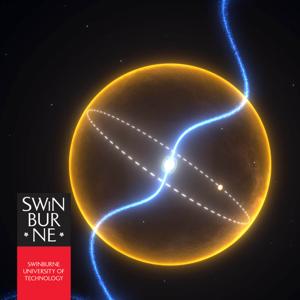
Free Astronomy Public Lectures

By Swinburne University of TechnologyEducation
Download on the App Store

Free Astronomy Public Lectures episodes

  • The violent Universe: explosions, transient events, and gravitational waves (Free Astronomy Public Lectures)
    Presented by Igor Andreoni on Friday 20 October 2017.

    The ancients considered the Universe unchanging, and had a special name for the planets, which they regarded as “wanderers”. Any changes in the night sky were seen as portents of doom – and a reason to fear the Gods. The advent of modern astronomy means that we no longer fear changes in the night sky, indeed some of us make our living from them! In this lecture I will tell you the story of the modern transient sky, where stars live and die in spectacular explosions and amazing instruments such as the LIGO and Virgo gravitational wave interferometers probe the darkest depths of the Universe. The discovery of gravitational waves was awarded the Nobel Prize in Physics this month and has the power to reveal a plethora of new science from the merger of black holes and other exotic stars.
    1 hr 14 min
  • "When life got really big" - Tales from a rock whisperer (Free Astronomy Public Lectures)
    Presented by Prof. Patricia Vickers-Rich on Friday 7 July 2017.

    We have been plotting the history of life around the world and climate over more than 1 billion years. Tonight we will zero in on a time when the Earth's first animals came into the picture - at a time when the planet was in the grips of a massive glaciation, Snowball Earth - which is likely better named Slushball Earth.
    1 hr 5 min
  • Small, medium, large: what galaxy sizes reveal about their past (Free Astronomy Public Lectures)
    Presented by Dr Rebecca Allen on Friday 12 May 2017. Galaxies are the largest structures of matter in our Universe. Our own Milky Way has been studied in glorious detail. We know it has billions of stars, around most of which planets are likely to be found. There is a super massive black hole at its center where anything that gets too close will be consumed. There are intricate dust lanes that obscure the main disk of the galaxy. There is the life-force of stars, hydrogen gas. Finally, there is the mysterious dark matter that acts as a gravitational glue holding the ordinary matter together. But our galaxy is just one of many, and since their discovery, understanding how these complex objects form and evolve has been a focus of astronomers. There are many pathways to reveal more about the nature and evolution of galaxies. In this talk, Dr Rebecca Allen from the Centre for Astrophysics and Supercomputing, will share how she uses the sizes of galaxies to understand more about their growth.

    54 min
  • The rocket science in everyday life in your backyard (Free Astronomy Public Lectures)
    Presented by Dr. Themiya Nanayakkara on 21st April 2017.

    Over the last century, our understanding of the Universe has grown by leaps and bounds whilst posing new questions and testing our very fundamental knowledge and understanding of things around us. To answer these profound questions, scientists are planning ever more ambitious projects driven by human curiosity, to explore the unknown and comprehend our place in the vast senseless space. The Australian federal government in 2016-17 provided AUD 10 billion in support of science research and experiment development while NASA and ESA combined, plans to invest USD 25+ billion in 2017. Why is it important for governments to spend substantial amounts of money in fundamental science research? What are the benefits for the average tax payer, from governments investing billions of dollars into space science? How has our everyday lives been influenced by such investments? Together we shall discuss and explore how our investments in science has improved our way of living, and what the future may hold in store for us.
    1 hr 3 min
  • Cosmology: from the Big Bang to the formation of atoms (Free Astronomy Public Lectures)
    Presented by Assoc. Prof. Emma Ryan-Weber on 10 February 2017.

    The whole Universe was in a hot dense state, then nearly 14 billion years ago expansion started. Wait... is the Bang Bang true and how do we know? In this talk Associate Professor Emma Ryan-Weber from the Centre for Astrophysics and Supercomputing will describe the observational evidence for Big Bang Cosmology and how it sets the initial conditions for every atom in the Universe. The talk is especially suitable for year 11 teachers and students studying VCE Physics Unit 1, area of study 3 "What is matter and how is it formed".
    54 min
  • The world's largest radio telescope in your backyard (Free Astronomy Public Lectures)
    Presented by Dr. Tyler Bourke on 24th March 2017.

    Australia is part of an international effort to build the World's largest radio telescope, the Square Kilometre Array (SKA). In fact, one of the two telescope arrays that make up the SKA will be built in the Western Australian outback near Murchison, about 800 km NNE of Perth, a remote area almost devoid of people, but already the location of two advanced radio telescopes. The other SKA telescope array will be in a similarly isolated location in South Africa. The telescopes of the SKA will provide more than an order-of-magnitude increase in performance over existing radio telescopes, to for example: address fundamental questions on the history of our Universe and the emergence of the first stars and galaxies ; detect the merger of super-massive black-holes at the centres of galaxies through their gravitational waves, and use these events to test Einstein's theories ; detect powerful bursts of radio emission whose origin and nature remain controversial.
    1 hr 11 min
  • LIGO, gravitational waves and the new astronomy (Free Astronomy Public Lectures)
    On September 14, 2015, gravitational waves from the merger of two black holes rippled through the Laser Interferometer Gravitational-wave Observatory (LIGO). The measurement of these ripples would ultimately lead to the first direct detection of gravitational waves, the first observation of a binary black hole, and the birth of an entirely new field of astronomy. In this talk, Dr Eric Thrane from Monash University, will trace the history of gravitational waves from Einstein to the LIGO detection. Dr Thrane will describe how LIGO works and how we are using it to learn about black holes and other interesting objects. He'll also discuss the future of gravitational-wave astronomy in Australia and around the world. Presented on 16 December 2016.
    1 hr 13 min

About Free Astronomy Public Lectures

From the publisher's feed

Each month, from February to November, the Centre for Astrophysics & Supercomputing presents a free public lecture at the Hawthorn campus of Swinburne University of Technology.

More shows like Free Astronomy Public Lectures

Chancellor's Lecture Series by Swinburne Commons

Chancellor's Lecture Series

0 Listeners

Talking About ... by Learning Transformations Unit

Talking About ...

0 Listeners

CSIRO Oral Histories by Swinburne Commons

CSIRO Oral Histories

0 Listeners