
Sign up to save your podcasts
Or

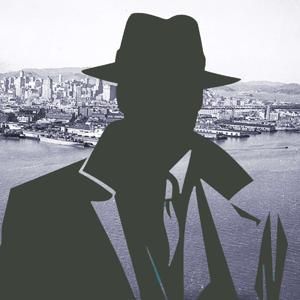


This episode of "The Secret History of Frisco" podcast introduces listeners to Jimmie Tarantino, a man described as a "louse, a blowhard, a barely literate, anti-Communist shake-down artist." The episode delves into Tarantino's early life in East Orange, New Jersey, and his eventual move to Hollywood where he became a peripheral member of Frank Sinatra's inner circle, "The Varsity."
I discuss Sinatra's deep and complicated ties to organized crime and he used those connections to get out of his contract with bandleader Tommy Dorsey. It involved a pistol jammed in Dorsey's mouth.
The podcast then details how Tarantino, with financial backing from Sinatra and mobster Mickey Cohen, started a tabloid called Hollywood Nite Life to extort celebrities. This venture eventually led to Tarantino double-crossing Sinatra, fleeing to San Francisco, and joining forces with crime boss Bones Remmer. The podcast also shares a moving story about Sinatra's courage as a champion of civil rights and the remarkable life of boxing champion and war hero Barney Ross, who was also involved with Tarantino's magazine.
In "Call It FRISCO, Part 2," host Knox Bronson defends his podcast's name, "The Secret History of Frisco," against objections from hither and thither, including the Reddit San Francisco group. Historical figures like Emperor Norton and madam Sally Stanford each make an appearance, showcasing their differing views on the term "Frisco." "Colorful characters like Foghorn Murphy and Charles Cora, embraced the name, contrasting them with later transplants who, according to Stanford's autobiography, brought "provincial" sensibilities and disapproved of the city's previously open and permissive culture. The Secret History of Frisco is a deliberate nod to this older, more authentic San Francisco spirit, despite suprisingly vehement opposition.
In this episode, the first of a series, Knox Bronson, host of "The Secret History of Frisco" podcast, welcomes Rachel Walther, a film noir expert and author, to discuss the genre's connection to San Francisco. Walther, who writes for the Film Noir Foundation's "Noir City" magazine and has a forthcoming book on "Dog Day Afternoon," highlights San Francisco's significant role in film, particularly after World War II, due to its cinematic landscape and the rise of on-location shooting. The conversation then delves into two adaptations of "The Maltese Falcon," the 1931 and 1941 versions. While the 1941 film, directed by John Huston and starring Humphrey Bogart, is widely considered a foundational noir, the 1931 version, starring Ricardo Cortez, is noted for its different interpretation of Sam Spade and its more studio-bound production.
The discussion also explores the historical context of San Francisco in the 1930s and 40s, touching upon the city's organized crime elements and how those were rarely directly depicted in films of the era. Walther explains that '30s films set in San Francisco often harked back to the Barbary Coast lore rather than contemporary issues. She attributes the surge of on-location shooting in San Francisco in the post-war period to lighter camera equipment and filmmakers' desire to move beyond studio sets, inspired by Italian neorealism. The interview concludes with a focus on the Film Noir Foundation, a non-profit dedicated to film restoration, highlighting their magazine and restored films like "Woman on the Run" and "The Man Who Cheated Himself," both shot extensively in San Francisco in the late 1940s and early 1950s—considered the golden era of noir in the city.
The episode chronicles the romantic life of Johnny Ochsner, a young Oakland oil heir whose escapades in the 1940s became international news.
Marguerite Faye Human and Teresa Briston, separately stowawayed across the Pacific in pursuit of Johnny, driven by dreams of marriage.
The story involves underage sex, a high-seas burglary, and the intervention of the FBI, naval officers, juvenile court, as well as Johnny's wealthy mother, who actively interfered to protect her son from what she perceived as "gold-diggers."
Johnny's romantic life continued to be tumultuous, marked by a number marriages, divorces and annulments, throughout his life.
Wealth, privilege, and very likely alcohol all play a part in these chapters from the life of the rich kid Romeo from Oakland.
This bonus episode of "The Secret History of Frisco" podcast delves into the scandalous lives intertwined with San Francisco's notorious madam, Sally Stanford. Born Mabel Busby in 1903, Stanford's early life of poverty and a wrongful imprisonment for cashing stolen checks fueled her determination to achieve financial independence. By 21, she opened her first brothel in San Francisco's Tenderloin, adopting the name Sally Stanford and quickly expanding her empire to multiple locations across the city. Her autobiography, "The Lady of the House," paints a vivid picture of a "live-and-let-live" San Francisco, where her establishments thrived.
The podcast highlights her flagship brothel at 1144 Pine Street, a "fortress" she acquired in 1941, designed by Stanford White. This lavish establishment, frequented by the city's elite and wartime contractors, became a hub of clandestine activity, with rumors suggesting even the early details of the United Nations were hammered out in her living room.
The episode then introduces two legendary Hollywood figures and their connections to Stanford. Humphrey Bogart, despite his public image as a "tough and rugged good guy," is revealed by Stanford as a "foul-mouthed, pugnacious drunk" who was eventually "eighty-sixed" from her establishment due to his boorish behavior towards her girls. This account significantly diminishes his heroic luster in the host's eyes.
In contrast, Errol Flynn—a "swashbuckling scalawag"—was a beloved figure at Sally's. After decking a Marine at Finnochio's, a famous North Beach nightclub known for its female impersonators, Flynn sought refuge at Stanford's Pine Street house for two weeks in late 1945. Stanford recounts his charm and the fact that he "tested all of the talent, including both shifts, twice," going through the place "like a dose of salts." Despite his personal struggles and "screwy beliefs," Flynn's uninhibited nature and courage captivated Stanford and her girls.
The episode concludes by bidding adieu to Bogart and Flynn, promising more tales of the formidable Sally Stanford in future installments of "The Secret History of Frisco."
The Secret Life of Freddie Francisco: A Rogue's Rise and Fall
This episode of "The Secret History of Frisco" delves into the captivating, often scandalous, life of Bob Patterson, a writer of prodigious talent and even more prodigious roguishness. Under the pen name Freddie Francisco, Patterson became Northern California's most powerful newspaper columnist in the 1940s for the San Francisco Examiner. His dazzling prose and irreverent insights into San Francisco's elite captivated readers, but his career came crashing down in 1949 when Hollywood Life exposed his hidden past: a convicted criminal who had served four prison stints.
Born Robert Lawson Preston in 1907, Patterson was a man of many aliases and even more arrests—over 40 in his lifetime. At just 18, he was arrested for passing bad checks as "Maximillian Carlton." A year later, he was reporting for the San Francisco Chronicle before moving to New York City to continue his journalistic career. As the host aptly puts it, "criming came as naturally to Bob as breathing: it was simply in his DNA, as was writing." He became a "rococo stylist" who ghost-wrote memoirs for infamous figures like lawyer Jake Ehrlich and San Francisco madam Sally Stanford.
Patterson ran the gamut from confidence games and larceny in Chicago to grand larceny, robbery, and assault in New York, leading to stints in Elmira Reformatory and Sing Sing Prison. He even impersonated a prominent San Francisco socialite, Niles Larsen, to pass bad checks—a clear indication of his "Trickster's natural disdain for the upper crust."
Out of prison, near the end of WWII, Patterson wrote a letter to the San Francisco Examiner on Time Magazine stationery, got hired and moved to San Francisco.
The episode concludes with a reading from Freddie Francisco's September 26, 1946 column, "'Bad' Women, but They Make Good Company," which subtly challenges societal notions of respectability and reputation. Patterson, ever the astute observer, critiques the hypocrisy of the upper crust, highlighting that "bad" women often possess more warmth and humanity than their "reputable" counterparts. The host muses on Patterson's enduring appeal, wondering if such a "rascal" could thrive in today's journalistic landscape.
In this episode, I talk to author and historian Paul Drexler about the crime and vice rooted in the very birth of San Francisco and their evolution and influence in the city for the next hundred years.
People and groups discussed in the episode include the Sydney Ducks, the Hounds, the San Francisco Police Department, Donna Fine, Sally Stanford, Bones Remmer and his mafia connections, including one-time employee Jack Ruby, California Governor and Attorney General Edmund G. Brown, and various other criminals and their Frisco escapades.
Paul's Book, Notorious San Francisco: True Tales of Crime, Passion, and Murder, can be found here on Amazon.
His website for his San Francisco Crime Walking Tours can be found here.
I have a wonderful episode for you today, the story of the Hawaiian princess who came to San Francisco to open a nightclub where she could sing. We will again encounter lawyer Jake Ehrlich, of course. The McDonough Brothers, who controlled all the vice in the city, Chief of Police William Quinn and his corrupt Captain Fred Lemon at Central Station, also make appearances.
The Princess came to California in 1930. In 1933, she opened the Club Kilokawa on Bush St., full of pictures of Diamondhead and Waikiki Beach, palm fronds, coconuts, and prostitutes in grass skirts. It was very popular place.
However, the Princess refused to make the payments to the McDonough Brothers' graft machine and drama ensued. Ultimately, the Princess made some remarks to the press after a Grand Jury appearance. Her short speech led to the creation of Atherton Report of 1937, which shook Frisco to her core almost as badly as the great quake of 1906.
This episode explores the long and often contentious history of the nickname "Frisco" for San Francisco. Despite the strong disapproval of many, including Chronicle columnist Herb Caen, the term has deep roots stretching back to the Gold Rush era.
We delve into the earliest documented uses of "Frisco" in the mid-19th century, finding it in letters from 1849 and newspapers like the Placer Times in 1850, suggesting it was once a common and respectable abbreviation, even appearing in genteel literature by 1868. The episode also touches on the theory of a Middle English origin for "Frisco" as a port term. We examine the contrasting perspective, highlighting how figures like Emperor Norton, the judiciary, and Herb Caen later campaigned against the nickname, viewing it as vulgar and disrespectful, particularly associating it with outsiders and the city's more unruly past.
The discussion then shifts to the more nuanced and contemporary understanding of "Frisco." We explore how, despite the traditional disdain, the term has persisted and even been reclaimed by certain communities, notably within Black San Francisco culture, as a sign of solidarity and identity. Even Herb Caen eventually softened his stance, acknowledging it as a "salty nickname." Ultimately, the episode concludes by inviting listeners to reconsider their own use of "Frisco" as a way to connect with the city's rich and complex history, particularly the "wide-open" era that this podcast aims to resurrect.
Links:
A call to Action:
Share your stories and knowledge of San Francisco in the 1930s and 1940s! If you have expertise or anecdotes to share, please reach out. Tell your friends who love San Francisco history about the podcast, and have a little fun... call it Frisco!
Welcome to The Secret History of Frisco, a podcast peeling back the layers of San Francisco's vibrant and often illicit past during its last wide-open era, 1934 to 1953. Join host Knox Bronson as we journey through the city's smoky backrooms, bustling waterfronts, and glittering nightlife, where fortunes were made and lost, and a unique live-and-let-live ethos reigned supreme, naturally contingent on the right palms being greased. From the early days of Gold Rush outlaws like The Hounds and the Sydney Ducks, who set the stage for a city steeped in vice, to the looming figures of Mafia boss Frank Lanza and the corrupting influence of the McDonough brothers, we'll explore the intricate dance between crime, politics, and the burgeoning cultural landscape that captured the world's imagination, as immortalized in Tony Bennett's iconic ode to the "cool grey city of love."
In this inaugural episode, we set the stage for our exploration of Frisco, a term embraced for its outlaw swagger and the swirling mix of cultures, dreams, and darkness that defined San Francisco. We'll encounter the legendary defense attorney Jake Ehrlich, a true embodiment of the city's spirit, and glimpse the powerful forces that shaped its underworld, including the entrenched Mafia and the deeply compromised San Francisco Police Department, whose lucrative take from vice painted a picture of a city operating by its own set of rules. From the Barbary Coast's den of iniquity to the nascent jazz clubs and the shadow of the impending crackdown, prepare to delve into the secret history of a Frisco on the cusp of transformation, a city as seductive and dangerous as the fog that rolls through the Golden Gate.
From the publisher's feed
Join us on a cinematic journey through the last wild years when San Francisco was still wide-open. The cops ran the town in the Thirties and Bones Remmer ran the town in the…