
Sign up to save your podcasts
Or

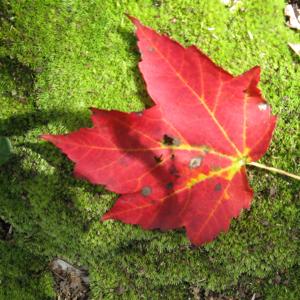


Every 3rd Wednesday we have Wood Artist, Gary Mead on the show to discuss a native tree, or something else forest-related. This month we'll be discussing the most abundant spruce trees in the Catskills--Norway & Red.
On this week's show, we'll be talking to Cornell University Associate Professor of Natural Resources Bernd Blossey about his 10-year study. Bernd and his team found that neither fertility control nor recreational hunting was effective at reducing whitetail deer populations or the pressure they place on native vegetation.
Bernd was born and raised in northern Germany. In 1992, he moved to Cornell University, where he is a Professor directing the Ecology and Management of Invasive Plants Program. He also is the PI for the New York Invasive Species Research Institute. A major part of Bernd's work is the development and implementation biological weed control programs using specialized insect herbivores. Among his target plants are purple loosestrife, garlic mustard, water chestnut, Japanese knotweeds and invasive Phragmites.
An ever-increasing focus of his team are investigations into impacts of multiple “stressors” including invasive plants, non-native earthworms, and deer on a wide range of native organisms. He is intimately involved in different approaches to deer management at Cornell and in the surrounding municipalities, and he is the chair of the Cornell Deer Management Committee. Bernd has developed a network or deer exclosures to study impact of deer on many species and processes, and is developing bioindicators to assess effects of different stressors, including deer. The ultimate aim of this work is to increase the conservation values of all lands through development of best management practices.
On this week's show we'll be talking about agroforestry, or the "integration of trees & agriculture" with the Agroforestry Center's Tracey Testo-Smith.
Tracey Testo-Smith is on the Agriculture and Natural Resource Team at Cornell Cooperative Extension of Columbia and Greene Counties’ Agroforestry Resource Center and Siuslaw Model Forest as an Agroforestry and Natural Resource Educator. She graduated from SUNY Cobleskill’s Plant Science and Horticulture Bachelor program, has worked on many farms including the world’s largest wild-simulated ginseng farm, and manages her own forest farm.
Her employment at CCE is multi-faceted, including her role as co-chair of the NYS Agroforestry Program Work Team, and educator of general forestry and agroforestry topics such as deer browse, mushroom cultivation, ginseng production, plant, and mushroom identification as well as foraging classes. Much of her work is applied at the organization's 142-acre watershed demonstration forest, the Siuslaw Model Forest.
Tracey enjoys working with natural systems, specifically forests and streams, to build more resilient communities through education. Her passions include gardening, hiking, wild plant identification, the study of mycology, and foraging for food and medicine.
Summer is sunsetting, while fall is rising. On this week's show, we'll discuss some of the science behind these beautiful fall colors and our favorite fall foliage trees as well.
Every 3rd Wednesday we have Wood Artist, Gary Mead on the show to discuss a native tree, or something else forest-related. This month we'll be discussing the Douglas fir tree.
On this week's show we'll discuss the midstory of the forest. A forest is made up of three canopy stratums--the overstory, midstory and understory (forest floor). We'll focus on the midstory and why it might be less important than originally thought. That's right. Less important.
On this week's show we'll discuss a shrub that went from being a hero or pushed onto the landscape, to one that has been shunned or prohibited. Whether you like or dislike this plant, it seems to symbolize how culture has changed surrounding plants and their management.
Paul Misko is an avid hiker who grew up in Woodland Valley, Ulster County. Paul will discuss Wednesday's hike with CFA Staff up Woodland Valley, things that have changed and what not over the many decades.
From the publisher's feed
Ranked by our users in the last 21 days

78,308 Listeners

31,922 Listeners
23,763 Listeners

43,334 Listeners

38,636 Listeners

26,824 Listeners

3,652 Listeners
679 Listeners

111,800 Listeners
874 Listeners

24,521 Listeners

3,562 Listeners
55 Listeners

5,558 Listeners

16,033 Listeners