
Sign up to save your podcasts
Or

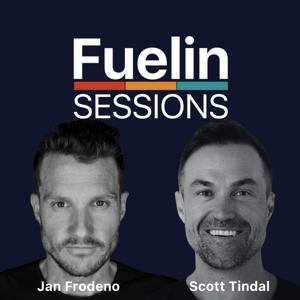


Megan joins Scott Tindal on Fuelin Sessions to discuss whether female athletes really need to eat more during different phases of their menstrual cycle. With research suggesting women consume an average of 168 additional calories per day during the luteal phase, does this reflect a genuine increase in energy needs, or are hormonal changes influencing hunger and cravings?
They break down the latest research on menstrual cycles, appetite, and metabolism, and discuss practical ways female athletes can manage cravings while maintaining their nutrition and performance goals.
STUDIES / ARTICLES MENTIONED
The Effect of the Menstrual Cycle on Energy Intake: A Systematic Review and Meta-analysis
Evidence for Periodizing Strength and/or Endurance Training According to Menstrual Cycle Phases to Optimize Female Athlete Performance Is Lacking
Increased carbohydrate availability partially attenuates endocrine suppression in response to low-energy availability
Fuelin Article: Cutting Calories, Cutting Carbs: You may want to rethink that strategy
MORE FROM FUELIN
Follow Fuelin on Instagram
Try Fuelin for 14 Days
Dr. Alan McCubbin joins Scott Tindal on Fuelin Sessions to discuss whether athletes really need to go gluten-free. With so many athletes avoiding gluten in hopes of improving performance and reducing gut issues, is there actually any science to support it? And could cutting out gluten unnecessarily do more harm than good? Listen to find out.
STUDIES / ARTICLES MENTIONED
Exploring the Popularity, Experiences, and Beliefs Surrounding Gluten-Free Diets in Nonceliac Athletes
Low Carbohydrate Availability in Energy Balance Alters Bone Turnover and Muscle Proteomic Response With Limited Endocrine Disruption
Body fat, skin tone, and the accuracy of smartwatch caloric expenditure estimates
Lactate Gels
MORE FROM FUELIN
Follow Fuelin on Instagram
Try Fuelin for 14 Days
Can a workout make up for a bad night’s sleep? Scott Tindal sits down with Dr. Michael Ormsbee, who directs Florida State University’s Institute of Sports Sciences and Medicine (yes, the pre-sleep protein guy, and Scott has already asked him back for that one). Michael's lab pushed people’s bedtimes back until they lost 30% of their sleep, three nights running. In the sedentary group, cardiovascular function started to slip. The active group held. It doesn’t save everything. College women who lifted and binge drank kept their strength, but their glucose control still drifted. They also get into why journal reviewers won’t let Michael publish sleep stage data from wearables, and why his cross-country runners’ sleep a full week out still showed up on race day.
STUDIES MENTIONED
Body Composition Changes in Postmenopausal Women After Twelve Weeks of Either Resistance or Aerobic Training (conference abstract, study ongoing)
Resistance Training and Binge Drinking: Impacts on Glucose Regulation in Young Adult Females
Impact of Exercise on Sleep in Postmenopausal Women With Obesity: A Pilot Study
Sleep Duration Correlates With Performance in Ultra-Endurance Triathlon
Pre-Sleep Milk-Derived Proteins Do Not Impair Sleep or Recovery in Elite Female Athletes
Effects of Pre-Sleep Macronutrient Ingestion on Nocturnal and Morning Glycemic Responses in Elite Female Athletes: A Pilot Study
MORE FROM FUELIN
Fuelin on Instagram
Try Fuelin Free for 14 Days
What does an Olympic champion eat when he’s racing for fun? Scott Tindal sits down with Jan Frodeno, Olympic gold medalist and three-time Ironman World Champion, to dig into how 100,000 lifetime kilometers and a bottle every 5K at 80 grams of carbs an hour added up to a 2:23 Berlin Marathon; why UTMB OCC a month earlier was the opposite story, with Jan running dry three times and drinking from a river; and how Scott is fueling the 80K Bondi to Manly Ultra he’s running for his son Jack.
Fuelin on Instagram
Try Fuelin Free for 14 Days
Why do some athletes cramp no matter how much salt they take? In this episode of Fuelin Sessions, Scott Tindal is joined by Dr Alan McCubbin, sports dietitian and Monash University researcher, to work through the three main theories of exercise-associated muscle cramps. They dig into why the dehydration and electrolyte story has struggled to hold up in the research and how Kevin Miller's multifactorial model treats each athlete's cramps as their own recipe. Alan's take: there's no single cause, so control as many of the controllables as you can.
Martinez-Navarro I, Vicente-Mampel J, Lopez-Grueso R, Collado-Boira E, Recacha-Ponce P, Gomez-Sere T, Hernando C. Muscle Cramping in Ultra-Trail: Dehydration and Electrolyte Depletion versus Muscle Damage. J Strength Cond Res. 2026. DOI: 10.1519/JSC.0000000000005440
Martinez-Navarro et al. Muscle Cramping in the Marathon: Dehydration and Electrolyte Depletion vs. Muscle Damage. J Strength Cond Res. 2020. DOI: 10.1519/JSC.0000000000003713
Miller KC et al. An Evidence-Based Review of the Pathophysiology, Treatment, and Prevention of Exercise-Associated Muscle Cramps. J Athl Train. 2022. DOI: 10.4085/1062-6050-0696.20
Maughan RJ & Shirreffs SM. Muscle Cramping During Exercise: Causes, Solutions, and Questions Remaining. Sports Med. 2019. 49(Suppl 2):115-124. DOI: 10.1007/s40279-019-01162-1
Fuelin on Instagram
Try Fuelin Free for 14 Days
What do you do when you tear all three hamstrings off the bone and the first people you ask tell you it's probably just a strain? Scott Tindal sits down with Jen Harrison, a Chicago triathlon coach and lifelong swimmer who fell on a trail in Tucson, got sent home from the ER on crutches, and waited four days for the diagnosis. They cover the two to three week surgery window she nearly missed, why she shifted toward protein before the operation, how she ate through six weeks of bedrest, isometrics starting three days post-op, and the motto she taped to her desk: fuel for the season you're in.
Fuelin on Instagram
Try Fuelin Free for 14 Days
In this episode, Scott Tindal sits down with Megan Foley, sports dietitian and professional triathlete, straight off her Nice 70.3 World Championship start. They go through the numbers day by day, why her fat dropped to 30g and her protein to 80g, the case for drinking your carbs instead of eating them, and the decision to front load 200g on the climb because the descent gave her nowhere to fuel.
Fuelin on Instagram
Try Fuelin Free for 14 Days
Can a supplement get you sweating earlier and racing cooler? Scott Tindal sits down with Alistair Brownlee, the only male triathlete to win back-to-back Olympic gold, who now runs True Fuels and has just launched a taurine supplement called CoreCTRL. They discuss what the taurine and heat studies actually measured, whether a bigger sweat rate leaves you short on fluid, and how much of that effect a properly heat-acclimated athlete has already banked. Alistair also walks through the Kona blow-up that pushed him to strip race nutrition back.
The effect of 8-day oral taurine supplementation on thermoregulation during low-intensity exercise at fixed heat production in hot conditions of incremental humidity
CoreCTRL
Alistair Brownlee Instagram
Fuelin on Instagram
Does blending fruit destroy the fiber? Scott Tindal is joined by Fuelin dietitian Megan Foley to take apart two claims doing the rounds online, starting with the viral warning against blending bananas with blueberries, which came from a trial of eight men that never once put the two in the same glass. From there they get into the 2022 study where blended fruit produced a lower glucose response than whole fruit, what the unmeasured insulin response is probably doing underneath that, and the one real drawback of smoothies nobody posts about. Their answer on the fiber: it survives the blender.
Impact of polyphenol oxidase on the bioavailability of flavan-3-ols in fruit smoothies: a controlled, single blinded, cross-over study
Recent Research on the Health Benefits of Blueberries and Their Anthocyanins
Postprandial Glycemic Response to Whole Fruit versus Blended Fruit in Healthy, Young Adults
Perspective on the health value of carbohydrate-rich foods: glycemic index and load; fiber and whole grains
Fuelin on Instagram
90 grams of carbs an hour was never a physiological limit; it was a practical target. In this episode of Fuelin Sessions, Scott Tindal is joined by sports dietitian Alan McCubbin to unpack the narrative review questioning ultra-high carbohydrate intake in endurance athletes. They discuss where that number actually came from, why glucose oxidation tops out around 60–70g while fructose has no clear ceiling, what unpublished testing on the UTMB winners suggested about their real oxidation ceiling, why gut training improves tolerance but maybe not absorption, and why a rider under 150 watts needs 30–50g an hour, not 90.
Effects of 120 g/h of Carbohydrates Intake during a Mountain Marathon on Exercise-Induced Muscle Damage in Elite Runners
Carbohydrate improves exercise capacity but does not affect subcellular lipid droplet morphology, AMPK and p53 signalling in human skeletal muscle
C-glucose-fructose labeling reveals comparable exogenous CHO oxidation during exercise when consuming 120 g/h in fluid, gel, jelly chew, or coingestion
Fuelin on Instagram
Try Fuelin Free for 14 Days
From the publisher's feed
3,625 Listeners
425 Listeners
2,615 Listeners

7,951 Listeners

662 Listeners
302 Listeners
112 Listeners

373 Listeners

1,878 Listeners

185 Listeners
157 Listeners
562 Listeners

1,223 Listeners
31 Listeners
8 Listeners