Read on my website.
The last big weight milestone
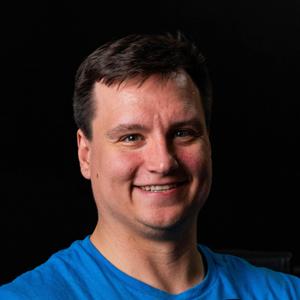
I’m not done shedding pounds, but there likely won’t be another big round number to focus on. It was not that long ago I was thrilled to be below 500 Shortly after I went below 450 and was already remarkably mobile compared to the start. Mid last year I made it to being below 400 which was finally the point where I was really starting to see progress. As I got below 350 I was back into a familiar range, and was able to wear my old clothes again. The hard part was breaking through 300 and managing to push forward. Since then I’ve been enjoying throwing myself into rollerblading and getting back on my bike.
At this stage, I would have expected to have a clearer idea of where my target is, but it’s still quite blurry. I’m still working hard to reach 15% bodyfat which is the low end of the healthy range for men. But putting that to a precise number is hard when I have a fair amount of loose skin. Once I’m in the 230s I’m thinking of getting another dexa scan to confirm how close or far away I am at that point.I don’t anticipate needing to go far below 200 if at all with the way things are.
Now that I’ve made the best of Summer, I have a bit of work to do to prepare for a return to working on The Libre Solutions Network, as well as related blogs.I appreciate your patience and support in this challenging time.
This is where the fun begins
I’m overjoyed that I get to explore so many fun activities I’ve been missing out on. These activities really help motivate me to do more than just the ‘minimum’ in the gym. Taking rollerblading seriously has been all the incentive I need to really start taking leg day seriously. I’m very focused on single-leg mobility, as well as the finer aspects of balance. If that wasn’t motivating enough, I’m finally at the point where some of the muscle I’ve put on underneath is just slightly beginning to show. One of the harder aspects of this whole process is that the positive feedback lags so very far behind negative feedback. If you eat off-plan, the scale shoots up immediately. If you hurt yourself, it can be hard to start again. In my opinion, this is the real reason why starting and restarting feels so much harder than just continuing on.
The learning has only begun
While I still don’t have a firm weight target, my health journey has now expanded far beyond weight loss. From the beginning, I knew I needed to do more than just get the weight off, but actually build a foundation for living a healthy life. As soon as I could stand it, I learned to cook for myself and have been scouring the Internet for all the information I can find regarding fitness, health, & nutrition. Now that I’m physically capable, I’m very excited to learn to rollerblade well. Since I started biking around to do errands or go down trails, I’ve definitely fallen in love with outdoor cardio. Instead of dreading Winter, my other half is determined to get us active in the snow. She is really looking forward to teaching me to ski with her this Winter, and I’m excited to go skating to improve my skills on wheels and blades.
Rollerblading
While I love to just glide through the air, I know enough to know that practicing the basics can go a long way. I’ve committed to regularly doing beginner drills, but especially my stopping skills. For lots of people, the heel brake is sufficient, but I’m really trying to get good at the t-stop. The plan is to get as much practice of the basics as I can before the Winter, but I’m really looking forward to doing longer rides when it begins getting a little cool.
Some thoughts on rollerblading as a heavy guy
* Hard-boot skates are NOT OPTIONAL! (…learned that the hard way)
* Wear ALL safety gear! (Helmet, elbow/knee pads & wrist guards)
* Ankle and foot mobility are vital, I definitely recommend training off skates in addition to your practice sessions.
* Get lower than you think you should to help with balance.
* Safely practice falling on a mat to get used to the sensation as well as protecting yourself with your limbs rather than just falling flat on your back.
* Avoid loading up any backpacks heavily.
* Like a lot of exercise, it can be better to do a little bit more often than long journeys occasionally.
* You’re going to have to rotate/replace your wheels often, that’s just how it is sadly.
* It’s worth the wait to find well-paved surfaces/parks and go when conditions are nice.
* More skin exposed means the cooler you feel, but leave it vulnerable to scrapes
Cooking & Nutrition
Learning to make food has been a gratifying experience. Taking that on in addition to the weight loss has made food feel more of a tool than a threat. Back when I wrote Why can’t I stop eating? I could never imagine what it would be like to be where I’m at now. While food troubles are not entirely behind me, I regularly have days where I’m not worried about it at all. Not out of avoidance, but from finally building up routines and enduring trust. I’m finally at the point where I’m willing to do more than the very basics when it comes to cooking. I’m interested in more complex recipes and finally beginning to put the effort in more varied meals.
Now that cooking itself is no longer the major battle, I’m very interested in learning what I should be making. My first major step into the nutrition discussion was reading Food Politics. It was an excellent read that absolutely honed some of how I see the contentious health debates these days. I still need to read ‘Being Vegan’ thanks to a kind suggestion from someone, and I’m very interested in exploring the many different perspectives out there. I certainly don’t think carbs are the enemy, but I wonder about nutrient decline. At this point, I’ve only dipped my toe into what is a very lively and contentious space.
Disability Rights
I started this journey overwhelmed with frustration of constantly feeling useless and that I was a burden. I had sacrificed my health for a tiny bit of independence that faded exponentially as my health deteriorated. In that situation, having low-self worth feels like the least of your problems. Ironically, I am now convinced it may in fact be the real problem all along. In some ways, I am lucky that much of my condition was reversible. Not only did I not believe it was possible, but many others still doubt it can be done at all. For part of me, it is gut-wrenching to realize how radically transformative a bit of long-overdue compassion with myself has been.
People say the open contempt for overweight people is rooted in health. From my perspective I largely doubt it. As someone who has transformed radically in a fairly short period of time, I have a strong sense that it’s actually rooted in different things entirely. Firstly, I think there’s a naked hatred for a (perceived or actual) lack of utility. It’s genuinely hard to do basic things the more weight you pack on. What’s likely confusing to people is that someone’s mobility while overweight is not easily deducible. Some people at a particular build can still be quite mobile, while others are unable to move without significant pain or effort. It’s not always clear what’s underneath in a wide variety of ways.
Beyond that, I think a more insidious reason obese people can be openly ‘kicked when they’re down’ by people is because it is an overt sign of larger problems. For a while I had a bit of a chip on my shoulder over the fact that other addictions with less-obvious signs can be more socially acceptable. Having overcome that a bit, it seems like people hate that a visible sign things are not always okay is just out there. Given my own difficulties with facing my own pain, I can certainly sympathize. This is where I’ve come to learn that some aspects of the spectacle of weight loss can be toxic hope porn to distract from more fundamental issues.
A lot of this has a direct impact on other issues, but especially other disabilities. While I’m still new at this, I absolutely want to have a much better understanding of disability rights and history as a whole. So far, I’ve only got my own experiences and what I’ve been able to learn from other thoughtful people, so I know there’s a long way to go. We live in a time where medical advances can do great things, and that is real power that can be abused on big and small scales. While they may overlap, medicine practiced for the benefit of the patient, rather than society are different things that can conflict at times. The threat of an all out bio-tech dystopia is far closer than it would appear. Respecting the sanctity of life, and a fundamental commitment to protecting the rights of others seems to be one of the most effective ways to work against it.
I would greatly appreciate any pointers or resources in any way related to this.
Rant: It has been a long road
I wish I could say that it gets so much easier. In some ways it really does. I no longer worry about relapsing, and this year has been wildly successful despite many serious challenges. I started 2026 at just above 300lbs. That was certainly a great deal of progress from where I started, but it was also where I had basically been for most of my life. Since the start of this year I have gone from familiar suffering to gradually beginning to feel the benefits of how far I’ve come in two years. Lately, as the weeks have passed, I’m starting to feel more capable rather than just less constrained.
So much of where I’m at now is entirely unfamiliar. My long run of social isolation and immobility didn’t really begin during the covid years. Now that I have taken off the weight of those years and then some, I am beginning to uncover problems that are harsh reminders I’m not coming out of this unscarred. Despite being really strong in some ways, insidious mobility difficulties remain. As frustrating as that can be I’m fairly optimistic that with time I can resolve those as well. What’s really painful for me at this stage is grieving the opportunity cost of not having fixed all this earlier. It is immensely challenging to ignore that when so many simple interactions and small things serve as nagging reminders.
People who have taken this road before warn that people treat you radically differently as you change. I did not expect it to be so heartbreaking. It has been eye-opening to see the world as someone people dismiss as useless at best, to gradually but swiftly being seen in a whole new light for fairly superficial reasons. I am certainly not blind to the ways in which obesity makes even the simplest things in life more difficult, but I vastly underestimated how much of that is exacerbated by how one is seen. Which is why even fairly nice interactions now can be quite bittersweet. I am quite worried about how I will ever come to trust people outside the (thankfully numerous) people who showed me real kindness prior to changing.
A downside to ’throwing everything’ at this problem for as long as I have is that I feel like I have learned too much about it. I’ve been trapped in a vicious shame-spiral over being unable to articulate how I’ve been feeling about this. In part, this is because I feel I have no right to complain about any of this. I am quite happy to have come this far, and it was completely unthinkable not that long ago. It’s just that I feel wholly unprepared for what feels like a crash landing. That’s the part that makes it difficult to share. I feel bad, and that makes it hard to talk about how I’m feeling, then I feel bad for not continuing to be transparent about all this. Even worse, I’ve fallen behind on projects outside this mission which aggravates me greatly. At this stage, I’m learning that there is a fine line between being patient with oneself and slow-motion self-abandonment.
So much of this process is not at all interesting to me anymore. I’ve mastered the basics and the nuances often don’t amount to enough to bother obsessing over. I want to continue to lose weight so that I can get the most out of the fun activities I’m learning. As far as ‘good problems to have’ I feel genuinely lucky to have been able to get to this point. The hard part is that I’ve also learned a lot about health generally, and it’s no longer at all shocking to me that not only do so many people struggle with weight, but why so few people manage to reverse it.
I’m not special.
So what I’m supposed to say here is that I’ve dropped the ‘victim mentality’ regarding my weight so that I can seize all the blame for it in exchange for assuming all the credit for reversing it. I’m supposed to say “If I can do it, so you can too!” with a smile while I look down on where I started. Once I’m comfortable with rewriting history to absolve the bigger picture, I can then decry others for struggling with their ’excuses’. I am convinced this is actually how many people successfully lose the weight. You dehumanize your past self to avoid thinking too hard about what you’re assimilating into.
There’s a bigger picture to health, I knew from the beginning I would never successfully lose weight, never mind keep it off if I didn’t resolve problems beyond just diet and exercise. Usually in any discussion about losing weight, people tell you to “stop eating” or some other knee-jerk advice. In my experience, shame-driven weight loss only leads to self-destructive ends even if they aren’t obvious. In my first post about this back at the end of 2023, I warned to never compromise on your health. In reflecting during these difficult years, I’ve had to wrestle with the difficult question of why I did in the first place.
In my case, while I was certainly ignorant of the minutiae of nutrition. I also knew hardly anything about exercise beyond the fact that I liked to ride a bike. Ultimately, that doesn’t really matter at all because eating was effectively my only coping strategy. In the beginning of this process I presumed that this would all be as easy as simply adopting positive coping mechanisms. Since then I’ve developed a much more nuanced position. I’ve realized even ‘healthy’ coping mechanisms can lead to disastrous ends. Strategically, one could spread that between different mechanisms to make the impacts less obvious to themselves and others. It is clear to me the important question is why do you even need to cope?.
The terrible truth: it was never about the weight
Yes, you can prioritize your health and make a beautiful spectacle of changing, but you’re then put in a very difficult situation. If the validation doesn’t distract you from it, it becomes quite clear that the challenges relating to weight management, and taking care of your health generally truly don’t depend that much on your dieting and fitness skills. At a certain point it becomes blatantly clear that it’s just real-life accounting tricks to repackage toxic liabilities as growing assets.
I am now so much more suspicious of any health ‘success story’ that doesn’t directly threaten people’s ‘just world fallacy’. People seem to desperately want fitness (and health, by extension) to be the ultimate meritocracy. You just ‘put in the work’ and somehow resources, community, and other issues can be ignored entirely. As noble and aspirational this can look on the outside, there is a grim dimension to it. If it’s just a matter of ‘being ready’ or ‘wanting it enough’, then why is it such a challenge for so many people? Just as a person is not immune to propaganda no matter how intelligent they may seem, the same applies to health.
Maintaining or even building health requires sacrifices in some form or another, especially in unhealthy and dysfunctional environments. To be fair, many of these are genuinely worthwhile, but it’s hubris to presume they’re all harmless. From the beginning, I’ve been fairly open about the kindness, support, and guidance I’ve received in getting this started. This is why I feel I owe it to those who still struggle with these problems to be as genuine about this as I can be. In practice, it turns out to be so much harder than I anticipated. My goal was never to merely show people I could change, but to help others see that it is so much harder than it needs to be. None of which is exclusive to body weight.
From the beginning, sharing my thoughts was incredibly easy. Publishing into the void is a useful way to avoid the anxiety relating to mental and emotional struggles. Once my newsletter began to grow, and this blog got more attention, I would lie to myself that “nobody is listening anyways” to keep the apprehension at bay. It is the absolute peak of irony that while I believed I was desperate to be heard, actually being heard made speaking so much more difficult. Why am I so afraid of judgement? Why is it all so hard to talk about?. These questions make me long for the days in which my means of interacting with other people was almost entirely online. Since I started writing I’ve come recognize that my inability to share shorter things comes out of a deep fear of being ‘misunderstood’.
In the years where I hid from the world, I was seeking safety that I could never secure. Escaping my upbringing was not the same as escaping the consequences of it. I spent so long believing I was victorious for securing some sense of independence. A tiny foothold of security wasn’t enough to prevent me from collapsing under the weight what I lacked, and what I endured.
I am writing this wholly confident that I will be able to reach an optimal weight relatively soon, aside from the extra skin I’m carrying on top of it. From this vantage point I can see now that the important change was never about food choices, fitness programming, or anything like that. What’s changed is that I can begin to accept my circumstances for what they are, rather than numbing terror with substances and comforting lies. Like everything else, it’s a process. I do still falter quite a bit on this front, but at least I am consciously contending with it.
I say all this to contradict much of what I’ve come across (and learned from) in mainstream and alternative health discussions. It seems that both systems select for compatibility with the comfortable lies we tell ourselves. Health authorities are never going to contradict power, and ultimately alternative remedies need to be marketable to gain traction. Of course that’s not to say both worlds are pointless. Depending on the circumstances, both systems have their utility. We should not at all be shocked that in complex circumstances, that majority of people struggle to fruitfully navigate the labyrinth.
This is a public episode. If you'd like to discuss this with other subscribers or get access to bonus episodes, visit gaberocks.substack.com/subscribe