
Sign up to save your podcasts
Or

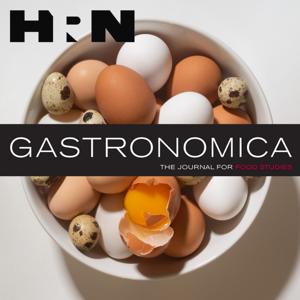


In this episode, Gastronomica’s Jaclyn Rohel talks with Dr. Anne E. McBride and Dr. Tara Scully about how climate change is impacting restaurants, the focus of their collaboration on a new report from the James Beard Foundation and the Global Food Institute, The Climate Reality for Independent Restaurants: A Deep Dive into the Supply Chain and New Economic Realities. Anne and Tara share some of the key research insights and discuss how the James Beard Foundation is mobilizing this knowledge to support chefs, engage lawmakers, and advocate for sustainable food policies and conservation programs. Bringing together food systems research and advocacy, they shed light on the role of chefs in helping to advance climate solutions and highlight how to take action.
Dr. Anne E. McBride is Vice President of Programs at the James Beard Foundation. Dr. Tara Scully is Director of Curriculum Development at the Global Food Institute at The George Washington University.
Hosted by Simplecast, an AdsWizz company. See pcm.adswizz.com for information about our collection and use of personal data for advertising.
This episode offers listeners a peek into Gastronomica’s next issue. “Coproducing ‘Planetary’ Eating Futures from Dakar: Dietary Diffusionism and the (Geo)Politics of Nutrition Transition” is co-authored by Branwyn Poleykett, Ndiaga Sall, Fatou Ndow, and Paul Young. Branwyn joins the show and talks with Gastronomica’s Jaclyn Rohel about the concept of the planetary diet and the problems with dietary diffusionism, highlighting the process of localized engagement and what it means of negotiating global food system change. Listeners can learn more and find the article in Gastronomica’s Summer 2024 issue, coming soon.
Hosted by Simplecast, an AdsWizz company. See pcm.adswizz.com for information about our collection and use of personal data for advertising.
In this episode, Gastronomica’s Bob Valgenti talks with Evelyn Lambeth about the rise of beef consumption and the historical legacies that continue to shape food systems in Australia. Contrasting cattle with kangaroos and wallabies, Evelyn explains how imperial power and regulation have defined notions of what’s edible – and what’s not. Bob and Evelyn discuss what this means for local ecosystems today, and what policy changes and adaptations are needed to support environmentally and culturally sustainable foodways moving forward. Evelyn’s research article will be available in the next issue of Gastronomica (24.2).
Hosted by Simplecast, an AdsWizz company. See pcm.adswizz.com for information about our collection and use of personal data for advertising.
This week’s episode looks at lab-grown meat, climate change, and the possible futures of edibility. In conversation with Gastronomica’s Bob Valgenti, Hallam Stevens shares his new article about a mammoth meatball and what motivated him to explore the technological innovation of an un-eatable food. Connecting history, biology, technology, and ethics, Hallam discusses how cellular agriculture shapes the temporality of food and the category of the animal itself, weighing in on what these new forms of value creation mean for sustainability transitions.
Hosted by Simplecast, an AdsWizz company. See pcm.adswizz.com for information about our collection and use of personal data for advertising.
In this episode, Gastronomica’s James Farrer talks with sociologist Pooja Kalita about gender and the labor of food provisioning in Assam, India. Taking the case of pithas – the steamed or fried rice cakes and roasted rice flour rolls that have been traditionally prepared by women – Pooja explores how men became involved in making and selling this everyday food item in the urban marketplace. Drawing on her new Gastronomica article, Pooja sheds light on how care work, trust, and authenticity came to be at the center of these efforts to preserve Assamese culture.
Hosted by Simplecast, an AdsWizz company. See pcm.adswizz.com for information about our collection and use of personal data for advertising.
Where is Food Studies today, and where might it be tomorrow? Join Alyshia Gálvez in conversation with Jessica Carbone, Irina Mihalache, Krishnendu Ray, and Signe Rousseau of Gastronomica’s Editorial Collective as they weigh in on recent developments in Food Studies. They discuss some of their favorite pieces over the last year, reflect on directions in the field, and share what they’d love to see in the journal’s pages in the future.
Hosted by Simplecast, an AdsWizz company. See pcm.adswizz.com for information about our collection and use of personal data for advertising.
In this episode, Gastronomica’s Jaclyn Rohel talks with author Lillian Tsay about her latest research on the rise of the confectionery industry in the early 20th century, from banana caramels to chocolate. Focusing on sweetness and power in Japan and colonial Taiwan, Lillian connects the early commercial success of Western-style confectionery to histories of empire, industrialization, and commoditization.
Hosted by Simplecast, an AdsWizz company. See pcm.adswizz.com for information about our collection and use of personal data for advertising.
What is “sweetness,” and how does its meaning change in communities over time? In this episode, Eric C. Rath and Takeshi Watanabe introduce some of the sweet substances of Japanese history, the subject of a special section on “The Power of Japanese Sweets and Sweeteners” in Gastronomica’s latest issue. In conversation with Gastronomica’s Dan Bender, Eric and Takeshi explore the theme of continuity and change in a culture by taking listeners through the complex history of sweets.
Hosted by Simplecast, an AdsWizz company. See pcm.adswizz.com for information about our collection and use of personal data for advertising.
What does food sustain? Elora Halim Chowdhury joins Gastronomica’s Signe Rousseau to discuss her new article on family, class, and culture in South Asian identity-making. Reflecting on her food nostalgia for the family mealtimes of her childhood in Rajshahi, Dhaka, and New Delhi, Elora discusses how time, labor, and transnational connections shape identity and community.
Hosted by Simplecast, an AdsWizz company. See pcm.adswizz.com for information about our collection and use of personal data for advertising.
In this episode, Gastronomica’s Krishnendu Ray talks with Sean Wyer about the 21st century transformation of Rome’s Jewish Quarter. Drawing on his latest research, recently published in Gastronomica, Sean considers how a range of factors – from heritage tourism and cosmopolitan innovation to religious dietary laws and diasporic migration – helped shape Jewish-Roman cuisine and the evolving character of a historic neighborhood.
Hosted by Simplecast, an AdsWizz company. See pcm.adswizz.com for information about our collection and use of personal data for advertising.
From the publisher's feed

3 Listeners

122 Listeners

40 Listeners

2 Listeners

30 Listeners

6 Listeners

4 Listeners

63 Listeners
18 Listeners
64 Listeners

14 Listeners

6 Listeners

28 Listeners

32 Listeners

2 Listeners
8 Listeners

770 Listeners
10 Listeners

6 Listeners

10 Listeners
10 Listeners