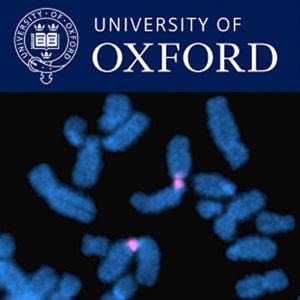
Genetics

Genetics

By Oxford UniversityEducation
Download on the App Store

Genetics episodes

  • Gastrointestinal cancers
    Dr Claire Palles studies whole genome sequencing data and targeted analyses with the aim of discovering genetic variants that affect susceptibility to colorectal cancer and Barrett’s oesophagus. The gastrointestinal track is responsible for more cancers than any other system. A condition called Barrett's oesophagus, characterised by a change in the cells lining the oesophagus, can lead to oesophageal adenocarcinoma. Only few people with Barrett's oesophagus will go on to develop cancer, and genome sequencing studies aim to identify genetic risk factors and therefore better target high-risk patients.
    5 min
  • Rare neurological disorders
    Chorea-Acanthocytosis: ChAc is a rare progressive neurological disorder caused by mutations in a very complex gene. Dr Antonio Velayos-Baeza is interested in two main projects: Chorea-acanthocytosis (ChAc), a rare autosomal-recessive disorder that is characterised by progressive neurodegeneration and red cell acanthocytosis (spiky red blood cells), and Developmental dyslexia, the most common of the childhood learning disorders.
    9 min
  • Computation and genetics
    Resistance to drugs in bacteria can be aquired by swapping genes between individual bacteria. Computer programs developed by Dr Iqbal enable doctors to predict which antibiotics will be met with drug resistance, enabling the selection of the right drug. BIOINFORMATICS & PATHOGEN GENOMICS
    Dr Zamin Iqbal studies the DNA of bacteria and parasites, and compares the genomes of individual pathogens to track the spread of antibiotic resistance. Pathogens accumulate small genetic changes over time, and by tracking these changes, it is possible to map the spread of an infection. This enables better surveillance of pathogen evolution, within a host, within a hospital and across the world.

    5 min
  • The Evolution of the Genome
    Computational and stastistical methods help us understand evolution as well as genetic disease. Professor Gerton Lunter is interested in investigating the processes of evolution and biology using computational methods. His focus is on sequencing data; Professor Lunter develops methods to investigate evolutionary questions in population genetics.
    6 min
  • DNA replication and Cancer
    DNA replication and Cancer The process of DNA replication is complex, and mistakes can lead to genome instability. Surveillance systems are not always successful which results in mutations that have the potential to inactivate genes or change their activity. This can lead to cancer, and many chemotherapeutic drugs are designed to disrupt DNA replication. A better understanding of these mechanisms can help us develop new drugs with reduced side effects.
    8 min
  • Big Data
    Over the past decade, data-driven science has produced enormous sets of data. The convergence of statistics and computer science, in the field known as machine learning, provide the means to understand these large datasets. Ultimately, machine learning algorithms will be develop into clinical decision making support systems.
    7 min
  • Human Genetics
    Professor Peter Donnelly tells us how genetics helps us to understand common diseases and develop new drugs. Understanding which variations in our DNA affect susceptibility to diseases can provide new insights into the disease process and lead to new treatments. Professor Peter Donnelly leads large collaborative human genetic studies, and his group develops and applies statistical methods to extract maximal information from the large datasets generated by genomic studies.
    6 min
  • Psychiatric Genetics
    Every psychiatric disorder has a genetic contribution. Although anxiety and depression are very common diseases, current treatments are not very good. A better understanding of the contribution of genetic variants might help us better diagnose as well as develop new therapies.
    5 min
  • Statistical Genetics
    Professor Gil McVean tells us how statistical genetics helps us understand and treat disease. Genomic technology and statistical analysis of the genome is a powerful tool in understanding disease. Prof Gil McVean is the Head of Bioinformatics and Statistical Genetics at the Wellcome Trust Centre for Human Genetics. Professor McVean's research covers several areas in the analysis of genetic variation. Combining the development of methods for analysing high throughput sequencing data, theoretical work, and empirical analysis, this research may lead to genetic diagnosis and targeted treatments for disease.
    8 min
  • Specific Language Impairment
    Dr Dianne Newbury talks about the contribution of genetics to specific language impairment. Specific Language Impairment (SLI) is a complex genetic disorder in the development of language. Dr Dianne Newbury is looking for the genes that predispose to SLI. Two regions, located on chromosomes 16 and 19, are linked with this disorder. Interactions between several normal genetic variants and environmental factors make certain individuals more vulnerable to language problems. A better understanding of these underlying biological pathways will lead to the development of more accurate identification systems and better therapies.
    5 min

About Genetics

From the publisher's feed

We are all products of our genes, and Genetics is a major focus of NDM research. Our podcasts on genetics look at a variety of projects, including the study of some common and less-common inherited…

More shows like Genetics

Philosophy for Beginners by Oxford University

Philosophy for Beginners

329 Listeners

Approaching Shakespeare by Oxford University

Approaching Shakespeare

328 Listeners

John Locke Lectures in Philosophy by Oxford University

John Locke Lectures in Philosophy

35 Listeners

General Philosophy by Oxford University

General Philosophy

70 Listeners

Aesthetics and Philosophy of Art lectures by Oxford University

Aesthetics and Philosophy of Art lectures

76 Listeners

Theoretical Physics - From Outer Space to Plasma by Oxford University

Theoretical Physics - From Outer Space to Plasma

61 Listeners

Critical Reasoning: A Romp Through the Foothills of Logic by Oxford University

Critical Reasoning: A Romp Through the Foothills of Logic

38 Listeners

The Secrets of Mathematics by Oxford University

The Secrets of Mathematics

41 Listeners

Critical Reasoning for Beginners by Oxford University

Critical Reasoning for Beginners

30 Listeners

CortexCast - A Neuroscience Podcast by Oxford University

CortexCast - A Neuroscience Podcast

4 Listeners

Dr. DNA Dan - A Genetics & Genomics Podcast by DNA Dan

Dr. DNA Dan - A Genetics & Genomics Podcast

8 Listeners