
Sign up to save your podcasts
Or

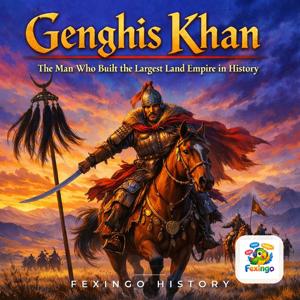


Genghis Khan's rise from outcast to emperor of the largest land empire in history was not a solitary journey. His brothers — Khasar, Khachiun, Temüge, and the half-brothers Behter and Belgütei — were both his earliest allies and his most dangerous rivals. In this episode, Lucas and Luna explore the complex fraternal dynamics that shaped the Mongol Empire. From the murder of Behter on the banks of the Onon River to Khasar's near-fatal clash with the shaman Teb Tengri, the bonds of blood were tested by ambition, ideology, and the ruthless logic of steppe politics. The Secret History of the Mongols and Rashid al-Din's chronicles reveal a family where loyalty was rewarded with generalships and appanages, but disloyalty — or even perceived threat — could mean exile or execution. By the time Genghis Khan died, his brothers controlled vast territories, but the price of their power was a constant struggle between love and fear. This episode sheds light on the men who fought beside the Great Khan, and the one who tried to steal his legacy.
#GenghisKhan #MongolEmpire #Khasar #Temüge #Behter #Belgütei #TebTengri #SecretHistoryoftheMongols #RashidalDin #OnonRiver #Kinship #SteppePolitics #MongolHistory #CentralAsia #Brothers #PowerDynamics #FexingoHistory #History
Keep every episode free: buymeacoffee.com/fexingo
This episode unpacks the Mongol Empire's sophisticated intelligence and communication network — the Yam — which Genghis Khan transformed from a simple relay system into a sprawling web of spies, scouts, and messengers that stretched from the Caspian to the Pacific. Lucas and Luna explore how the Khan's horsemen could relay news across 500 miles in a single day, how merchants doubled as informants, and how the Mongol spy network gave commanders like Subutai and Jebe the real-time battlefield intelligence that made their lightning campaigns possible. We look at the role of the örtege (post stations), the paiza (golden tablets of authority), and the terrifyingly efficient system of interrogation and intelligence-gathering that preceded every Mongol invasion. Drawing on sources from Juvayni and Marco Polo to the Secret History of the Mongols, this episode reveals how Genghis Khan's greatest weapon wasn't his cavalry — it was knowing what his enemies were doing before they knew it themselves.
#MongolEmpire #GenghisKhan #YamSystem #MongolSpies #SteppeIntelligence #Subutai #Jebe #Örtege #Paiza #SilkRoad #Juvayni #MarcoPolo #SecretHistoryOfTheMongols #MilitaryHistory #Espionage #CentralAsia #History #FexingoHistory
Keep every episode free: buymeacoffee.com/fexingo
In this episode of Fexingo History, Lucas and Luna explore how the Mongol Empire's adoption of the Uyghur script transformed a nomadic oral culture into a literate administration that could govern the largest land empire in history. They discuss the pivotal role of the Uyghur scribe Tata-tonga, captured by Genghis Khan in 1204 after the defeat of the Naimans, who introduced the vertical script adapted from the Sogdian alphabet. The hosts trace how this writing system became the foundation for the 'Secret History of the Mongols,' the earliest known Mongolian literary work, and how it enabled the empire to issue decrees ('yarlig'), codify laws ('Yassa'), and correspond across the Silk Road. They also touch on the enduring legacy of the script, which is still used by Inner Mongolians in China today. This episode offers a fresh angle on how writing—not just warfare—cemented Genghis Khan's conquests.
#GenghisKhan #MongolEmpire #UyghurScript #TataTonga #SecretHistoryOfTheMongols #Yassa #SilkRoad #Karakorum #MongolianLanguage #SogdianAlphabet #Naiman #NomadicEmpire #Literacy #Administration #CentralAsia #History #FexingoHistory #CulturalExchange
Keep every episode free: buymeacoffee.com/fexingo
In the early years of his rise, Genghis Khan faced one of his most formidable opponents: the Naiman confederation, a powerful steppe kingdom with a sophisticated culture, a script, and ambitions of its own. This episode of the Fexingo History podcast dives into the war between the Mongols and the Naimans, focusing on the key figures – Tayang Khan, his son Kuchlug, and the legendary Mongol general Subutai – and the decisive battle of Chakirma'ut in 1204. We explore how Genghis used innovative tactics, psychological warfare, and the defection of key Naiman allies to destroy a rival that could have halted his empire before it began. The episode also examines the aftermath: the integration of Naiman scribes and administrators into the Mongol court, the adoption of the Uyghur script that would become the basis for written Mongolian, and the long shadow cast by Kuchlug, who fled west to cause trouble for decades. For anyone interested in the building blocks of the Mongol Empire, this is a foundational story of survival, strategy, and cultural absorption.
#GenghisKhan #NaimanConfederation #TayangKhan #Kuchlug #BattleOfChakirmaut #Subutai #MongolEmpire #SteppeWarfare #1204 #UyghurScript #MongolianScript #Kereyids #Jamukha #CentralAsia #MongolHistory #WorldHistory #History #FexingoHistory
Keep every episode free: buymeacoffee.com/fexingo
In 1258, the Mongol army under Hulagu Khan, grandson of Genghis Khan, besieged and sacked Baghdad, ending the Abbasid Caliphate that had ruled for over 500 years. This episode explores the campaign leading up to the siege, the fall of the city, and the aftermath. We discuss Hulagu's strategy, the role of his Chinese engineers, the massacre of hundreds of thousands, and the destruction of the House of Wisdom. We also examine the assassination of Caliph al-Musta'sim and the subsequent Mongol rule in Persia under the Ilkhanate. The conversation touches on the division within the Mongol Empire between Hulagu and his cousin Berke of the Golden Horde, the Battle of Ain Jalut, and the long-term cultural and political consequences for the Islamic world. Listeners will learn about key figures like Hulagu, his wife Dokuz Khatun, and the Persian historian Juvayni, who accompanied the campaign. We also explore the legend of the Tigris running black with ink from destroyed books.
#Baghdad1258 #HulaguKhan #MongolSiege #AbbasidCaliphate #Ilkhanate #HouseofWisdom #BattleofAinJalut #Juvayni #DokuzKhatun #MongolCampaigns #ChineseEngineers #MedievalHistory #IslamicHistory #CentralAsia #SiegeWarfare #History #FexingoHistory #Podcast
Keep every episode free: buymeacoffee.com/fexingo
In this 100th episode, Lucas and Luna explore the Pax Mongolica — the century of relative peace and stability that followed Genghis Khan's conquests. They discuss how the Mongol Empire unified the Silk Road under a single legal code, the Yassa, and how this allowed unprecedented movement of people, goods, and ideas across Eurasia. The episode covers the role of the Yam postal system, the ortoq merchant partnerships, and the exchange of technologies like paper money and gunpowder. It also touches on the dark side: the brutal conquests that made this peace possible. Key figures include Marco Polo, who traveled the Silk Road during the Pax Mongolica, and the historian Juvayni, who chronicled the Mongol court. The episode ends by questioning whether the benefits of the Mongol Peace outweighed its human cost.
#PaxMongolica #SilkRoad #GenghisKhan #MongolEmpire #Yassa #Yam #Ortoq #MarcoPolo #Juvayni #Karakorum #KublaiKhan #CentralAsia #Eurasia #MongolHistory #Trade #CulturalExchange #History #FexingoHistory
Keep every episode free: buymeacoffee.com/fexingo
In this episode, Lucas and Luna explore the dramatic Battle of the Indus River in 1221, where Genghis Khan cornered Jalal al-Din Mingburnu, the last Khwarezmian prince. They discuss the harrowing cavalry charge, the river crossing, and the famous moment when Genghis Khan watched Jalal al-Din leap his horse off a cliff. The conversation also examines how this victory solidified Mongol control over Khwarezm, the role of the Mongol horse archers, and the diplomatic aftermath. Lucas shares details from Juvayni's account, the strategic decisions that led to the battle, and how Genghis Khan's admiration for his enemy shaped his later campaigns. This episode is a deep dive into a pivotal turning point in the Mongol conquest of Central Asia.
#BattleOfTheIndus #JalalAlDin #GenghisKhan #Khwarezm #MongolEmpire #IndusRiver #Juvayni #MongolHorseArchers #1221 #CentralAsia #History #FexingoHistory #MongolConquest #MedievalWarfare #SilkRoad #SteppeWarfare #Mingburnu #Subutai
Keep every episode free: buymeacoffee.com/fexingo
In 1218, Genghis Khan sent a peaceful trade caravan to the Khwarezmian Empire. Its governor executed the merchants. The khan sent an ambassador, demanding justice. The Shah executed the ambassador. What followed was not just a war—it was a cataclysm that reshaped the known world. In this episode, we explore the Khwarezmian Empire under Shah Muhammad II and the chain of provocations that led Genghis to launch his most devastating campaign. We examine the internal weaknesses of Khwarezm, the shah's fatal miscalculations, and the Mongol siege tactics that shattered the great cities of Central Asia: Otrar, Bukhara, Samarkand, and Urgench. The war did not just destroy an empire—it fundamentally altered the course of history in Persia and the Middle East.
#GenghisKhan #KhwarezmianEmpire #MongolEmpire #CentralAsia #SiegeOfOtrar #ShahMuhammadII #Bukhara #Samarkand #Urgench #Juvayni #SilkRoad #MongolConquest #13thCentury #PersianHistory #Warfare #History #FexingoHistory #SteppeEmpires
Keep every episode free: buymeacoffee.com/fexingo
Long before the Pony Express, the Mongols built the world's most efficient communication network — the Yam. In this episode, Lucas and Luna explore how Genghis Khan and his successors created a relay system spanning thousands of miles, with stations every 20 to 30 miles staffed by messengers and horses ready at a moment's notice. They discuss the origins of the Yam in the steppe tradition, the role of the paiza as a passport, the astonishing speeds achieved by riders covering 200 miles a day, and how the system was used for military intelligence, tax collection, and trade. The episode also examines the Yam's legacy, influencing later empires like the Mughals and the Ottomans, and its mention in Marco Polo's travels. Specific details include the number of horses kept at stations, the use of bells to alert the next rider, and the story of a Mongol messenger delivering fresh fruit from Persia to the Great Khan in weeks. This episode offers a fresh look at the logistical genius behind the Mongol Empire's success.
#MongolEmpire #YamSystem #GenghisKhan #MongolPostalSystem #Paiza #MarcoPolo #SteppeHistory #CentralAsia #MongolMessengers #HistoryOfCommunication #Logistics #MongolConquest #Ögedei #Karakorum #SilkRoad #History #FexingoHistory #AsiaHistory
Keep every episode free: buymeacoffee.com/fexingo
In this episode, Lucas and Luna explore the crucial role of Mongol horses in Genghis Khan's conquests. They discuss the unique characteristics of the Mongolian steppe pony — its endurance, diet, and ability to survive on snow and grass. The episode delves into how the Mongol army used multiple horses per rider, rotating mounts to cover immense distances, like the 8,000-kilometer ride to the Caspian Sea. They also examine the impact of these horses on warfare tactics, logistics, and the empire's expansion. The conversation touches on the horse-headed banners (tug), the connections to the earlier Xiongnu horse culture, and the environmental factors that made these animals superior. The hosts also briefly mention how listeners can support the ad-free show.
#MongolHorses #GenghisKhan #SteppePony #MongolEmpire #Tug #Xiongnu #CentralAsia #SteppeNomads #Cavalry #MongolArmy #HorseCulture #EnduranceRiding #Mongolia #History #FexingoHistory #Warfare #Logistics #AncientHorses
Keep every episode free: buymeacoffee.com/fexingo
From the publisher's feed