
Sign up to save your podcasts
Or

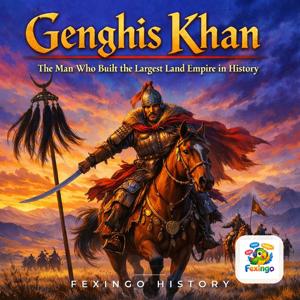


Long before the Mongol war machine rolled across Asia, Genghis Khan built a system of communication and espionage that was unprecedented in speed and reach. In this episode, Lucas and Luna explore the Yam — the Mongol relay station network that stretched from the Caspian to the Pacific — and the gray-clad spies who rode its routes. They discuss how merchants, travelers, and defectors doubled as intelligence gatherers, how the Yam allowed Genghis to coordinate campaigns thousands of miles apart, and how one captured caravan guard gave the Mongols the blueprint for taking Bukhara without a siege. They also touch on the paiza passes that controlled access to the system, the role of the ortogh merchant-investors, and the legacy of the Yam in the later Silk Road. Drawing from The Secret History of the Mongols, Juvayni, and Marco Polo, this episode uncovers the hidden infrastructure behind the largest land empire in history.
#GenghisKhan #Yam #MongolEmpire #SpyNetwork #SilkRoad #Paiza #Ortogh #Juvayni #SecretHistoryOfTheMongols #MarcoPolo #Bukhara #CentralAsia #Steppe #Espionage #Communication #History #FexingoHistory #MongolSpies
Keep every episode free: buymeacoffee.com/fexingo
In this episode, Lucas and Luna explore Karakorum, the Mongol capital that Genghis Khan founded and his son Ögedei expanded into a true imperial center. They walk through its layout: the Silver Tree fountain that dispensed wine, mare's milk, and mead; the four gates facing the cardinal directions; the quarters for Muslim merchants, Chinese craftsmen, and European envoys. They discuss the role of the kheshig as both bodyguard and administrative staff, the Yam relay stations that connected the city to the rest of the empire, and the religious syncretism that allowed Buddhist temples, mosques, and Nestorian churches to coexist within the walls. The conversation touches on the city's decline after Khubilai moved the capital to Khanbaliq (Beijing) and its rediscovery by modern archaeologists. The episode draws on the accounts of William of Rubruck, Juvayni, and the Secret History of the Mongols to bring this vanished city back to life.
#Karakorum #MongolEmpire #GenghisKhan #Ögedei #SilverTree #WilliamOfRubruck #Juvayni #SecretHistoryOfTheMongols #Kheshig #Yam #SteppeArchitecture #MongolCapital #Khanbaliq #PaxMongolica #CentralAsia #History #FexingoHistory #MedievalCities
Keep every episode free: buymeacoffee.com/fexingo
This episode explores the crucial role of Bactrian camels in the Mongol Empire's logistics and expansion. Lucas and Luna discuss how these two-humped beasts enabled Genghis Khan's armies to traverse the harsh Central Asian steppes, carrying supplies, yurts, and even siege equipment. They delve into the camel's unique adaptations—its ability to store fat in humps, withstand extreme temperatures, and go days without water—which made it indispensable for long campaigns like the Khwarezmian War and the invasion of Xi Xia. The conversation also touches on camel breeding, the silk road trade network, and how the Mongols integrated camels into their military tactics alongside horses. Discover how the Bactrian camel, often overshadowed by cavalry, was the unsung beast of burden that held the empire together.
#GenghisKhan #BactrianCamels #MongolEmpire #CentralAsia #SteppeLogistics #CamelCaravans #SilkRoad #Khwarezm #XiXia #MilitaryHistory #AnimalHistory #HorsesVsCamels #NomadicWarfare #MongolArmy #SiegeWarfare #History #FexingoHistory #Podcast
Keep every episode free: buymeacoffee.com/fexingo
In this episode, Lucas and Luna explore the lead-up to the Mongol invasion of the Khwarezmian Empire in 1218–1219. They begin with Shah Muhammad II's rise to power and his empire's fragile unity—stretching from the Caspian Sea to the Indus. The tipping point comes with the Otrar Incident, where the shah's governor massacres a Mongol trade caravan, defying Genghis Khan's earlier overtures of diplomacy and trade. Lucas details the shah's fatal miscalculation: he underestimated the Mongols, refused demands for justice, and dismissed Genghis Khan as a mere steppe barbarian. The conversation covers the shah's paranoid court, his tense relationship with the powerful Khwarezmian military elite, and the role of his mother, Terken Khatun, who actually ruled parts of the empire. Lucas also examines the strategic brilliance of Genghis Khan's response: a two-pronged invasion in winter 1219, the use of spies and siege engineers, and the psychological warfare that shattered Khwarezmian morale. The episode ends with the fall of Otrar and the beginning of a war that would destroy one of the Islamic world's greatest empires. Specific names and terms include: Shah Muhammad II, Otrar, Inalchuq, Terken Khatun, Samarkand, Bukhara, Jaxartes River, Transoxiana, and the Khwarezmian Empire.
#GenghisKhan #KhwarezmianEmpire #OtrarIncident #ShahMuhammadII #MongolInvasion #TerkenKhatun #Samarkand #Bukhara #Transoxiana #JaxartesRiver #Inalchuq #CentralAsia #SiegeWarfare #MongolEmpire #MedievalHistory #TradeCaravan #History #FexingoHistory
Keep every episode free: buymeacoffee.com/fexingo
Ata-Malik Juvayni was a Persian nobleman who served the Mongol Empire and wrote one of the most important histories of the Mongol conquests: the 'Tarikh-i-Jahan-gusha' or 'History of the World Conqueror'. In this episode, Lucas and Luna explore Juvayni's life and work: how he rose from a provincial governor's family to become a high-ranking administrator under Hulegu, the conqueror of Baghdad. We dive into Juvayni's unique perspective as an insider who both served the Mongols and mourned the destruction of Islamic civilization. Key points include his role in the siege of Baghdad (1258), his diplomatic missions to Karakorum, his account of the Assassins (Nizari Ismailis), and his complex legacy as a historian torn between loyalty and grief. We also discuss how Juvayni's work shaped later Persian historiography and what his silences tell us about life under Mongol rule. Names and terms covered: Ata-Malik Juvayni, Tarikh-i-Jahan-gusha, Hulegu, Mongke Khan, Arghun Aqa, Nizari Ismailis, Alamut, Baghdad 1258, Ilkhanate, Rashid al-Din, and more.
#AtaMalikJuvayni #TarikhIJahanGusha #MongolEmpire #Hulegu #HistoryOfTheWorldConqueror #PersianHistoriography #SiegeOfBaghdad1258 #NizariIsmailis #Alamut #MongolAdministration #Ilkhanate #MedievalPersia #CentralAsia #MongolConquests #History #FexingoHistory #Podcast #13thCentury
Keep every episode free: buymeacoffee.com/fexingo
This episode zooms in on Subutai, Genghis Khan's most brilliant general, whose 1220-1223 reconnaissance campaign through the Caucasus and into the Rus' principalities remains one of history's most audacious military feats. Lucas and Luna trace Subutai's origins as a commoner who rose through merit, his partnership with Jebe, and the astonishing 8,000-kilometer ride that culminated in the Kalka River victory. They examine Subutai's tactics—feigned retreats, use of smoke screens, and psychological warfare—and discuss how this campaign shaped Mongol strategy for decades. The conversation also touches on the Mongol approach to winter warfare, their use of captured siege engineers, and the enduring legacy of Subutai's mobility. Key figures include Subutai, Jebe, Mstislav the Bold, Mstislav of Kiev, and Koten of the Cumans. Places: Kalka River, Dnieper River, Crimea, Caucasus Mountains, Novgorod, Kiev.
#Subutai #MongolEmpire #GenghisKhan #KalkaRiver #Cavalry #SteppeWarfare #MongolTactics #Jebe #Cumans #KievanRus #Mstislav #Reconnaissance #FeignedRetreat #History #FexingoHistory #MilitaryHistory #CentralAsia #1223
Keep every episode free: buymeacoffee.com/fexingo
When the Mongols invaded China, they encountered something they'd never seen before: walled cities. But Genghis Khan did what he always did — he learned. Episode 119 of our Genghis Khan series dives into the story of how Mongol armies mastered siege warfare, from the first failed assaults on Jin Dynasty fortresses to the terrifying engines that brought down Zhongdu and Samarkand. We look at the key figures who made it possible: the Khitan and Chinese engineers who defected to the Mongols, the siege specialists like Anmur and Guo Baoyu, and the brutal methods — biological warfare at Caffa, flooding at Xi Xia, and the use of mangonels and counterweight trebuchets. We also explore how the Mongols adapted their steppe tactics to siegecraft, using feigned retreats and deception to draw defenders out. And we ask: was Genghis Khan a military genius or a ruthless pragmatist who simply stole the best technology from every culture he conquered?
#GenghisKhan #MongolSiegeWarfare #JinDynasty #Zhongdu #SiegeOfSamarkand #Mangonel #Trebuchet #GuoBaoyu #Anmur #KhitanEngineers #BiologicalWarfare #Caffa #XiXia #MongolEmpire #SteppeWarfare #MilitaryHistory #FexingoHistory #History
Keep every episode free: buymeacoffee.com/fexingo
#GenghisKhan #XiXia #Tangut #Subutai #Zhongxing #Yinchuan #MongolEmpire #SteppeHistory #1227 #SiegeWarfare #EmpireCollapse #HistoricalMysteries #CentralAsia #FexingoHistory #History #WarHistory #AncientWarfare #Conquerors
Keep every episode free: buymeacoffee.com/fexingo
In this episode, Lucas and Luna explore Genghis Khan's first major war against a settled empire: the campaign against the Jin Dynasty of northern China. They discuss the strategic shift from steppe warfare to siegecraft, the capture of Chinese engineers, and the defection of Khitan and Han commanders. Key events include the Battle of Yehuling in 1211, the siege of Zhongdu (modern Beijing), and the use of terror tactics. The episode also covers the role of the Khitan leader Yelü Chucai, who later became a key administrator in the Mongol Empire. Lucas explains how the war with the Jin influenced Mongol military organization and set the stage for the conquest of the rest of China.
#GenghisKhan #JinDynasty #BattleOfYehuling #SiegeOfZhongdu #MongolSiegecraft #YelüChucai #Khitan #ChineseEngineers #SteppeWarfare #TerrorTactics #MongolEmpire #Jurchen #EmperorXuanzong #MongolWarfare #CentralAsia #History #FexingoHistory #MongolConquest
Keep every episode free: buymeacoffee.com/fexingo
In 1221, the Mongol army under Tolui, Genghis Khan's youngest son, laid siege to the city of Nishapur, one of the great cultural and economic centers of the Khwarezmian Empire. After the city's initial resistance and the death of Genghis's son-in-law Tokuchar in battle, the Mongols unleashed a devastating retaliation. Using sophisticated siege engines—mangonels, ballistae, and possibly gunpowder-based early rockets—they breached the walls and massacred much of the population in an act of calculated revenge. This episode explores the siege's military tactics, the role of women such as Genghis's daughter Al-Altun in the broader conflict, and how the destruction of Nishapur became a chilling template for Mongol psychological warfare. We also discuss the conflicting accounts in Persian chronicles like Juvayni and the Secret History of the Mongols, and how the Mongols integrated Chinese and Muslim siege engineers. A deep dive into one of the most brutal yet strategically revealing episodes of the Mongol conquests.
#Nishapur #MongolSiege #Tolui #GenghisKhan #KhwarezmianEmpire #SiegeWarfare #Mangonel #Gunpowder #Juvayni #SecretHistoryOfTheMongols #Tokuchar #AlAltun #PersianChronicles #PsychologicalWarfare #CentralAsia #History #FexingoHistory #MongolEmpire
Keep every episode free: buymeacoffee.com/fexingo
From the publisher's feed