
Sign up to save your podcasts
Or

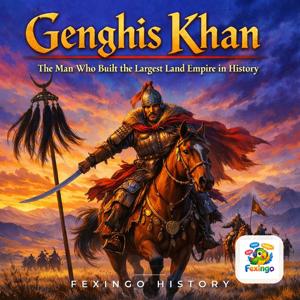


Episode 135 of Fexingo History explores the life of Al-Altun, Genghis Khan's formidable daughter whose political marriages shaped the Mongol Empire's alliances. After the execution of her first husband Tokuchar (a general disgraced at Nishapur), Al-Altun was married to the Uyghur ruler Barchuk and later betrothed to the Tangut emperor of Xi Xia, a union that ended in disaster when the Tanguts broke the agreement. Genghis's furious response—the invasion of Xi Xia—became his final campaign. Drawing from the Secret History of the Mongols and Juvayni's chronicles, Lucas and Luna discuss how Mongol princesses wielded real authority as diplomats and regents, managing vast territories and commanding troops. They examine the Yassa, the Mongol legal code that granted women property rights, and compare Al-Altun's influence to that of Börte, Sorqaqtani Beki, and Khubilai's wife Chabi. This episode sheds light on the often-overlooked role of royal women in Mongol statecraft, where marriage alliances were as strategic as military campaigns.
#GenghisKhan #AlAltun #MongolEmpire #MongolWomen #XiXia #Uyghurs #SecretHistoryoftheMongols #Juvayni #Yassa #Börte #SorqaqtaniBeki #Chabi #Tokuchar #Barchuk #MongolPrincesses #MongolDiplomacy #History #FexingoHistory
Keep every episode free: buymeacoffee.com/fexingo
This episode explores the life and influence of Börte, the first wife and empress of Genghis Khan. We discuss her kidnapping by the Merkit tribe, which triggered the unification of the Mongol tribes, and her role as a political advisor and leader. Börte's lineage produced the Great Khans Ögedei, Jochi, Chagatai, and Tolui, shaping the Mongol Empire's succession. We examine her portrayal in the Secret History of the Mongols and her legacy as a powerful woman in a patriarchal society. The episode also touches on her rivalry with Genghis Khan's other wives and her influence over his policies, including the decision to adopt the Uyghur script for the Mongol language. Börte's story challenges the stereotype of Mongol women as passive figures, revealing her as a key strategist and matriarch.
#Börte #GenghisKhan #MongolEmpire #SecretHistoryoftheMongols #Merkit #Jochi #Chagatai #Ögedei #Tolui #UyghurScript #Khatun #MongolWomen #SteppeEmpire #CentralAsia #Empress #FexingoHistory #History #Podcast
Keep every episode free: buymeacoffee.com/fexingo
The kheshig was Genghis Khan's personal bodyguard, but it was far more than a protective detail. This episode explores how the kheshig evolved from a small retinue of sworn brothers into a 10,000-strong elite force that controlled access to the khan, administered justice, and trained future commanders. We discuss their rigorous selection, their role in enforcing the Yassa, and how they became a nursery for generals like Subutai and Jebe. Drawing on the Secret History of the Mongols and Rashid al-Din, we examine the day-to-day duties of the kheshig, their privileged status, and the political tensions that arose when later khans expanded the guard. We also touch on the kheshig's decline under Khubilai as the Mongol Empire fractured.
#GenghisKhan #Kheshig #MongolEmpire #ImperialGuard #SecretHistoryoftheMongols #Yassa #Subutai #Jebe #RashidalDin #Khubilai #MongolMilitary #SteppeWarriors #Tumen #Karakorum #MongolHierarchy #History #FexingoHistory #CentralAsia
Keep every episode free: buymeacoffee.com/fexingo
When we picture Mongol warriors, we often imagine unarmored riders dashing across the steppe, relying on speed and bows. But Lucas and Luna dig into the overlooked reality: Mongol armor was sophisticated, layered, and crucial to their conquests. This episode explores the materials—rawhide, iron, silk—and the cultural exchange that improved it, from Song dynasty lamellar to Persian mail. We discuss how the Mongols mass-produced armor through their decimal organization, how silk undershirts helped extract arrowheads, and how the famous 'Mongol bow' worked in tandem with protection. Key figures like Subutai and Jebe aren't the focus, but their campaigns illustrate armor's role. We also touch on the armor of horses, the psychological impact of lamellar vs. chainmail, and how the Mongol Empire's later fragmentation changed armor styles. This is a fresh look at a critical but under-discussed aspect of their military machine, drawing on sources like The Secret History of the Mongols and archaeological finds from the Orkhon Valley.
#MongolArmor #Lamellar #GenghisKhan #SteppeWarfare #MongolBow #SilkArmor #Subutai #Jebe #OrkhonValley #Yassa #MongolEmpire #MilitaryHistory #MongolHorseArmor #Tumen #Karakorum #CentralAsia #History #FexingoHistory
Keep every episode free: buymeacoffee.com/fexingo
In this episode of Fexingo History, Lucas and Luna explore a surprising and little-known factor behind the Mongol conquests: the climate. Drawing on recent tree-ring studies by scientists like Amy Hessl and Neil Pederson, they uncover the 'Mongol Pluvials' — decades of unusually wet and mild weather that transformed the steppe into a lush grassland. This allowed Genghis Khan to muster unprecedented numbers of horses and warriors, fueling the rapid expansion of his empire. The episode also examines the role of drought in destabilizing neighboring civilizations like the Jin Dynasty and the Khwarezmian Empire, and how Genghis's own experiences with environmental hardship shaped his Yassa code. Specifics include the tree-ring chronologies from Hangay Mountains, the medieval warm period, the decline of the Jin Dynasty, and the ecological edge that enabled Subutai and Jebe's lightning campaigns. Listeners will gain a new appreciation for how environmental factors intersected with human ambition to create history's largest contiguous land empire.
#GenghisKhan #MongolPluvials #ClimateHistory #TreeRings #AmyHessl #NeilPederson #HangayMountains #Yassa #JinDynasty #Khwarezm #MedievalWarmPeriod #SteppeEcology #Subutai #Jebe #MongolEmpire #History #FexingoHistory #Podcast
Keep every episode free: buymeacoffee.com/fexingo
In this episode, Lucas and Luna explore the Yassa, the legal code attributed to Genghis Khan that governed the Mongol Empire. They discuss its origins, key provisions like religious tolerance and environmental protection, the debate over whether it was written down by Genghis or codified later by Ögedei, and its role in maintaining order across a vast, diverse realm. Drawing on sources like Juvayni and the Secret History of the Mongols, they unpack how the Yassa balanced steppe tradition with imperial necessity.
#Yassa #GenghisKhan #MongolEmpire #LegalCode #Juvayni #SecretHistoryOfTheMongols #Ögedei #SteppeLaw #ReligiousTolerance #MongolHistory #CentralAsia #EmpireBuilding #LawAndOrder #SteppeTradition #MongolConquest #Karakorum #History #FexingoHistory
Keep every episode free: buymeacoffee.com/fexingo
What was the weather like when Genghis Khan conquered an empire? Recent tree-ring studies from Central Asia reveal a remarkable climate story: the Mongol rise coincided with an unprecedented wet period on the steppe, followed by drought that may have driven the invasions. This episode explores the science of paleoclimatology, using data from Siberian larch and ancient juniper to reconstruct precipitation patterns from 1100 to 1300 CE. We examine how the 1211 drought hit the Jin Dynasty hardest, giving the Mongols a strategic edge, and how the 'Mongol Pluvials' of the 1220s and 1230s provided grassland bounty that fueled their armies. Drawing on dendrochronological studies by scientists like Dr. Amy Hessl and Dr. Neil Pederson, we connect climate shifts to historical turning points: the fall of Samarkand, the sack of Baghdad, and the eventual fragmentation of the empire. The conversation also touches on the role of volcanic eruptions, the Medieval Warm Period, and how environmental factors shaped the Yassa, the Mongol legal code. A fresh look at an old story — with science, not speculation.
#GenghisKhan #MongolEmpire #ClimateHistory #Dendrochronology #CentralAsia #Steppe #Drought #JinDynasty #Samarkand #Baghdad #Yassa #Paleoclimatology #MedievalWarmPeriod #TreeRings #MongolPluvial #Subutai #History #FexingoHistory
Keep every episode free: buymeacoffee.com/fexingo
Yelü Chucai was a Khitan prince, a Confucian scholar, and the man who convinced Genghis Khan that conquered cities were more valuable alive than dead. In this episode, Lucas and Luna explore how a single adviser shifted Mongol policy from wholesale slaughter to taxation, agriculture, and literacy. They trace Yelü Chucai's journey from the Jin court to Karakorum, his role in saving tens of thousands of lives after the fall of Zhongdu, and his famous line: 'You can conquer an empire on horseback, but you cannot govern it from horseback.' They also examine his use of Chinese administrative methods, his protection of Confucian scholars, and the lasting tension between steppe tradition and sedentary governance that defined the Mongol Empire. Drawing on the Secret History of the Mongols and the writings of Rashid al-Din, this episode reveals the intellectual who built the bureaucracy that outlived the khans.
#GenghisKhan #YelüChucai #MongolEmpire #Confucianism #Khitan #JinDynasty #Karakorum #SecretHistoryOfTheMongols #RashidAlDin #MongolAdministration #SteppeEmpire #Zhongdu #Beijing #MongolConquest #CentralAsia #History #FexingoHistory #Podcast
Keep every episode free: buymeacoffee.com/fexingo
In this episode, Lucas and Luna explore the revolutionary decimal military organization that Genghis Khan imposed on the Mongol tribes—the arban, zuun, minggan, and tumen. They trace how this system, drawn from earlier steppe traditions but refined into a ruthless meritocracy, enabled the Mongols to field disciplined, flexible armies of unprecedented scale. The conversation covers the role of the kesikten (imperial guard) as a training ground for commanders, the integration of conquered peoples like the Khitans and Jurchens, the use of the yam relay system for rapid communication, and how Genghis’s reforms broke tribal loyalties to forge a single war machine. Specific examples include the tumen of Jebe and Subutai, the census that underpinned mobilization, and the contrast with the feudal armies of Europe and the Jin Dynasty. Lucas explains how the decimal system survived Genghis’s death and remained the backbone of Mongol power under Ögedei and Khubilai.
#MongolArmy #DecimalSystem #Tumen #Arban #Zuun #Minggan #GenghisKhan #MongolEmpire #Kesikten #Yam #Jebe #Subutai #MilitaryHistory #SteppeHistory #CentralAsia #Horsemen #EmpireBuilding #FexingoHistory
Keep every episode free: buymeacoffee.com/fexingo
Long before the Mongol Empire swept across Asia, Genghis Khan instituted a revolutionary census system that allowed him to mobilize armies, distribute wealth, and administer an empire. This episode explores the creation of the decimal-based military and social organization—the arban, zuun, minggan, and tumen—that turned nomadic tribes into an unstoppable force. Lucas and Luna discuss how the census was conducted on horseback, how it tied families to their leaders for life, and how it enabled the Yam messenger system to function. They delve into the role of the Secret History of the Mongols and Rashid al-Din's records, and touch on the controversial practice of decimal rounding of populations. The episode also examines how this system persisted under Ögedei and Khubilai, and its echoes in later Chinese and Russian administration. No other episode has focused on the census itself, making this a fresh angle on the administrative genius behind the conquests.
#MongolEmpire #GenghisKhan #Census #SteppeAdministration #DecimalOrganization #Minggan #Tumen #Arban #Yam #SecretHistoryOfTheMongols #RashidAlDin #Ögedei #Khubilai #CentralAsia #History #FexingoHistory #MongolMilitary #SteppeNomads
Keep every episode free: buymeacoffee.com/fexingo
From the publisher's feed