
Sign up to save your podcasts
Or

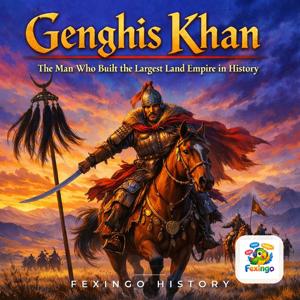


Before the Mongol Empire became a conquest machine, Genghis Khan forged a partnership with merchants from the Silk Road. This episode dives into the ortogh system—a state-backed merchant network that provided intelligence, logistics, and financing for Mongol expansion. We trace how Genghis courted traders like the Uyghur merchant Hasan, granted them low-interest loans from the imperial treasury, and used their caravans as spies. The ortogh system blurred the line between commerce and conquest: a merchant's report on Khwarezm's wealth led to invasion, while ortogh traders financed entire campaigns. We explore the system's roots in the Uyghur and Sogdian traditions, its codification in the Yassa, and its lasting impact on the Pax Mongolica. Along the way, we meet the Persian historian Juvayni, who described ortogh practices, and the Chinese merchant Chao Ju-kua, who noted Mongol trade policies. This is the story of how Genghis Khan turned merchants into the empire's hidden architects.
#GenghisKhan #MongolEmpire #Ortogh #SilkRoad #MedievalTrade #Yassa #Juvayni #Uyghur #Sogdian #PaxMongolica #ChaoJuKua #Khwarezm #MerchantNetwork #CentralAsia #SteppeHistory #CommerceAndConquest #History #FexingoHistory
Keep every episode free: buymeacoffee.com/fexingo
For decades, historians have searched for a complete text of the Yassa, the legal code attributed to Genghis Khan. This episode digs into what we actually know about Mongol law—not from a single surviving document, but from scattered references in Persian and Arabic chronicles like Juvayni's 'History of the World Conqueror' and Rashid al-Din's 'Jami' al-tawarikh'. Lucas and Luna explore the origins of the Yassa in the 1206 kurultai, its blend of steppe custom (töre) and Genghis Khan's own decrees, and how it shaped daily life—from religious tolerance to postal relay stations to the death penalty for theft. They discuss the mystery of why no original Yassa text survives, the debate over whether it was a written code or an oral tradition, and how later Mongol khans selectively applied it. Specific rules covered include the ban on washing clothes in running water, the exemption of clerics from taxes, and the harsh penalties for desertion. This episode offers a concrete look at the legal foundation of the largest land empire in history.
#Yassa #GenghisKhan #MongolLaw #Juvayni #RashidAlDin #Kurultai1206 #Töre #SteppeCustom #MongolEmpire #CentralAsia #LegalHistory #History #FexingoHistory #WorldHistory #Mongolia #SilkRoad #PaxMongolica #OralTradition
Keep every episode free: buymeacoffee.com/fexingo
In 1206, on the banks of the Onon River, a kurultai of Mongol nobles proclaimed Temüjin as Genghis Khan, ruler of all felt-tent dwellers. This episode unpacks the political mechanics of that gathering — how clans that had warred for generations were assembled under a single banner, how the title 'Genghis Khan' was chosen, and what the shaman Kököchü (Teb Tengeri) revealed as Tengri's will. We explore the newly formed Yassa code, the restructuring of steppe society into decimal military units, and the appointment of the first imperial guard. Drawing from the Secret History of the Mongols and Rashid al-Din's Jami' al-tawarikh, we examine what the kurultai actually decided — and what it meant for the world. If you've ever wondered how a scattered collection of nomadic tribes became the engine of the largest land empire in history, this is the turning point.
#Kurultai #GenghisKhan #1206 #Temüjin #OnonRiver #MongolEmpire #Kököchü #TebTengeri #Yassa #SecretHistoryoftheMongols #RashidalDin #JamiAltawarikh #SteppePolitics #MongolNobility #ImperialGuard #History #FexingoHistory #CentralAsia
Keep every episode free: buymeacoffee.com/fexingo
In 1204, Temüjin faced his greatest military test yet: the Naiman confederation under Tayang Khan, backed by the powerful Merkit, Kereyid, and Tatar remnants. The Battle of Chakirmaut was not just a fight for territory — it was a clash of steppe cultures, pitting the old aristocratic order against Temüjin's merit-based revolution. Lucas and Luna explore the espionage that gave the Mongols a crucial edge, the ingenious tactical feints that shattered a larger army, and the aftermath that allowed Temüjin to claim the title Genghis Khan in 1206. They discuss the role of Jebe and Subutai, the use of the Naiman seal and Uyghur script, and how this single battle paved the way for the Mongol Empire. Plus, a brief reflection on how supporting independent history shows helps bring stories like this to light.
#GenghisKhan #MongolEmpire #BattleOfChakirmaut #TayangKhan #Naiman #Jebe #Subutai #1204 #SteppeWarfare #MongolUnification #UyghurScript #SecretHistoryOfTheMongols #Temüjin #Kurultai #Merkit #Kereyid #History #FexingoHistory
Keep every episode free: buymeacoffee.com/fexingo
Before the Pony Express, before the Silk Road reached its golden age, Genghis Khan created an astonishing communication network across the largest empire in history. The Yam system — a chain of relay stations stretching from the Caspian Sea to the Pacific — allowed news, orders, and diplomats to travel at speeds that wouldn't be matched until the advent of the railroad. In this episode, Lucas and Luna explore how the Mongols organized this vast network, from the specialized riders known as ulachi to the strict rules that governed their passage. Along the way, they uncover the Yam's role in military strategy, trade intelligence, and even its eventual impact on the postal systems of Russia and China. Expect stories of 250-mile days, forged paizas, and the surprising way Marco Polo encountered the Yam on his journey to Khanbaliq. If you've ever wondered how an empire held together without phones or email, this is the episode for you.
#YamSystem #MongolEmpire #GenghisKhan #PostalHistory #SilkRoad #Paiza #Ulachi #Karakorum #Khanbaliq #MarcoPolo #PaxMongolica #SteppeCommunication #HistoricalInfrastructure #OverlandTrade #CentralAsia #MongolLogistics #History #FexingoHistory
Keep every episode free: buymeacoffee.com/fexingo
In this episode of Fexingo History, Lucas and Luna explore the revolutionary legal reforms that Genghis Khan imposed on the Mongol tribes. Before the empire, steppe justice was a cycle of blood feuds and vendettas. Genghis Khan's Yassa code introduced a fixed blood price — compensation in livestock or goods — that could end a feud without further killing. We look at specific cases from the Secret History of the Mongols, including the murder of Temüjin's father Yesügei and the later dispute with the Jurkin clan. We also examine how the Yassa applied to non-Mongols in conquered territories, the role of the yarguchi (judges), and the legacy of this legal system in later Mongol states like the Ilkhanate and Yuan dynasty. The conversation touches on the tension between customary töre and codified law, and how Genghis used justice to consolidate power. Fresh angle: not the Yassa as a whole, but the specific mechanism of blood price as a tool for peace.
#GenghisKhan #Yassa #MongolLaw #BloodPrice #SecretHistoryOfTheMongols #SteppeJustice #Töre #Yesügei #Jurkin #Yarguchi #MongolEmpire #CentralAsia #12thCentury #13thCentury #LegalHistory #History #FexingoHistory #MongolConquests
Keep every episode free: buymeacoffee.com/fexingo
In this episode, Lucas and Luna explore the tumen, the Mongol army's fundamental 10,000-man unit that enabled Genghis Khan's unprecedented conquests. They trace its origins from the steppe decimal system used by earlier nomadic empires like the Xiongnu and Göktürks, through its formalization under the Yassa, to its battlefield tactics under legendary generals Subutai and Jebe. Lucas explains how the tumen's flexibility—breaking into smaller units (arban, zuun, minggan) or combining into larger armies—gave the Mongols a strategic advantage over settled foes. He also discusses the tumen's role in siege warfare and logistics, including the use of the yam messenger system. The episode touches on the tumen's cultural and social implications, such as the kheshig imperial guard as a tumen-scale institution, and how the system influenced later empires like the Timurids and Mughals. A brief donation segment acknowledges listener support as the key to keeping the show ad-free.
#GenghisKhan #Tumen #MongolEmpire #MongolMilitary #DecimalSystem #Subutai #Jebe #Yassa #Kheshig #Yam #SteppeWarfare #Arban #Zuun #Minggan #CentralAsia #MilitaryHistory #History #FexingoHistory
Keep every episode free: buymeacoffee.com/fexingo
Before the Mongol Empire conquered half the world, its founder was shaped by a faith that saw the sky as god. In this episode, Lucas and Luna explore Tengrism — the animistic belief system that guided Genghis Khan from his youth to his greatest conquests. They discuss how the Eternal Blue Sky (Tengri) granted legitimacy to rulers, how shamans like Teb Tengeri wielded immense political power, and how the Mongols' religious tolerance became a strategic weapon. Along the way, they touch on the sacred mountain Burkhan Khaldun, the use of divination and rain-making, and the way Tengrist ideas of cosmic balance influenced law and warfare. This is not a rehash of battles or clan politics — it's a look at the spiritual engine that drove the steppe's greatest empire.
#Tengrism #GenghisKhan #MongolEmpire #BurkhanKhaldun #TebTengeri #Shamanism #EternalBlueSky #SteppeReligion #KhentiiMountains #Yassa #Juvayni #SecretHistoryOfTheMongols #RashidAlDin #MongolTolerance #Divination #ReligionAndPower #History #FexingoHistory
Keep every episode free: buymeacoffee.com/fexingo
Long before the Mongol Empire stretched from Korea to Hungary, Genghis Khan built a shadow army of spies and scouts that gave him an edge over every enemy. In this episode, Lucas and Luna explore the little-known world of Mongol intelligence — the yurtchis who mapped distant trade routes, the merchants who doubled as informants, and the lightning-fast couriers of the Yam network. They dive into how Temüjin used intelligence to defeat the Naimans at the Battle of Chakirmaut in 1204, how spies delivered the layout of Samarkand before its siege, and how the Mongols pioneered psychological warfare by planting false rumors. The conversation also touches on the controversial role of Khwarezmian merchants who betrayed their own sultan, and the ethical questions around Mongol espionage. How did a nomadic culture with no written bureaucracy manage the largest intelligence operation the world had ever seen? The answer lies in the steppe's ancient traditions of loyalty and information-sharing.
#GenghisKhan #MongolSpies #SteppeIntelligence #Yam #BattleOfChakirmaut #MongolEmpire #Naimans #Temüjin #Samarkand #Khwarezm #Yurtchi #Espionage #PsychologicalWarfare #SecretHistoryOfTheMongols #CentralAsia #History #FexingoHistory #MilitaryIntelligence
Keep every episode free: buymeacoffee.com/fexingo
In April 1221, the city of Nishapur in eastern Iran was utterly destroyed by Mongol forces under Tolui, Genghis Khan's youngest son. The siege was an act of revenge: earlier that year, the city's inhabitants had killed a Mongol general named Toquchar, who was also Genghis Khan's son-in-law. When Tolui arrived with a massive army, he offered terms, but the city refused to surrender. After a brief but brutal assault, the Mongols razed Nishapur to the ground, killing nearly everyone — including cats and dogs, according to the historian Juvayni. The destruction of Nishapur, along with other cities like Merv and Herat, marked the annihilation of the Khwarezmian Empire's urban heartland. This episode explores the siege in detail: the weapons used, the role of Chinese engineers, the fate of the population, and the broader context of Genghis Khan's campaign against the Khwarezmian Shah. It also examines the controversy around the number of casualties and what the sources — Persian, Arabic, and Mongol — actually say.
#Nishapur #SiegeOfNishapur #Tolui #GenghisKhan #MongolEmpire #KhwarezmianEmpire #Toquchar #Juvayni #MongolSiege #MedievalWarfare #CentralAsia #Iran #1221 #MongolConquests #History #FexingoHistory #Podcast #Siege
Keep every episode free: buymeacoffee.com/fexingo
From the publisher's feed