
Sign up to save your podcasts
Or

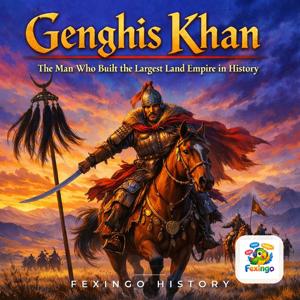


In 1227, Genghis Khan died, leaving an empire that stretched from the Caspian to the Pacific. But who would rule it? This episode explores the dramatic power struggle that followed, focusing on Tolui, Genghis's youngest son and the empire's most capable general. As regent for two years, Tolui held the Mongol Empire together—but he never claimed the throne. Why did the man who conquered the Khwarezmian heartland step aside for his brother Ögedei? We examine the 1229 kurultai, the role of Tolui's wife Sorghaghtani Beki, and the mysterious circumstances of his death in 1232. Drawing on the Secret History of the Mongols and Rashid al-Din's Jami' al-tawarikh, we piece together the story of a man who chose loyalty over ambition—and whose sons would later rule the empire. We also discuss how Tolui's regency shaped Mongol succession traditions, the tension between merit and birthright, and why his legacy endures in the Yuan Dynasty.
#Tolui #GenghisKhan #Ögedei #SorghaghtaniBeki #MongolEmpire #Kurultai #1229Kurultai #SecretHistoryOfTheMongols #RashidAlDin #JamiAltawarikh #MongolSuccession #YuanDynasty #CentralAsia #SteppeHistory #KhubilaiKhan #MongolRegency #FexingoHistory #History
Keep every episode free: buymeacoffee.com/fexingo
In 1215, Genghis Khan captured Zhongdu, the capital of the Jin Dynasty in northern China. This episode explores the three-year siege, the Jin emperor's desperate gamble to break the blockade, and how Genghis adapted Mongol tactics to take a walled city. We discuss the role of Chinese defectors like Guo Baoyu, the use of gunpowder weapons from Song China, and the aftermath: a city burned and a lesson in siegecraft that shaped Mongol strategy for decades. Learn about the importance of the siege in Mongol expansion, the contrasting accounts in Rashid al-Din's Jami' al-tawarikh and the Secret History of the Mongols, and how Zhongdu set the stage for the later conquest of the Jin Dynasty under Ögedei.
#SiegeOfZhongdu #GenghisKhan #JinDynasty #MongolEmpire #1215 #GuoBaoyu #RashidAlDin #SecretHistoryOfTheMongols #Siegecraft #Gunpowder #Zhongdu #Beijing #MongolSiege #SteppeWarfare #MedievalChina #History #FexingoHistory #MongolConquests
Keep every episode free: buymeacoffee.com/fexingo
After Genghis Khan died in 1227, his empire stretched from the Caspian to the Pacific. But how did one man's conquest become a dynasty that ruled for generations? In this episode, Lucas and Luna explore the succession crisis that followed Genghis's death — the kurultai that elected Ögedei as Great Khan, the delicate balance between the branches of the family, and the legal framework of the Yassa that held it together. They discuss the role of Tolui as regent, the rivalry between Jochi's line and Chagatai's, and how the Mongol Empire's division into uluses sowed the seeds of both its expansion and its fragmentation. Drawing on the Secret History of the Mongols and Persian chroniclers like Rashid al-Din and Juvayni, they trace how Genghis's vision of a united Mongol nation collided with the realities of succession by merit versus birthright. This is the story of how an empire built on conquest faced its greatest test: peace.
#MongolEmpire #GenghisKhan #Ögedei #Kurultai #Yassa #SecretHistoryOfTheMongols #RashidAlDin #Juvayni #Tolui #Chagatai #Jochi #Succession #Ulus #CentralAsia #SteppeHistory #EmpireBuilding #History #FexingoHistory
Keep every episode free: buymeacoffee.com/fexingo
In 1206, on the banks of the Onon River in the Khentii Mountains, a kurultai of Mongol and Turkic tribes proclaimed Temüjin as Genghis Khan, universal ruler. This episode explores the kurultai's rituals, politics, and symbolism—from the nine-tailed white banner to the shaman Kököchü's endorsement, the creation of the Yassa legal code, and the appointment of the kheshig imperial guard. Drawing on the Secret History of the Mongols and Rashid al-Din's Jami' al-tawarikh, we unpack how this coronation transformed a tribal confederation into an empire and set the stage for world conquest. We also discuss the contested role of Teb Tengeri, the qabqanas standards, and how Burkhan Khaldun became the sacred mountain of Mongol identity.
#Kurultai #GenghisKhan #MongolEmpire #OnonRiver #1206 #Yassa #Kheshig #TebTengeri #BurkhanKhaldun #JamiAltawarikh #SecretHistoryOfTheMongols #KhentiiMountains #Temüjin #Kököchü #Qabqanas #Steppe #History #FexingoHistory
Keep every episode free: buymeacoffee.com/fexingo
Long before the Mongol Empire stretched from Korea to the Caspian, Genghis Khan understood that swords alone couldn't hold a realm. In this episode, Lucas and Luna explore the adoption of the Uyghur script as the Mongol writing system — a quiet revolution that let a nomadic people administer an empire. We trace how a captured Uyghur scribe named Tata-tonga, brought before Genghis after the fall of the Naiman in 1204, introduced the alphabet that would eventually produce the Secret History of the Mongols and countless diplomatic letters. We discuss why Genghis chose a foreign script over developing his own, how the Uyghur-derived Mongol script worked (vertical, read top-to-bottom, left-to-right), and what was lost — and gained — in this act of cultural adoption. We also touch on the script's later fate under Khubilai Khan's attempted replacement with the 'Phags-pa script, and its persistence among Mongol communities into the modern era. Specific names: Tata-tonga, Genghis Khan, Tayang Khan, Naiman, Uyghur, Khubilai, 'Phags-pa, Secret History of the Mongols, Rashid al-Din, Juvayni.
#GenghisKhan #UyghurScript #MongolEmpire #TataTonga #SecretHistoryOfTheMongols #PhagsPa #Naiman #MongolScript #SteppeHistory #CentralAsia #WritingSystems #Alphabet #MedievalHistory #KhubilaiKhan #Linguistics #Podcast #FexingoHistory #History
Keep every episode free: buymeacoffee.com/fexingo
When Genghis Khan conquered a kingdom, he didn't just execute its king — he often married his daughter. In this episode, Lucas and Luna explore how the Mongol khan used his daughters as governors of conquered lands, creating a network of loyal female rulers who held power across Central Asia. They focus on Alakhai Beki, the princess who ruled the Ongut tribe, and Checheyigen, who managed the Oirat confederation. Drawing on the Secret History of the Mongols and Rashid al-Din's Jami' al-tawarikh, they discuss how these women wielded real military and political authority, commanded troops, and managed cities — all while remaining loyal to their father's empire. The episode also touches on the surprising degree of autonomy Mongol women enjoyed compared to their contemporaries in China and Persia, and how Genghis Khan's policy of strategic marriages shaped the empire's stability.
#GenghisKhan #AlakhaiBeki #Checheyigen #MongolEmpire #WomenInHistory #SecretHistoryoftheMongols #RashidAlDin #JamialTawarikh #Ongut #Oirat #MongolQueens #Yassa #CentralAsia #SteppeEmpire #History #FexingoHistory #MedievalHistory #WomenRulers
Keep every episode free: buymeacoffee.com/fexingo
This episode of Fexingo History uncovers the story of Alakhai Beki, the daughter of Genghis Khan who became a key political and military figure in the Mongol Empire. As a young woman, she was married off to the Ongut tribe to secure an alliance, but she refused to fade into obscurity. Instead, she ruled as a regent, commanded troops, and even put down a rebellion when her husband's family turned against the Mongols. The Secret History of the Mongols and Rashid al-Din's Jami' al-tawarikh provide glimpses of her authority — she held her own court, dispensed justice, and was one of the few women to receive a personal paiza of authority. We explore how Genghis Khan trusted his daughters with vast territories, a practice often overshadowed by the exploits of his sons. Alakhai's story challenges conventional views of Mongol women and reveals the empire's reliance on female rulers in strategic regions. Tune in for a deep dive into the life of a steppe princess who wielded real power.
#AlakhaiBeki #GenghisKhan #MongolEmpire #Ongut #SecretHistoryOfTheMongols #RashidAlDin #JamiAlTawarikh #Paiza #SteppePrincess #MedievalHistory #WomenInHistory #CentralAsia #MongolWomen #EmpireBuilding #HistoryPodcast #FexingoHistory #13thCentury #WarriorPrincess
Keep every episode free: buymeacoffee.com/fexingo
Before he was Genghis Khan, Temüjin forged his power through blood brotherhood — the Mongol tradition of anda (sworn brother) and nökör (personal companion). In this episode, Lucas and Luna explore the pivotal alliances that built the Mongol Empire: Temüjin's childhood bond with Jamuqa, his lifelong loyalty to Bo'orchu and Jelme, and the brutal betrayal that turned anda against anda at the Battle of Chakirmaut. Drawing from the Secret History of the Mongols and Rashid al-Din's Jami' al-tawarikh, they unpack how these relationships transcended clan ties, how the nökör system created a meritocratic inner circle, and why the broken anda oath with Jamuqa haunted Genghis Khan to his deathbed. A story of loyalty, blood, and the price of empire.
#MongolEmpire #GenghisKhan #AndaBrotherhood #Jamuqa #SecretHistoryoftheMongols #Nökör #Bo'orchu #Jelme #Juvayni #RashidalDin #Chakirmaut #SteppeTraditions #CentralAsia #BloodBrother #MongolHistory #1206Kurultai #EmpireBuilding #FexingoHistory
Keep every episode free: buymeacoffee.com/fexingo
In this episode, Lucas and Luna explore the technological marvel that made the Mongol army unstoppable: the composite recurve bow. Drawing on the Secret History of the Mongols, Marco Polo's travelogue, and modern archaeological experiments, they unpack how this weapon — made from sinew, horn, wood, and animal glue — could outrange European longbows by fifty yards and penetrate armor at two hundred. They discuss the bow's construction, the training regime that produced archers who could shoot accurately from a galloping horse, and the tactical doctrine of the feigned retreat that turned the battlefield into a slaughterhouse. Lucas explains the role of the bow in Mongol culture, from the ceremonial nerge hunt to the battlefield volley that broke the Khwarezmian lines at the Indus. They also touch on the controversial question: did the Mongols really use a 'horn bow season' to control their warriors? This episode is a deep dive into the hardware and human skill behind the largest land empire in history, without rehashing any of the prior 156 episodes' battles or campaigns.
#MongolBow #CompositeRecurve #SteppeArchery #MongolHorseArcher #SecretHistoryOfTheMongols #MarcoPolo #MongolMilitary #HorseArcher #MongolTactics #MongolEmpire #CentralAsia #MilitaryHistory #History #FexingoHistory #GenghisKhan #ArcheryHistory #SiegeWarfare #MongolWeapons
Keep every episode free: buymeacoffee.com/fexingo
In this episode of Fexingo History, Lucas and Luna dive into the elite imperial guard of the Mongol Empire: the kheshig. Created by Genghis Khan as a personal bodyguard of 10,000 men, the kheshig evolved into a training ground for future generals and administrators, a hostage system to ensure tribal loyalty, and the core of the Mongol military command. We explore how Genghis selected his guards — often the sons of rival chiefs — and how the kheshig's structured hierarchy, from the night guard (khevtuul) to the quiver bearers (khorchin), shaped the empire's administration. Drawing on the Secret History of the Mongols and the accounts of Rashid al-Din, we uncover how the kheshig's discipline and loyalty outlasted Genghis himself, influencing the Yuan, Ilkhanate, and beyond. This episode also examines the transition from steppe tribal guards to a sophisticated imperial institution under Ögedei and Khubilai. No prior knowledge required, but context from earlier episodes on Mongol military tactics enriches the discussion.
#Kheshig #GenghisKhan #MongolEmpire #ImperialGuard #SecretHistoryOfTheMongols #RashidAlDin #YuanDynasty #SteppeWarfare #CentralAsia #MilitaryHistory #Khevtuul #Khorchin #Ögedei #Khubilai #MongolMilitary #EmpireBuilding #History #FexingoHistory
Keep every episode free: buymeacoffee.com/fexingo
From the publisher's feed