
Sign up to save your podcasts
Or

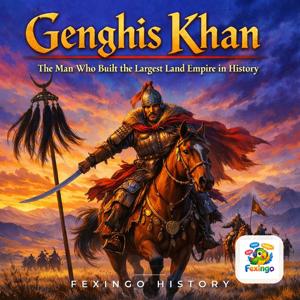


In this episode, we explore the role of airag—fermented mare's milk—in the Mongol Empire. From the steppe tradition of drinking airag to its use in Genghis Khan's court, we uncover how this humble drink fueled the Mongol conquests and shaped their rituals. We discuss the health benefits of airag, its connection to shamanic practices, and how it was served at the kurultai. We also touch on the cultural significance of airag in modern Mongolia and its surprising influence on the Mongol military. Join us as we toast to the khan with a cup of airag and discover the hidden history of the Mongol Empire's favorite beverage.
#GenghisKhan #MongolEmpire #Airag #MareMilk #Kurultai #Shamanism #Tengri #Steppe #MongolFood #CentralAsia #History #FexingoHistory #MongolCulture #MongolArmy #MongolRituals #FermentedDrinks #NomadicEmpire #GenghisKhanLegacy
Keep every episode free: buymeacoffee.com/fexingo
In this episode, Lucas and Luna explore the spiritual world of Genghis Khan and the Mongol Empire. From the great sky god Tengri to the shaman Kokochu who crowned Temujin as Genghis Khan, we look at how religion shaped politics, warfare, and daily life. We discuss the sacred mountain Burkhan Khaldun, where Genghis prayed for survival and later returned to be buried. We consider the role of female shamans like Alaqai, and how the Mongols tolerated other faiths while keeping their own traditions. We reflect on how shamanism influenced the Yassa law code and the Yam postal system, and how the Mongols' belief in omens and the supernatural guided their conquests. Finally, we ask: was Genghis Khan a believer, or was he using faith as a tool of statecraft?
#GenghisKhan #MongolEmpire #Shamanism #Tengri #BurkhanKhaldun #Kokochu #Yassa #Yam #Alaqai #MongolHistory #CentralAsia #Steppe #Kheshig #SecretHistory #Juvayni #RashidAlDin #History #FexingoHistory
Keep every episode free: buymeacoffee.com/fexingo
In 1211, Genghis Khan turned his armies east against the Jin Dynasty, a vast empire with walled cities, standing armies, and a sophisticated bureaucracy. The Mongols, famed for their mobility and composite bows, faced a new kind of warfare: siegecraft. How did a nomadic people conquer a sedentary empire that outnumbered them? This episode examines the Jurchen war, a turning point in Mongol history that forced innovation and adaptation. Lucas and Luna explore the early battles, the brutal sieges of Zhongdu and Yanjing, and the strategic genius of Genghis Khan as he learned to crack stone walls. They consider the role of defectors like the Khitan and the Chinese engineer Wei-ts'ung, who introduced the Mongols to counterweight trebuchets and siege towers. Discover how a steppe warlord became a conqueror of cities, and how the fall of the Jin dynasty reshaped Asia. This is the story of Genghis Khan's greatest challenge, a war that forged the Mongol Empire's ability to rule an agrarian world.
#GenghisKhan #MongolEmpire #JinDynasty #Jurchen #SiegeWarfare #Zhongdu #Yanjing #Wei-ts'ung #Trebuchet #CompositeBow #Steppe #CentralAsia #12thCentury #13thCentury #MongolConquests #History #FexingoHistory #Warfare
Keep every episode free: buymeacoffee.com/fexingo
When we think of Genghis Khan, we picture mounted archers sweeping across the steppe. But the Mongol Empire's greatest conquests—the fall of the Jin Dynasty, the sack of Bukhara, the siege of Zhongxing—were won by engineers. In this episode, Lucas and Luna explore the forgotten army behind the army: the siege engineers who built trebuchets, rams, and catapults, often using Chinese and Persian expertise. They trace how the Mongols, initially helpless against fortified walls, absorbed siege technology from the Jin and Khwarezmid Empires, creating a hybrid force that could reduce any city. We meet Wei-ts'ung, a Chinese engineer who defected to the Mongols and designed the counterweight trebuchet that broke through Jin walls, and we examine the siege of Nishapur, where the Mongols deployed 3,000 catapults and 3,000 ballistae. We also touch on the human cost—the massacres that followed surrender—and how this engineering prowess reshaped Eurasian warfare. Drawing on the Secret History of the Mongols and Persian chroniclers like Juvayni, we separate myth from reality: the Mongols weren't just nomads on horseback; they were masters of applied technology. Join us for a deep dive into the siegecraft that built the largest land empire in history.
#GenghisKhan #MongolEmpire #SiegeWarfare #MilitaryHistory #Trebuchet #JinDynasty #KhwarezmidEmpire #Nishapur #Wei-ts'ung #SecretHistoryoftheMongols #Juvayni #Zhongxing #Bukhara #CentralAsia #History #FexingoHistory #MongolArmy #Engineering
Keep every episode free: buymeacoffee.com/fexingo
When we think of Genghis Khan, we picture a warrior on horseback, but behind every conquest stood a network of women who held the empire together. In this episode, Lucas and Luna explore the lives of Genghis Khan's wives and daughters—from the political marriages that secured alliances to the remarkable women who governed territories in his name. Discover how Börte, the senior wife, wielded influence that shaped succession; how Alakhai Bekhi and Checheyigen, his daughters, were married off to strategically vital tribes and became powerful rulers in their own right; and how the Mongol Empire's stability depended on the diplomatic roles of these women. Drawing from sources like the Secret History of the Mongols and the Jami' al-tawarikh, we piece together the often overlooked story of the women who were partners in empire-building. This episode offers a fresh perspective on Mongol history, highlighting the political acumen and resilience of the women who helped forge the largest land empire in history.
#GenghisKhan #MongolEmpire #Borte #AlakhaiBekhi #Checheyigen #SecretHistory #JamiAltawarikh #RashidAlDin #MongolWomen #SteppePolitics #Diplomacy #EmpireBuilding #CentralAsia #MongolHistory #WomenInHistory #History #FexingoHistory #Podcast
Keep every episode free: buymeacoffee.com/fexingo
In this episode of Fexingo History, Lucas and Luna explore Genghis Khan's transformative impact on trade along the Silk Road. They discuss how the Mongol Empire, contrary to popular belief, actively encouraged commerce, establishing safe passage, standardizing weights and measures, and fostering a cosmopolitan environment where merchants thrived. The episode highlights key figures like the Persian official Juvayni, who chronicled the empire's administrative genius, and touches on the role of the Yam postal system and the Pax Mongolica. Lucas also shares a lesser-known story of the Uyghur merchant Tata-tonga, whose skills were so valued that he was integrated into the Mongol court, bringing with him the Uyghur script that became the empire's written language. The episode offers a fresh perspective on Genghis Khan as not just a conqueror but a savvy economic strategist whose policies laid the groundwork for the global exchange of goods and ideas.
#GenghisKhan #SilkRoad #PaxMongolica #MongolEmpire #TradeHistory #Juvayni #TataTonga #UyghurScript #YamSystem #Merchants #CentralAsia #13thCentury #EconomicHistory #WorldHistory #FexingoHistory #HistoryPodcast #MongolConquest #GlobalExchange
Keep every episode free: buymeacoffee.com/fexingo
In this episode, Lucas and Luna dig into the military machine that built the largest land empire in history. From the decimal system of tumens to the iron discipline of the kheshig, they explore how Genghis Khan forged a nomadic force into a ruthless, adaptive army. Learn about the nerge, the hunting technique that trained soldiers for war, and how the Mongol warrior's composite bow and horse made them nearly unstoppable. They discuss the key battles that showcased Mongol tactics—like the 1223 Kalka River campaign—and the innovations that allowed a steppe people to conquer cities and empires. Join the conversation as they examine the logistics, the psychology, and the legacy of the Mongol war machine.
#MongolArmy #TumenSystem #Kheshig #Nerge #CompositeBow #MongolHorse #GenghisKhan #KalkaRiver #MongolTactics #SteppeWarfare #Subotai #Jebe #MongolEmpire #Yassa #MilitaryHistory #CentralAsia #History #FexingoHistory
Keep every episode free: buymeacoffee.com/fexingo
In this episode, Lucas and Luna explore the final chapter of Genghis Khan's life: the brutal campaign against the Tangut-led Xi Xia kingdom, which ended with his death in 1227. They discuss the origins of the conflict, the siege of Zhongxing (modern Yinchuan), the role of Subotai and other generals, and the emperor's mysterious demise—possibly from illness, injury, or a wound sustained in battle. The hosts also examine the aftermath, including the destruction of the Tangut civilization, the succession of Ögedei, and the secrecy surrounding Genghis's burial, which remains undiscovered to this day. Along the way, they touch on the Yassa, the kurultai, and the complex relationship between the Mongols and the sedentary civilizations they conquered. This episode offers a nuanced look at the last days of the world's greatest conqueror, drawing from the Secret History of the Mongols, Rashid al-Din, and other primary sources.
#GenghisKhan #MongolEmpire #Tangut #XiXia #Zhongxing #Yinchuan #1227 #SecretHistoryOfTheMongols #RashidAlDin #Subotai #Yassa #Kurultai #MongolConquests #CentralAsia #SteppeHistory #BurialSecrets #History #FexingoHistory
Keep every episode free: buymeacoffee.com/fexingo
In this episode, Lucas and Luna explore the Yassa, Genghis Khan's code of law that held the Mongol Empire together. From the death penalty for stealing livestock to religious tolerance and the promotion of merit over birth, the Yassa was a revolutionary legal system for its time. Learn how it was compiled, what it actually said, and how it shaped Mongol society and the empire's expansion. The conversation also touches on the Yassa's legacy in later empires and the challenges of studying it today, since no complete copy survives. A must-listen for anyone curious about how a nomadic conqueror built a legal foundation for the largest land empire in history.
#GenghisKhan #Yassa #MongolEmpire #MongolLaw #CentralAsia #Steppe #Temüjin #Kurultai #Juvayni #RashidAlDin #SecretHistory #Meritocracy #ReligiousTolerance #MongolSociety #Empire #History #FexingoHistory #LegalHistory
Keep every episode free: buymeacoffee.com/fexingo
Long before the Mongol Empire ever stretched from Korea to Hungary, Genghis Khan made a surprisingly quiet decision that would shape the future of Eurasia. In 1204, after defeating the Naiman tribe, he captured a Uyghur scribe named Tata-tonga. Instead of executing him, Genghis ordered Tata-tonga to adapt the Uyghur script to write the Mongol language. That simple act gave the Mongols their first written script, and it became the backbone of the empire's administration, law, and culture. In this episode, Lucas and Luna explore how Genghis Khan's respect for literacy transformed a nomadic confederation into a literate state. They trace the script's origins in the Syriac alphabet, its spread along the Silk Road, and its later evolution into the modern Mongolian Cyrillic and traditional Mongolian script still used today. They also discuss the Yassa, the Mongol law code, and how the new script codified it, and they look at the Secret History of the Mongols, the first great work of Mongolian literature, written in this very script. Along the way, they touch on the role of Uyghur advisors, the practical uses of writing in the Yam postal system, and how the script enabled the Mongols to administer a diverse empire. This episode reveals how a conqueror known for horsemen and arrows also understood the power of words.
#GenghisKhan #MongolEmpire #UyghurScript #TataTonga #SecretHistoryoftheMongols #Yassa #MongolianLanguage #MongolWritingSystem #EurasianHistory #SteppeHistory #LiteracyInHistory #MongolAdministration #SilkRoad #NaimanTribe #CentralAsia #MongolCulture #History #FexingoHistory
Keep every episode free: buymeacoffee.com/fexingo
From the publisher's feed