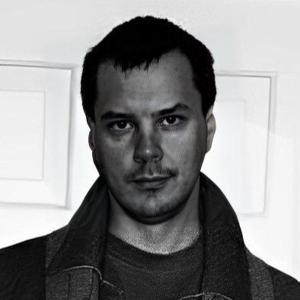
Geoffrey Gordon Composer

Geoffrey Gordon Composer

By Geoffrey GordonMusic
Download on the App Store

Geoffrey Gordon Composer episodes

  • GORDON - Winterleben V. Wintersonne (European premiere)
    Horn soloist Tommi Hyytinen (Finnish Radio Symphony Orchestra), mezzo soprano Niina Keitel and pianist Marko Hilpo give the European premiere of composer Geoffrey Gordon's chamber vocal work, Winterleben, at the Sibelius Academy in Helsinki, Finland - Monday, 7 June 2021 . Winterleben is a song cycle setting five texts, in German, by Mahler's favorite poet, Friedrich Rückert, for mezzo, horn and piano. This work was originally commissioned by Elizabeth and Justus Schlichting, and first premiered in Zipper Hall,Los Angeles, on 7 August 2015.
    6 min
  • GORDON - Winterleben II. Winter-Lerchenton (European premiere)
    Horn soloist Tommi Hyytinen (Finnish Radio Symphony Orchestra), mezzo soprano Niina Keitel and pianist Marko Hilpo give the European premiere of composer Geoffrey Gordon's chamber vocal work, Winterleben, at the Sibelius Academy in Helsinki, Finland - Monday, 7 June 2021 . Winterleben is a song cycle setting five texts, in German, by Mahler's favorite poet, Friedrich Rückert, for mezzo, horn and piano. This work was originally commissioned by Elizabeth and Justus Schlichting, and first premiered in Zipper Hall,Los Angeles, on 7 August 2015.
    5 min
  • GORDON - Roman Rituals for solo horn
    GORDON: Roman Rituals for solo horn
    Saar Berger, horn - Ensemble Modern
    PROGRAM NOTES:
     The flame is a reminder of Pentecost when witnesses were unified by the power of the Holy Spirit and saw "tongues, as of fire" (Acts 2:3).
     Pentecost comes from a Jewish harvest festival called Shavuot. The apostles were celebrating this festival when the Holy Spirit descended on them. It sounded like a very strong wind, and it looked like tongues of fire. The apostles then found themselves speaking in foreign languages, inspired by the Holy Spirit.
     Pentecost is the Greek name for Shavuot, the spring harvest festival of the Israelites, which was going on when the Holy Spirit came. The disciples were together in Jerusalem after Jesus' Resurrection and return to heaven, fearful because he had left them.
     Speaking in tongues is a spiritual gift that can be manifested as either a human language or a heavenly supernatural language in three ways: The "sign of tongues" refers to xenoglossia, wherein one speaks an actual language they have never learned.
     Bible: 1 Corinthians 14 : Follow the way of love and eagerly desire spiritual gifts, especially the gift of prophecy. For anyone who speaks in a tongue does not speak to men but to God.
     The devil mostly speaks a language of his own called Bellsybabble which he makes up himself as he goes along but when he is very angry he can speak quite bad French very well though some who have heard him say that he has a strong Dublin accent. The name "Bellsybabble" is a pun on Beelzebub, "babble" and Babel.
     Vedic Sanskrit
    In Vedic religion, "speech" Vāc, i.e. the language of liturgy, now known as Vedic Sanskrit, is considered the language of the gods.
     The eight muscles of the human tongue are classified as either intrinsic or extrinsic. The four intrinsic muscles act to change the shape of the tongue, and are not attached to any bone.
    TEXT REFERENCES:
    Hebrew:
    "Sha–bu–'ot" (Pentecost)
    "mi–ba–tar yo–ma ṭa–ba" (after the holy day)
    Latin:
    “De–us” (God)
    “Lin–gua” (tongue)
    Greek:
    “Kyr–i–e e–lei–son” (Lord have mercy)
    Vedic Sanskrit:
    “de–vá” (God)
    “yaj–ñá” (sacrifice)
    Babble/Babel:
    “Bell–sy–bab–ble" (devil speech)

    7 min
  • GORDON - Ewelme 1475
    This is a live recording of Geoffrey Gordon's new work for piano trio, Ewelme 1475 ... a work responding to the plague of 1471-1475. Below is the program note from the score:
    "According to the chronicle of the grey friars at King's Lynn, the plague arrived by ship from Gascony to Melcombe in Dorset– today normally referred to as Weymouth – shortly before the Feast of St. John The Baptist on 24 June 1348…..The Black Death was the first occurrence of the Second Pandemic, which continued to strike England and the rest of Europe more or less regularly until the 18th century. An outbreak which began in 1471 took as much as 10–15 percent of the population…."
    Caption for the cover photo:
    St Mary’s parish church, Ewelme, Oxfordshire, 1475:
    memento mori
    8 min
  • GORDON - Aphrodite And Eros (fighting off the advances of Pan)
    This is the world premiere performance of Geoffrey Gordon's Aphrodite and Eros (fighting off the advances of Pan), for violin and cello, with violinist Yuri Revich and cellist Benedict Klöckner, from the International Music Festival Koblenz 2020 (IMUKO).
    This work is inspired by a sculpture dating from ca. 100 BC, from Delos, now housed in the Exhibition Room of the National Archaeological Museum in Athens, Greece.
    Notes from the museum curator:
    The naked goddess of beauty and love is rendered frontally with hair well-combed and tied up by means of a scarf bound in a bow above her parting. The manner in which she bends her left leg lends a gracefulness to her stance. She holds her left hand in front of her pubic triangle which she is trying to cover or protect with her palm from the indiscreet intentions of the philanderer Pan, while she brandishes her sandal in her raised right hand in an attempt to deter him. The goat-footed, horned god has seized her left wrist with his sinewy left hand. He leans on a tree trunk covered with an animal's skin and has left his hunting stick (lagobolon) at the foot of the tree. The little, winged son of Aphrodite, Eros, is trying to repulse Pan by grasping his right horn. On the low base of the group an inscription is carved 'Dionysos, son of Zenon who was son Theodoros, from Beirut dedicated [this offering] to the ancestral gods for his own benefit and that of his children'.
    5 min
  • GORDON - Peter Quince At The Clavier (excerpt)
    This is an excerpt of the world premiere performance of Geoffrey Gordon's Peter Quince at the Clavier, for baritone and piano - a setting of the Wallace Stevens poem - from the Arnold Schoenberg Center in Vienna - 16 March 2018. Baritone Tobias Greenhalgh and pianist Marcin Koziel perform.
    PETER QUINCE AT THE CLAVIER
    Wallace Stevens
    I.
    Just as my fingers on these keys
    Make music, so the selfsame sounds
    On my spirit make a music, too.
    Music is feeling, then, not sound;
    And thus it is that what I feel,
    Here in this room, desiring you,
    Thinking of your blue-shadowed silk,
    Is music. It is like the strain
    Waked in the elders by Susanna:
    Of a green evening, clear and warm,
    She bathed in her still garden, while
    The red-eyed elders, watching, felt
    The basses of their beings throb
    In witching chords, and their thin blood
    Pulse pizzicati of Hosanna.
    4 min
  • GORDON - Bagatelle after Beethoven
    This is the premiere (live) recording of Geoffrey Gordon's Bagatelle after Beethoven, a solo piano work commissioned for the International Beethoven Project’s Beethoven Festival: REVOLUTION 2012 and performed by pianist James Giles, 16 September 2012, at the National Pastime Theater, Chicago.
    2 min
  • GORDON - Prometheus 1st Movement
    This is an excerpt from the first movement of the premiere performance of composer Geoffrey Gordon's bass clarinet concerto, Prometheus, featuring the Philharmonia Orchestra, from Royal Festival Hall, Southbank Centre, London, with soloist Laurent Ben Slimane and guest conductor, Martyn Brabbins, 19 January 2019.
    PROGRAM NOTE:
    Prometheus is inspired by the short story by Franz Kafka, based on the Greek legend. That text is as follows:
    There are four legends concerning Prometheus:
    I. According to the first, he was clamped to a rock in the Caucasus for betraying the secrets of the gods to men, and the gods sent eagles to feed on his liver, which was perpetually renewed.
    II. According to the second, Prometheus, goaded by the pain of the tearing beaks, pressed himself deeper and deeper into the rock until he became one with it.
    III. According to the third, his treachery was forgotten in the course of thousands of years, the gods forgotten, the eagles, he himself forgotten.
    IV. According to the fourth, every one grew weary of the meaningless affair. The gods grew weary, the eagles grew weary, the wound closed wearily.
    There remained the inexplicable mass of rock.--The legend tried to explain the inexplicable. As it came out of a substratum of truth it had in turn to end in the inexplicable.
    Franz Kafka (1917) public domain
    7 min
  • GORDON - Ode to a Nightingale (studio)
    This is the studio recording of composer Geoffrey Gordon's setting of the John Keats poem, Ode to a Nightingale, for mixed choir (SATB) and solo cello, featuring the Mogens Dahl Chamber Choir and cello soloist Toke Moldrup. Recorded in Copenhagen and released on the BIS records label in April 2020:
    https://bis.se/performers/moldrup-toke/cello-libris-works-by-geoffrey-gordon
    From reviews of the studio recording of Ode to a Nightingale:
    “…luminous and astringent by turns….. ecstatic.”
    Richard Whitehouse
    Gramophone
    "… flashes of vocal writing which recall Britten at his best.”
    Richard Hanlon
    MusicWeb International
    “ …sheer sonic gold - a gorgeous setting of the Keats poem.”
    Colin Clarke
    Fanfare
    “…full of activity, warmth of feeling, and virtuosity.”
    David Moore
    American Record Guide
    24 min
  • GORDON - Cosmic Inflation and the End of the Dark Ages
    This is the world premiere of Geoffrey Gordon's new chamber work, Cosmic Inflation and the End of the Dark Ages - commissioned by the Institut Curie, as part of the Muse-IC project - from the performance in Paris, at the Salle Cortot concert hall, on 12 March 2019, featuring an ensemble drawn from the musicians of the Orchestre Philharmonique de Radio France, conducted by Marc Desmons. Cosmic Inflation and the End of the Dark Ages, scored for bass clarinet (doubling Bb clarinet), string quartet, piano and harp, is inspired by the research of astrophysicist Herve Dole into the first vibrations of the universe.
    VIDEO OF CONCERT PERFORMANCE:
    https://youtu.be/psbVGXidTrg?t=2547
    13 min

About Geoffrey Gordon Composer

From the publisher's feed

US/UK composer Geoffrey Gordon’s contributions to the contemporary music repertoire have been and continue to be exceptional. Intense and luxuriant harmony, passionate melody and superb handling of instrumentation and sonic textures define his music. His works include orchestral, chamber and vocal works, recognised and performed by the world's top musicians and ensembles. His music has been called "darkly seductive" (The New York Times), "complex, richly-satisfying " (BBC Music Magazine), “stunning” (Philadelphia Inquirer), “iridescent and glowing” (Chicago Tribune), “taut and exhilarating” (Classical Ear), “haunting” (Strings Magazine), "gripping" (Bachtrack), "fierce and uncompromising" (MusicWeb International) and “magnificent” (Fanfare). The Philharmonia identifies “his infectious style" and “an ear for melody”; the New York Times his “zest for sonic experimentation”.