
Sign up to save your podcasts
Or

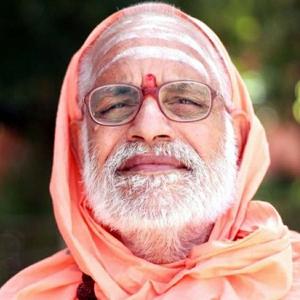


In the Bhagavad Gita, Chapter 13, the concepts of the higher self and lower self can be understood in terms of the "field" (Kshetra) and the "knower of the field" (Kshetrajna). Lord Krishna uses these terms to describe the body-mind complex and the eternal Self (Atman) within it.
The field (Kshetra) represents the lower self, which includes the physical body, the mind, and the intellect. It consists of the elements, sense organs, ego, and various processes of life. The field is subject to change, decay, and death. It is driven by desires, fears, and attachments, which create the illusion of individuality and separation.
The knower of the field (Kshetrajna) represents the higher self or the Atman, which is the eternal consciousness that pervades all living beings. It is the unchanging witness that observes the ever-changing field. The Atman is inherently pure, limitless, and one with the Supreme Consciousness (Brahman).
In Chapter 13, Lord Krishna emphasizes the importance of understanding the difference between the field and the knower of the field. By cultivating self-awareness, discernment, and detachment, individuals can overcome the limitations of the lower self (Kshetra) and realize their true nature as the higher self (Kshetrajna).
Ultimately, the Bhagavad Gita encourages individuals to recognize and connect with their true nature, transcending the limitations of the lower self and experiencing the infinite potential of their higher self.
Support the show
All by the grace of Guru ji,
Brahmleen Sant Samvit Somgiri Ji Maharaj.
Biocentrism is a philosophical theory and ethical perspective that puts the value of life and living organisms at the center of its worldview. It was developed by American scientist and author Dr. Robert Lanza, who posits that life and consciousness are the foundations of the universe, rather than being mere byproducts of physical processes.
Biocentrism challenges the traditional scientific view that the universe and its laws are separate from life and consciousness. Instead, it proposes that our understanding of the universe is shaped by our conscious experiences and perceptions. The theory suggests that space and time are not absolute entities but rather are forms of animal perception.
Biocentrism has been met with both interest and skepticism within the scientific community. While some appreciate its novel approach to understanding the universe, others argue that the theory lacks empirical evidence and relies too heavily on philosophical conjecture. The discussion surrounding biocentrism is ongoing and serves as an example of how scientific understanding is constantly evolving.
Support the show
All by the grace of Guru ji,
Brahmleen Sant Samvit Somgiri Ji Maharaj.
Support the show
All by the grace of Guru ji,
Brahmleen Sant Samvit Somgiri Ji Maharaj.
To discover the Supreme Self within, one needs to embark on a spiritual journey of self-discovery and self-realization. This journey involves different practices and paths, including meditation, yoga, self-inquiry, and mindfulness, which help you to become aware of your thoughts, emotions, and physical sensations, and gradually peel away the layers of illusion that separate you from your true nature.
By connecting with your Supreme Self, you can develop a deeper understanding of yourself and your place in the universe. This realization can lead to spiritual growth, inner peace, and a sense of unity with all living beings. Ultimately, the discovery of the Supreme Self within can help you attain liberation from the cycle of birth and death and the suffering that arises from a limited sense of self.
Support the show
All by the grace of Guru ji,
Brahmleen Sant Samvit Somgiri Ji Maharaj.
Support the show
All by the grace of Guru ji,
Brahmleen Sant Samvit Somgiri Ji Maharaj.
In the Bhagavad Gita, Prakriti and Purusha are important concepts from the ancient Indian philosophy of Samkhya.
Prakrit is often translated as "nature" or "matter," and refers to the basic constituents of the material world. It is the source of all material existence, including the physical body and the senses. Prakrit is seen as being composed of three gunas, or qualities: sattva (purity), rajas (passion), and tamas (ignorance).
Purusha, on the other hand, is often translated as "spirit" or "consciousness," and refers to the true self or soul. It is the unchanging, eternal aspect of the individual that transcends the material world. Purusha is pure and free from all the gunas of Prakriti.
In the Bhagavad Gita, these two concepts are discussed in the morning session in context of the yoga of knowledge (Jnana yoga). The goal of this yoga is to gain an understanding of the true nature of the self, which is said to be identical with Purusha. Through this understanding, one can detach from the material world and achieve liberation from suffering.
Support the show
All by the grace of Guru ji,
Brahmleen Sant Samvit Somgiri Ji Maharaj.
The Supreme Self, also known as the Atman, Paramatman, or Brahman, refers to the ultimate, eternal, and divine consciousness that pervades all of creation. In Hindu philosophy, it is considered the essence of existence and the highest reality. The Supreme Self is present within each individual, as well as in the entire universe. The concept of the Supreme Self is central to the teachings of the Bhagavad Gita and other Hindu scriptures like the Upanishads.
Here are some key aspects of the Supreme Self in you:
The goal of human life, according to Hindu philosophy, is to realize and experience the Supreme Self within, also known as self-realization or moksha (liberation). This realization leads to the dissolution of the illusion of duality and separation, transcending the cycle of birth and death, and ultimately experiencing lasting peace, bliss, and freedom.
Support the show
All by the grace of Guru ji,
Brahmleen Sant Samvit Somgiri Ji Maharaj.
The Supreme Self in you, also known as the Atman, the Higher Self, or the True Self, is the pure, unchanging essence of your consciousness that transcends the ego, the physical body, and the material world. It is the core of your being, the eternal and divine aspect of your existence that is one with the ultimate reality or the source of all existence.
The concept of the Supreme Self is rooted in Hinduism and other Eastern philosophies, which teach that every individual's true nature is the same as the ultimate reality or the Divine. This Supreme Self is considered to be infinite, eternal, and unchanging, in contrast to the temporary, ever-changing nature of the material world and our daily experiences.
Connecting with the Supreme Self is believed to lead to spiritual awakening, self-realization, and ultimately, liberation from the cycle of birth and death. By understanding and experiencing the Supreme Self, one can attain inner peace, wisdom, and a deeper sense of purpose in life.
Understand what Lord Krishna says about the Supreme Self in Chapter 13th of Shrimad Bhagwat Geeta.
Support the show
All by the grace of Guru ji,
Brahmleen Sant Samvit Somgiri Ji Maharaj.
Support the show
All by the grace of Guru ji,
Brahmleen Sant Samvit Somgiri Ji Maharaj.
Support the show
All by the grace of Guru ji,
Brahmleen Sant Samvit Somgiri Ji Maharaj.
From the publisher's feed