
Sign up to save your podcasts
Or

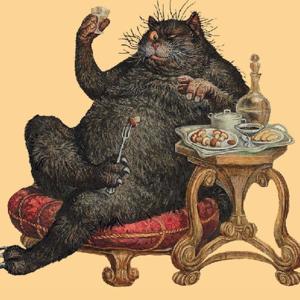


The Bridge of Dream chapter (Tyrion Five from A Dance with Dragons) delves deeply into a number of the key themes in the series. These include the subjective nature of reality, the non-thought of received ideas, and the unreliability of language/communication. These issues are central to the human experience, and their treatment in this chapter makes the case for a moral reading of the text.
This is a response to the Bridge of Dream episode from Boiled Leather Audio Hour. Those guys are legendary ASOIAF podders, so please do give a listen to their work.
The "non-thought of received ideas" I first encountered in Milan Kundera's Art of the Novel. He was responding to Flaubert's earlier, posthumously published Dictionary of Received Ideas. Both get at the cost and consequence to the individual and society as a whole when critical engagement with ideas fails. Please do check them out.
Thank you for listening!
Feast reminds me of MLK Jr's revolution of values. But whereas he was concerned with race, class and militarism, Feast is concerned with gender, class and militarism. And just as MLKJ aimed to transform society by changing individual beliefs and behaviors, Feast too it is explicitly concerned with personal transformation. The book begins with the question, have you decided what you are? The next 1000 pages force us to confront that question over and over in different social contexts.
Of course, no book in the series gets more hate than Feast. That's understandable--the earlier books comprise arguably the greatest epic fantasy trilogy of all time. Faced with writing a sequel to that, GRRM plotted an entirely different course--Feast sacrifices epic action for internal struggle.
The original trilogy is about heroic characters remaking the world around them. In Feast, we're navigating internal landscapes. The transformation is personal. Consider these lines from the book: Have you decided what you are? The question is, who are you? Girl or boy, we fight our battles, but the gods let us choose our weapons. What is dead may never die but rises again stronger. What changed? I died in the Battle of the Trident. Who are you? No one.
The earlier books contained many great ideas and insights. Feast goes a step further and shows how you can apply those ideas to enrich your own life. Another big difference is that Feast emphasizes and highlights the social context in which we operate. As a result, it offers a much more nuanced and thoughtful discussion of personal choice and responsibility than does the original trilogy.
Feast also differs from the earlier books because it's the product of a different cultural moment. The earlier books were conceived and written in the 1990s, when political scientists were contemplating "the end of history." Feast is written after 9/11 and Bush/Gore, when our understanding of democracy and our place in the world has been massively shaken.
The point is, Feast is not at all like the original trilogy--it's even better.
Mentioned during pod:
Original, correct Margaret Thatcher quote with context:
https://www.loc.gov/programs/poetry-and-literature/poet-laureate/poet-laureate-projects/poetry-180/all-poems/item/poetry-180-133/the-summer-day/
Francis Fukuyama and the end of history:
https://www.jstor.org/stable/24027184
The cost and complexity of "greed is good": https://www.chicagobooth.edu/review/moral-ambivalence-gordon-gekko
GRRM against voter suppression: https://grrm.livejournal.com/287215.html
Song of Myself (I contain multitudes):
https://poets.org/poem/song-myself-51
The Summer Day (one precious life):
https://www.loc.gov/programs/poetry-and-literature/poet-laureate/poet-laureate-projects/poetry-180/all-poems/item/poetry-180-133/the-summer-day/
In Brant Two, GRRM digs deep into his bag of tricks and comes up with...twincest! But this pair of identical twins couldn't be more dissimilar--they disagree on literally everything, except for maybe the need to silence Bran. Speaking of which, Jamie looks to add "kidslayer" to his list of honors/epithets.
But let's not make the mistake of having the incident at the very end of the chapter obscure everything that came before--the chapter is in fact about problems of perception and interpretation. Surprise! That also happens to be a key theme in Bran One. So it seems pretty clear based on these two chapters (and insights from the larger series) that Bran's role is similar to that of Ishmael in Moby Dick. That is, he's the (limited) lens through which we view much of the action in the story, and communicates some of the key problems and issues George wants to explore. These include the inescapably subjective experience of seeing and interpreting our reality. Of course, this problem will occur over and over throughout the series and is not exclusive to Bran. But it's clear that it is perhaps the central motif of Bran's character.
I've said over and over again that real magic is being able to see with another person's eyes, being able to feel what they feel. Early returns, however, aren't encouraging--George so far seems to be saying that it's difficult, if not impossible, to do so. Bran One and Two say that our understanding is necessarily totally context dependent and incomplete, while Arya One says we can't reliably make others aware of our feelings and experience, at least not with words. Meanwhile, here's Cat Two, earnestly encouraging us to look through different lenses and keep the parallax alive, hoping that maybe, just maybe, we can find a shared meaning. For my part, I'm on Team Cat. Whatever the resolution, I'm virtually certain that this will be an animating source for all the books to come in the series.
Note: I'm heavily involved in a Lady Stoneheart episode. LSH as a Dante character. LSH in the context of war literature. LSH in the context of the literature of revenge--emphasis on The Iliad and The Oresteia. And finally, LSH and the contrast between restorative and retributive justice.
These are my LSH areas of exploration. If you have questions or avenues you want covered, please do leave a voice message through the Spotify pod message function. Get in!
Plato's Republic is the Mother of Game of Thrones/A Song of Ice and Fire. Arya One is the Midwife.
Contrary to popular belief, Arya One is not some throwaway text between two vastly more consequential chapters. In fact, it lays out the central moral and ethical questions that power the entire series. That's because Arya One is George's answer to Book V of Plato's Republic, the massively influential--and controversial--heart of Plato's great work. Plato imagines what it might take to create just individuals and a just society to promote and sustain such a citizenry. His arguments are in turns insightful, revolutionary and repugnant. George takes Plato's ideas and puts them in action--he turns Plato's thought experiment into a great fantasy epic. Arguably the action of the series--the "game" in Game of Thrones--is George underlining Plato's point about nepotism and family-based claims to power and resources. Indeed, virtually every major line of argument in Book V is echoed or addressed in some way in Arya One. Equality of opportunity and education, the role of women in society, the desirability and consequences of maintaining family names and lines of succession, bad-ass warrior women, philosopher queens, guard dogs, hunting, and yes, even incest--all of these things and more appear in both Book V and George's work. When Plato writes that a prerequisite for creating philosopher kings and queens is dividing children from their parents at birth, George takes him at his word--Dany and Jon are the literary expressions of this idea. When Plato writes that men and women should enjoy the same opportunities and education, George gives us Jamie and Cersei to show the consequences of failure to do so. He gives us Arya and Brienne to show the alternative scenario; that is, when women are educated according to their unique interest and ability, as opposed to their predetermined, gender-specific roles. In this episode, I point to the links between Plato's Republic Book V and Arya One, and try to explain how this single chapter lays the groundwork for George's entire series.
Still working on audio quality issues. I'm a literature nerd, not a sound engineer, but I am trying.
References in the text
Ancient Greece Declassified: https://www.greecepodcast.com/
Angie Hobbs Plato's Republic: https://fivebooks.com/book/platos-republic-a-ladybird-expert-book/
Mary Townsend: https://www.academia.edu/34022796/The_Woman_Question_in_Platos_Republic
Also, here's good, accessible discussion by Santa Clara University's Markkula Center for Applied Ethics about the concepts of fairness and justice in modern society: https://www.scu.edu/ethics/ethics-resources/ethical-decision-making/justice-and-fairness/
Great things sometimes come in small packages. Arya One is a short little chapter that is easy to overlook. People will call it a palate cleanser or the pause that refreshes between two blockbuster chapters, Cat Two and Bran Two, either side of this one. But with the benefit of the re-read, with the ability to see the entire scope and ambition of GRRM's work, it is clear that this chapter presents the core ethical arguments of the entire series. Arya One is inspired by Book V of Plato's Republic, which begins with an admonition to explain the disposition and education of women and children in Plato's idealized, just society. Here Arya talks of fairness, as a nine-year-old child must. But when we hear Arya claim that the prevailing social order based on gender and class is not "fair," we understand that is a nod to the issues raised and addressed in The Republic specifically around these topics. Little nine-year-old Arya fires the opening shots in the complex ethical debate about what makes a just society in this very chapter. There is plenty of evidence to support this argument, and I present it in detail in Part Two of the Arya One re-read.
In Part One, we tackle a different, but also profound problem that has confounded humans throughout the ages--that is, is communication even possible? Is it possible to communicate what we feel or think to another person? GRRM takes it even further, showing multiple times already that not only is successful communication difficult to pull off, but failure to communicate can in fact be deadly. The good news is that George would say, yes, there is a way to communicate our feelings toward another person, but just don't do it with words! This solves the riddle of the constant mussing of the hair that goes on in this chapter--it's an unmistakable sign of affection and no words are necessary. Which brings us around to another one of Plato's classic arguments--beware of rhetoric. Speech, the spoken word, is an important source of deception. And indeed, George spends much of the chapter showing us precisely this, mostly through Sansa's lying teeth. I argue that while George makes it manifest in this chapter, this phenomenon has in fact been latent throughout the book so far.
So please do dig in and engage with Part One until we return with Part Two, when we'll dive into questions and fairness and education, and show how Arya One links to one of Plato's most famous chapters. Thanks for listening!
Woot woot!!! Here's an academic from the University of Nebraska-Lincoln talking about Plato's (and Aristotle's) influence on the series specifically referencing the Gorgias. Note, this article is written from the perspective of the conclusion of the show, so it's definitely a different angle of attack, but the thrust of the argument is the same. Please note there are MAJOR SPOILERS for both books and show in this one: https://www.newswise.com/articles/how-game-of-thrones-embraced-the-platonic-ideal
Did I tell you that every scene in the series has a double or a triplet? Well, here's one of those doubles--Catelyn Two is the double of the Prologue. If we agree that the series is about the problem of the eyes, about Joyce's parallax and the ineluctable modality of the eyes, and about Plato's cave and how we perceive reality through our eyes, then George has to keep hitting that theme. Beyond the point-of-view structure, GRRM has to create doubles and triplets to cultivate our dragonfly eyes, to give us different views of the same problem--same issue, same concerns, but different characters, different setting. This is essentially George offering us a lesson in close literary reading, an early chapter, an early chance to cultivate and stretch our literary analytical muscles.
And if you don't believe me, ask George himself--in this very chapter, the author peers out from the text and tells us to read his novel allegorically. He has Maester Luwin tell us to look through different lenses, that "there's more to this than the seeming," and how the "true message [is] concealed within." George could not make it any more explicit. This is comparable to Dante's admonition in Canto IX of the Inferno to "look beneath the veil of my verse." But in contrast to the Prologue, which ends with the Others intruding on Waymar Royce's false reality, this chapter has no such revelatory moment--we are left with the undeniable sense that something is amiss here, but with no obvious resolution to that tension.
Did I say Cat One and Dany One were a pair? Well, Jon One and Dany One are a pair! Believe that Jon and Dany are destined to be Westeros' new power couple? Well, the links are established beginning in this very chapter. Dig in to find out what a feast in Winterfell has to do with Daenerys Targaryen. And if that's not enough to entice you inside, how about a heaping helping of Dante, Joyce and Socrates, fathers and sons, plus a side of the age-old problem of appearing and being seasoned with a soupcon of Stoicism? And oh, yeah, the Lannister brood enter the frame. Get in! Get Lit!
Woot woot! Weeks after publishing a special episode dedicated to showing Plato's influence on the series, we get confirmation. Arianne II from the pre-released Winds of Winter material includes a direct reference to Plato's cave, confirming beyond a shadow of a doubt that George is intentionally linking his work to those past greats. Of course it is in that line--we knew it was based on tons and tons of textual evidence. But here GRRM makes it as explicit as he possibly can that ASOIAF should be viewed and understand in the context of Plato's Republic and indeed the other great epics we've cited so far.
George's work exists in a fantasy universe and so cannot make explicit references to Plato. Here he does the next best thing--he describes a descent into a cave, a long and steep and rough descent, a cave lit by fire, where voices echo off walls and we encounter blind, staring eyes and representations of reality in the form of statues. That is all but a verbatim lift from The Republic itself.
So give this very brief episode a listen in its own right, but above all, please please do lend an ear to the Plato's Cave episode because we now know that George intends for us to understand earlier chapters and incidents in the story to be viewed through that lens. Get in!
You may ask yourself, how is it that I only just read Arianne II, when it's been available for some time. The reality is that I have been avoiding these chapters like the plague. I don’t want to take on board text that’s outside the five published books. I have not looked at nor do I reference any other text or statements that George makes anywhere but in the books themselves. I just don't believe that's our charge--our goal is to engage with the text we're given and develop our own understanding, not to appeal to George for his understanding! Another reason I haven't looked at this material is that the text in these sample chapters could change, so I don't want to get all worked up about text that isn't official, isn't published. And as I believe and hope I showed in the Cat One/Dany One special episode, the context around these chapters matters a great deal. So I’m never going to read these chapters in isolation and take them at face value. That's because the chapters don’t exist in isolation, they exist in the larger context of the work. But I have been pondering what to do about TWOW when or if it ultimately drops, so I thought I should look at the text and see what we're dealing with. Who knew there was such an important chapter and reference to Plato lurking in these sample chapters?!?!?! I certainly didn't, but am glad I looked.
Thanks for listening!
Did I say Joyce's parallax is a central issue in the series? Well, this chapter gives us some key evidence for that statement. Words, lines and scenes are doubled, offering two interpretations or takes of the same event or thing. If you're going to write thousands of pages of text using the point of view structure, you have to show that points of view differ, that they matter. George does some of that work in this chapter. And Joyce isn't the only work alluded to here. Robert and Ned's descent down into the crypts is evocative of other well known journeys down into the land of the dead--in Homer, Virgil and Dante. But above all, the language in this chapter most closely mirrors the descent down into Plato's Cave. The Allegory of the Cave is so important to GRRM's series that I did an entire special episode on it. That's because while we formally encounter it here, we are going to be dealing with this issue for all five books, so best come to grips with it now. For our purposes here in the re-read, it's enough to note the links, the suggestion that we are operating in Plato's Cave of shadow reality. And if that's correct, then it should color our understanding of everything that passes between Ned and Robert in this chapter.
From the publisher's feed