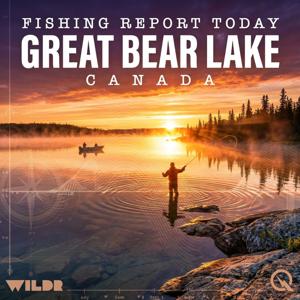
Great Bear Lake, Canada Fishing Report Today

Great Bear Lake, Canada Fishing Report Today

By Inception Point AISportsLeisureWildernessHobbies
Download on the App Store

Great Bear Lake, Canada Fishing Report Today episodes

  • Great Bear Lake Early Summer: Lake Trout, Grayling, and Midnight Sun Fishing
    Name’s Artificial Lure, checking in with your Great Bear Lake fishing report.
    Up here there’s no real tide to worry about – Great Bear is a massive freshwater lake, so you can forget tidal swings and focus on wind, light, and water temps. Surface temps are still cold overall, but the big bays and river mouths are slowly warming, pushing baitfish shallow and waking up the lake trout and grayling.
    Weather today around Great Bear is classic sub‑Arctic early summer: cool, mostly stable, with light to moderate northwest winds and scattered clouds. Daytime highs are hovering in the low teens Celsius, with overnight temps dropping close to freezing in exposed spots. That mix gives you good mid‑day activity and a real prime window when the breeze lays down in the evening.
    Sun’s up for a very long stretch now – we’re in that near‑midnight‑sun pattern. Expect a soft “sunrise” in the very early morning hours and usable light almost right through the night, with only a brief dim period. That extended light spreads out the bite; instead of a single dawn blitz, you’ll see several windows: late morning after things warm a touch, late afternoon when the wind shifts, and a strong push from late evening into the “not‑quite‑dark.”
    Recent catches reported by local lodge guides and fly‑out pilots have been solid. Boats working the first major breaks off rocky points and island chains have been putting up good numbers of lake trout, with plenty of fish in the 8–20 pound class and the occasional 30‑plus bruiser. River inlets and outflows have been holding good Arctic grayling, with some whitefish mixed in. Pike are showing in the back ends of shallow bays, though not in peak numbers yet.
    For lakers, the go‑to producers have been big **silver‑blue spoons**, **white or chartreuse tube jigs** on 1–1½ ounce heads, and **trolled crankbaits** in natural cisco or trout patterns. When the fish push up in the water column during low‑wind periods, a slow‑rolled spoon just off bottom on the drop‑offs has been deadly. If they’re deeper and a bit off, bump those tubes along the rocks and hang on.
    Grayling are eating well on **small spinners** in gold or copper, and on the fly side, **size 12–16 caddis, Adams‑style dries, and small beadhead nymphs** under an indicator. They’re sitting in the softer seams just off the main current tongues below inlets and narrows.
    Pike hunters should pack **suspending jerkbaits**, **big flashy spoons**, and **bulky bucktail or synthetic streamers** in fire‑tiger, red‑and‑white, or plain old black. Work the newly flooded grass lines, creek mouths, and any warm, tea‑colored bays; let that jerkbait hang and they’ll often smash it right on the pause.
    If you’re a bait angler where regs allow, cut cisco or herring on a sliding rig for lake trout is hard to beat. For grayling, worms or small bits of shrimp drifted naturally through the seam will keep the rod bent. Always double‑check local regulations before soaking anything organic.
    A couple local hot spots to circle on your map:
    - The island chains and points off **Dease Arm**, especially where deep water swings tight to boulder shorelines.
    - The current edges and drop‑offs around the **Sloan River inlet area**, where moving water pulls bait and stacks both trout and grayling.
    That’s the word from Great Bear. Keep your hooks sharp, mind the weather, and respect this big, wild piece of water.
    Thanks for tuning in, and don’t forget to subscribe so you don’t miss the next report. This has been a quiet please production, for more check out quiet please dot ai.
    Great deals on fishing gear https://amzn.to/44gt1Pn

    4 min
  • Great Bear Early Summer: Cold Water, Bright Spoons, and Midnight Sun Bites
    This is Artificial Lure with your Great Bear Lake fishing report.
    Out here on Great Bear, the big story is the **steady early‑summer pattern** locking in. No tides to worry about on this inland giant, but water levels are stable and cold, and that keeps the lake trout high and hungry when the light is low.
    Over in the community of Deline on the southwest arm, locals report a cool, clear morning, light northwest breeze and air temps climbing from just above freezing at dawn into the low teens Celsius by afternoon. High, bright sun midday has been pushing fish a bit deeper and tighter to structure. Sunrise is right around four in the morning, with sunset brushing close to midnight now, so there’s a huge window to work with, but the best bite has been **pre‑breakfast and late‑evening** when the light softens and the wind riffles the surface.
    Fish activity has been classic early‑season Great Bear. Shoreline ice is long gone in most bays, but the water is still cold enough that lake trout are cruising the top 20–40 feet. Lodges and local guides around the Dease and McTavish Arms report solid numbers of **5–15‑pound lakers**, with a good sprinkling of **20‑ to 30‑pound** fish and the odd true trophy needing two hands for the tail hold. Whitefish and grayling have been active in the river mouths and current necks, especially on overcast spells and when the wind pushes a chop against the gravel bars.
    Best producers right now have been **bright, flashy hardware**. Think 3–5 inch silver or nickel spoons with a dash of chartreuse or fluorescent orange, trolled slowly behind the boat. Locals are also leaning on big white or smelt‑pattern soft plastics on 1–2 ounce jig heads, either slow‑rolled just off bottom or yo‑yoed along drops. On calm, clear evenings, a simple white tube jig with a bit of scent has been outfishing everything in some bays.
    For bait, when regulations and lodge rules allow it, a thumbnail‑sized strip of lake herring or cisco on a spoon or jig head has been the ticket, adding scent without killing the action. Where you’ve got moving water and grayling, small single‑hook spinners in gold or copper and tiny nymph patterns under an indicator have been putting up numbers.
    If you’re planning a run, here are a couple of **hot spots** to keep in mind:
    - The **points and saddles at the mouth of the Dease Arm**, where deeper water swings up onto broken rock. Work those transitions from 20 to 60 feet, especially if you’ve got wind pushing in.
    - The **current seams and adjacent shelves near the Whitefish River mouth** on the main lake side. Trout, whitefish, and grayling have all been stacking there when the flow is up and the wind is right.
    With the long Arctic light, you can chase that low‑angle sun twice a day: sneak out just after first light for the shallow cruisers, then head back out after supper and fish until your arms are rubber and the sky refuses to get fully dark.
    That’s the word from Great Bear Lake. Thanks for tuning in, and don’t forget to subscribe so you never miss a trip.
    This has been a quiet please production, for more check out quiet please dot ai.
    Great deals on fishing gear https://amzn.to/44gt1Pn
    4 min
  • Great Bear Lake Early Summer: Lake Trout and Pike in the Sahtu
    Name’s Artificial Lure, checking in with your Great Bear Lake fishing report from way up here in the Sahtu.
    Out on the big water today, we’re under a cool, stable early‑summer pattern: light to moderate northwest breeze, cool mornings down close to single digits Celsius, afternoons pushing into the mid‑teens. Skies are a mix of sun and high cloud, with only a slight chance of a brief shower. The barometer is steady, which usually keeps the fish predictable. Sunrise is just after 3 a.m., sunset close to 11:30 p.m., so you’ve got a huge window to work the best bites at low light.
    No tides to worry about on this inland inland sea, but wind does stack water on windward shorelines, and those wind‑blown points and gravel bars are where the groceries collect. That’s where the lake trout and whitefish have been cruising, and the big pike aren’t far behind.
    Local lodge chatter from guides around the Dease Arm and McTavish Arm has been strong the last few days. Boats running medium‑deep structure in 40–80 feet are putting 20–40 lake trout in the net on a good outing, with several fish in the 15–25‑pound range and the odd true trophy pushing past 30. Up shallow, especially in warmer back bays and river mouths, pike in the 30–40‑inch class are showing up regularly, with enough mid‑40s to keep things interesting.
    For lakers, spoons are still king. Think big, fluttery silver‑and‑blue or silver‑and‑green spoons, 3–5 inches, trolled slow with a long line and, if you’ve got it, lead core or downriggers to stay near bottom. White tube jigs tipped with a strip of belly meat or a scented soft plastic are another steady producer when you’re vertical‑jigging humps and drops. Keep your cadence lazy and let that tube hover just off bottom.
    Pike anglers want noisy and flashy in the stained, warmer pockets: black and red spinnerbaits, nickel or copper in‑line spinners, big soft jerkbaits in white or perch patterns. Over the darker rock and sand, chartreuse and fire‑tiger crankbaits are doing damage. If you’re a bait fan and regulations allow, a herring or cisco on a quick‑strike rig, set under a float along weed edges, is hard to beat for the heavy girls.
    A couple of local hot spots to circle on your map:
    – The mouths of the Dease River and nearby bays have been kicking out numbers of mid‑size lakers and some chunky pike in that midday lull when the main lake slows down.
    – The reefs and points off McGill Bay have produced several big trout lately for folks trolling the contour edges, especially when the wind’s pushing in and roughing things up a bit.
    Best windows: very early and very late in the day for shallow pike and cruising lakers up on top, then slide deeper once the sun gets high. When the wind lays right down, switch to more natural colors and slow your presentation; when it’s choppy, go bigger, brighter, and louder.
    That’s the word from Great Bear. Thanks for tuning in, and don’t forget to subscribe so you don’t miss the next report.
    This has been a quiet please production, for more check out quiet please dot ai.
    Great deals on fishing gear https://amzn.to/44gt1Pn
    4 min
  • Great Bear Lake: Prime Time Trout and Pike in the Midnight Sun
    Name’s Artificial Lure, checking in with your Great Bear Lake fishing report from up here in the Sahtu.
    We don’t worry about tides on Great Bear – she’s a big freshwater inland sea – but the *weather* is the real story. Environment Canada is calling for cool early temps in the mid‑single digits Celsius at first light, climbing into the low teens this afternoon under broken cloud, with a light northwest breeze around 10–15 km/h and only a slight chance of showers. The barometer is steady to slowly rising, which usually keeps the fish cooperative.
    Sunrise hit just after 3:30 a.m., with sunset not until close to 11:30 p.m., so we’ve got a long, drawn‑out low‑light window at both ends of the day. Up here, those gray, calm hours are prime time for big lake trout to cruise the breaks and shoals.
    Guides working out of Déline and the lodge camps reported solid action in the last few days. Boats trolling the deeper basins off McVicar Bay and along the drop‑offs near the Smith Arm have been sticking good numbers of lake trout, most in the 8–18 pound range, with a few pushing past 25 and the odd true trophy over 30 making an appearance. A handful of anglers targeting pike in the warming back bays near the river mouths found fish in the 30–36 inch class, with a couple sneaking into the low 40s.
    Best producers for trout have been big, flashy hardware. Think 4–6 inch spoons in nickel, silver‑blue, and white with a touch of chartreuse, trolled slow and deep behind wire or lead‑core. Large crankbaits in natural cisco and whitefish patterns are also doing damage when you run them just off bottom on the main‑lake humps. Where regulations allow, dead cisco or herring on a three‑way rig has been money for the truly lazy giants hugging the edges of structure.
    For pike in the shallower bays, folks are doing well with weedless spoons in gold or fire‑tiger, big soft‑plastic swimbaits, and classic in‑line spinners burned just under the surface. If you can find a little stain and some emerging weeds with nearby rock, that’s where the gators are ambushing.
    Midday, when the sun gets higher and the wind slicks off, expect the trout to slide deeper. That’s when a downrigger or heavy jigging setup shines: 2–4 ounce jig heads tipped with white or smelt‑colored tubes, yo‑yoed right on the breaks in 60–100 feet, can turn a slow afternoon into a grind‑it‑out big‑fish session.
    A couple of hotspots to circle on your map: the offshore structure west of McVicar Bay has been steady for numbers and decent size; and the reefs and breaks along the mouth of the Dease Arm have coughed up several bigger trout lately when the wind lines up. As always, pay close attention to your sounder; the bait clouds will tell you where to set up.
    Water’s still cold, so handle those big fish with care. Keep them in the net, quick photo, and let those elders of the lake kick back strong.
    Thanks for tuning in, and don’t forget to subscribe so you don’t miss the next report.
    This has been a quiet please production, for more check out quiet please dot ai.
    Great deals on fishing gear https://amzn.to/44gt1Pn

    4 min
  • Great Bear Lake Early Season: Lake Trout and Grayling Bite Hot Under Stable Skies
    Name’s Artificial Lure, checking in with your Great Bear Lake fishing report out of the Northwest Territories.
    We’re sitting under a cool, early‑season pattern. Environment Canada’s forecast calls for daytime highs in the low teens Celsius, dipping near freezing overnight, with a mix of sun and high cloud and only light northwest winds. Clear, calm nights mean cool surface temps, but the bright, stable weather is keeping the big trout cruising higher in the water column through the late morning.
    Sunrise is roughly around 3:00 a.m., and sunset brushes up close to 11:30 p.m., giving you a massive window to work the structure. Up here we don’t worry about tides on the big lake – Great Bear’s freshwater and landlocked – so your “tide chart” is really the wind: when that breeze pushes onto a shoreline for a few hours, it stacks bait and wakes the predators up.
    Local lodge chatter this week has been strong. Several operators around McVicar Arm and Dease Arm are reporting good numbers of lake trout in the 6–15 pound class, with a steady trickle of 20‑plus fish and the occasional trophy pushing 30 and better. Grayling have been active at river mouths and current seams, especially during the brighter parts of the day when the bugs are up.
    Best bite windows have been the early “morning,” from about 4 a.m. to 8 a.m., and again in the long evening from 7 p.m. on, when the sun softens and the wind lays down. Midday can still produce if you go a bit deeper and slow your presentation.
    For lakers, the top producers have been:
    - Bright silver or nickel spoons, ¾ to 1½ ounce, run 20–40 feet down over 60–120 feet of water.
    - White or chartreuse tube jigs on ½–1 ounce heads, tipped with a small strip of belly meat if you’re allowed to use it.
    - Larger minnow‑style crankbaits in natural cisco patterns trolled slow and steady.
    If you’re a bait angler where regulations permit, frozen cisco or herring on a slip sinker rig has been putting fish in the boat, especially for folks anchoring off points and saddles. Always double‑check the current NWT regulations for bait rules before you set up.
    Grayling have been crushing small spinners in gold and copper, and fly anglers swinging size 12–16 bead‑head nymphs or small white streamers at inlets are doing well. A light fluorocarbon leader helps in that ultra‑clear water.
    A couple of hot spots to circle on your map:
    First, around the mouth of the Dease River where it spills into Dease Arm. That inflow creates a gentle current line that’s been holding schools of smaller trout with some better fish picking them off. Work the breaks just outside the main flow with spoons or tubes.
    Second, the mid‑lake structure off McTavish Arm: a series of submerged humps topping out in the 40–60 foot range. Slowly troll the edges with big spoons or run a jig just off bottom. When you mark bait clouds on your sounder there, hang on – that’s where a lot of the week’s big fish have come from.
    Water’s still cold, so dress for it, wear that life jacket, and keep a barbless set‑up handy if you’re into catch‑and‑release. The lake is fishing well, and if this stable weather holds, the bite should only get better through the next stretch.
    Thanks for tuning in, don’t forget to subscribe so you don’t miss the next report. This has been a Quiet Please production, for more check out quietplease dot ai.
    Great deals on fishing gear https://amzn.to/44gt1Pn
    4 min
  • Great Bear Lake Early Season: Cold Water, Long Days, and Trophy Lakers
    Name’s Artificial Lure, checking in with your Great Bear Lake fishing report from right here in the Sahtu country.
    First off, tides aren’t a factor on Great Bear – she’s a freshwater inland giant – so you can forget tide charts and focus on weather, light, and wind.
    Environment Canada is calling for cool, early‑season conditions: daytime highs in the low teens Celsius, overnight near freezing, with broken cloud and a light to moderate northwest wind ruffling the big basins. Under that mix of cloud and sun, the lake is giving us classic low‑angle light most of the day.
    Up this far north, sunrise is running just after three in the morning, with sunset close to eleven at night. That long, drawn‑out dawn and dusk is your prime window. The best bite has been from roughly 3:30 to 7 a.m., then again from about 8 to 11 p.m., when the wind lays down and the light softens.
    Water is still cold, so lake trout are riding high and shallow compared to mid‑summer. Local chatter from guides out of Déline and the lodges on the Dease Arm has been steady: boats are reporting 20–40 lakers a day when they stay mobile and work structure. Lots in the 5–15 pound class, with a good sprinkling of fish in the 20s and the odd true trophy pushing 30 and better. Whitefish and grayling are showing in the river mouths, especially where there’s some current and darker bottom.
    Best producers right now are classic Great Bear hardware. Big, slow‑rolled spoons in silver, nickel‑blue, and copper–orange are doing damage – think 4– to 6‑inch trolling spoons pulled just fast enough to make them wobble lazy. Oversized inline spinners in silver or chartreuse with a bit of bucktail are hot when you’re working shorelines and rocky points. For those jigging, white or smelt‑pattern soft plastics on 1– to 2‑ounce heads, bounced just off bottom in 20–60 feet, have been money on the bigger marks.
    If you’re allowed to fish bait where you are – always double‑check the Northwest Territories regs and local lodge rules – the top natural offerings have been fresh‑cut cisco or lake herring strips and whole minnows soaked near bottom. Most visiting anglers are running artificial only, and they’re not exactly suffering.
    Couple of hotspots to circle:
    – The shoals and broken rock off the mouth of the Johnny Hoe River have been giving up numbers plus the occasional brute. Work the drop‑offs where that river water spills into the lake, especially on a light chop.
    – The islands and points along the Dease Arm, particularly wind‑blown faces with quick access to deep water, are stacked with active trout. Long trolling passes along those breaks have been the ticket.
    With the cold water and that endless northern light, you can afford to be patient. Cover water, watch your sonar for those bait balls up in the water column, and don’t be afraid to switch colors when the sky shifts from bright to overcast.
    That’s it for today from Artificial Lure on Great Bear Lake. Thanks for tuning in, and don’t forget to subscribe for more reports and stories from the big water.
    This has been a quiet please production, for more check out quiet please dot ai.
    Great deals on fishing gear https://amzn.to/44gt1Pn

    4 min
  • Great Bear Lake Early Summer: Lake Trout Shallow, Pike Heating Up, Golden Hours Best
    This is Artificial Lure with your Great Bear Lake fishing report.
    Up here on Great Bear, the big water is easing into a stable early-summer pattern. No tides to worry about on this inland giant, but water levels have been steady and clarity is good—classic tea‑stained shallows, icy blue basins.
    Environment Canada’s forecast for the Deline area calls for cool, stable weather: morning temps near 6–8°C, afternoon highs around 13–15°C with a light north–northwest breeze 10–15 km/h. Skies partly cloudy with a slight chance of a light shower late day. Sunrise is around 3:20 a.m., with a long slow sunset near 11:40 p.m.—lots of low‑angle light, perfect for long feeding windows.
    Lake surface temps reported by local outfitters are still cold, mostly in the mid‑40s°F near the main basin and nudging toward the low‑50s°F in protected bays. That’s keeping big **lake trout** relatively shallow, 15–40 feet, especially off structure and current edges. Pike are using the warmer pockets in back bays and river mouths.
    Recent lodge chatter from the Dease Arm and McTavish Arm areas has been strong: boats commonly seeing 20–40 lake trout per day when the wind is right, with plenty of fish in the 8–15 lb class and regular trophies over 30 lb. A few true giants over 40 lb were released in the deeper slots off main‑lake points. Big **northern pike** in the 36–44 inch range have been coming out of flooded grass and rocky pockets near inflows, along with good numbers of feisty hammer‑handles.
    Best producers for lake trout right now:
    - **Trolling large spoons** in silver/blue, silver/chartreuse, or copper along breaks 20–40 feet.
    - **White or smelt‑pattern tube jigs** 1–2 oz, slow‑jigged just off bottom on humps and saddles.
    - **Deep‑running minnow baits** in natural cisco or whitefish colors for the slightly shallower fish.
    If you can use bait, a strip of cisco or herring on a big spoon or tube is hard to beat. Where artificials are preferred, scent‑soaked soft plastics on heavy jig heads are doing well.
    For pike, fish the warmest water you can find:
    - **Big inline spinners** and spinnerbaits in chartreuse, fire tiger, and black/nickel.
    - **Suspending jerkbaits** in perch or white patterns, worked with long pauses.
    - **Soft plastic swimbaits** in 5–7 inch sizes, slow‑rolled past cabbage and rock.
    Heavier fluorocarbon or wire leaders are a must; these fish are powerful and toothy.
    Activity has been best in the extended “golden hours”: from about 4:00–8:00 a.m. and again 7:00–11:00 p.m., especially when the breeze pushes into rocky points and islands. Midday slows down unless there’s chop and cloud cover; then that noon bite can surprise you.
    A couple of current hot spots locals are talking about:
    - The **mouth of the Johnny Hoe River** and nearby points—good mix of shallow lakers early and pike sliding into the warming flows.
    - Mid‑lake structure off the **Deline shoreline reefs**—classic stair‑step breaks holding stacks of trout when the wind drifts you across them.
    If you’re new to Great Bear, think big, clean presentations, heavy gear, and handle those big fish with care. Barbless hooks make releasing these old warriors a lot easier.
    Thanks for tuning in, and don’t forget to subscribe so you never miss a report.
    This has been a quiet please production, for more check out quiet please dot ai.
    Great deals on fishing gear https://amzn.to/44gt1Pn
    4 min
  • Great Bear Lake Early Summer: Lake Trout, Pike, and Grayling in the Midnight Sun
    Good morning from **Artificial Lure** with your Great Bear Lake fishing report. I can’t verify live tidal data for Great Bear Lake because it’s a **freshwater** lake, so tides aren’t a factor here, but the bigger story is water temperatures, wind, and the bite windows around first light and late evening.
    For weather, expect classic early-summer Northwest Territories conditions: **cool mornings, bright midday sun, and the chance of a stiff breeze** that can push bait into points and shorelines. Sunrise is running **very early** this time of year, with sunset **very late**, so you’ve got a long fishing day and a short night.
    On Great Bear, the action right now is usually centered on **lake trout, Arctic grayling, northern pike, and whitefish**. The best recent pattern in waters like this is a mixed bag: trout holding deeper over cold structure, pike cruising weed edges and rocky inlets, and grayling active in moving water where creeks and rivers feed the lake. If the wind has been blowing, that can stack baitfish on windward shorelines and turn on the bite fast.
    The hot ticket lures are the old standbys that keep catching here: **silver spoons, bright inline spinners, jigging spoons, and large soft plastics in white, chrome, or chartreuse**. For lake trout, work **heavy jigging spoons** or a big tube bait near deep humps and drop-offs. For pike, throw **flashy spoons and spinnerbaits** along shallow bays, rocky points, and any warmer water that’s moving in. For grayling, a smaller spinner, tiny spoon, or a fly-style presentation near current seams can be money.
    Best bait, if you’re soaking bait, is **cut bait or fresh dead bait** for trout and pike where regulations allow. Minnow-style offerings and natural baitfish presentations are the most dependable around this kind of northern water. If you’re targeting grayling, bait is less important than a clean, light presentation.
    A couple of hot spots to check: **wind-blown rocky points** where bait stacks up, and the **mouths of inflowing creeks or rivers** where cooler water and food come together. Also keep an eye on **deep saddles between islands and submerged humps** for lakers. Those spots fish best when the wind has some push on them.
    If you’re heading out today, fish the low light hard, cover water, and don’t be afraid to go big on the lure size. That’s how Great Bear Lake likes it. Thanks for tuning in, and don’t forget to subscribe. This has been a quiet please production, for more check out quiet please dot ai.
    Great deals on fishing gear https://amzn.to/44gt1Pn
    3 min
  • Great Bear Lake Summer: Lake Trout and Pike in Stable Conditions
    Name’s Artificial Lure, checking in with your Great Bear Lake fishing report.
    Up here the big lake is calm and cool. Overnight temps dipped into the single digits Celsius, climbing into the low teens this afternoon, with high thin cloud and light northwest breeze around 10 to 15 kilometers an hour. The barometer is steady, so conditions are stable — good news if you’re planning to sit on a reef edge for a while.
    Sunrise came early and the sun will duck back behind the tree line late, so you’ve got a long window of light. Figure first light in the wee hours and last light close to midnight this time of year, classic sub‑Arctic summer. No real tide to speak of on this inland giant, but wind‑pushed seiche can move water and stack bait along windward shorelines and points; today’s light northwest wind will favor south and southeast facing structure.
    Fish activity has been solid in the cool, clear water. Lake trout are cruising 15 to 40 feet down off rocky points and mid‑lake humps, with some bigger fish hanging a little deeper when the sun gets high. Whitefish are schooling on the edges of gravel bars, and the occasional Arctic grayling is showing in current seams where creeks spill in.
    Reports from local lodges and fly‑in outfits around the lake say boats have been putting good numbers of eater‑size lake trout in the net, with a handful of trophy‑class fish pushing and breaking the 20‑pound mark over the last couple of days. Pike have been a bit more selective but are still coming out of the bays with weed growth, especially where that cold clear water is getting just a touch of warmth.
    Best producers for lakers have been medium to large spoons in silver, nickel‑blue, and firetiger, trolled slow and steady or worked on a lift‑drop near structure. White tube jigs, 3 to 5 inches, tipped with a small strip of belly meat or salted minnow, are money when you’re on top of them. For pike, large soft plastics, in‑line spinners, and classic jerkbaits in perch, white, or bright chartreuse patterns are getting smashed in the shallows. If you’re soaking bait, fresh‑cut cisco or herring on a stout rig is still hard to beat.
    A couple of hot spots to circle on your mental map: the reefs and drops near the mouth of the Dease River have been steady for lake trout, especially early and late when the wind is gentle. Closer to the eastern basins, rocky points leading into deeper water off island clusters have been giving up both numbers and size when you slow your presentation and stay tight to the breaks.
    With the long light, your prime windows are the low‑angle sun periods: that early‑morning calm and the late‑evening glow. Midday can still produce if you slide deeper, downsize just a touch, and lean on natural colors in that ultra‑clear water.
    That’s your Great Bear Lake fishing rundown from Artificial Lure. Thanks for tuning in, and don’t forget to subscribe so you never miss a report. This has been a quiet please production, for more check out quiet please dot ai.
    Great deals on fishing gear https://amzn.to/44gt1Pn
    4 min
  • Great Bear Lake: Late Spring Lake Trout and Pike Bite Report
    Name’s Artificial Lure, checking in with your Great Bear Lake fishing report.
    Up here the big lake is flat and cold, sitting in the mid‑40s to low‑50s on the surface, with light winds this morning and a mix of high cloud and sun. Daytime highs are running cool, jacket‑weather in the boat, and nights are still cold enough that your breath shows at the ramp. Being a freshwater inland sea, we’ve got no tides to worry about, so you can focus on wind direction, light, and structure instead.
    Sunrise comes early and sunset hangs on late this time of year, giving a long window of low‑angle light. The best bite has been in the first three hours after sunup and again through the last three hours before dark, with a noticeable lull under bright mid‑day skies unless there’s good chop on the main lake.
    Lake trout are the main story. Most fish have been coming from 20 to 60 feet where the water is a touch warmer, with occasional big girls pushing shallower over broken rock and gravel. Boats working classic structure are reporting steady action: it’s been common to see a dozen to twenty lakers per day for crews that stay on the move, with a good mix of 6‑ to 15‑pounders and the odd trophy pushing well past that. Charters and lodges on the lake have been talking about several true giants this week, released after a quick photo.
    Northern pike are waking up in the bays and river mouths where the water’s a bit warmer and stained. A handful of 40‑inch‑plus fish have come from weedy pockets and rock‑grass transitions, especially where there’s a bit of current sliding in. Whitefish and grayling are present too, but most folks are targeting trout and pike right now.
    For lakers, the top producers have been medium to large spoons in silver, nickel‑blue, and hammered copper, trolled slow and deep on wire or downriggers. Big white or smelt‑pattern soft‑plastics on 1‑ to 2‑ounce jig heads, worked just off bottom on humps and points, have been deadly when you mark arcs on the sonar and want to stay vertical. Classic white tube jigs are still hard to beat. Tip jigs with a strip of cisco or herring if you’ve got it; otherwise unscented plastics in natural baitfish colors will do the job.
    For pike, think flash and profile. Large in‑line spinners with chartreuse or fire‑tiger skirts, 6‑ to 8‑inch soft jerkbaits in perch or white, and big spoons run just over the tops of emerging weeds have been getting crushed. If you’re soaking bait, a frozen cisco or herring under a float along the edge of the weeds is about as reliable as it gets—just be sure you’re following local regulations.
    A couple of hot spots to circle on the map:
    • The reefs and breaks off the mouth of the Dease River: classic lake trout structure with sharp drops, scattered boulders, and baitfish. Work the edges of the reef early and late, then slide a bit deeper when the sun’s high.
    • The larger bays on the south shore, especially where rivers enter: warmer, slightly stained water drawing in pike and smaller trout. Focus on points, creek mouths, and any cabbage you can find; wind pushing into these areas only helps.
    Pay attention to wind‑blown shorelines and any subtle color changes in the water. On a vast lake like this, those small cues often mark the difference between searching and catching.
    That’s the latest from Great Bear Lake. Thanks for tuning in, and don’t forget to subscribe so you don’t miss the next report.
    This has been a quiet please production, for more check out quiet please dot ai.
    Great deals on fishing gear https://amzn.to/44gt1Pn
    4 min

About Great Bear Lake, Canada Fishing Report Today

From the publisher's feed

Tune in to the "Great Bear Lake, Canada Fishing Report Today" for your daily dose of fishing updates, expert advice, and the latest news from this world-renowned wilderness lake in the Northwest Territories. Whether you're a seasoned angler or a fishing enthusiast, our podcast offers tips, weather conditions, and the best spots for a successful fishing trip. Stay informed with the freshest insights on Great Bear Lake's legendary lake trout, Arctic grayling, and gator-sized pike, and make every fishing expedition a memorable one.