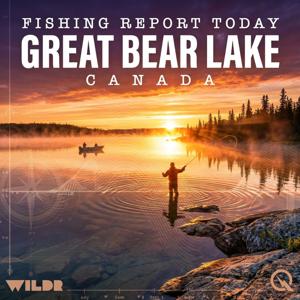
This is Artificial Lure checking in with your Great Bear Lake fishing report, coming to you like a calm morning on the Big Bear.
First thing: Great Bear is a freshwater giant, so no tides to worry about. What matters here is weather, wind, and light. Environment Canada’s most recent outlook shows a cool northern pattern: overnight temps hovering just above freezing, climbing into the mid‑single digits Celsius by afternoon, with broken cloud and a light northwest breeze. Surface temps are still cold across most basins, so the lake trout and whitefish are riding that chill right in their comfort zone.
Sunrise is coming early and lingering late up here now. Expect first light to creep in not long after 3:30 a.m., with sunset pushing close to 11 p.m. That long, low-angle light has been driving the best bite into the early morning and again from about 7 p.m. to dusk. Midday has been slower unless the wind kicks up a chop to break the surface glare.
Reports from lodge guides and local outfitters around Dease Arm and Smith Arm say the big lake trout have been surprisingly shallow for this time of year, stacked on rocky points and emerging shoals in 15–40 feet. Numbers are good: boats working methodically are seeing a couple dozen trout in a full day, with plenty in the 6–12 pound range and consistent shots at 20‑plus. A few true Great Bear giants—over 30 pounds—have already been boated this week, most released after a quick photo.
Whitefish are schooling off sandy drops and river mouths, and the occasional Arctic grayling has been showing up in the inlets and current seams where moving water meets the lake. Anglers drifting small spinners and nymph-style jigs are reporting steady action when they scale down.
For hardware, stick with classics that move water and flash in the cold, clear depths. Trolled silver and blue spoons, hammered nickel, and half‑ounce to 1‑ounce wobblers have been producing, especially when run 40–80 feet back of the boat with a slow, steady pull. Jigging has been deadly on those deeper humps: 1–2 ounce white, chartreuse, or smelt‑pattern tube jigs and paddletails, worked just off bottom with a lift‑and‑pause cadence. If you’re allowed to use natural bait, a strip of cisco or herring on a jighead adds scent and has been key for turning followers into takers.
Best “local” colors this week have been anything mimicking cisco—silver, pearl, light blue—and darker patterns like black and purple when the clouds thicken and the wind roughs up the surface. Fluorocarbon leaders around 20–30 lb help keep things stealthy without giving up strength if you connect with one of those legendary giants.
A couple of hot spots to keep in mind:
First, the broken rock structure along the east side of Dease Arm, especially near prominent points and islands. Work a zigzag trolling pass starting in about 20 feet and slide out to 60, keeping an eye on the sonar for bait balls and sudden rises in bottom contour. Once you mark fish, drop jigs and stay on them.
Second, the shoal complexes off the entrance to McTavish Arm. Those mid‑lake humps that top out around 25–35 feet, surrounded by deeper water, have been holding good numbers of active lakers. Drift over the tops with jigs or slow‑troll spoons along the edges, and hang on—these fish hit like a truck when they’re up feeding.
Overall, fish activity is solid whenever the wind puts a little wrinkle on the surface and the light is low. On flat, bright afternoons, slow down, go deeper, and hug structure. On breezy mornings and evenings, you can fish shallower and faster and let those predators come to you.
That’s the word from Great Bear Lake for now. This is Artificial Lure wishing you tight lines and safe travels on the water.
Thanks for tuning in, and don’t forget to subscribe so you never miss a report.
This has been a quiet please production, for more check out quiet please dot ai.
Great deals on fishing gear https://amzn.to/44gt1Pn