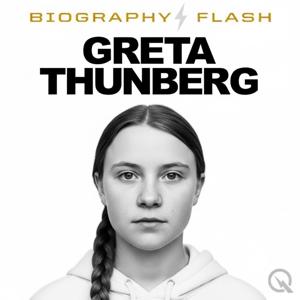
Greta Thunberg Biography Flash a weekly Biography.
Greta Thunberg’s last few days have been a tight mix of frontline activism, polarizing media commentary, and a steady reinforcement of the themes that will almost certainly define the next chapter of her biography: climate justice fused with human rights, and a refusal to soften her tone for anyone.
On social media, Greta has continued to spotlight the intersection of migration, climate, and European politics. A recent video message shared via Facebook shows her warning that Europe is building what she calls an “EU-wide deportation plan,” arguing it will not keep people safe and will instead produce “immense suffering and injustice,” and urging supporters to mobilise and “take back power.” According to that post, she is clearly framing migration and asylum as part of the same moral emergency as climate breakdown, a linkage that is becoming a signature of her late-2020s and now mid‑2020s activism.
In another widely shared clip circulating on Instagram, Greta appears in a recorded statement backing striking teachers in Belgium, explicitly introducing herself as “Greta Thunberg, an activist from Sweden” and stating she stands “in full solidarity with the teachers currently on strike in Belgium and with the students.” That short message extends her biography beyond climate into broader labour and social struggles, reinforcing a pattern that has been building since she began speaking out on Palestine and global justice in recent years.
Her stance on Israel and Gaza remains a flashpoint. A Facebook post from supporters quotes her saying she is “not scared of Israel” but rather fears “a world that has lost its sense of…” moral direction, underlining how she is now as much a lightning rod in geopolitical debates as she is in environmental ones. Right‑leaning outlets like Sky News Australia continue to use her as a cultural shorthand: one recent segment’s “Hall of Shame” feature mocked “Greta Thunberg” by name while attacking climate activists more broadly, and another commentator on the same network likened Australian political figure Brittany Higgins to “Australia’s equivalent of Greta Thunberg,” confirming that Greta’s name remains media code for young, disruptive protest.
Meanwhile, influencer analytics from HypeAuditor report that Greta’s Instagram following sits in the high‑teen millions and ranks her among the top global influencers for June 2026, with estimated monthly income in the tens of thousands of dollars. Those figures are estimates, not audited financials, but they underscore her continuing power as a digital force who can turn a single solidarity video or political critique into worldwide conversation within hours.
There are also lighter, gossip‑adjacent notes: viral Instagram commentary dissecting a “surprisingly intense” fashion choice by Greta at a recent appearance, treating her outfit almost like red‑carpet analysis, shows how she has crossed fully into pop‑culture territory. While those style takes are subjective and sometimes speculative, the fact that they go viral at all is biographically significant: Greta Thunberg, once the lone teenager with a handwritten sign, is now a figure whose clothes, causes, and even offhand phrases are all parsed for meaning.
Thank you for listening, and make sure you subscribe so you never miss an update on Greta Thunberg, and search the term Biography Flash for more great biographies.
Thanks for listening. This has been a Quiet Please production.
Get the best deals https://amzn.to/3ODvOta