
Sign up to save your podcasts
Or

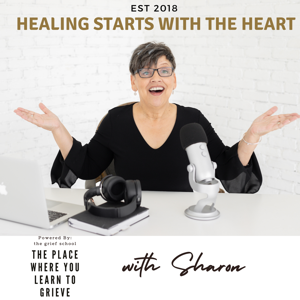


Episode Summary:
In this episode of The Grief School Podcast, Sharon Brubaker explores the transformative concept of balancing positive and negative emotions. She challenges listeners to embrace the idea that our human experience is meant to be a balance of both and explains how understanding this balance can increase our power and ability to effect change in the world. Sharon provides insightful reflections and practical steps to help listeners create emotional balance on purpose.
Key Takeaways:
Concepts Discussed:
Journal Questions: Identify Negative Emotions: What are some negative emotions you have experienced recently? How did you react to them?
Positive Outcomes from Negative Situations: Think about a positive outcome that emerged from a negative situation in your life. How did the balance between the positive and negative play out? Handling Negative Emotions: How do you typically handle negative emotions? Do you resist them, allow them, or try to change them?
Regular Positive Emotions: What positive emotions do you experience regularly? How do they influence your daily life?
Overwhelming Negative Emotions: Reflect on a time when you felt overwhelmed by negative emotions. What thoughts were you having, and how did they contribute to those feelings?
Creating Emotional Balance: How can you create more balance between positive and negative emotions in your daily life?
Personal Meaning of Balance: What does the concept of balancing positive and negative emotions mean to you personally?
Increasing Power through Balance: How can understanding this balance increase your power and ability to create change in the world?
Additional Resources:
Connect with Sharon Brubaker: Website | Instagram | Facebook
Call to Action:
If you found this episode helpful, please share it with someone who might benefit from understanding the balance of emotions.
Don't forget to download the eBook: The Griever's Guide. Link: https://beacons.ai/thegriefschool
Contact Information:
Email: [email protected]
Phone: (661) 212-0720
Thank you for listening to Healing Starts with The Heart. Remember to embrace the balance and take care!
Disclaimer: The information provided in this podcast is for educational purposes only and is not a substitute for professional advice or therapy.
Host: Sharon Brubaker, Grief Specialist
Description: Welcome to Healing Starts with the Heart, where grief meets resilience. In this deeply personal episode, host Sharon Brubaker shares her journey through a serious health diagnosis and its emotional impact. Sharon dives into the unexpected grief that accompanies serious illnesses or injuries, offering insights, support, and a heartfelt personal story to guide listeners through their own experiences.
Episode Highlights:
Resources:
Call to Action: If you've been touched by today's episode, please share it with someone who might benefit from hearing Sharon's story. Subscribe to Healing Starts with the Heart for more episodes on grief, healing, and resilience.
Contact Information:
Thank you for joining us on this journey. Remember, you are not alone in your grief, and together we can find healing.
Welcome to "Healing Starts with the Heart," a podcast where we explore the journey of healing from grief. I'm your host, Sharon, and today we're going to talk about a feeling that many of us who have experienced loss can relate to: not wanting to return to 'normal.'
Let's start with a simple truth. When you lose someone or something important, your life changes. It's like you're on a journey where, at first, your loss becomes a part of you. It's not about overcoming it quickly; it's about integrating it into your life.
Now, I know the idea of getting 'better' or the thought of your grief easing can feel almost... offensive, especially in the early stages. Why is that? Well, for many of us, our grief is the strongest connection we have to what we've lost. It can feel like if we start to feel better, maybe we're saying that the person we lost, or the life we had before, wasn't that important.
But here's a question: If you start to move forward, does it really mean your past life wasn't special? Absolutely not. Remember, healing doesn't mean forgetting. It doesn't mean the love or the memories are any less significant.
Healing starts with the heart. It's a process where we learn to live with our loss, not erase it. It's about carrying the love and the memories forward with us, even as we take steps into our new reality.
So, if you're feeling like you don't want to return to 'normal,' know that it's okay. You're not alone in this feeling. Your journey is unique, and how you integrate your loss into your life is entirely up to you.
Thank you for joining me today on "Healing Starts with the Heart." Remember, it's okay to grieve at your own pace, and it's okay to find your own path to healing. Until next time, take care of your heart.
https://beacons.ai/thegriefschool
Hello, dear listeners, and welcome to another episode of "Healing Starts with the Heart." I'm Sharon, your guide on this journey of understanding and healing from grief. Today's topic is a unique one: feeling like you're living in an 'Alternative Universe' after a loss.
You're still here on Earth, going about your daily life. You say hi to your neighbors, visit the grocery store, talk to people. But something feels different, doesn't it? It's like you're there, but not really seen. There's this vast divide between you and the rest of the world.
This feeling is more common in grief than you might think. It's like you're in a world parallel to the one everyone else is living in. You're physically present, but emotionally and mentally, there's a distance. The world keeps moving, but you might feel stuck or invisible.
The divide you're feeling – it's clear and profound, especially now. And it's during times like these that connecting with others who are grieving becomes so important. Why, you ask? Because they can truly see you. They recognize the devastation at the core of your life. This recognition, this feeling of being seen, it changes something in grief.
Being seen by someone who understands doesn't fix everything. But it helps. In the early stages of grief, it might be the only thing that feels like it's helping. Sharing your experience with someone who gets it can bridge that gap you're feeling, even if it's just for a moment.
So, if you're feeling like you're living in this 'Alternative Universe,' remember, you're not alone. Seek out those who are also on this journey of grief. Their understanding and recognition can be a lifeline. Thank you for tuning in to "Healing Starts with the Heart." Keep taking small steps towards healing, and remember, it's okay to lean on others who understand. Until next time, take care of yourselves and each other.
https://beacons.ai/thegriefschool
Hello, everyone! Welcome back to "Healing Starts with the Heart." I'm your host, Sharon. Today, we're going to explore a tough aspect of grief that many of us face: losing trust in the world and the people around us.
When something really big and painful happens, it can feel like your whole world has changed. You might start thinking that there aren't any good things or good people left. It's like you're asking yourself, "Do things really work out fine in the end?"
This feeling is what we call a secondary loss. It's not just about the person or thing you lost. It's also about losing your belief in positive outcomes. The hard part is, once you know something or have seen something, you can't just pretend it didn't happen, can you?
It's tough, I know. But here's something important to remember: losing trust doesn't mean it's gone forever. Just like a broken bone, trust can heal over time.
Healing starts with small steps. It's about finding little things and people in your life that show you kindness and goodness. It might be a friend who listens, a family member who's always there, or even a stranger's smile.
Remember, it's completely okay to feel like you've lost trust in the world. It's a normal part of grieving for many. But also, keep in mind that it's possible to rebuild that trust, bit by bit.
Thank you for joining me on "Healing Starts with the Heart." Remember, healing from grief is a journey. It's okay to take it one step at a time. Until next time, look for those small moments of kindness in your life. They are there, waiting to help you rebuild your trust. Take care, everyone.
https://beacons.ai/thegriefschool
Hello, everyone! Welcome to another episode of "Healing Starts with the Heart." I'm Sharon, your host, and today we're going to talk about something really important: the choices we have as grievers.
Often, when we're grieving, it feels like we have no control over anything. But guess what? That's not entirely true. Even in grief, we have choices.
You have the choice to stay where you are or to go somewhere new. It's okay to say no to things you don't feel ready for. And you know what? It's perfectly fine to ask for help when you need it. Or you can choose to handle things on your own.
Some days, you might want to sleep all day, and that's okay. If you feel like crying in public, that's okay too. You can go to a party and have fun, even if you're grieving.
Eat what you want, when you want. If you need companionship, reach out to someone. Or, if you prefer to be alone, that's a valid choice as well. It's okay to feel sad, and it's okay to change your routine or the things you used to do.
You don't always have to have all the answers. And most importantly, you can choose to heal, in your own time and in your own way.
Remember, grief doesn't take away your power to make choices. Every day, you can make small decisions that are right for you. Thank you for tuning in to "Healing Starts with the Heart." Your journey is unique, and your choices are valid. Take care of yourselves, and I'll talk to you in the next episode.
https://beacons.ai/thegriefschool
Hi everyone, welcome back to "Healing Starts with the Heart." I'm Sharon, your host, and today I want to talk about something very close to my heart: helping you heal from heartbreak and find peace and joy again.
If you're feeling alone, overwhelmed, or just lost in your grief, I'm here to support you. I understand the pain of a broken heart deeply because I've been there too.
After the death of my nephew Austin, I thought I would never really live again. I was consumed by grief. But then, something changed. I was introduced to a Grief Recovery Specialist, and through their guidance, I learned the tools to move beyond this pain.
This experience was so transformative for me that I knew I had to dedicate my life to helping others find their way through grief. And you know what? You can find your own recovery too.
Say "Yes" to healing your life. Say "Yes" to enjoying an authentic life that honors the memory of those you love. It's not about forgetting them; it's about finding a way to remember them with love, not just pain.
I've been teaching my grief program for over 17 years now, and I can tell you, there is hope. You can heal. Recovery from this pain is not just a dream; it's a real possibility.
And remember, healing doesn't mean forgetting. You will always remember your loved one. But one day, you'll find that you can talk about them with a smile, remembering the good times, not just the loss.
So, if you're ready to start your journey to recovery, I'm here to help. Thank you for joining me on "Healing Starts with the Heart." You're not alone in this. You can heal, and you can find joy again. Until next time, take care.
https://beacons.ai/thegriefschool
Hello, everyone! Welcome to "Healing Starts with the Heart." I'm Sharon, and today we're going to talk about something that touches all our lives: loss and grief.
Loss is an unavoidable part of life. Whether it's the loss of a loved one, a pet, or even a long-held dream, we will all experience a broken heart at some point. Grief is normal and natural, but going through the healing process can be one of the toughest times in our lives.
Now, have you ever wondered why people don't like to talk about grief? It seems like whenever we bring up grief or loss, people get uncomfortable. It's almost as if grief has become a 'dirty word' or the 'enemy.'
On social media, for example, funny and uplifting posts get lots of likes and comments. But mention grief or loss, and it's like a ghost town. So, why is it that the word 'grief' makes us so uncomfortable?
My guess? We don't talk about it enough. We associate grief with pain, tears, and death. These are all true, but grief is also a universal experience that connects us all.
Our discomfort with grief might be an unconscious choice, but it's a choice nonetheless. And seeing grief as the enemy can only hurt us. Holding onto the pain can lead to depression, anxiety, health issues, and even anger and sadness that can affect a big part of our lives.
But here's the thing: it doesn't have to be this way. We can choose to view and talk about grief differently. We can start having conversations about grief and loss now, even if we're not currently experiencing it.
It's time to change the narrative around grief. Let's open up, share our experiences, and support each other. Thank you for joining me today on "Healing Starts with the Heart." Remember, grief is a journey, and you're not alone. Until next time, let's keep the conversation going.
https://beacons.ai/thegriefschool
Introduction
Discussion Highlights
Conclusion
Introduction
Key Points Discussed
Conclusion
From the publisher's feed