
Sign up to save your podcasts
Or

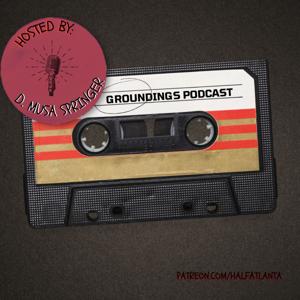


Anti-racist activist Tommy DiMassimo, known for rushing Trump's stage during the 2016 elections, discusses why he decided to charge at Trump and the repression against him which followed, the role of a white comrade in the anti-racism struggle, and moving beyond white guilt and liberalism.
In the interview, Tommy shares that the moment he ran after Trump on stage was not a random or unplanned event, rather the culmination of years of anti-racist activism. Then, he describes the political repression against him, enacted by the Feds, in the year following the event. Along with this, we talk about the role of white people who want to aid in the anti-racist struggle, specifically how to move beyond self-gratifying liberalism, inaction, and comfortability.
"Your consciousness can come from anywhere. but the point is, it needs to come urgently." — Asha Rodney
An Interview with Asha Rodney, scholar-activist, lawyer, and youngest child of Walter Rodney. Asha discusses the assassination of her father by the hands of an immensely repressive Guyanese government in 1980, describes what a "groundings" session is, and gives us suggestions for how to implement her father's work and legacy in our organizing today.
Asha Rodney, along with the rest of the Rodney family, has spent many years seeking justice for the assassination of her father, the revolutionary Walter Rodney. Walter Rodney was assassinated in 1980 by an explosive device which was hidden in a walkie-talkie, provided to him by Gregory Smith who was later revealed to have been an operative for the Guyanese government. Asha covers not only meticulous details of her father's assassination, but describes the political climate and context in which it occurred: an incredibly repressive, western-backed regime eliminating and outlawing all forms of dissent.
Along with covering the assassination, Asha also teaches us about the process of investigation surrounding the assassination; the decades it took to have an official commission of inquiry into Walter's murder, the hundreds of Guyanese people who testified for the commission of inquiry, how incredibly damning the results of the investigation are, and just how hard the Guyanese government has tried to suppress this information.
Finally, Asha brings this fight for justice to the current day and discusses why the commission of inquiry, as well as Walter Rodney's assassination, are very important for activists and organizers around the world. We then discuss the 'groundings' concept, and putting Walter's theories into practice.
Organizer and educator Derek Ford gives a historical context for the current imperialist aggression surrounding the DPRK, explains the 'Juche' ideology, and recounts some firsthand propaganda-shattering experiences from his travels inside the country.
The day after US Secretary of State Rex Tillerson announced the travel ban for US citizens to North Korea, Derek Ford traveled to the country on a fact-finding delegation. In this episode, he shares many of those firsthand experiences with me, and discusses how what he saw in person was quite different from the propaganda he'd been told in the US.
Along with this he discusses the 'Juche' ideology, which is essentially the guiding philosophical ideology of the Democratic People's Republic of Korea, and gives a quick history lesson on both the Juche ideology and the country itself.
Revolutionary Pan-Africanist writer, artist, and organizer Sobukwe Shakur gives a first-hand account of the history of the Black Art Movement, a movement which took place in the 1960s and 1970s and ran parallel to the Black Power Movement.
Sobukwe Shukur is a multi-media cultural worker, the host of the Revolutionary African Perspectives radio show on Georgia's independent WRFG station, a cadre and organizer in Nkrumah’s brainchild, the All-African People’s Revolutionary Party (A-APRP) and a former chair of the National Network On Cuba (NNOC).
The conversation begins with Sobukwe setting the context for the Black Arts Movement, one of global Black political consciousness at its height, before diving into first-hand experiences as a school student during the early 1960s before transforming into an organizer and cultural worker within the movement itself. In discussing the politics of the Black Arts Movement, he discusses how various ideologies existed simultaneously, at times in conflict, and how this was embraced and seen through the act of a multi-plural cultural revolution that took place. In the final third of the interview we discuss the legacy of the Black Arts Movement; how it has influenced us today compared to the Harlem Renaissance, and how Black arts of today reflect a deeply different dominant ideology being reflected in the art.
From the publisher's feed
23,149 Listeners
27,354 Listeners
3,320 Listeners
2,204 Listeners
15,580 Listeners
1,012 Listeners
606 Listeners

9,344 Listeners
107 Listeners
21 Listeners