
Sign up to save your podcasts
Or

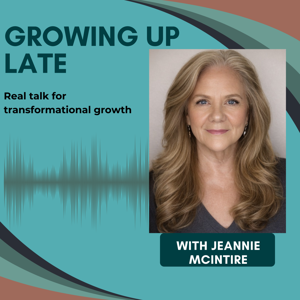


Being picked feels like proof you’re worth something. It isn’t. A story about flattery, people-pleasing, and what happens when you say no to an offer you were supposed to be grateful for.
For most of my life, if someone told me I was the right person for something and said it warmly, I said yes.
In this episode of Growing Up Late, I take apart the idea that being chosen is the same as being valued. I start with a too-fitted outfit and a salesgirl who said I looked amazing, move through a promotion I turned down three times before the division president made it personal, and into a marriage where I gave up what I wanted because it was dressed up as something I’d said I wanted. Then I'll tell you what happened when I recently said no to a board seat, and what the reaction taught me.
The idea in one paragraph: Being chosen can work like borrowed value. Someone else’s enthusiasm fills a gap I should have been filling myself. It feels like currency, but it’s really their yes standing in for my own. Being chosen isn’t the problem. The expectation that you owe gratitude for it, whether or not the offer serves you, is the thing to outgrow.
Key takeaways:
Notice: Who gets warm when you say yes and who goes cold when you say no, and when something good happens to you, who isn’t clapping? You don’t have to do anything about it. Just notice.
Quotable lines:
Listen if you’ve ever wondered why you say yes to things you don’t want, or why declining a flattering offer can feel like breaking a rule.
Burnout recovery, people-pleasing, and the mother wound: Morrighan Lynne, trauma-informed coach and author of The Spirited Human, shares how burnout came in to save her life and what she learned about self-abandonment along the way.
In this episode of Growing Up Late, host Jeannie McIntire talks with Morrighan Lynne about the moment everything collapsed at the end of 2022, the mother wound underneath her people-pleasing, and the grief of losing her identity when she had nothing left to give. Morgan also explains why she calls self-abandonment a million micro-betrayals, why women are trained to see caring for themselves as selfish, and how she keeps her spirituality grounded in real life.
If you're functioning, showing up, and quietly running on fumes, this conversation is for you.
In this episode:
- The 2022 collapse: doing everything right and still falling apart
- Reformed people-pleaser: "Please like me. Please want me."
- The mother wound and where people-pleasing really starts
- The grief nobody talks about: losing your identity to burnout
- Checking your battery and learning to disappoint people
- A million micro betrayals: how self-abandonment builds over years
- Selfish vs. sovereign: centuries-old programming
- Burnout as an intervention: "This stepped in to save you."
- Spirituality with your feet on the ground
- Trauma-informed coaching and why small-t trauma counts
- Closing message: life is hard, there are ways through it, and you're not alone
Timestamps:
0:00 Introduction
1:00 The collapse at the end of 2022
2:30 Reformed people-pleaser
5:15 The mother wound
6:40 The grief of losing your identity
7:50 Checking your battery and disappointing people
11:00 A million micro betrayals
13:15 Selfish, sovereign, and centuries-old programming
14:50 Permission for the woman running on fumes
16:20 Burnout as an intervention
18:45 Spirituality with your feet on the ground
22:20 Coaching: removing what's in the way
25:15 Trauma-informed work and small-t trauma
27:30 The Spirited Human
30:20 Closing thoughts: possibility
About Morrighan Lynne:
Morrighan Lynne is a trauma-informed coach, intuitive guide, author, speaker, and spiritual mentor with nearly two decades of experience helping women move from burnout and overwhelm to clarity, confidence, and self-trust. She is the author of The Spirited Human: Proactive Tools for a Reactive World and the creator of the Sovereign Path Oracle Deck. Her work focuses on emotional resilience, nervous system regulation, and reclaiming your voice after trauma.
Website
Books
Sovereign Path Oracle Deck
A Gift from Morrighan
About Growing Up Late:
Growing Up Late is a podcast about reinvention, resilience, and becoming the author of what comes next. Your host, Jeannie McIntire, is a former Fortune 500 executive who led a $2+ billion business and is now an entrepreneur, speaker, and podcast host.
Connect / Follow Jeannie
Content note: This episode discusses burnout, people-pleasing, identity loss, and dark moments, including thoughts of not wanting to exist. If you are struggling, in the U.S. you can call or text 988 (Suicide & Crisis Lifeline) at any time.
This conversation is for education and inspiration and is not a substitute for professional mental health care.
I fell down an entire flight of stairs rushing to impress my mentor. Cut up, adrenaline through the roof, and I still walked in late and unable to focus. That's the day I learned speed doesn't equal care, competence, or forward motion. I wasn't out of time. I was out of order.
This episode is about the fallacy that rushing gets things done faster, and what actually works instead: the 168-hour audit I run on my own calendar every week, an old Gaelic proverb about mentorship and doing your own growing, no matter how tall your grandfather was, everyone's got to do their own growing, and why hiring experts only helps once you already know where you're going.
Busy is not neutral. It depletes you and gets you no closer to what matters. This one ends on the question I keep coming back to: are you moving toward something that matters, or are you just moving?
The 168-hour audit worksheet mentioned in this episode is available in the show notes and on the newsletter.
Timestamps:
0:00 Falling down the stairs on the way to my mentor
2:00 The fallacy of rushing
5:00 Busy is not neutral
6:00 The 168-hour audit
9:00 No matter how tall your grandfather was
10:00 Time takes care of everyone
12:00 Parkinson's Law: alignment vs. panic
13:00 What rushing costs
16:00 Why I started this podcast
18:00 Hiring experts, or getting lost faster
20:00 Are you moving toward something that matters, or just moving?
168 Hour Reality Check
What happens when the story you tell about yourself changes, and the world starts responding differently? In this episode of Growing Up Late, transformational life coach and author Jennifer Benson (host of The Impossible Shift) shares how she moved from self-silencing and survival mode to a more open, grounded way of seeing herself, relationships, and love.
Jennifer talks candidly about the period in her life when shame took over her self-image, and the small, deliberate choice, as simple as choosing to smile, that started to shift how people treated her. We also dig into how childhood trauma shaped her early beliefs about trust and men, how that showed up in her relationships, and what changed when she met her husband.
The heart of this conversation is Jennifer's framework for change: that lasting transformation starts with reclaiming your agency through small, consistent choices, and that many of us, especially women, are conditioned to give our choices away without realizing we still carry the consequences.
In this episode:
About the guest: Jennifer Benson is a transformational life coach, author, and storyteller, and the host of The Impossible Shift podcast. Her work focuses on helping people examine the beliefs and stories that shape their self-image, and what becomes possible when those stories change.
Connect with Jennifer: Jennifer's Website
Connect with Growing Up Late: Jeannie's Website. Subscribe to Jeannie's YouTube Channel
Almost exactly a year ago, a DNA test I almost didn't take turned up a brother I never knew I had. On the eve of my birthday, I'm telling the story and the harder truth I found on the other side of it.
This is a birthday episode, but it's not really about turning a year older. It's about what happened when a chance DNA test (thank you, ex-boyfriend convinced I was a Viking princess) turned into an email from a full biological brother, then a sister, then an entire family I'd spent my life wondering about. I went to Massachusetts and Maine to meet them. I'm sharing what I found, the reunion, the small uncanny things we had in common, a glass bottle that undid me, and the one sentence my brother said that changed how I think about my whole life.
This isn't an adoption exposé. It's about the fantasy of the "what if" life, and what happens when you finally get close enough to it to find out you were never missing from the one you actually have.
In this episode:
If you've got something in your life you keep waiting to feel ready for — this one's for you.
#GrowingUpLate #DreamLifePodcast #IntentionalLiving #PersonalGrowth #midlifereinvention #happybirthday
Denise Willis was married six times before she learned how to set a boundary. In this episode of Growing Up Late, the life coach, author, and breast cancer survivor joins host Jeannie McIntire to unpack how growing up with conditional love shaped decades of people-pleasing, how she healed after surviving narcissistic and physically abusive relationships, and why she believes it's never too late to rebuild your self-worth. She remarried at 60 and launched her coaching business at 72.
About Denise WillisDenise Willis is a life coach, author, and the founder of Life By Design, where she helps women rebuild confidence, self-worth, and emotional freedom after painful relationships and major adversity. She's the author of The Book On Loving Yourself, a breast cancer survivor, and a passionate advocate for boundaries, self-care, and gratitude practice as tools for lasting transformation.
In This Episode, You'll Learn:Denise is offering free coaching to the first three listeners who take her self-worth quiz using the link from this podcast. Take the quiz at her website (link below) to see where your own boundaries might need work.
Resources & LinksWho is Denise Willis? Denise Willis is a life coach, author of The Book On Loving Yourself, founder of Life By Design, and a breast cancer survivor who helps women rebuild self-worth and set healthy boundaries after painful relationships.
What does Denise Willis say about boundaries? She teaches that boundaries aren't about controlling others or keeping people out — they're a safety net that protects your time, energy, and emotional space, and that "no is a complete sentence."
How old was Denise Willis when she started her coaching business? Denise Willis started her coaching business at age 72, after remarrying at age 60, illustrating her message that it's never too late to pursue a new calling.
What is Denise Willis's self-worth quiz? It's a free quiz on Denise Willis's website that helps women identify gaps in their boundaries and self-worth; the first three listeners of this episode to take it receive free coaching from Denise.
My marriage was over. My finances were devastated. My ex was building a new life with someone else.
Then he left me a voicemail:
"Can you take me off the mortgage?"
The nerve of it was one thing. What surprised me more was my own reaction.
I immediately started thinking about how I could fix it.
That was what I did. At work, I was actually nicknamed "The Ambulance" because I was sent into failing divisions and categories to revive them financially and put them back in order. I solved problems. I found answers. I knew a guy who knew a guy.
I could fix anything.
Or at least I thought I could.
Maybe that was also part of why it took me so long to stop trying to fix my marriage.
In this episode of Growing Up Late, I go back to the mortgage call that finally forced me to look at the role I had been playing for years: someone creates the mess, and I clean it up.
I also talk about something a woman helping me through my divorce said that changed the way I looked at leaving: some people get divorced on paper and stay married for the rest of their lives. They keep arguing, negotiating, rescuing, fixing, and communicating long after the legal relationship is over.
That left me with a much harder question:
Was I going to be legally divorced, or actually divorced?
In this episode:
I didn't stop helping people.
I stopped believing I had to solve their problems.
Today I can share what worked for me, offer tools, ask good questions and point out possibilities. But I don't need to have the answer to someone else's life.
Sometimes we have to come up against an unfixable problem to stop believing we can fix everything.
And sometimes a relationship doesn't really end when the papers are signed.
It ends when you stop doing your old job in it.
What problem are you still trying to solve that was never yours to solve?
Growing Up Late with Jeannie McIntire explores what happens when life forces you to reconsider who you are, how you got here, and what comes next.
There’s a difference between being generous and abandoning yourself. But when you’ve spent years being the helpful one, the dependable one, the woman everyone needs, that line can get surprisingly hard to see.
In this episode of Growing Up Late, I talk with holistic boundaries coach Alyssa Utecht about the energy leaks we create when our yes doesn’t really mean yes — and why sensitive women can become especially good at managing everyone else while slowly losing touch with themselves.
One idea really stopped me during our conversation: being needed can be intoxicating.
If being helpful makes us feel valued, safe, or like we have a place, we may volunteer, accommodate, and over-give before anyone ever asks us to. No one has to cross our boundaries because sometimes we’re crossing our own.
Alyssa and I talk about:
Alyssa also shares a simple practice for slowing down before automatically saying yes, and another for calming yourself after setting a boundary when your nervous system is telling you that saying no wasn’t safe.
And for the woman who feels exhausted, resentful, numb, or wonders where she went while taking care of everyone else, Alyssa offers a beautifully simple place to begin: find one tiny thing that brings you joy and start there.
ABOUT ALYSSA UTECHT
Alyssa Utecht is a holistic boundaries coach who helps sensitive women heal what’s been draining them, move beyond people-pleasing, and reclaim their time, energy and sense of self. She is also working on a book with the working title Boundaries Are an Inside Job.
CONNECT WITH ALYSSA
Free Gift: Seven Simple Ways to Soothe Your System and Shift Your Mood
https://bit.ly/SootheYourSystem
Website:
https://www.alyssautecht.com
Substack:
https://alyssautecht.substack.com/
ABOUT GROWING UP LATE
Growing Up Late is about what happens when the life you thought you were building changes and you have to figure out who you are now. Host Jeannie McIntire explores reinvention, identity, resilience, money, relationships, and what it means to keep growing long after we're supposedly grown.
A lot can change in a year. A lot can change in a life.
Jeannie McIntire lost her father at five years old. A year later, she watched a man walk on the moon. Decades later, she would discover just how many different lives can fit inside one lifetime.
In this episode of Growing Up Late, Jeannie explores what happens when we stop treating our current identity as the final version of who we are.
A career can end. A marriage can end. A plan can fall apart. But that does not mean the life you built was a mistake, or that the skills, wisdom, and experience you gained belong only to the chapter where you learned them.
Why This MattersWhen a major chapter ends, it can feel as if we have lost the person we were supposed to be.
But what if the earlier version of your life was not wrong?
What if it was simply a draft?
Growing up may have less to do with finally becoming the finished version of yourself and more to do with becoming an increasingly conscious author of what comes next.
Key TakeawayYour past does not have to be discarded when your life changes.
The abilities, relationships, lessons and hard-earned knowledge from one chapter can become the raw material for the next. Sometimes the skill you dismiss as something you just do may be one of your greatest gifts.
And sometimes the only way to discover the next version is to stop revising, put down the paintbrush and actually begin.
In This EpisodeJeannie spent years believing her professional path would follow a straight line: choose a field, become excellent at it, rise through the ranks and eventually retire.
Instead, leaving that career opened a much more expansive life.
The leadership, financial judgment, marketing, public relations, attention to detail and ability to connect people that she developed professionally did not disappear when she turned in her badge. Her career was simply where she happened to learn them.
That raises a different question:
What do you already know how to do that you have dismissed as just part of your job, just a hobby or just something that comes naturally to you?
Those skills may belong somewhere you have not imagined yet.
A Question to ConsiderWhat are you calling just something you do?
Organizing people. Making something beautiful. Solving problems. Running a household. Bringing the right people together. Creating order out of chaos.
The fact that something feels natural to you does not make it insignificant.
FAQHow do you reinvent yourself after a major life change?Start by recognizing that you are not beginning with nothing. Your previous chapters gave you skills, perspective, relationships and information that can be applied in new ways. Reinvention is often less about becoming someone completely different and more about discovering new uses for what you already know.
How do you know when it is time to move on from an old identity?Sometimes something that once fit begins to feel uncomfortable. That does not mean the earlier version was false or a failure. It may simply mean that growth is asking for another iteration.
What if I don't know what comes next?You may not be able to think your way into the answer. Taking a small action gives you new information. Jeannie discovered this while launching Growing Up Late: publishing something imperfect gave her more clarity than another round of planning could.
Is starting over really starting from scratch?No. The setting may change, but the experience comes with you. The skills you developed in one career, relationship, community or season of life may become unexpectedly valuable in another.
About Growing Up LateGrowing Up Late is a podcast about rebuilding, reinvention and becoming more fully yourself at any age.
Jeannie McIntire explores what happens when the life you expected changes — and how we can use everything we have learned to create what comes next.
If this episode resonated with you, follow Growing Up Late, share it with someone who may need it, and come back next week.
Because we're just getting started.
Find Natalie and the 621 Bakery here
What happens when the life you planned disappears, and grief leaves you responsible for decisions you never expected to make alone?
Catherine “Cathy” Bass had more than 25 years of tax and financial experience when her husband died unexpectedly in a drowning accident. Professionally, she knew how to handle paperwork, deadlines, and financial obligations. Personally, nothing could have prepared her for the brain fog, identity loss, loneliness, and delayed grief that followed.
In this episode of Growing Up Late, Cathy shares how she continued raising her children and running her business while postponing her own grief for nearly five years. She explains how grief can affect memory and decision-making, why widows are especially vulnerable to financial pressure and scams, and what she learned about rebuilding a life that no longer included the future she and her husband had planned together.
This is not simply a conversation about taxes after the death of a spouse. It is an honest and ultimately hopeful discussion about grief, identity, financial confidence, and learning to live again after an unimaginable loss.
In This EpisodeWhen grief makes paperwork and financial decisions feel impossible, Cathy recommends slowing down, taking a breath, and handling only what truly must be addressed immediately.
Not every decision has to be made on someone else’s timeline. Reliable guidance, a clear checklist, and one trustworthy person in your corner can help restore a sense of control.
About Catherine BassCatherine “Cathy” Bass is a tax professional with more than 25 years of experience helping individuals and small businesses navigate taxes and financial obligations. After becoming a widow herself, she began using both her professional knowledge and lived experience to support grieving women facing taxes, paperwork, deadlines, and difficult financial decisions.
Her work is rooted in a simple goal: helping widows feel less overwhelmed, less isolated, and more confident as they begin rebuilding their lives.
ResourcesConnect With Catherine "Cathy" Bass
Essential document checklist for widows: https://docs.google.com/forms/d/e/1FAIpQLSeaZ8gGSST1JElSdSNWMlx-V3xWEvb0mMOiUOrM_DxPYf0zJw/viewform
LinkedIn profile:
https://www.linkedin.com/in/catherine-bass-ea-ctrs/
Bass Tax Relief and Bass Tax Service:
https://www.basstaxservice.com/index.htm
About Growing Up LateGrowing Up Late explores reinvention, resilience, identity, and the lifelong process of becoming. Host Jeannie McIntire speaks with people who have faced the unexpected, questioned their lives, and discovered that growth can happen at any age.
Subscribe wherever you listen to podcasts and follow Growing Up Late for more conversations about starting over, moving forward, and becoming who you are now.
From the publisher's feed