
Sign up to save your podcasts
Or

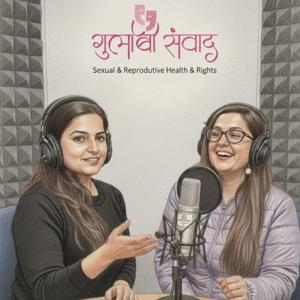


Promoting inclusivity and addressing the sexual and reproductive health and rights (SRHR) as well as mental health needs of persons with disabilities is a critical aspect of human rights and public health. This requires a comprehensive analysis of existing policies and legislation to ensure that they adequately protect and promote the well-being of this vulnerable population. The road to inclusivity for persons with disabilities concerning SRHR and mental health requires a multi-pronged approach involving legal, policy, and societal changes.
Addressing these, this episode of Gulabi Sambad discusses policies and legislation impacting SRHR and the Mental Health of persons with disabilities. It includes the interview with Sarita Lamichhane, founder president of Prayatna Nepal. Lamichhane has highlighted the intersectionality of disabilities and SRHR/Mental Health with an overview of existing policies and legislation. Further, she has analyzed how current policies address the specific SRHR and mental health needs of persons with disabilities following the identification of barriers and challenges faced by persons with disabilities in accessing SRHR and mental health services. This episode is designed in collaboration with Karuna Foundation Nepal.
The intersection of mental health and disabilities is a complex and important topic. It involves understanding how mental health conditions can coexist with physical, intellectual, or sensory disabilities. Individuals with disabilities may be at a higher risk for mental health challenges due to various factors such as stigma, social isolation, and the stress of managing their disability. Therefore the 48th episode of the 2nd season of Gulabi Sambad is designed to promote awareness, provide support, and access to appropriate mental health services for this population to ensure their overall well-being. It includes an interview with Susmeera Aryal, an activist working for the welfare of people with psychosocial disability. This episode is designed in collaboration with Karuna Foundation Nepal.
Family planning tools and services can sometimes be unfriendly or inaccessible to persons with disabilities for several reasons. These barriers may vary depending on the specific disability and the context, but some common challenges include physical accessibility, communication barriers, lack of information in accessible formats, etc. Addressing these issues requires a comprehensive approach that involves healthcare providers, policymakers, disability advocacy organizations, and the broader community. By addressing these challenges, healthcare providers and policymakers can create more inclusive and accessible family planning services that meet the diverse needs of individuals with disabilities.
Addressing the challenges of pregnant women with disabilities in terms of infrastructure and access to information is crucial to ensure they receive appropriate care and support. It requires a comprehensive, collaborative effort involving healthcare providers, government agencies, disability advocacy groups, and the wider community to ensure that every woman receives the care and support she needs during pregnancy. By working together and implementing certain strategies, it
Therefore, this episode of Gulabi Sambad highlights the challenges faced by pregnant women with disabilities and also the ways to overcome those obstacles. To discuss it in detail, it incorporates the interview of Nir Shrestha, Inclusive Development Enthusiast, Youth, and Disability Rights Campaigner, and Digital Accessibility Tester.
Shrestha has emphasized working on policy and legislation, access to information, accessible infrastructures, well-equipped healthcare
#pregnancy #pregnancyanddisabilities #access #disabilities #SRHR #spotify #gulabisambad #KarunaFoundation #DPRP
The physical and emotional well-being of girls and women with disabilities can be greatly impacted by unique challenges during menstruation. In situations where their disabilities are not well understood or accommodated, these challenges can become particularly prominent.
Menstrual hygiene can be difficult for them due to inaccessible toilets and changing rooms. There is a frequent lack of information and education about menstruation that is tailored to the needs of girls and women with disabilities. This has the potential to confuse, fear, and stigma. Addressing all these, in this episode of the podcast series, Gulabi Sambad discusses challenges faced by girls and women with disabilities during menstruation are highlighted.
It includes the experiences of Harikala Bhusal, a parent of an intellectual disability, and also, the experience of Roshani Adhikari, a girl with a vision-related disability. Bhusal has shared how she has struggled to maintain the menstrual hygiene of her daughter and Adhikari has shared how she deals with all the barriers that occur during her menstrual cycle.
This episode also incorporates the opinion of Radha Poudel, a Writer and a campaigner for Dignified Menstruation. In a discussion with Gulabi Sambad, Poudel emphasized the importance of parents and society in easing the problems and challenges faced by individuals with disabilities.
This episode is designed in collaboration with Karuna Foundation Nepal.
Birth defects are structural or functional abnormalities present at birth that can affect a baby's physical or mental development. These defects can occur in various parts of the body and may result from genetic factors, environmental exposures, or a combination of both. One of the most important and preventable birth defects is neural tube defects (NTDs).
Neural tube defects are a group of birth defects that affect the brain and spinal cord's development. They can lead to serious health issues, such as paralysis, intellectual disabilities, and even death. The most common types of NTDs are anencephaly (a severe underdevelopment of the brain) and spina bifida (a malformation of the spinal cord and spine).
The link between birth defects and the consumption of folic acid is primarily related to the prevention of NTDs. Neural tube defects are a specific category of birth defects that involve abnormalities in the development of the neural tube, which eventually forms the baby's brain and spinal cord. Folic acid plays a crucial role in preventing these defects.
To address all these interconnections between birth defects and consumption of folic acid, this episode of Gulabi Sambad incorporates the conversation with Dr. Benju Koirala, Gynecologist, and Obstetrician. Koirala has highlighted the role of folic acid in neural tube development, prevention of neural tube defects, dietary sources of folic acid, and so on. This episode is designed in collaboration with Karuna Foundation Nepal.
#birthdefect #folicacid #disabilities # #SRHR #spotify #gulabisambad #KarunaFoundation #DPRP
Providing Sexual and Reproductive Health and Rights (SRHR) counseling to children and teenagers with disabilities is a critical aspect of inclusive and comprehensive healthcare. Like all young people, these individuals have the right to receive information, education, and services concerning their sexual and reproductive health. However, there are many barriers that can make it challenging for children and teenagers with disabilities to access SRHR counseling. The ability of individuals to receive the necessary information and support for their sexual and reproductive health can be impeded by these barriers. Addressing all these agendas, this episode of Gulabi Sambad mainly focuses on identifying possible ways to confront those challenges and enhancing counseling on SRHR for children and teenagers with disabilities.
Therefore, this episode incorporates two voices. The first speaker is Sushila Kunwar, a parent of a 19-year-old
Moreover, there is an interview with Shila Thapa, the Founder-President of the Down Syndrome Society Nepal. Thapa is the parent of a child who has Down syndrome. Thapa has talked about ways to overcome any challenges that might arise when explaining SRHR to children and adolescents with disabilities. Additionally, she has highlighted the roles of parents, teachers, and other responsible stakeholders in addressing this issue and making SRHR counseling easier. This program is designed in collaboration with Karuna Foundation, Nepal.
#disability #disabilityawareness #SRHR #Children #teenager #adolescent #spotify #gulabisambad #KarunaFoundation #DPRP
Sexual exploitation, abuse, and harassment faced by persons with disabilities are serious and pervasive issues that often go unnoticed or unaddressed in many societies. These individuals are particularly vulnerable due to a range of factors, including social isolation, communication barriers, and power imbalances. Therefore, in this episode of Gulabi Sambad, we have talked about sexual exploitation, abuse, and harassment following the cases of molestation, harassment, and abuse. To discuss this in detail, it includes the interview with Mina Acharya, a female person with a physical disability who is chairperson of the Nepal Disabled Women Association. This program is designed in collaboration with Karuna Foundation, Nepal.
#disability #disabilityawareness #SRHR #spotify #gulabisambad #KarunaFoundation #DPRP
These two crazy young ladies quit their jobs and started a podcast about sexual and reproductive health and rights.
It is very challenging to work on this subject in Nepal. But they accepted the challenge and moved on. Even though it has been almost three years since they started the podcast, they are still working on a voluntary basis. Even when it was difficult to survive, they did not lose courage. Now listeners can help through the podcast. Please don't let their courage die. Your little help they can survive and become more active in their campaign. Please Help them.
This particular episode of Gulabi Sambad helps to understand disabilities and the importance of addressing the Sexual and Reproductive Health and Rights (SRHR) of people with disabilities. As an expert perspective, it incorporates the interview with Shobha Maya BK, Female, Person with Disability (Physical Disability), Associate Officer-Program, Karuna Foundation Nepal. This program is designed in collaboration with Karuna Foundation, Nepal.
From the publisher's feed
142 Listeners
0 Listeners