
Sign up to save your podcasts
Or

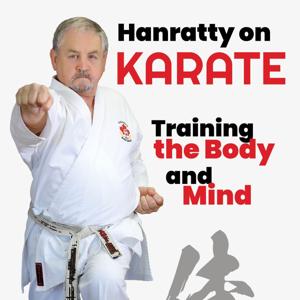


Sensei Hanratty discusses what karate has in common with golf, another sport he loves. He touches on the following:
-The importance of a good mental attitude
-The difference between criticism and correction
-His impressions of the first club he trained at in Canada
-The value of karate over most sports
Key quotes:
"A strong spirit carries a weak technique.”
“Do it for yourself – do it for your own satisfaction... Be proud of what you do, and just keep doing it.”
Sensei Hanratty discusses what karate has in common with golf, another sport he loves.
He touches on the following:
-The importance of a good mental attitude
-The difference between criticism and correction
-His impressions of the first club he trained at in Canada
-The value of karate over most sports
Key quotes:
"A strong spirit carries a weak technique.”
“Do it for yourself – do it for your own satisfaction... Be proud of what you do, and just keep doing it.”
Sensei Hanratty discusses the following:
-importance of looking at the weapon used in each kick
-stretches to help your kicks
-value of using kicking pads
-kicking drills, particularly for front kicks
-when to make kime during a front snapping kick
Sensei Hanratty offers some thoughts on his surprise 80th birthday celebration earlier this month, at which he was awarded his 9th Dan. He also discusses what’s kept him fit and interested in karate all these years, an upcoming trip that some of his students will be taking to Okinawa, a few thoughts on weapons training, and past karate camps he's enjoyed.
Sensei Hanratty, who recently celebrated his 80th birthday and also received his 9th Dan, discusses the following:
-The best way to handle a return to training after an extended break.
-Students who visit dojos other than their own.
-The importance of staying relaxed and fluid during kumite.
-Developing your full physical potential.
Key quote: “Classes are kind of like a living thing.”
Sensei Hanratty continues his discussion of common misconceptions about karate and other martial arts, particularly as they're depicted in movies and TV shows. Some of the questions answered by Sensei Hanratty:
-Is it realistic to block multiple techniques before deciding how to respond?
-Can someone develop their body or mind to become immune to pain?
-Does a trained martial artist have a definite advantage in a street fight, or are there factors that can neutralize that advantage?
-Is it possible to neutralize an attacker with a single technique?
Sensei Hanratty is joined by Angus Rogers, chief instructor of Heads of the Valleys Tang Soo Do, based in Wales, for a conversation about the similarities and differences between Tang Soo Do and Shotokan karate.
Recipes Do Not Make Delicious Meals: https://shorturl.at/tvc5K
Angus Rogers' YouTube channel: https://www.youtube.com/@HOVTangSooDo
Sensei Hanratty discusses the kata Unsu (cloud hands) – where it comes from, when it came into the Shotokan system, and what it means.
Sensei Hanratty concludes his four-part series on Japanese history by covering the Meiji period, a major period in the dissolution of the samurai class and the Shogunate.
Sensei Hanratty discusses the Edo period, sometimes informally referred to as the "samurai period" because it was dominated by the Tokugawa shogunate, a military government led by the shogun, with the samurai class at the top of the social hierarchy.
Sensei Hanratty also shares three famous revenge stories that illustrate the samurai code.
From the publisher's feed