
Sign up to save your podcasts
Or

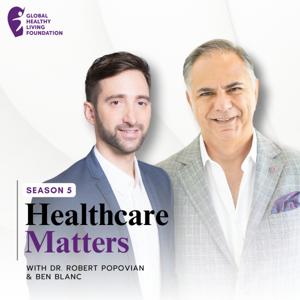


2023 will be marked by the introduction of several biosimilars for Humira (adalimumab) on the U.S. market. While biosimilars can generate savings for the health system, many questions remain with decisions to be made by Pharmacy Benefit Managers (PBMs), and health insurers, all of which will impact patients themselves.
In this episode, our hosts discuss the many implications of introducing competition to the marketplace. “Are we going to see lower prices? Are we going to see lower costs for patients? Those are… the questions that we're going to have to face in the next 12 months,” says Dr. Robert Popovian, Chief Science Policy Officer at GHLF.
Our guest, Zoe Rothblatt, Associate Director of Community Outreach at GHLF, and person living with spondyloarthritis and Crohn's disease, joins the conversation to bring her patient perspective.
Among the highlights in this episode:
1:35: “According to Amgen’s most recent Biosimilar Trends Report, biosimilars have saved the U.S. healthcare system roughly $21 billion over the past six years,” says Dr. Popovian
3:13: “Every time a biosimilar has been introduced into the market, the prices of the originator biosimilar drop… but also the [price of the] competitors, the biosimilars themselves,” says Dr. Popovian
4:54: The complexity of determining patient benefits from biosimilar introductions on the U.S. marketplace
7:08: The PBMs will benefit the most from biosimilar introductions to the market although the exact amounts are difficult to estimate due to the lack of transparency with pharmacy benefit design
9:18: “I'm hoping that we will see that some biopharmaceutical company that is developing biosimilars is brave enough to come out and slash its average wholesale price, or retail price significantly, and draw attention from policymakers, patient advocacy groups, patients, and providers, and for us to put pressure on the PBMs to do the right thing,” says Dr. Popovian
11:40: In the U.S., a biosimilar with an “interchangeable” designation can be substituted for its reference product at the pharmacy, without additional approvals from the prescribing physician, state law permitting
12:34: “If you are substituted for a biosimilar and you're currently on a brand name drug, by law pharmacists are required to inform you upfront about the substitution,” says Dr. Popovian
14:34: “Knowledge is so much power when you live with a chronic condition that often… it feels like [your disease is] controlling you and I always feel like a way to take some of that power back is through knowledge, and just learning more about my condition,” Zoe Rothblatt, Associate Director of Community Outreach at GHLF
14:48: Zoe discusses the prospect of drug switching from a patient’s perspective
16:58: Will biosimilars have similar support programs as biologics do, and how can patients look into them?
18:51: Dr. Popovian shares some final thoughts
******
For more information on the recent developments on biosimilars:
You can find the full report by Patients Rising on the significant developments in the biosimilar space and the impacts on patient access, affordability, and quality of care here:
https://accessandaffordability.org/wp-content/uploads/2023/01/2023-BioSimilars-Report-FINAL-01242023.pdf
“AbbVie's Humira Gets a U.S. Rival, but Costs Could Stay High” - Jan 31, 2023 (Reuters)
https://www.reuters.com/business/healthcare-pharmaceuticals/abbvies-humira-gets-us-rival-costs-could-stay-high-2023-01-31/
Contact Our Hosts
Dr. Robert Popovian, Chief Science Policy Officer at GHLF: [email protected]
Conner Mertens, Patient Advocate and Community Outreach Manager at GHLF: [email protected]
We want to hear what you think. Send your comments, or a video or audio clip of yourself, to [email protected]
Listen to all episodes of Healthcare Matters on our website or on your favorite podcast channel.
See omnystudio.com/listener for privacy information.
The COVID-19 pandemic led to an increased role of pharmacies in the overall immunization process, as they served as key sites of administration for COVID-19 vaccines.
The IQVIA Institute for Human Data Science and the Global Healthy Living Foundation (GHLF) released a report today to better understand the trends in vaccine administration in the United States.
“[The report is] built into the evidence of how we can address equity, where patients want to get their care, and what are the policy solutions that are important for us to pursue to make our healthcare system more equitable among everyone,” says Dr. Robert Popovian, Chief Science Policy Officer at GHLF.
In this episode, Dr. Popovian discusses the key findings of the report, from the enhanced role of pharmacies in the overall immunization process in the U.S. to the differences in vaccine administration site by gender, income, or race.
Among the highlights in this episode:
1:56: “90% of the U.S. population lives within a five-mile radius of a retail pharmacy,” says Dr. Popovian
3:23: What led to the partnership between IQVIA and GHLF in developing the report
4:28: A deeper look at the key factors and changes in vaccine administration that were analyzed
5:19: “What the trends tell us is that overwhelmingly adult patients received their [COVID] vaccines in a pharmacy after the pandemic took place… But we also saw some trends where there was an increased flu vaccination in the pharmacies in the last two flu cycles,” says Dr. Popovian
6:42: The trends in pediatric vaccine administration
7:31: Dr. Popovian discusses differences in vaccination trends as they pertain to race and ethnicity
8:20: “Minorities, whether they're racial minorities, or ethnic minorities, have a very limited access to health care compared to white Americans… So if we want to maintain access for patients who are minorities, we need to ensure that pharmacies, pharmacists, and pharmacy technicians at some point are able to administer all vaccines that a physician, for example, or a provider can administer in their office. That is critical,” says Dr. Popovian
9:58: Dr. Popovian elaborates on the policy recommendations that GHLF and IQVIA put forward in response to this report’s findings
12:45: Dr. Popovian shares some final thoughts
14:17: Please find below the two reports mentioned by Dr. Popovian
Accessibility of adult immunizations in pharmacies compared to physician offices in low-income communities (Published on March 30, 2022) - Journal of the American Pharmacists Association (JAPhA)/GHLF: https://www.japha.org/article/S1544-3191(22)00094-2/fulltext
Trends in Vaccine Administration in the United States (Published on January 18, 2023) - IQVIA Institute for Human Data Science/GHLF: https://www.iqvia.com/insights/the-iqvia-institute/reports/trends-in-vaccine-administration-in-the-united-states
Contact Our Hosts
Dr. Robert Popovian, Chief Science Policy Officer at GHLF: [email protected]
Conner Mertens, Patient Advocate and Community Outreach Manager at GHLF: [email protected]
We want to hear what you think. Send your comments, or a video or audio clip of yourself, to [email protected]
Listen to all episodes of Healthcare Matters on our website or on your favorite podcast channel.
See omnystudio.com/listener for privacy information.
This week, our hosts sit down for a special ‘mailbag episode’ to answer questions from our listeners. They are joined by the podcast’s producer, Ben Blanc, Manager of Programs and Special Projects at GHLF, who moderates the discussion.
Our hosts cover a wide variety of topics, including everything from patient spendings to vaccines.
Our hosts also share more about their advocacy work and the importance of providing a platform for patients to be heard. “What we're trying to do is convey information to the everyday patient who's looking for answers… And that's what we take very seriously,” says Dr. Robert Popovian, Chief Science Policy Officer at GHLF.
“Tell us your story and work with us to elevate the stories. We'll give you a megaphone. We'll make sure that legislators and folks that are at the tables of power… are going to hear your experience and hear you out for how their decisions impact your life, your care, and your health,” says Conner Mertens, Patient Advocate and Community Outreach Manager at GHLF.
Among the highlights in this episode:
2:44: Dr. Popovian explains what the Mark Cuban Cost Plus pharmacies are and how patients can sometimes save money by paying for their pharmaceutical needs in cash instead of using their insurance cards
4:19: Dr. Popovian shares information on other similar pharmacies that are cash-based
5:23: Ali asks: “I hear that PBMs use the rebates to lower premiums. Is that true? Is that the reason why they don't want to share their rebates with patients?”
7:20: One major area of improvement when it comes to PBMs is transparency
8:24: Albert asks: “I have heard from health care professionals that natural immunity is far better than vaccination. Is that true?”
8:50: “The question is whether or not you should risk getting really sick or perhaps dying. And by taking the vaccine, you're avoiding that journey as a patient,” says Dr. Popovian
10:26: Dr. Popovian explains why the COVID vaccine is ineffective for some immunocompromised patients and why that should be a factor people in general should consider when debating on whether to get their COVID shot
11:48: Co-host Conner Mertens explains the importance of looking for verified and peer-reviewed health information as well as trusting scientists and finding the right patient community
13:32: Conner shares information on the importance of advocacy and how to get involved with GHLF’s 50-State Network: “Sign up, tell us your story, and work with us to elevate the stories. We'll give you a megaphone,” he says. More information here: www.50statenetwork.org
14:48: Dr. Popovian answers this recurring question asked by patients: Are biosimilars safe?
17:03: Dr. Popovian shares some final thoughts
Contact Our Hosts
Dr. Robert Popovian, Chief Science Policy Officer at GHLF: [email protected]
Conner Mertens, Patient Advocate and Community Outreach Manager at GHLF: [email protected]
We want to hear what you think. Send your comments, or a video or audio clip of yourself, to [email protected]
Listen to all episodes of Healthcare Matters on our website or on your favorite podcast channel.
See omnystudio.com/listener for privacy information.
As of the recording of this episode, control of the U.S. Senate and the U.S. House of Representatives has not yet been determined, which means that like many other issues the future of health care policy for the coming years remains unknown.
Could a change in the balance of power mean changes to existing programs? What will be the focus of Congress in the coming years regarding health care?
“At the end of the day, whether it's a Republican Congress, or a Democratic Congress or Senate or a governorship doesn't matter, because the patient issues of trying to get healthier, to be kept healthy, and to be able to access medicines and physicians and hospitals is the same. And both parties have a responsibility to patients to be able to get them better, quicker and faster,” says Dr. Robert Popovian.
Among the highlights in this episode:
1:04: In our next episode, the hosts will be taking questions from our audience: to participate, send your questions or audio clips to [email protected]
2:11: Oklahoma, Georgia, Illinois, and Washington have all passed accumulator or maximiser bans
3:23: One of the main health care issues that should remain a priority in 2023 is out-of-pocket spending for patients
4:00: Dr. Popovian explains how PBMs (Pharmacy Benefit Managers) along with insurers are pocketing rebates that should instead benefit patients
5:17: The importance of transparency in health care policies, especially when it comes to PBMs and money and rebate circulation between health care stakeholders
6:36: According to Dr. Popovian, one of the best ways to address transparency and pharmaceutical company pricing is, “to create an environment whereby [the] pharmaceutical industry has a stake also in the outcomes of these drugs… So instead of just setting a price and getting paid for it, they need to make sure that these drugs work in the patients.”
7:51: What can the next Congress do to maintain and ensure innovation in the medical fields while also ensuring patients are going to benefit better and more?
8:51: Dr. Popovian reviews which health care priorities should be the focus at the state level
11:31: Co-host Conner Mertens describes what patients are paying attention to in the new era of governorships at both the state level and the federal level
12:20: “Health care is bipartisan. Access to health care is a bipartisan issue,” says Dr. Popovian
13:31: Dr. Popovian shares some final thoughts
Contact Our Hosts
Dr. Robert Popovian, Chief Science Policy Officer at GHLF: [email protected]
Conner Mertens, Patient Advocate and Community Outreach Manager at GHLF: [email protected]
We want to hear what you think. Send your comments, or a video or audio clip of yourself, to [email protected]
Listen to all episodes of Healthcare
See omnystudio.com/listener for privacy information.
As the third winter of the coronavirus pandemic looms, more waves of COVID-19 are expected with few masking or social distancing restrictions in place. However, death and hospitalization rates are expected to be less severe compared to past pandemic winters largely due to vaccination drives, natural immunity, and the increasing availability of effective COVID-19 treatments.
In this episode, Dr. Robert Popovian, Chief Science Policy Officer at the Global Healthy Living Foundation, provides an update on where we stand with protection and treatment against the virus and how patients, vaccinated or not, can work with health care professionals on getting themselves better care.
“So it's not just about the vaccines, but how do we move forward as a community, as researchers, as patient advocates, as health care professionals,” says Dr. Robert Popovian.
Among the highlights in this episode:
1:16: 2,566 Americans passed away from COVID in the last seven days
1:47: What we need to know about where we are in the pandemic right now
2:46: Vaccine limitations, and options and treatments available for patients whose condition doesn’t allow for vaccination
4:01: The limits of natural immunity antibodies, and the potential of antibody treatments
5:27: What are some of the biggest hurdles to bring successful new treatments for COVID-19 to the market?
7:20: Dr. Popovian provides an update on BCG vaccine studies and the potential ties to COVID-19 protection
9:33: With so much time, money, research and development put forward to find the best protection against COVID-19, what are some of the medical advancements that have been generated by the pandemic?
11:08: Where do we stand with nasal vaccination?
12:32: Dr. Popovian shares some final thoughts
Contact Our Hosts
Dr. Robert Popovian, Chief Science Policy Officer at GHLF: [email protected]
Conner Mertens, Patient Advocate and Community Outreach Manager at GHLF: [email protected]
We want to hear what you think. Send your comments, or a video or audio clip of yourself, to [email protected]
Listen to all episodes of Healthcare Matters on our website or on your favorite podcast channel.
See omnystudio.com/listener for privacy information.
Since its creation in 1992, the federal 340B Drug Pricing Program allows qualifying health care providers who treat low-income and uninsured individuals to buy discounted prescription drugs. The program has grown significantly - due to an increase in the number of eligible health care providers and the higher volume of drugs purchased through the program. However, as the program has grown beyond its original intent, there has been a series of legal challenges between drug manufacturers, providers, and federal policymakers.
“In the U.S. we have at most about 80,000 pharmacies… that serve patients. 38,000 to 39,000, almost, are eligible for this 340B discount, which is primarily meant for uninsured patients. There is no way in the U.S. that… we have 50 percent of our population which is uninsured, nor is it a possibility that 50 percent of our population is low income,” says Dr. Robert Popovian, Chief Science Policy Officer at the Global Healthy Living Foundation.
Among the highlights in this episode:
1:31: There are 38,000 contract pharmacies eligible for the 340B program in the U.S.
2:25: Why was this program created by the federal government and who does it serve?
4:15: How the 340B program drifted away from its original intent
6:58: “Currently, there are no criteria for these institutions that receive these 340B discounts to reinvest and provide, for example, charity care,” says Dr. Robert Popovian
8:01: What the shortcomings of the program mean for patients
9:09: The New York Times released an article demonstrating how some health care providers use the 340B program to turn a substantial profit at the expense of underserved communities
Link: https://www.nytimes.com/2022/09/24/health/bon-secours-mercy-health-profit-poor-neighborhood.html
10:27: Is the program salvageable and how?
12:53: Dr. Popovian shares some final thoughts
Contact Our Hosts
Dr. Robert Popovian, Chief Science Policy Officer at GHLF: [email protected]
Conner Mertens, Patient Advocate and Community Outreach Manager at GHLF: [email protected]
We want to hear what you think. Send your comments, or a video or audio clip of yourself, to [email protected]
Listen to all episodes of Healthcare Matters on our website or on your favorite podcast channel.
See omnystudio.com/listener for privacy information.
In the United States, nine out of 10 prescriptions issued are for generic, instead of brand-name medications.
While Pharmacy Benefit Managers negotiate drug prices on behalf of Americans, an increasing number of patients are choosing to bypass these intermediaries – as well as their insurance – altogether and pay for prescription drugs in cash instead. “Generics are supposed to be very low-cost alternatives to brand-name medicines, but you'd be surprised to hear what's going on here,” says Dr. Robert Popovian, Chief Science Policy Officer at the Global Healthy Living Foundation.
“We need to become better consumers of health care. We are patients, but we need to also become consumers just like the way we consume anything. We need to become better at it,” says Dr. Popovian.
Among the highlights in this episode:
1:36: 92% of all prescriptions dispensed in the U.S. are for generic medicines as opposed to only 8% of prescriptions for brand-name medicines
2:45: Patients bypassing their insurance to buy their prescription medicines: the role of cash pharmacies
4:13: What is ‘spread pricing’?
5:18: A study published by The Schaeffer Center at University of Southern California found that patients overpay for their prescription about 25% of the time
6:58: What are Pharmacy Benefit Managers (PBM) and what is their role in the health care system?
8:54: Dr. Popovian gives a personal anecdote of how it can be cheaper to pay in cash for a medical exam rather than paying via an insurance plan
10:10: A few tips on things patients should consider in order to pay less for their medications and other medical expenses
11:25: The Federal Trade Commission is conducting an inquiry into the competitive impact of contracting and other business practices of PBMs
13:04: Dr. Popovian shares some final thoughts
Contact Our Hosts
Dr. Robert Popovian, Chief Science Policy Officer at GHLF: [email protected]
Conner Mertens, Patient Advocate and Community Outreach Manager at GHLF: [email protected]
We want to hear what you think. Send your comments, or a video or audio clip of yourself, to [email protected]
Listen to all episodes of Healthcare Matters on our website or on your favorite podcast channel.
See omnystudio.com/listener for privacy information.
The Inflation Reduction Act (IRA), a sweeping climate, health care and tax bill was signed into law this summer.
While the IRA undeniably brings some great wins for patients, there are some significant complexities to consider regarding the health care financing and delivery system in the U.S. and the many ways in which this bill will impact patients. Dr. Robert Popovian, Chief Science Policy Officer at the Global Healthy Living Foundation, delivers his analysis on the wins and misses of a bill as it relates to patients in the U.S.
“What I wish the bill did… is one: address the issue of formulary exclusions, and number 2: to have the patients benefit from the negotiated prices at the pharmacy. This is unbelievably unfair for patients! And this happens both with Medicare and with commercial plans,” says Dr. Robert Popovian.
Among the highlights in this episode:
1:09: Listener comment
1:58: The IRA sets a $2,000 annual cap for beneficiaries' Part D spending
3:32: Starting next year, seniors will not pay out-of-pocket costs for any of the vaccines covered under their Medicare Part D program and reasons why that’s important for them
5:01: How the federal government missed an opportunity to address the issue of patients paying their co-insurance or deductible based on the retail price of the medicine rather than prices negotiated by PBMs on their behalf
5:45: Another issue that is not addressed in the bill is the growing number of formulary exclusions
6:49: Is there any clinical or economic justification for excluding certain medications from national PBM formularies or is it just about profitability?
8:25: An analysis on the bill’s negative impacts regarding drug innovation
9:12: Which classes of medicines and disease areas might be negatively impacted by the bill
10:02: Further discussion of the main issues that the IRA could have addressed and the impact on patients
12:20: The IRA also brings some great wins for patients
13:22: Dr. Popovian shares some final thoughts
Contact Our Hosts
Dr. Robert Popovian, Chief Science Policy Officer at GHLF: [email protected]
Conner Mertens, Patient Advocate and Community Outreach Manager at GHLF: [email protected]
We want to hear what you think. Send your comments, or a video or audio clip of yourself, to [email protected]
Listen to all episodes of Healthcare Matters on our website or on your favorite podcast channel.
See omnystudio.com/listener for privacy information.
We are a nation of working, playing, and yes, even getting sick and injured at all hours of the day and night. That’s why it is so vital to have access to quality health care beyond the weekday, 9-to-5 paradigm that our system is set up for. In this episode, we explore a new study that points to the need for pharmacies and pharmacists to play a greater role in expanding access to health care.
“Patients in low-income communities, especially seniors living in low-income communities, deserve better access to health care,” says Dr. Robert Popovian, Chief Science Policy Officer at Global Healthy Living Foundation.
Among the highlights in this episode:
1:38: Listeners’ comment
2:12: A deep dive into a study Robert was part of
2:22: The bottom line: pharmacies can play a valuable role in expanding immunization access and other access to health care
3:01: How low-income patients have a disadvantage in accessing quality health care
3:43: Conner describes trips to the ER as a child during off-hours
3:57: Robert recalls having to take his daughters to the ER for earaches on weekends
4:46: How to improve access to health care
5:50: The fallacy that if you have health insurance, your health care automatically improves
7:42: “Pharmacists, physicians and nurses need to work collaboratively,” says Robert
8:38: We must maximize the health care professional’s skill sets
8:48: Surprise findings in Robert’s study
10:05: Policies need to be implemented to expand pharmacies or pharmacist’s ability to provide more health care services
Read to the GHLF study, funded by the American Disease Prevention Coalition, discussed in this episode
Contact our hosts:
Dr. Robert Popovian, Chief Science Policy Officer at GHLF: [email protected]
Conner Mertens, Patient Advocate and Community Outreach Manager at GHLF: [email protected]
We want to hear what you think. Send your comments, or a video or audio clip of yourself, to [email protected].
Listen to all episodes of Healthcare Matters on our website or on your favorite podcast channel.
See omnystudio.com/listener for privacy information.
Biosimilars are equally as safe and effective as brand biologic medicines. Plus, they are less expensive, which means they save patients money. So why are there still hurdles for the U.S. health care system to adopt them?
“Patients are saving money and the system is saving money. So what we need to do is introduce policies in the marketplace that really enhance the adoption of biosimilars,” says Dr. Robert Popovian, Chief Science Policy Officer at Global Healthy Living Foundation.
Among the highlights in this episode:
1:19: Listeners’ comment
2:33: What is a biosimilar?
3:15: How a biologic drug is created
3:44: One benefit of biosimilars is lower priced for patients
4:26: Why biosimilars are used more in Europe than the U.S.
5:27: States have different laws overseeing the substitution of biosimilars
5:40: The FDA has approved biosimilars and has found them to be of equal safety, efficacy, and purity
6:05: Pharmacists have the power to substitute biosimilars
6:36: Patients must be informed when a biosimilar is being used
6:53: Why are biosimilars cheaper?
7:50: How patients benefit from biosimilars
8:30: Barriers to biosimilar adoption in the U.S. market
9:27: The “regulatory malaise” of the FDA
10:35: The future of biosimilars
Contact our hosts:
Dr. Robert Popovian, Chief Science Policy Officer at GHLF: [email protected]
Conner Mertens, Patient Advocate and Community Outreach Manager at GHLF: [email protected]
We want to hear what you think. Send your comments, or a video or audio clip of yourself, to [email protected].
Listen to all episodes of Healthcare Matters on our website or on your favorite podcast channel.
See omnystudio.com/listener for privacy information.
From the publisher's feed
Welcome to Healthcare Matters! In this podcast, we talk about 'matters' in healthcare and why it matters to you!
Our host Ben Blanc will speak with our talented Chief Science Officer Robert Popovian. And together, we will take on some pretty complex topics and distil them, so everyone can understand what is happening in the world of healthcare.
The show is brought to you by the Global Healthy Living Foundation.
www.ghlf.org