
Sign up to save your podcasts
Or

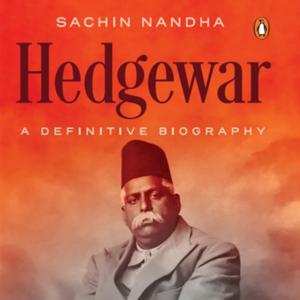


Hedgewar was no more, but his ideas did not simply die with him. Under new leadership, the RSS grew from strength to strength in independent, post-partition India, with an impact to rival – or even surpass – that of Gandhi, Nehru and Ambedkar. But where does it go today – will it continue to build social capital or be seduced by that great temptress, power itself?
Hedgewar’s journey was coming to an end – and he knew it. In his final days, how did he lay the foundations for the RSS to continue on its path beyond his lifetime? Who, if anybody, could take forward his vision in the battles to come?
As Hedgewar’s health declined, his world was on fire. The RSS was growing, but not fast enough to be the bulwark that Hindu society needed. How could it manage the three-pronged threat of Muslim nationalism, the stirrings of World War II that would further drain India’s resources, and a growing fallout with Savarkar?
10 years after its inception, the RSS had grown but still could not accommodate half of India’s population: its women. In a time of rising tensions, this is the story of how one woman – Lakshmi Kelkar – changed this, and helped to propel Hedgewar’s movement forward.
As the RSS continued to spread across India and build bonded social capital, it risked creating a Hindu ‘us’ opposed to a ‘them’. Yet Hedgewar was not creating a divisive patriotism, but a more open sense of desh bhakti that raised the Hindu community beyond caste and creed – catching the eye even of Gandhi himself.
‘The RSS is fascist’ – a common refrain of contemporary academic discourse about it. But was it really so, or is the reality rather more messy? Hedgewar, with his emphasis on social capital, soon found himself at odds with Vinayak Savarkar and his brand of ethno-nationalism.
Hindu society was being fractured from within, and nobody within the Congress was willing to stop it. Yet against the controversy over independent India’s national flag and the Congress’ continued support for separatist leaders, the RSS only continued to expand as a protective force in times of disorder and national betrayal.
How did the nascent RSS combat its greatest challenge – itself? Hedgewar’s leadership and deep strategic thinking pulled his young organisation back from the brink of religious extremism and militancy, towards discipline and restraint, championed by a core of selfless and dedicated workers.
With the British state receding, who would protect Hindus in a world increasingly riven by religious divisions? As tensions spilled over into the streets of Nagpur, it was to the RSS – Hedgewar’s new creation – that Hindu families looked to in their hour of need.
The RSS had arrived: a movement that would outlast British rule, Hedgewar’s own life and become, 100 years later, the largest volunteer organisation in the world. Hedgewar’s answer to the fragmentation of Hindu society was to train individuals physically and mentally to create the social capital that would sustain India’s future.
From the publisher's feed