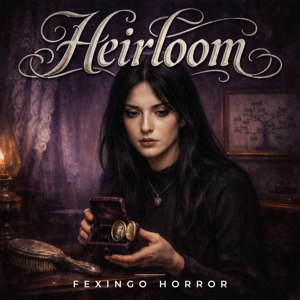
Luna's great-grandmother's hand mirror, silver-backed and impossibly clear, has hung on the vanity for as long as she can remember. One autumn evening, dusting the lace doily beneath it, she notices the glass does not reflect the room behind her—it shows a different room, dim and papered in roses, with a single figure seated at a writing desk. The woman in the mirror is young, wearing a high-collared dress from the 1890s, and she is writing a letter. She never looks up. But when Luna breathes on the glass, the woman stops, lifts her pen, and turns. In Chapel Hollow, a town that burned to the ground in 1911 and was never rebuilt, there is a grave marker for one Eliza Whitethorn. The date of death is this coming Thursday. Luna drives out to the hollow—a stretch of second-growth forest where the road ends at a stone wall—and finds a foundation hole, a tangle of lilacs, and a single headstone half-sunk in moss. The name is worn away. But someone has left fresh cut flowers. This is a story about what we inherit, what we owe, and the letters that still arrive a hundred years late.