
Sign up to save your podcasts
Or



Thank you to everyone who tuned into my live video! Join me for my next live video in the app.
Helix Alpha Architecture 2026
Date: January 20, 2026
Objective: Target 75% Annual Return | 5% Max Drawdown
Framework: Helix Barbell Strategy & Carhart 4-Factor Model
I. Introduction: The Era of Multidimensional Polarization
As we move into the first quarter of 2026, the market is no longer a monolith. We are operating in an era of ‘multidimensional polarization’. While the broad index hyperventilates over narrative-driven AI peaks, Helix continues to weaponize research to separate physical reality from ‘Green Unicorns’. Our objective remains clinical: achieving 75% alpha by buying the balance sheet and shorting the hypocrisy.
Thank you to everyone who tuned into my live video! Join me for my next live video in the app.
Good evening. I’m Sowmy VJ. Most of you would have seen the news that Meta is laying off over a thousand people, that too mainly in their Reality Labs. They are making AI investments, called ‘Compute AI’.
Today, we run the Helix Quantamental Model on Meta Platforms. 20 steps. Zero assumptions. No narrative-jumping. Just the data as it stands today, January 13, 2026. If the math doesn’t work, we are the first to call it out. Let’s start at the top.
As a subscriber, we like to add value to your financial future, and hence we offer you the ability to get a 360 degree view of your finances.
On the header of this email (and all our emails), you will find a link titled ‘Start Client Journey’. Don’t worry, you will not be charged a penny for clicking that link. There is no obligation to invest in our fund, or to use any of our services. If you prefer, you can choose not to share details with us.
This takes you to an intuitive financial planning tool, called Compass. It will ask you questions about your income, assets and liabilities (such as a mortgage) and will present a 360 degree view.
If you work with a financial advisor, you can enter their details, or if you would like us to refer you to one, we can make that connection. Likewise, if you have questions about a will, taxes, your business income, or inheritance, we can refer you to the appropriate professionals, on our panel.
We will be bringing along other tools, as well as content from other professionals, as appropriate, to help you navigate your finances.
Until next time, this is Sowmy VJ, signing off!
Happy New Year to You and Your Family!
As always, I prefer to add a little insight in my posts, and here’s what we found about the US Economy, and what we are doing about it.
The White House is shouting about a Golden Age while the Federal Reserve is quietly breaking out the emergency plumbing tools for the first time since 2020. We’re seeing 4.3% GDP growth paired with a labour market that’s essentially flatlining. It is a decoupling that traditional models can’t explain, but our Eco-economics framework predicted. The system is cannibalizing its own foundation to keep the headline numbers shiny.
In this deep dive, you’ll get:
* The truth behind the Jobless Expansion and why your portfolio is likely overpaying for digital smoke.
* A breakdown of the $12.6 trillion repo market stress and the Silver Squeeze that almost broke a bullion bank.
* The Jevons Paradox in AI: Why efficiency is actually driving a massive, unpriced energy and capital burn.
* Our current Helix Position: Which Boring Giants we’re using as anchors and why we’re shorting the AI workslop factories.
Yahoo Finance recently hosted a discussion featuring three experienced investors—Marques Blank (Blank Capital), Shailesh Kumar (Astute Investors Calculus), and Sowmy VJ (Managing Partner, Helix research)—sharing high-conviction investment ideas, ranging from micro-cap defense contractors to well-known value conglomerates and short-sale targets in discount retail.
Featured Investment Ideas
Here is a quick summary of the ideas presented:
* Graham Holdings Company (GHC) (Presented by Shailesh Kumar)
* Thesis: Shailesh sees GHC, the former Washington Post Company, as an undervalued holding company and “small conglomerate, much like Berkshire Hathaway”. It’s managed by the Graham family’s son-in-law, Tim O’Shaughnessy.
* Valuation: Shailesh used a sum-of-the-parts analysis, breaking the company into four major segments (education, auto, broadcasting, healthcare), and applying a free cash flow multiple valuation against peer groups.
* Conclusion: He found an intrinsic value of about $6.8 billion, representing a significant discount to the current stock price, offering a “big margin of safety” for a long-term hold. He has been holding the stock for about six months.
* Optex Systems (OPXS) (Presented by Marquis Blank)
* Thesis: Optex is pitched as a “sole source monopoly hidden in plain sight”. It manufactures critical periscopes and sighting systems for US Army vehicles like the Abrams tank and Bradley fighting vehicle.
* Catalysts: The company benefits from a regulatory and technical “sole source moat” , a “geopolitical super cycle” leading to a “renaissance of armor” , and potential margin expansion as revenue scales past $30 million. Their backlog recently expanded to a record high of $45 million.
* Key Risk: The biggest risk is customer concentration, with about 90% of revenue tied to US defense prime contractors and the government. Marquis entered the stock earlier this year when it was around $5 to $6 a share.
* Dollar General (DG) (Presented by Sowmy VJ)
* Thesis: Helix is shorting Dollar General, taking a “feeding the rally” stance. The trade fits into the “necessity trade” as consumers turn to discount retailers in a slowing economy.
* Concerns: While analysts praise growing free cash flow (FCF), Sowmy argues FCF alone can be easily spent. The key concern is a “drag on the return on invested capital (ROIC),” suggesting a lack of a wide moat.
* Management & Ethics: Additional factors include numerous OSHA violations (like blocked fire exits), questioning management efficiency and effectiveness , and the company’s role in “food deserts” by selling “highly processed junk,” which Sami believes is “convenience at the expense of public health”.
We have a few more discussions lined up, with experts on the Yahoo Finance platform. Please share your views and let us know what you are investing in.
Most people read my posts on a mobile device. Did you know that you can listen to the text, on your way to work? Just get the app.
I remember a few years back, I was looking at a massive utility that was practically swimming in coal dust, but their CEO was on every finance news show talking about their 2050 net-zero goal. I swear, the stock jumped 10% that day. I thought, “Are you kidding me? A promise for 30 years from now is worth a premium today?”. That’s the moment I knew this ESG narrative was getting detached from reality.
What are you investing on?
It’s about time we, as investors, got real about underperforming ESG funds. I’ve built my own model over the last three decades and I don’t pay premium prices unless a stock is truly worth it. Most of what’s out there is just marketing gimmicks. You’re tired of sub-optimal returns. I get it. It’s time to demand the data.
We are looking for a method to preserve and grow your wealth using eco-economics. This post isn’t telling you what to buy or sell. I’m just publishing my position.
A Snapshot
Are you sick of paying a premium for a stock based on a CEO’s promise for 2050?. I am too. The disconnect between a company’s financial narrative and its actual ESG reality is costing you money.
What you get in the Deep Dive:
* My cynical, data-driven analysis of a major company’s Financial, Social, and Environmental risks.
* I will expose the hidden financial weaknesses often buried by marketing hype.
* A clear view of how money flows, valuations, and momentum are truly aligned to the eco-economics thesis.
* Our precise position on the stock and what we are doing about the hypocrisy we found.
The Deep Dive
The Valuation Game: Don’t Pay for Empty Promises
I am a big fan of the margin of safety approach. I want undervalued stocks that will deliver.
Don’t believe the propaganda—don’t believe the popular narrative. I analysed this. The surge in ESG funds since 2018 has created a bizarre dynamic where an ESG rating itself can make the stock price go up. The accounts might be “true and fair” as per the accountants, but they can be unfair to you, the investor. I’m looking for a competitive advantage, not a slick press release. If a company is actually delivering today, like an Octopus Energy with real solar and wind power, that’s worth the premium. If they’re just pushing a “2050 goal,” you’re paying for air. I’m looking at the valuations and money flows to spot where the premium is real and where it’s fake.
Social & Environmental Facade: Where the Data Falls Apart
I looked at the market capitalization and how that influences the narrative. You see these massive companies—the main thing you’re hearing about is their future impact. They love to talk about the ‘E’ and the ‘S’. The ESG label has become a shield for financial weaknesses. If I am looking at a company and the narrative is all about how great they will be for the environment tomorrow, my immediate reaction is to look for what they are hiding today. The logical jumps they want you to make—that future ‘green’ status justifies today’s price—is a trap. I am amazed at the simple things they miss. The only thing that matters is performance. We need to connect the dots. The macro environment is changing, and just slapping an ESG badge on a coal company doesn’t change the underlying eco-economics thesis.
Helix Position: Shorting the Hypocrisy
This isn’t a Buy/Sell call, it’s about what We Are Doing. We looked at the financials, the global macro environment, and the stock’s market-specific momentum. The numbers don’t lie. They rarely do.
Based on the extreme disconnect between the ESG hype and the financial data, we are fading the rally. I think we are looking at a classic case of accounts being true but misleading. I am simply not going to pay a premium for a stock that’s not worth it. You shouldn’t either. The financial, social, and environmental risks are too high. What’s your opinion?.
The corporate landscape is facing a dual challenge: the necessity of genuinely addressing Environmental, Social, and Governance (ESG) concerns, and the imperative to recognize the evolving preferences of younger generations. A deep dive into recent corporate practices suggests a significant disconnect between what brands say they are doing and what they are actually implementing.
The Misalignment with Younger Generations
A core finding from a recent survey, which was also supported by academic journals, highlights a major gap: brands do not recognize the preferences of the younger generations.
Shockingly, very few brands actually take that into account.
In an era where younger consumers are increasingly basing their purchasing decisions on a company’s values, sustainability efforts, and social impact, this oversight is a critical strategic blunder. Failing to align with the values of future consumers and employees is a clear path to long-term irrelevance.
ESG: Strategy vs. Report
While the topic of ESG is ubiquitous in boardrooms, the implementation often falls short of genuine commitment. Companies are indeed producing ESG materials:
* They will have a section on ESG in their annual reports.
* They will even have an ESG report.
However, the key distinction is that their ESG report is a report, not an ESG strategy.
They are not doing real ESG implementation.
The effort appears to be centered on performing the bare minimum—perhaps pleasing their shareholders and maybe inflating asset prices. Beyond that, they’re not doing anything.
The Critical Internalization of Risk
The most telling sign of whether a company’s ESG commitment is genuine lies in its risk assessment, found within the annual report.
When looking at the risk statements in a company’s annual report:
* If a company is not actively managing ESG matters, they will call it as external risk.
* If a company is implementing ESG, then social and environmental risks cannot be external risks.
* True ESG implementation means treating these risks as internal.
The practice of categorizing social and environmental risks as purely “external” suggests a lack of active management or integration into core business operations and strategic planning. This is a pattern you will see that a lot among many listed companies.
The Path to Genuine Change
To thrive in the coming decades, companies must move past the performative nature of ESG reporting and make these values integral to their operations.
* Internalize ESG Risk: Reclassify social and environmental matters from external risks to internal, manageable business risks. This forces the creation of strategies and operational changes to mitigate them.
* Move from Report to Strategy: An ESG report is a historical document; a strategy is a roadmap. Companies need to shift their focus to real ESG implementation.
* Prioritize Youth Preferences: Acknowledge that the preferences of the younger generations are a critical driver of future success. Integrate these values into product development, marketing, and corporate purpose to secure market share and talent.
The time for viewing ESG as a compliance exercise or a PR tool is over. Authentic, internalized commitment is the new standard for corporate legitimacy.
If you have ever looked at a stock chart, seen a fantastic upward trend, entered the trade, and then immediately watched your stop-loss get hit, you are not alone. It is one of the most frustrating experiences in trading. You were right about the direction, but you still lost money.
Why does this happen? According to the insights shared in this video, the culprit is often not your strategy, but the timeframe you are analyzing.
Below, we break down exactly which charts you should be ignoring and which ones offer the “sweet spot” for consistent trading.
The Sweet Spot: 4-Hour to Daily Charts
When setting up your charts, it is crucial to filter out the noise while ensuring you aren’t looking at data that is too zoomed out to be actionable.
In the video, Sowmy VJ identifies a specific range that acts as the Goldilocks zone for traders:
* The Preferred Standard: The 4-hour chart is the primary recommendation for analyzing intervals.
* The Minimum: On the lower end, the smallest timeframe you should consider is the 1-hour chart.
* The Maximum: On the higher end, the maximum timeframe to utilize is the Daily chart.
Key Takeaway: If you are analyzing a trade, ensure your chart is set between the 1-hour and Daily settings, with a strong preference for the 4-hour interval.
The Trap of the Weekly Chart
It is intuitive to think that “zooming out” to a weekly chart gives you a better perspective on the overall health of a stock. While it might show you the long-term history, it is often a trap for active traders.
Sowmy VJ argues there is “no point in looking at the weekly charts” for trade execution. Here is why:
1. The Illusion of Safety
Weekly charts smooth out the data. You might look at a stock and think, “My God, this stock is going fantastic, I need to enter”. It creates a sense of confidence that the trend is unbreakable.
2. The Reality of Volatility
The reality of the market is that hour by hour changes can be drastic. Within a single week candle, the price variation is often massive.
3. The Stop-Loss Killer
Because the price fluctuates so wildly within that week, your tighter stop-losses are highly likely to trigger. You might get stopped out for a loss, even if the stock eventually finishes the week higher.
As Swami notes, “Your stop loss will hit. And then you’ll say, oh, my God, most of my trades are on losses”.
The diagnosis? “That’s because you’re looking at the wrong time frame”.
Avoid the Noise: Micro-Timeframes
Just as looking too far out is dangerous, zooming in too close is equally counterproductive. The video advises that there is no point in looking at the following ultra-short timeframes10:
* 15-minute charts
* 5-minute charts
These intervals often present “noise”—random market fluctuations that do not represent a tradable trend for this specific strategy.
Summary: Your Charting Cheatsheet
To keep your trading disciplined, use this quick reference guide based on the discussion:
Final Thoughts
Successful trading isn’t just about picking the right stock; it’s about picking the right battlefield. By sticking to the 1-hour to Daily range, you protect yourself from the drastic volatility of weekly swings and the distracting noise of minute-by-minute updates.
We are focusing our investment strategy on companies that are profitable and sustainable at the same time. This isn’t just about ESG; it’s about eco-economics.
But we need to know you better, to tell you more about it. Mind filling this form, to let us know?
Here’s the core thesis:
* Sustainability Drives Profitability: In most cases, companies become more profitable because they are sustainable. We are not suggesting you compromise profits for sustainability.
* It’s About the Future of the Economic System: Beyond environmental considerations (the planet can save itself ), this focus is fundamentally a question of pensions and the future stability of our economic system.
* The Pyramid Scheme Reality: Our current economic system is built like a pyramid scheme, where a mechanism is required to take care of the aging population. You need money and assets for retirement when you’re older and not working (pensions).
By focusing on profitable and sustainable companies that engage with the younger generation, we are investing in the foundation required for this “pyramid” to continue working.
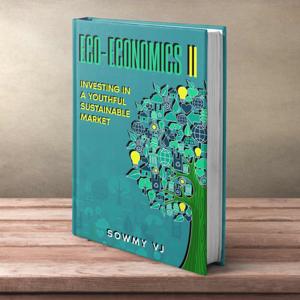
You can read my books, on Eco-economics, for free, and get an upgrade as well. Want to know more?
It takes until the year end, to have that upgrade, but if you want it now, we can give you, 90% off, until 25th Nov.
For updates during the day, business news as it happens, and job opportunities, please join our chat.
What are your thoughts on integrating profitability and sustainability in investment decisions?
#EcoEconomics #Investing #Sustainability #Pensions #FinancialPlanning #EconomicSystem
Amidst all the AI hype, it’s crucial to look beyond the noise and focus on fundamentally sound investments. We took a look at IBM as a key case in point.
Instead of recommending the “hype stocks” in the AI space, we are focusing on companies that are positioned for long-term strength.
* IBM is playing to its existing strengths, particularly in enterprise spend.
* While there has been a lot of hype around smaller, related spending, these numbers are small and could easily fizzle out.
* What really matters are the large, stable order books. Companies like IBM accumulate large orders that span 5 to 10 years.
This focus on long-term, accumulated, large-scale enterprise orders is key to sustainable success in the AI game.
What do you think, about this?
#AI #Investment #EnterpriseTech #IBM #StockMarket #Fundamentals
From the publisher's feed