
Sign up to save your podcasts
Or

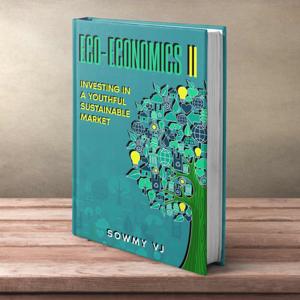


The old rules of risk and return are being completely rewritten. A powerful new paradigm, dubbed Eco-economics, makes the compelling case that the most durable and resilient profitability is now directly linked to ecological sustainability.
This isn’t about sacrificing profit for the planet; it’s a new compass guiding us toward a future where the two drive each other forward.
The Urgent Shift
Our current economic model is operating on borrowed time. Decades of writing off environmental costs as “externalities” are now coming due and showing up on the balance sheet. Ignoring unprecedented environmental turmoil and resource depletion is creating systemic risks that investors can no longer afford to ignore.
Sustainability as Competitive Advantage
Embedding sustainability is fast becoming a primary source of competitive advantage and a loud market signal for performance.
* Driving Profitability: Companies are boosting profits through innovation and waste reduction (moving from a “take-make-waste” model to a circular one where waste becomes a resource).
* Building Resilience: They are getting ahead of regulations and attracting top talent who demand purpose from their work.
* Real-World Proof: Companies like Unilever and Patagonia show that brands committed to sustainability massively outperform the rest of their portfolio and build evangelical customer bases. Google’s early move to carbon neutrality provided a huge advantage in managing energy costs and volatility.
The Roadmap for Transformation
The capital and tools to fund this shift are already here, including Green Bonds, Impact Investing, and sustainability-linked loans (where interest rates are tied to clear environmental targets).
To weave sustainability into corporate strategy, businesses must:
* Secure Leadership Buy-in.
* Determine their current environmental footprint.
* Set credible, measurable goals.
* Bake these goals into the core business (from the supply chain to R&D).
* Measure and report progress transparently.
The Bottom Line: As a steward of capital, you have the powerful leverage to challenge the old models and reshape entire markets. The business case is compelling, the tools are available, and the stage is set for a massive transformation.
Want a simple, effective framework for analyzing a stock before you invest? I rely on a model called EIC (Economy, Industry, Company) , a straightforward approach also used by banks and credit institutions.
It breaks down your analysis into three simple steps:
* Economy (E): Start by looking at the big picture. Is the economy growing or stagnating?
* Industry (I): Next, focus on the specific industry (e.g., retail). How are its numbers looking? Has it been stagnating, or are people buying more over the last few years? This gives you an industry indication.
* Company (C): Finally, zoom in on the specific stock. Is this company performing better or worse than its peers?
By assessing the economy, then the industry, and finally the company itself, you build a solid foundation for your investment decision.
#StockAnalysis #InvestingTips #Finance #InvestmentStrategy #EICModel
What stock are you going to apply the EIC model to first?
A crucial economic point that isn’t often discussed in the mainstream dialogue is the risk posed by youth unemployment to our economic future and, specifically, our pensions.
In the UK, the median age is 40 and continues to rise. Our economic system, which relies on an influx of young, fully employed workers paying taxes and National Insurance to support benefits for the aging population, operates much like a pyramid.
If you are investing for your future, this is critical:
Focus your investment attention on companies that:
* Employ more people in the younger age groups.
* Are selling services and products to the under-30 age bracket.
By stimulating this process, you are indirectly helping to secure the foundational mechanism of the economy as you age.
This reality is particularly acute in the UK, with additional economic challenges due to Brexit, and is also a significant factor across much of Europe.
It’s time to look beyond typical news cycles and fund manager advice and invest in a youthful, sustainable market.
#Investing #Pensions #UKEconomy #YouthEmployment #FinancialPlanning #EcoEconomics
Would you like to explore specific investment sectors that target the under-30 demographic?
It’s tempting to think the global economy is always in a fantastic, growing stage. However, the current global macroeconomic scene indicates we are in a slowing or declining cycle.
Key takeaways from the analysis:
* This slowing cycle has not changed since the pandemic and is unlikely to change for the next five or more years globally.
* Most developed economies are in this declining stage.
* While some pockets of growth exist (which growth-oriented investors can look for) , the major trend is slowing.
* A divergent policy channel is at play, with the US diverging from other major central banks, triggering both policy-related and risk-related money flows.
What are your thoughts on this slowing cycle, and where do you see the most significant pockets of growth emerging?
Thank you to everyone who tuned into my live video! Join me for my next live video in the app.
Insights on Investing in a Shifting Global Economy
Excited to share key takeaways from the latest discussion on investment strategy, focusing on stability and sustainability in the current macroeconomic climate.
Here’s the essential advice for navigating today’s market:
* Focus on Profitability & Sustainability: The core philosophy is eco-economics, where companies are both profitable and sustainable. Sustainability here means the effective use of resources, efficient energy use, and reducing cost and wastage—not compromising profits for ESG.
* The Macro View: The global economy is largely in a slowing or declining cycle that began with the pandemic and is unlikely to change for the next five or more years. This is driven by a divergent policy channel, particularly with the US Fed.
* Safe Investment Sectors: Stick to essential services, as people still need to eat, pay utilities, and commute. Look for healthcare companies with existing cash flow rather than those with long drug development timelines.
* Company Characteristics for Investment: Look for companies with:
* A strong competitive advantage (a wide moat).
* Lower debt compared to peers.
* Strong pricing power.
* Stocks that are fairly valued, avoiding excessive valuations.
We also looked at how market weightage in indices like the S&P 500 can be skewed by a handful of technology stocks , underscoring the value in looking at the other 496 stocks.
Recently Recommended Stocks included Dr. Pepper, Nucor (green steel), Intel, IBM, GE Aerospace, Bank of America, American Express, and Delta Airlines.
For those interested in this approach, all research details are available using a quantitative plus fundamental model.
Upcoming Event: I’ll be attending a Meet the Author event at Cambridge Central Library this Saturday at 11 o’clock. Drop by to meet local authors and get signed copies!
#investing #finance #sustainability #macroeconomics #stockmarket #econonmics #bookevent
Thanks to everyone who joined my Sunday session on “Understanding the Macro Environment as an Equity Investor”! For those who missed it, the recording is out now.
It’s easy to get lost in macro data like GDP, interest rates, and inflation. My goal was to provide a simple framework to make this data usable in your investment journey.
Key Takeaways from the Session
The Four Macro Cycles
The economy doesn’t just grow—it moves through four critical cycles:
* Growth
* Deflation
* Decline
* Inflation
Understanding where an economy is in these multi-year cycles is paramount. Remember, various global economies can be in different cycles simultaneously!
The Economic Pyramid: Beyond GDP
GDP is only the tip of the iceberg. The economy’s foundation is built layer by layer:
* Consumer Spending (The Base): The economy grows only because consumers spend; policy and supply are secondary.
* Trade: The next level, encompassing supply chains, import, export, and corporate buying.
* Public Finances: Government investment and borrowing, typically recovered through taxes.
* Interest Rates: A highly publicized, but lagging indicator—it reflects past policy decisions.
* Unemployment: Also a lagging indicator that tells you about the last quarter, not the next.
* Inflation: An overall increase in the cost of a “basket of things” routinely bought, not just one price going up.
* GDP (The Peak): A coincidental piece of information atop the entire structure.
📱 A Mobile Analogy for Global Markets
I used a simple phone analogy to frame key market concepts:
* Operating System (OS): The US Dollar.
* User Interfaces (UIs) / Launchers: The Pound, Euro, and Japanese Yen.
* Battery Charge: Oil prices, signaling the economy’s power level.
* Text/Email: The Stock Market (where equity investors operate).
* VIP Access App: The Money Market, which signals interest in a particular asset.
* Roadside Assistance App (AA/RAC): Gold, which sees increased interest during stress or ‘breakdown’.
The 4-Step Macro Framework
My simplified process for analyzing the macro environment:
* Group Indicators by Type: Leading, lagging, or coincidental.
* Analyze in Sequence: Determine if the economy is growing, squeezing, or facing an issue.
* Look for Deviations: Discrepancies between indicators often signal a trend is about to break.
* Look for Long-Term Trends: Macro trends take a long time (6-8 quarters or more) to fully play out.
Building Your Portfolio: The Foundation
To build a resilient portfolio, start with a strong foundation of sectors that grow well even under stress.
* Consumer Staples (People still eat).
* Utilities (People pay bills).
* Healthcare (People get sick).
* Housing/Rent (People pay rent/mortgage).
* Discount Retail (Shoppers downgrade from Waitrose/M&S to Tesco/Aldi).
* Education.
Once your foundation is solid, you can add stocks with discretionary or luxury purchases.
Integrating Macro & Fundamental Analysis
Use macro to set the tone and context—which direction is the economy going? Then, apply the EIC Model (Economy —> Industry —> Company):
* Economy: Is it growing or stagnating?
* Industry: How is the sector performing over time?
* Company: Is the company better or worse than its peers?
For stock-specific analysis, focus on:
* Pricing Power.
* Competitive Advantage/Moat (measured by Free Cash Flow and Return on Invested Capital).
* Debt (especially in debt-prone business models like industrials).
* Valuations (P/E, P/S, P/FCF, compared to peers and historical data).
Looking forward to our next event!
#EquityInvesting #MacroEconomics #InvestingTips #FinanceFramework
We often hear about the challenges of pensions and lifestyles as our economies age. The populations of the UK and Europe are aging , with the median age in the UK at 40 and rising.
This trend means more benefits and incentives are being targeted at the older population. For this system to work, you need more young people entering the workforce in full employment, paying income taxes and National Insurance.
Here’s the part that often gets overlooked in the national dialogue: increasing youth unemployment is a direct risk to your pension!
If you’re investing in the future, consider focusing on companies that:
* Employ more people in younger age groups.
* Sell to and offer services oriented toward the under 30 age bracket.
Stimulating this process is key to supporting the economic structure as we all age.
#Economy #Pensions #YouthEmployment #Investing #Demographics #UKEconomy
We are highlighting Nucor, a US-based green steelmaker, as a compelling example in the current investment landscape.
The fundamentals are strong: the company exhibits good free cash flow and a solid return on invested capital (ROIC).
But the critical catalyst right now is the significant wave of infrastructure investment that is underway. A large portion of this infrastructure spending will directly benefit steel producers.
Why Green Steel?
* Regulations Matter: Despite changes at the federal level, most environmental regulations and incentives relevant to construction, industrial farming, and manufacturing are governed at the state level.
* Favorable Conditions: These state-level conditions remain the same or have even become more favorable for green steel.
Given who is best placed in the steel sector amidst current environmental regulations, we are recommending green steel.
#GreenSteel #Nucor #InfrastructureInvestment #Investing #SustainableInvesting #ESG
A major challenge we’ve been hearing about from family offices, investment firms, and EPC firms is a struggle with capability. This means finding the right people—managers, operators, analysts, researchers, etc.—to essentially run their operations. It’s proving to be very difficult for them.
To tackle this, we’re leveraging our network of 8,000+ investors and 1,000 LPs to help connect talent with opportunity!
If you’re a professional in this space and you’re looking for a job or considering a change in the next few months or year, please message me. Let’s have a confidential discussion about how we can help each other.
From the publisher's feed