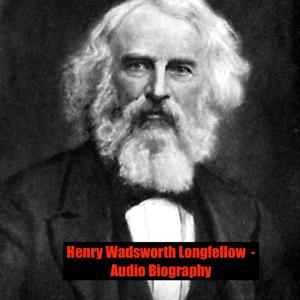
Henry Wadsworth Longfellow: America's Beloved Poet Henry Wadsworth Longfellow, born on February 27, 1807, in Portland, Maine, emerged as one of the most celebrated and influential American poets of the 19th century. His life spanned a period of significant change in American history, from the early days of the republic to the aftermath of the Civil War, and his works reflected and helped shape the cultural identity of a growing nation. Early Life and Education Longfellow was born into a prominent New England family. His father, Stephen Longfellow, was a lawyer and U.S. congressman, while his mother, Zilpah Wadsworth Longfellow, came from a military family. Growing up in Portland, young Henry was exposed to a rich cultural environment that fostered his early love for literature and languages. From an early age, Longfellow showed a remarkable aptitude for language and writing. He began composing poetry at the age of thirteen and published his first poem, "The Battle of Lovell's Pond," in the Portland Gazette in 1820. This early success fueled his passion for literature and set him on the path to becoming one of America's most beloved poets. Longfellow's formal education began at Portland Academy, where he excelled in his studies. In 1822, at the age of fifteen, he enrolled at Bowdoin College in Brunswick, Maine. During his time at Bowdoin, Longfellow's literary talents flourished. He continued to write and publish poetry, and his academic performance was outstanding. He graduated in 1825, ranking fourth in his class. Early Career and European Travels Upon graduation, Longfellow was offered a position as a professor of modern languages at Bowdoin College. However, before taking up the post, he embarked on a three-year tour of Europe to further his language studies. This journey would prove transformative for the young poet, exposing him to the rich cultural heritage of Europe and deepening his understanding of European literature and languages. Longfellow's European sojourn took him to France, Spain, Italy, and Germany. He immersed himself in the study of Romance languages, becoming fluent in French, Spanish, and Italian. This linguistic prowess would later influence his poetry and his work as a translator. During his travels, he also met many prominent literary figures, including Washington Irving, who became a lifelong friend and mentor. Returning to the United States in 1829, Longfellow took up his position at Bowdoin College. He threw himself into his teaching duties with enthusiasm, while continuing to write and translate. In 1831, he published his first book, a translation of medieval Spanish ballads titled "Coplas de Don Jorge Manrique." This was followed by his first original work, "Outre-Mer: A Pilgrimage Beyond the Sea" (1835), a prose account of his European travels. Harvard Years and Literary Acclaim In 1834, Longfellow was offered a position as the Smith Professor of Modern Languages at Harvard University. Before assuming this role, he
This content was created in partnership and with the help of Artificial Intelligence AI.