
Sign up to save your podcasts
Or



作品灵感源自王安石《梅》诗,以“暗香”为核心意象,通过古筝细腻的声韵变化,展现梅花的清雅、独立与坚韧。
音乐含蓄婉转,在两台古筝的交织与对话中展开,既有内在的克制与留白,也在高潮处释放出隐而不显的力量。曲终以泛音收束,如余香未散,意境悠远。
An Xiang was originally written for guzheng and cello, and is presented here as a duet for two guzhengs. Inspired by Wang Anshi’s Plum Blossom, the piece centers on the image of “hidden fragrance,” expressed through subtle resonance and delicate timbral changes.
The music unfolds in a restrained and lyrical manner, shaped by the dialogue between the two instruments. It moves between stillness and quiet intensity, and concludes with harmonics that fade like a lingering scent, leaving a sense of depth and calm.
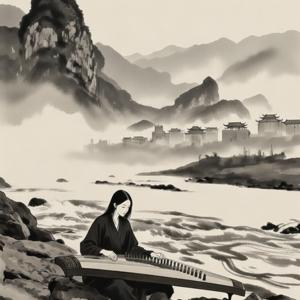
在这一期《Hidden Guzheng Echoes》中,我将介绍顾冠仁的古筝与钢琴作品《山水》。
这首作品并非对自然景色的简单描绘,而是在声音的层次、气息的流动之中,展开了一种具有中国审美特质的空间感。
借由宋代画家郭熙提出的“三远”观念——高远、深远与平远——我尝试去理解这部作品如何在音乐中呈现:山势的升腾之力、空间的层层递进,以及水与雾所营造出的静谧与流动。
在我看来,《山水》最动人的地方,并不在于描绘风景本身,而在于它引人进入其间,在片刻之间,为心灵留出一方安静与慰藉的空间。
In this episode ofHidden Guzheng Echoes, I introduce Shanshui, a work by Gu Guanren for guzheng and piano. Rather than simply depicting natural scenery, the piece unfolds a uniquely Chinese sense of space through layers of sound, breath, and flow.
Drawing on Guo Xi’s idea of the “three distances” — height, depth, and level distance — I explore how the music evokes rising mountain force, overlapping inner space, and the quiet drifting atmosphere of water and mist. To me, what makesShanshuiso moving is that it does not merely describe landscape — it invites us into it, offering a brief moment of inward stillness and consolation.
In this episode of Hidden Guzheng Echoes, I introduce Lu You and Tang Wan, a work inspired by the love story of the Song Dynasty poet Lu You and Tang Wan. Written for guzheng, piano, and voice, the piece unfolds as a layered meditation on love, separation, memory, and regret.
本期《Hidden Guzheng Echoes》,我将介绍一首以宋代诗人陆游与唐琬爱情故事为题材的作品《陆游与唐琬》。这首作品由古筝、钢琴与人声共同呈现,在层层交织的声音中,展开一段关于爱、分离、记忆与遗憾的叙事。
In this episode of Hidden Guzheng Echoes, I introduce the traditional Chinese guzheng piece Moon on High.
This music not only evokes the beauty of moonlight, but also carries the splendor and grandeur of the Tang imperial court, echoing the brilliance of a golden age.
Yet beneath its radiance lies a deeper sense of emptiness. The moon remains, while human life and civilizations fade.
As the music fades, ask yourself: Is it the moon we are looking at, or is the moon looking at us?
本期《Hidden Guzheng Echoes》,我将介绍中国传统古筝曲《月儿高》。
这首作品不仅描绘月色之美,也承载着盛唐宫廷的华美与壮丽。音乐之中,仿佛回响着一个黄金时代的辉煌气象。
但在这份灿烂之下,又隐约流露出一种深刻的虚空感。明月恒在,而人世与文明终将流转消散。
相关搜索
“江畔何人初见月,江月何年初照人”
Chinese guzheng music podcast | traditional Chinese music | cultural storytelling | guzheng performance
想像一張琴、一潭水、一朵輕輕綻放的蓮花。
本期節目,我們將一起走進客家箏樂名曲《出水蓮》。這首曲子如同一幅清淡的水墨畫,不急於驚豔,卻邀請你靜心聆聽。
每一次撥弦,都像是琴弦化作了水波,在平靜的心田激起一圈圈溫柔的漣漪。
"Chu Shui Lian" (Lotus Emerging from Water): When Notes Become Ripples.
Close your eyes and imagine: a serene pond at dawn, a traditional Guzheng, and a pristine lotus slowly rising above the water.
In this episode, we explore the Hakka Guzheng masterpiece, "Chu Shui Lian" (Lotus Emerging from Water). Known for its elegant and restrained beauty, this music invites you to listen closer to the space between the notes.
Let our cover art be your visual guide: think of each note as a string transforming into water, creating gentle, circular ripples that spread stillness through your soul.
Chinese guzheng music podcast | traditional Chinese music | cultural storytelling | guzheng performance
本期我将介绍一首室内乐作品《玲珑》。这首作品由德国作曲家老锣(Lao Luo)创作,为钢丝筝与笙而作。作曲家通过两种传统乐器之间细腻而灵动的音色对话,营造出一种透明、诗意而富有空间感的声音景象。
“残月华晻暧,远水响玲珑。
一声声是梦,一声声是空。”
In this episode of Hidden Guzheng Echoes, I introduce the chamber piece “Linglong”, composed by the German composer Lao Luo for steel-string guzheng and sheng.
The piece explores the delicate dialogue between these two traditional Chinese instruments. The bright and flexible sound of the guzheng contrasts with the sustained, flowing harmony of the sheng, creating a sound world that feels transparent, poetic, and spacious.
In this episode, I briefly talk about the background and structure of the piece and share several musical excerpts.
“残月华晻暧,远水响玲珑。
一声声是梦,一声声是空。”
These words beautifully capture the spirit of the music—distant, delicate, and dreamlike.
Chinese guzheng music podcast | traditional Chinese music | cultural storytelling | guzheng performance
筝曲《枫桥夜泊》是作曲家王建民先生依据唐代诗人张继的同名诗所作,融合了昆曲、苏南民歌、丝竹等素材和音调特征,具有清新秀丽的江南风格,似一幅浓淡相宜、情景交融的水墨画。慢板乐段运用江南民间音调为素材,右手如歌的旋律婉转而柔美;快板轻盈活泼,富有弹性与层次。
月落乌啼霜满天,
江枫渔火对愁眠。
姑苏城外寒山寺,
夜半钟声到客船。
音乐徐徐展开,营造出朦胧静谧的氛围,动中有静,时明时暗,犹如一幅人生长卷,写尽了生命的繁华与幻灭,灿烂与虚空。
In this episode of Hidden Guzheng Echoes, I introduce “Fengqiao Night Mooring,” a contemporary guzheng work by composer Wang Jianmin inspired by a famous Tang Dynasty poem by Zhang Ji.
The piece blends elements of Kunqu opera, Jiangnan folk melodies, and the elegant style of Jiangnan sizhu, creating a poetic soundscape reminiscent of a traditional Chinese ink painting.
Chinese guzheng music podcast | traditional Chinese music | cultural storytelling | guzheng performance
這是一段深夜隨手彈的即興,沒有固定旋律,只有當下的心情與弦音。
A quiet, off-the-cuff improvisation in the midnight hours. No fixed melody, only the fleeting emotions carried on the strings.
Chinese guzheng music podcast | traditional Chinese music | guzheng performance
From the publisher's feed