
Sign up to save your podcasts
Or



Based on Podcast App listening data
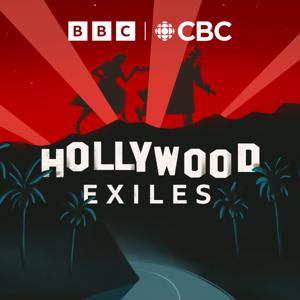
Although the blacklist era ends, the scars remain. Dalton Trumbo discovers a backdoor to Hollywood screenwriting work. Families of Hollywood workers reckon with the fallout in generations to come. After decades away, Charlie Chaplin makes a triumphant return to America. Ellen Geer recalls the effects of the blacklist on her father Will Geer, who refused to expose his friends. Oona Chaplin reflects on the lasting effects of anti-communist fervour on her family and the wider culture.
Archive:
After years of allegations and suspicion, those accused of so-called un-American political beliefs are driven from the movie industry. Mitzi Trumbo recalls visiting her father Dalton in prison. Host Oona Chaplin speaks to some of those whose careers were ruined and friendships fractured, as anti-communist fervour pushed witnesses to expose the names of alleged communists. Norma Barzman describes this as a period of political exile. Charlie Chaplin faces the FBI.
Archive:
Hollywood producers gather at the Waldorf Hotel to plot strategy. They push back against allegations of “subversive” content. Motion Picture Association of America president Eric Johnston makes the case that movies are a force for moral good. He also calls for a hardline: he pushes studios to purge communists and sympathizers from their payrolls. This marks the beginning of the so-called “blacklist” era in Hollywood. Screenwriter Norma Barzman recalls this as a repressive period, when creative people were self censoring their political beliefs
Archive:
The House Unamerican Activities Committee begins its hearings into alleged communist subversion in the movie business. The hearings cement a phrase in American history: “Are you now or have you ever been a member of the communist party?” Friendly witnesses, including actors Gary Cooper & Robert Taylor, are called to the stand, along with movie mogul Jack Warner of Warner Brothers. Walt Disney uses the opportunity to call out alleged communists among members of the striking animators’ union. Dalton Trumbo and his allies challenge the legitimacy of HUAC and its hearings.
Archive:
Mission to Moscow, directed by Michael Curtiz for Warner Bros., 1943
The House Unamerican Activities Committee starts calling witnesses. Their hearings with Tinseltown celebrities create a sensation and put Hollywood's alleged communists in the spotlight. Dalton Trumbo is among those summoned to Washington for hearings. Oona Chaplin explains why her grandfather Charlie was not called to appear, despite his reputation as a leftist. Actress Katharine Hepburn takes a public stand against HUAC, mocking its hearings at a Los Angeles rally.
Archive used:
Testimony of J. Edgar Hoover before HUAC, National Archives and Records Administration, 1947
Rumours of communist infiltration in the movie business had circulated for years. Showbiz insider Billy Wilkerson is the first to publicly name alleged Tinseltown “communists”, including Dalton Trumbo, in his paper, the Hollywood Reporter. William R. Wilkerson III speaks about his father’s friendship with billionaire producer Howard Hughes, a rabid anti-communist. He describes how his mostly apolitical father’s anti-communist stance was shaped by a visit to the Soviet Union. Wilkerson III recalls how his father’s close connections with stars like Jimmy Cagney gave him political influence in Hollywood. Oona Chaplin learns how future president Ronald Reagan operated as an FBI informant.
FBI Director J. Edgar Hoover and allies like Ayn Rand were convinced that Hollywood was infested with communists. Now they started scouring the movies themselves for evidence of propaganda. Anti-communist figures in the movie business, including John Wayne and Gary Cooper, create the Motion Picture Alliance for the Preservation of American Ideals to counter groups like the Writers Guild. Even American classics like It’s a Wonderful Life came under FBI scrutiny. Studios began to feel the pressure – even changing seemingly innocuous scripts to avoid political heat.
Archive:
The Locket, directed by John Brahm for RKO Pictures, 1946
Charlie Chaplin’s personal life sparks legal woes. Hedda Hopper, known as the queen of Hollywood gossip, was Chaplin’s nemesis, and she deemed him "un-American.” Joan Barry was just 22 years old when she arrived in Hollywood with dreams of stardom. She soon met Chaplin and the pair became romantically entwined. When the relationship went sour, Chaplin’s enemies – including J Edgar Hoover and columnist and radio star Hopper – saw an opportunity. Chaplin soon landed in court facing charges under the White-Slave Traffic Act.
Archive:
Dalton Trumbo’s career as a screenwriter blossoms just as FBI director J. Edgar Hoover makes Hollywood his focus for rooting out communism. Trumbo becomes active in the Screen Writers Guild, a harbour for radical politics. Charlie Chaplin makes influential friends on the political left. With his first talking film, The Great Dictator, Chaplin draws critical praise and unwanted attention with a rousing speech. Shifting alliances between Soviets and Nazis force an awkward political reckoning in the US. Host Oona Chaplin explores the FBI's covert operations which targeted alleged communists. We learn how Hollywood became the battleground for the soul of America.
From the BBC World Service and CBC Podcasts.
Archive:
Interviews with Dalton Trumbo, UCLA Department of Communication Archive, 1972
G-Men trailer, directed by William Keighley, Warner Brothers 1935
Upton Sinclair interviewed by Joe Toyoshima, 1966
The Great Dictator, Charlie Chaplin, United Artists, 1940
Battle of the United States, J. Edgar Hoover, Army-Navy Screen Magazine, 1940
Charlie Chaplin was one of Hollywood’s first and biggest stars. He helped create the art and industry of movies. But by the 1960s, he was exiled. Oona Chaplin follows her grandfather’s rise from the grinding poverty of his childhood in Victorian London to wealth and fame in Hollywood. In many ways, it seemed like the embodiment of the American Dream. But almost as soon as he hit the big time, Chaplin made some powerful enemies. Federal investigators were suspicious of his political beliefs and began to build a file on him. We learn how Hollywood became the battleground for the soul of America.
From the BBC World Service and CBC Podcasts.
Archive:
Communism Condemned, Universal Newsreel, 1947
From the publisher's feed
Host Oona Chaplin guides listeners through the period known as the Red Scare - an ideological battle that implicated Hollywood’s biggest stars, including her grandfather, Charlie.
Ranked by our users in the last 21 days

90,986 Listeners

37,984 Listeners

17,267 Listeners
19,043 Listeners

11,964 Listeners

4,779 Listeners

10,691 Listeners
2,110 Listeners

46,898 Listeners

4,389 Listeners
1,053 Listeners
3,638 Listeners
1,587 Listeners
494 Listeners