For me, being on the spectrum, I’ve started to notice a pattern. I’m drawn to what I’d call thought outliers—people who see what others miss, either because the perspective of the situation is different or the interpretation is, and then say what others won’t. But it’s more than that. The work that stays with me doesn’t just make a point—it makes me curious. It leaves something unresolved, something I have to understand. That’s what the music of Steve Taylor did. Much of this I couldn’t have articulated as a teenager. It was fun, different and not a Sunday school lesson in every song. So what I’ve come to realize is—it’s not just the boldness. It’s not just the satire. It’s that combination of seeing clearly, saying it creatively, and leaving just enough unsaid that it pulls you in.
What if your favorite characters were leaving clues? This podcast is audio only. To see the YouTube and see the clips:https://www.youtube.com/@HolmesCinemaCluesAutisminMedia
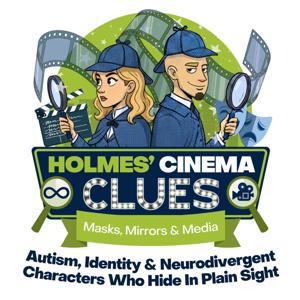
Holmes’ Cinema Clues is a YouTube series hosted by Dr. Stephanie Holmes, a certified autism specialist, and Dan Holmes, who is neurodivergent himself. Together they examine movies, television, and pop culture through the lens of lived experience and professional expertise, exploring how autism, ADHD, and other neurodivergent identities appear on screen — whether explicitly named or quietly coded into the characters audiences connect with most.Each episode treats media like a case file. With neurodivergent guests, clinicians, and behavioral experts, the show investigates representation: what works, what falls into stereotype, and why certain portrayals resonate so strongly with viewers. The goal isn’t necessarily a diagnosis — it’s insight. A smarter way to watch stories and understand how media shapes identity, belonging, and perception.Sharp, accessible, and grounded in both science and lived reality, Holmes’ Cinema Clues invites viewers to follow the evidence hidden in plain sight, and to see representation with new clarity.