
Sign up to save your podcasts
Or



Thanksgiving Day is behind us. But what does giving thanks look like when the heartache remains?
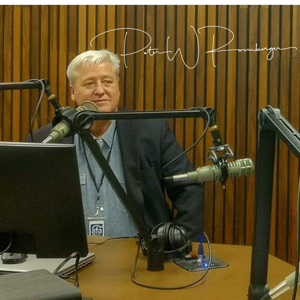
My longtime friend Stu Epperson, president of the Truth Network and author of Thanks Living, joins me for a candid, often humorous, and deeply theological conversation about gratitude.
Drawing from 1 Thessalonians 5:18, we explore the relationship between grace and gratitude, the temptation toward bitterness, and what it means to give thanks in circumstances we would never have chosen.
I also share a remarkable insight from a conversation with our mutual friend, Joni Eareckson Tada, who told me something about her wheelchair that I won't soon forget.
As Stu reminds us, gratitude flows from understanding what Christ has done for us — not from what life has done to us.
Good theology always results in doxology.
We close with Gracie's beautiful recording of "Thankful."
Order Stu's book, Thanks Living: https://a.co/d/0iHsr3MH
More encouragement for family caregivers: https://caregiver.substack.com
What connects a flea-infested Nazi concentration camp to a six-year-old girl in Florida?
In this special Thanksgiving episode, I share a deeply personal story of Corrie ten Boom, her sister Betsie, and the extraordinary ways God weaves our lives together across generations.
Drawing from Hebrews 13:7 and the remarkable account in The Hiding Place, I explore what it means to imitate the faith of those who came before us and give thanks in circumstances we would never have chosen.
We don't have to like our circumstances to trust God in them.
Originally broadcast on Truth Talk Live on November 25, 2026, this message is particularly for those facing a difficult Thanksgiving, including family caregivers, those living with chronic pain, and anyone struggling to find gratitude amid heartache.
Featuring an excerpt from "Thankful," performed by Gracie Rosenberger.
For more encouragement, resources, and messages of hope, visit https://caregiver.substack.com.
Listen now (61 mins) | Pastor, comedian, and caregiving father Keith Foskey joins Peter Rosenberger to discuss pastoring those who suffer, raising a daughter with autism, and why sound theology matters when life doesn't get better.
"God is still in control." Are we offering comfort or repeating a cliché? Peter Rosenberger shares what Gracie's rescuers understood about helping someone in distress, and explores trusting God when answers may never come in this lifetime.
A few words of Swahili brought a surprised smile to a Kenyan shuttle driver's face. "How do you know my language?" he asked.
Family caregivers know that feeling when someone understands without needing the whole story explained. After forty years of caring for my wife, Gracie, I speak fluent caregiver: the insurance calls, sleepless nights, weariness, and unexpected laughter.
In this episode, I share why being understood matters, how it shapes our caregiver support group, and what it means to come to a Savior who already knows our language.
Find more encouragement at caregiver.substack.com.
I can't make Gracie's pain stop by loving her enough. I can do everything I know to do and still lie awake wondering what I missed. So when somebody tells me, "God's trying to get your attention," I have a question. When did God start trying to do anything?
In this episode of Hope for the Caregiver, I open Isaiah 46, look at what happened to Saul on the road to Damascus, and turn to Jesus' promise in John 6. What does God's sovereignty mean for family caregivers who make hard decisions with incomplete information and live with outcomes they can't control?
I also take you to our caregiver support group in Montana, where we pass the tissues and the Costco cookies around the same table. Somehow, every week, we find a reason to laugh. Around that table, we speak fluent caregiver.
Should you follow your heart when caregiving leaves you exhausted, anxious, or overwhelmed? In this episode of Hope for the Caregiver, Peter Rosenberger explores what the Bible says about trusting your heart and how family caregivers can respond with wisdom instead of reacting out of fear, guilt, or exhaustion.
Drawing on four decades of caring for his wife, Gracie, Peter brings biblical encouragement to the emotional challenges of caring for a loved one with a chronic illness or disability. Through Jeremiah 17:9–10, Proverbs 3:5–6, Mark 7:21–23, and Ecclesiastes 11:9, he examines the difference between acknowledging strong feelings and allowing those feelings to direct your decisions.
In this episode: • A fruit-bearing tree beneath an enormous boulder offers a picture of hope for overwhelmed caregivers. • "Follow your heart" faces a practical question: Where is it taking you? • Caregiver stress reveals the need to examine our motives, seek wise counsel, and trust God. • The series "Have You Considered the Implications?" challenges familiar sayings with Scripture and real-life caregiving experience.
The episode closes with Gracie singing "One Heart," accompanied by Peter.
Find caregiver support and more episodes: https://hopeforthecaregiver.com
Read Peter's writing: https://caregiver.substack.com
Support Standing With Hope's caregiver ministry and prosthetic limb outreach, and learn about the 2027 Caregiver Calendar: https://standingwithhope.com
If He can save me, He can keep me. But what does that mean when I'm exhausted, frightened, or sitting in an emergency room?
In this episode of Hope for the Caregiver, I explore the perseverance of the saints and why this doctrine has sustained me through forty years of caregiving. Through Scripture, Peter's denial and restoration, and familiar hymns, I examine God's faithfulness when our own strength and confidence falter.
I also report on the "five cats of the apocalypse" recently recruited for barn duty, and close at the caregiver keyboard with "He Will Hold Me Fast."
The hands carrying you and me bear the scars of our redemption.
Find more encouragement at HopefortheCaregiver.com.
You pray. You fill the prescriptions. You make breakfast. And somewhere in the middle of it all, you wonder whether everything depends on you.
After forty years caring for my wife, Gracie, I know that feeling well.
In this episode of Hope for the Caregiver, I explore divine concurrence: how God carries out His sovereign purposes through the real choices and actions of His creatures. What does that mean when we're choosing a medical procedure, second-guessing a decision, asking for help, or trying to get some sleep?
Beginning with snowfall at our home in Montana and closing at the piano with William Cowper's "God Moves in a Mysterious Way," we look to Scripture for assurance that our work matters and our limitations do not exhaust God's care.
More at HopeForTheCaregiver.com.
After forty years as a caregiver, I know my way around hospitals, medications, and insurance forms. An old tractor on a Montana hillside? That's when I call a neighbor.
But asking for help can catch in your throat when you've spent years being the person everyone depends on. In this episode of Hope for the Caregiver, I share why specific requests help, how I'm learning skills that intimidate me, and why experience doesn't mean we're finished learning.
Plus, an update on Standing With Hope's prosthetic limb outreach in Ghana, a candid look at examining our hearts through Scripture, and Gracie singing "I Want to Be More Like Jesus."
Healthy Caregivers Make Better Caregivers™.
More at hopeforthecaregiver.com and caregiver.substack.com.